
Towns & cities · Scottish Lowlands
St Boswells
Also known as: Cille Bhoisil
St Boswells — village in Scottish Borders, Scotland, UK; historical County of Roxburgh.

Wikimedia Commons contributors — see linked file page for photographer and licence licence

Plan your visit
- Typical visit
- 3 h–6 h
- Nearest railway station
- Tweedbank · 8.1 km
- Free entry
- Family-friendly
- Dog-friendly
Getting there & planning your visit
St Boswells is located in central Scotland, with the postcode TD6 0AA. The nearest railway station is Tweedbank, which is 8.1 km away. Entry to the town is free.
About
St Boswells is a town, city, village or settlement in the United Kingdom. Recent population estimates put it at around 1,470 people. Wikidata describes it as: "village in Scottish Borders, Scotland, UK; historical County of Roxburgh". Coordinates: 55.5708°, -2.6458°.
Photo gallery
See it from the streetimagery from 2023
Imagery © Mapillary contributors, CC BY-SA 4.0
From the Wikipedia article
St Boswells (Scots: Bosels / Bosells [ˈboːzəɫz]; Scottish Gaelic: Cille Bhoisil [ˈçiʎəˈvɔʃɪl]) is a village on the south side of the River Tweed in the Scottish Borders, about 1 mile (2 kilometres) southeast of Newtown St Boswells on the A68 road. It lies within the boundaries of the historic county of Roxburghshire. It has a hotel, post office, award-winning butcher, garage, fish and chip shop, bookshop and café and several convenience stores. There is also a golf course next to the River Tweed, a cricket club, football club, rugby club and tennis club. The village is mostly known for being on the route of St Cuthbert's Way, a long distance footpath linking Melrose Abbey (5 miles or 8 kilometres northwest) to the Holy Island of Lindisfarne off the Northumberland coast in north east England. The name commemorates Saint Boisil, an Abbot of Melrose. The village has an annual gypsy fair, originally a focus for the trade of horses. This fair once attracted Gypsies from most parts of Scotland, northern England and Ireland. However, today it is little more than a two-day get-together on the village green. Fair day is on 18 July each year. It remains a popular opportunity for many locals to have their fortunes predicted.
Excerpt from Wikipedia under CC BY-SA 4.0. See the source article linked in Sources below.
Background
History
The Romans came to this area almost two thousand years ago, leaving Dere Street and the nearby fort of Trimontium as evidence of their occupation. Following the departure of the Romans, the area came under the sway of the Anglian kingdom of Northumbria. In the 7th century Northumbria was ruled by the pagan leader Oswald who, upon converting to Christianity, established, with the help of St Aidan, a monastery at Lindisfarne. Under his leadership a monastery was built at Old Melrose. One of the monks from this new religious centre was Boisil, and it was he who gave his name to the village and parish of Saint Boswells. It is suggested that some of the dwellings were on the flat haugh below…
Description
It is not possible to speak of St Boswells village without thinking of the river which bends and twists on its swift flowing course north of the village. Famous for its salmon and brown trout it has given satisfaction to anglers over the years. Many of the local houses were built of stones from the river bed. The riverside walks are at all times pleasant and sometimes spectacular. Walkers on St Cuthbert's Way through the village on pilgrimage from Melrose to Lindisfarne see the same view of the Eildon Hills as was seen by such men as Modan who established a religious cell at Dryburgh; Aidan who brought twelve young monks from Lindisfarne to Old Melrose as missionaries; Cuthbert who became…
Sourced from Wikipedia under CC BY-SA 4.0.
- Coordinates
- 55.5708, -2.6458
- District
- Scottish Borders
- Postcode
- TD6 0AA
- Parliamentary constituency
- Berwickshire, Roxburgh and Selkirk
- Population
- 1,470
- Nearest railway station
- Tweedbank — 8.1 km
- Official site
- www.nrscotland.gov.uk
Sources
- wikidata: Q1002153 (CC0)
- wikipedia: St Boswells (CC BY-SA 4.0)
- commons: Main Street, St Boswells - geograph.org.uk - 596439.jpg (CC BY-SA 4.0)
Other places nearby

Saint Boswells
Villages · 0.3 km

St Boswells Drinking Fountain
Memorials & monuments · 0.3 km
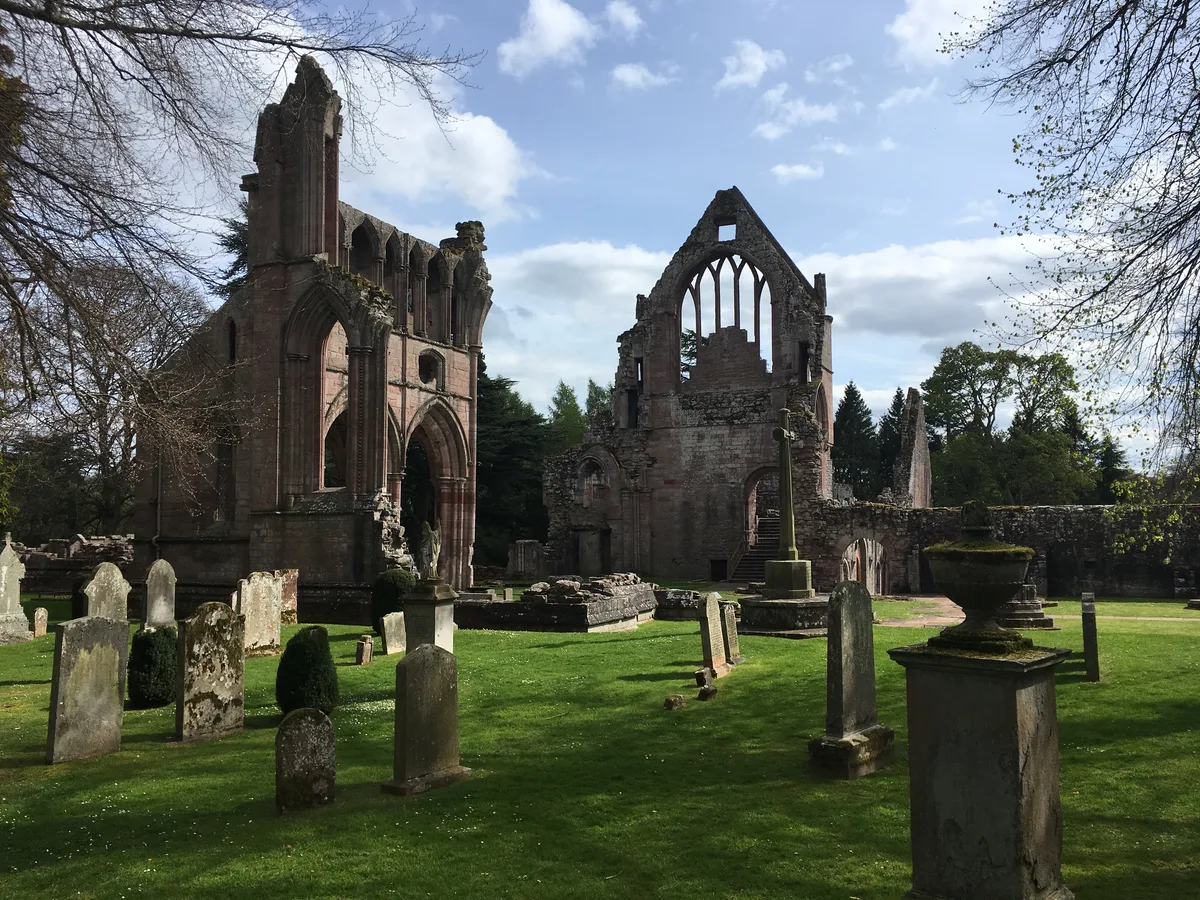
Dryburgh Abbey
Abbeys & priories · 0.6 km
.jpg?width=1200)
Lessudden House
Historic houses · 0.7 km

Monument to James I of Scotland
Memorials & monuments · 0.7 km

Dryburgh Abbey, Chapter House
Memorials & monuments · 0.7 km

Greycrook
Abbeys & priories · 0.7 km

Walter Scott's Tomb
Follies · 0.8 km

Scottish Borders Donkey Sanctuary
Natural landmarks · 0.8 km

Dryburgh Abbey Hotel
Hotels · 0.9 km

Dryburgh
Abbeys & priories · 0.9 km

Dryburgh Abbey Hotel
Abbeys & priories · 1.1 km
St Boswells is a charming town located in the Scottish Lowlands. Visitors can explore the historic grounds of Dryburgh Abbey and its adjacent bridge. The town also offers a peaceful retreat at Mertoun Mill, a traditional watermill.
At a glance
- Population
- 1,470
- Constituency
- Berwickshire, Roxburgh and Selkirk
- Top categories near here
Things to see in St Boswells
39 attractions within 12 km — showing the 24 most editorially-significant. Full guide: things to do in St Boswells →
 📷 4
📷 4 📷 4
📷 4 📷 4
📷 4 📷 4
📷 4Heritage railway stations · Scottish Lowlands
Charlesfield Halt railway station
Charlesfield Halt railway station in England North East, United Kingdom.
 📷 4
📷 4Abbeys & priories · Scottish Lowlands
Dryburgh Bridge
Dryburgh Bridge in England North East, United Kingdom.
📷 4📷 4Abbeys & priories · Scottish Lowlands
Dryburgh Abbey Hotel
Dryburgh Abbey Hotel in England North East, United Kingdom.
Flagship📷 3 📷 4
📷 4Parks · Scottish Lowlands
Statue of William Wallace
Statue of William Wallace in England North East, United Kingdom.
📷 4Abbeys & priories · Scottish Lowlands
Dryburgh Abbey Bridge
Dryburgh Abbey Bridge in England North East, United Kingdom.
 📷 4
📷 4Historic bridges · Scottish Lowlands
Mertoun Bridge
Mertoun Bridge in England North East, United Kingdom.
_-_geograph.org.uk_-_822246.jpg?width=1200) 📷 3
📷 3Forests & woodlands · Scottish Lowlands
Bemersyde Moss
Bemersyde Moss is a forest or woodland in the United Kingdom.
📷 3Wildlife reserves · Scottish Lowlands
Bemersyde Moss
Bemersyde Moss — nature reserve in the Scottish Borders.
 📷 3
📷 3Mountains & hills · Scottish Lowlands
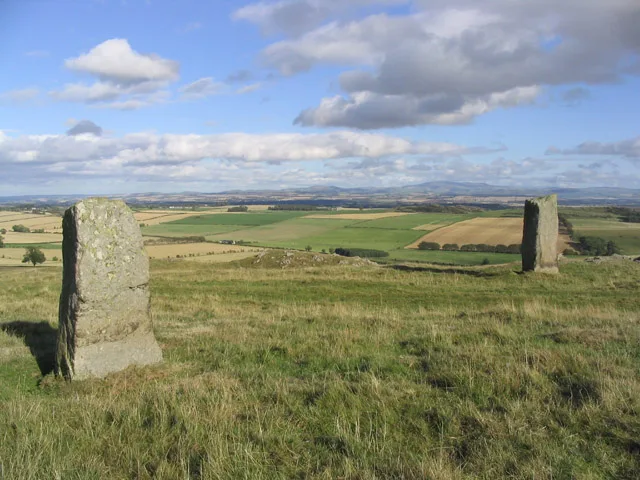
Brotherstone Hill
Brotherstone Hill — Named summit at 247 m.
★ Iconic📷 5Abbeys & priories · Scottish Lowlands
Dryburgh Abbey
Dryburgh Abbey — category A listed building in Scottish Borders, Scotland, UK.
📷 3Historic houses · Scottish Lowlands
Lessudden House
Lessudden House — house in Scottish Borders, Scotland, UK.
📷 3Follies · Scottish Lowlands
Walter Scott's Tomb
Walter Scott's Tomb is a folly in the United Kingdom.
📷 3Natural landmarks · Scottish Lowlands
Wallace Statue
Wallace Statue — a other in scotland-central, United Kingdom.
📷 3Natural landmarks · Scottish Lowlands
Scottish Borders Donkey Sanctuary
Scottish Borders Donkey Sanctuary — a other in scotland-central, United Kingdom.
 📷 3
📷 3Archaeological sites · Scottish Lowlands
Longnewton Village (Site of)
Longnewton Village (Site of) — a archaeological in scotland-central, United Kingdom.
 📷 3
📷 3Archaeological sites · Scottish Lowlands
The Cow Stone
The Cow Stone — a archaeological in scotland-central, United Kingdom.
 📷 3
📷 3Historic houses · Scottish Lowlands
Whitrigbog Tileworks
Whitrigbog Tileworks — a historic house in scotland-central, United Kingdom.
📷 3Historic houses · Scottish Lowlands
Clay Mill
Clay Mill — a historic house in scotland-central, United Kingdom.
📷 3Memorials & monuments · Scottish Lowlands
St Boswells Drinking Fountain
St Boswells Drinking Fountain — a memorial in scotland-central, United Kingdom.
Nearby
📷 5📷 3Memorials & monuments · Scottish Lowlands
St Boswells Drinking Fountain
St Boswells Drinking Fountain — a memorial in scotland-central, United Kingdom.
★ Iconic📷 5Abbeys & priories · Scottish Lowlands
Dryburgh Abbey
Dryburgh Abbey — category A listed building in Scottish Borders, Scotland, UK.
📷 3Historic houses · Scottish Lowlands
Lessudden House
Lessudden House — house in Scottish Borders, Scotland, UK.
📷 3Memorials & monuments · Scottish Lowlands
Monument to James I of Scotland
Monument to James I of Scotland — a memorial in scotland-central, United Kingdom.
📷 5Memorials & monuments · Scottish Lowlands
Dryburgh Abbey, Chapter House
Dryburgh Abbey, Chapter House — category A listed building-listed memorial in scotland-central, United Kingdom.
Where to eat & stay near St Boswells
Places to stay
📷 5 📷 5
📷 5Caravan parks · Scottish Lowlands
Roulotte Retreat
Roulotte Retreat — a caravan park in scotland central.
 📷 5
📷 5 📷 5
📷 5Caravan parks · Scottish Lowlands
Lilliardsedge Park
Lilliardsedge Park — a caravan park in scotland central.
 📷 5
📷 5Hotels · Scottish Lowlands
Station Hotel
Station Hotel — a hotel in scotland central.
 📷 7
📷 7Places to eat & drink
 📷 6
📷 6Historic pubs · Scottish Lowlands
Town Arms Inn, 1 Market Place, Selkirk
Town Arms Inn, 1 Market Place, Selkirk in Scotland Central, United Kingdom.
 📷 7
📷 7Historic pubs · Scottish Lowlands
Clovenfords Hotel, Clovenfords
Clovenfords Hotel, Clovenfords in Scotland Central, United Kingdom.
More towns in this region
 📷 4
📷 4 📷 4
📷 4Towns & cities · Scottish Lowlands
Coldstream
Coldstream in England North East, United Kingdom.
 📷 5
📷 5 📷 4
📷 4Frequently asked questions
- Where is St Boswells?
- St Boswells is in the Scottish Lowlands, United Kingdom (postcode TD6 0AA).
- What is St Boswells?
- St Boswells — village in Scottish Borders, Scotland, UK; historical County of Roxburgh.
- How do I get to St Boswells?
- The nearest railway station is Tweedbank, about 8.1 km away. Drivers can use postcode TD6 0AA.
- Is St Boswells free to visit?
- Yes, St Boswells is free to enter.
- How do I get to St Boswells?
- Drivers can navigate to postcode TD6 0AA. It sits within the Berwickshire, Roxburgh and Selkirk parliamentary constituency.