
Palaces · Central Scotland
Holyrood Palace
Also known as: Palas Holyrood
In or near Edinburgh.
Holyrood Palace — official residence of the British monarch in Scotland.

Wikimedia Commons contributors — see linked file page for photographer and licence licence

Plan your visit
- Typical visit
- 2 h–3 h
- Nearest railway station
- Edinburgh Waverley · 1.1 km
- Paid entry
- Family-friendly
- Limited wheelchair access
Getting there & planning your visit
To visit Holyrood Palace, the nearest railway station is Edinburgh Waverley, located 1.1 km away. The postcode for sat-nav is EH8 8DX. Accessibility is limited for wheelchair users.
About
Holyrood Palace is a palace in the United Kingdom — a residence built or used by royalty, the aristocracy, or a bishop. Heritage designation: category A listed building. Owned by David I of Scotland. Address: http://www.wikidata.org/entity/Q852908, EH8 8DX. Wikidata describes it as: "official residence of the British monarch in Scotland". Coordinates: 55.9527°, -3.1723°.
Photo gallery
Heritage listing
The Palace of Holyroodhouse ( or ), also known as Holyrood Palace, is the official residence of the monarch of the United Kingdom in Scotland. Located at the bottom of the Royal Mile in Edinburgh, at the opposite end to Edinburgh Castle, Holyrood has served as the principal royal residence in Scotland since the 16th century, and is a setting for state occasions and official entertaining. The palace adjoins Holyrood Abbey, and the gardens are set within Holyrood Park. The King's Gallery was converted from existing buildings at the western entrance to the palace and was opened in 2002 to exhibit works of art from the Royal Collection. King Charles III spends one week in residence at Holyrood at the beginning of summer, where he carries out a range of official engagements and ceremonies.
From Historic Environment Scotland under OGL v3.
Summary from the official site
Holyrood Palace is the official residence of the British monarch in Scotland. Visitors can explore the historic state apartments, the ruins of Holyrood Abbey, and the beautiful gardens surrounding the palace.
Read more on the official property page.
From the Wikipedia article
The Palace of Holyroodhouse ( or ), also known as Holyrood Palace, is the official residence of the monarch of the United Kingdom in Scotland. Located at the bottom of the Royal Mile in Edinburgh, at the opposite end to Edinburgh Castle, Holyrood has served as the principal royal residence in Scotland since the 16th century, and is a setting for state occasions and official entertaining. The palace adjoins Holyrood Abbey, and the gardens are set within Holyrood Park. The King's Gallery was converted from existing buildings at the western entrance to the palace and was opened in 2002 to exhibit works of art from the Royal Collection. King Charles III spends one week in residence at Holyrood at the beginning of summer, where he carries out a range of official engagements and ceremonies. The 16th-century historic apartments of Mary, Queen of Scots, and the State Apartments, used for official and state entertaining, are open to the public throughout the year, except when members of the royal family are in residence. The palace also serves as the official residence of the Lord High Commissioner to the General Assembly of the Church of Scotland during the annual meeting of the General Assembly.
Excerpt from Wikipedia under CC BY-SA 4.0. See the source article linked in Sources below.
Background
Architecture
The palace as it stands today was designed by Sir William Bruce and built between 1671 and 1678, with the exception of the 16th-century north-west tower built by James V. The palace is laid out round a central, classical-style three-storey plus attic quadrangle layout. The palace extends approximately 230 ft from north to south and 230 ft from east to west. The 16th-century north-west tower is balanced with a matching south-west tower, each with a pair of circular angle turrets with ball-finialled, conical bell-cast roofs. The towers are linked by a recessed two-storey front, with the central principal entrance framed by giant Doric columns and surmounted by the carved Royal arms of…
Description
The Great Gallery, at 150 feet (45 m) in length, is the largest room in the palace and connects the King's Closet on the east side with the Queen's Lobby in James V's Tower to the west. The Gallery features a pair of black marble chimneypieces within Doric surrounds, framed by Ionic pilasters. The most notable decorative features of the gallery are 96 of the 111 original portraits of the Scottish monarchs, beginning with the legendary Fergus I, who supposedly ruled from 330 BC. The Dutch painter Jacob de Wet was commissioned by Charles II to paint the portraits, illustrating both real and legendary monarchs, from Fergus I to James VII. The portraits were completed between 1684 and 1686, and…
Sourced from Wikipedia under CC BY-SA 4.0.
- Coordinates
- 55.9527, -3.1723
- District
- City of Edinburgh
- Postcode
- EH8 8DX
- Parliamentary constituency
- Edinburgh East and Musselburgh
- Phone
- +44 (0)303 123 7324
- Established
- 1678
- Nearest railway station
- Edinburgh Waverley — 1.1 km
- Opening
- Open throughout the year
- Official site
- www.royalcollection.org.uk
Sources
- wikidata: Q505950 (CC0)
- wikipedia: Holyrood Palace (CC BY-SA 4.0)
- commons: Holyrood Palace - aerial - 2025-04-19 04.jpg (CC BY-SA 4.0)
Featured in these 4 guides
Itinerary
Three days in Edinburgh
Castle to coast: a measured route through Scotland's capital.
Itinerary
Rainy day with kids: Edinburgh
Castle, museum, dynamic exhibits, all indoors.
Itinerary
Royal Britain: palaces & residences
Where the monarch has lived, then and now.
Itinerary
A weekend in Edinburgh
Castle, Royal Mile, Holyrood, and the Old Town wynds.
Other places nearby

Palace of Holyroodhouse
Memorials & monuments · 0.0 km

Holyrood Abbey
Archaeological sites · 0.1 km

Memorial to King Edward VII
Memorials & monuments · 0.1 km

Holyrood Free Church and School, Horse Wynd, Edinburgh
Historic churches · 0.1 km

King's Gallery
Galleries · 0.1 km

Wentworth Elm
Natural landmarks · 0.1 km

55 Abbeyhill
Gardens · 0.2 km

Scottish Veterans
Memorials & monuments · 0.2 km

Robert Stevenson
Follies · 0.2 km

Queensberry House
Historic houses · 0.2 km
William Knox
Follies · 0.2 km
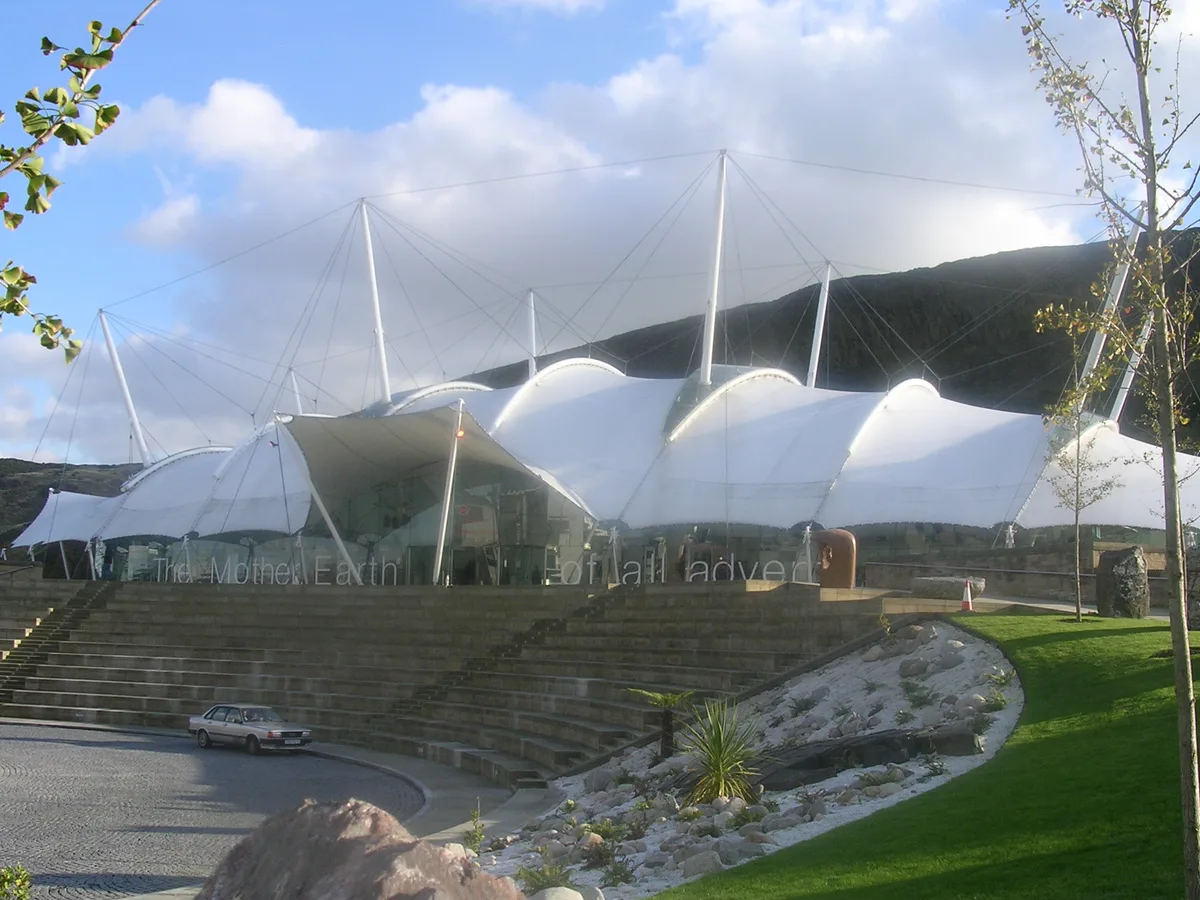
Dynamic Earth
Museums · 0.3 km
Nearby
📷 5Memorials & monuments · Central Scotland
Palace of Holyroodhouse
Palace of Holyroodhouse — a monument in scotland central.
📷 5Archaeological sites · Central Scotland
Holyrood Abbey
Holyrood Abbey — archaeological in scotland central.
📷 3Memorials & monuments · Central Scotland
Memorial to King Edward VII
Memorial to King Edward VII — a memorial in scotland-central, United Kingdom.
📷 5Historic churches · Central Scotland
Holyrood Free Church and School, Horse Wynd, Edinburgh
Holyrood Free Church and School, Horse Wynd, Edinburgh — category B listed building-listed church in scotland-central, United Kingdom.
📷 4Galleries · Central Scotland
King's Gallery
King's Gallery — art gallery in Holyrood Palace, Edinburgh.
📷 3Natural landmarks · Central Scotland
Wentworth Elm
Wentworth Elm — a other in scotland-central, United Kingdom.
Where to eat & stay near Holyrood Palace
Places to stay
 📷 6
📷 6Hotels · Central Scotland
Destiny Student Brae House
Destiny Student Brae House — a hotel in scotland central.
 📷 7
📷 7Hotels · Central Scotland
Edinburgh Marriott Holyrood Hotel
Edinburgh Marriott Holyrood Hotel — a hotel in scotland central. 4-star. Brand: Marriott.
 📷 7
📷 7Hotels · Central Scotland
24 Royal Terrace
24 Royal Terrace — a hotel in scotland central.
 📷 5
📷 5Hotels · Central Scotland
Adagio Aparthotel
Adagio Aparthotel — a hotel in scotland central.
 📷 5
📷 5Hostels · Central Scotland
The Salvation Army Life House
The Salvation Army Life House — a hostel in scotland central.
 📷 5
📷 5Hostels · Central Scotland
Royal Mile Backpackers
Royal Mile Backpackers — a hostel in scotland central.
Places to eat & drink
 📷 7
📷 7Historic pubs · Central Scotland
1, 3 Montrose Terrace, Edinburgh
1, 3 Montrose Terrace, Edinburgh in Scotland Central, United Kingdom.
 📷 5
📷 5Historic pubs · Central Scotland
23 Elm Row and 2 Montgomery Street, Edinburgh
23 Elm Row and 2 Montgomery Street, Edinburgh in Scotland Central, United Kingdom.
 📷 6
📷 6Historic pubs · Central Scotland
3, 5, 7 Waterloo Place, Edinburgh
3, 5, 7 Waterloo Place, Edinburgh in Scotland Central, United Kingdom.
 📷 7
📷 7Historic pubs · Central Scotland
3 Drummond Street, Edinburgh
3 Drummond Street, Edinburgh in Scotland Central, United Kingdom.
 📷 5
📷 5Historic pubs · Central Scotland
156-158 High Street, Edinburgh
156-158 High Street, Edinburgh in Scotland Central, United Kingdom.
 📷 7
📷 7Restaurants · Central Scotland
Number One
Number One — a restaurant in scotland central.
More palaces in this region
 📷 4
📷 4Palaces · Central Scotland
Culross Palace
Culross Palace in Scotland Islands, United Kingdom.
 Flagship📷 4
Palaces · Central Scotland
Market Cross, Scone Palace
Market Cross, Scone Palace in Scotland Islands, United Kingdom.
 📷 4
📷 4Palaces · Central Scotland
Perth Racecourse
Perth Racecourse in Scotland Islands, United Kingdom.
 📷 4
📷 4Palaces · Central Scotland
Falkland Palace Royal Tennis Club
Falkland Palace Royal Tennis Club in Scotland Islands, United Kingdom.
Frequently asked questions
- Where is Holyrood Palace?
- Holyrood Palace is in central Scotland, United Kingdom (postcode EH8 8DX).
- What is Holyrood Palace?
- Holyrood Palace — official residence of the British monarch in Scotland.
- How do I get to Holyrood Palace?
- The nearest railway station is Edinburgh Waverley, about 1.1 km away. The nearest town is Edinburgh. Drivers can use postcode EH8 8DX.
- When was Holyrood Palace built?
- Built or established in 1678.
- Who owns Holyrood Palace?
- Holyrood Palace is owned by David I of Scotland.
- Is Holyrood Palace a listed building?
- Holyrood Palace is officially recognised as category A listed building listed.
- Does Holyrood Palace charge admission?
- Holyrood Palace typically charges admission. Check the official site for current ticket prices and opening hours.
- How do I get to Holyrood Palace?
- The nearest railway station is Edinburgh Waverley, about 1.1 km away. Drivers can navigate to postcode EH8 8DX.