
Historic houses · North Wales
Wynn Hall
In or near Ruabon.
Wynn Hall — house in Penycae, United Kingdom.

Colin Pyle — CC BY-SA 2.0 via Wikimedia Commons licence

Plan your visit
- Typical visit
- 1 h–2 h
- Nearest railway station
- Ruabon · 1.4 km
- Family-friendly
- Limited wheelchair access
Getting there & planning your visit
Wynn Hall is located in Wrexham, North Wales, with the postcode LL14 1TW. The nearest railway station is Ruabon, which is 1.4 km away. Entry is paid, and wheelchair accessibility is limited.
About
Wynn Hall is a historic house in the United Kingdom — typically a country seat, manor, or town house with notable architecture or history. Heritage designation: Grade II* listed building. Wikidata describes it as: "house in Penycae, United Kingdom". Coordinates: 52.9959°, -3.0590°.
Photo gallery
Heritage listing
http://cadwpublic-api.azurewebsites.net/reports/listedbuilding/FullReport?lang=en&id=1620
From Cadw under OGL v3.
Protected designations
- Site of Special Scientific Interest: River Dee (England) SSSI
Designations sourced from Natural England open data under OGL v3.
From the Wikipedia article
Wynn Hall is a 17th-century house in the old hamlet of Bodylltyn in Ruabon, Wrexham, Wales standing at the junction of the Penycae Road and Plas Bennion Road. It was built in about 1649 by William Wynn and is a Grade II* listed building. During the English Civil War William Wynn served on the Parliamentarian side and was imprisoned at Denbigh Castle. Wynn was one of the commissioners named in the 1650 Act for Propagating the Gospel in Wales. During the 17th and 18th centuries the family was connected with the development of the nonconformist cause in the Wrexham area. He died in 1692 and was buried in the Dissenters' Graveyard in Rhosddu, Wrexham. William Wynn's granddaughter Sarah, the daughter of Archibald Hamilton and Sarah Wynn, married the Rev. John Kenrick (1683–1745), minister of Chester Street Presbyterian Chapel, Wrexham which placed the house in the hands of the Kenrick family for over two centuries. The Wynn Hall Colliery was opened by William Kenrick (1798–1865), the grandson of John, and consisted of two pits, the 'Foundry Pit' and the 'Rock Pit'. Both pits were "drowned out" in 1846, severely affecting coal production. The Kenricks also owned a spelter (zinc) works at nearby Copperas. William's cousin, Archibald Kenrick, was grandfather of cousins Harriet and Florence Kenrick, the first and second wives of the politician Joseph Chamberlain, mothers of Sir Austen Chamberlain and the British prime minister Neville Chamberlain respectively . Florence Kenrick's sister Louisa was the wife of Joseph Chamblerlain's brother Arthur; they were grandparents of the author Elizabeth Longford and great-grandparents of the Labour politician Harriet Harman. Llewelyn Kenrick (1847–1933), the son of William Kenrick, was born at Wynn Hall. After attending Ruabon Grammar School he trained as a solicitor but always remained a keen football player. Kenrick was instrumental in forming the Football Association of Wales in 1876 at a meeting in the Wynnstay Arms Hotel in…
Excerpt from Wikipedia under CC BY-SA 4.0. See the source article linked in Sources below.
- Coordinates
- 52.9959, -3.0590
- District
- Wrexham
- Parish
- Penycae
- Postcode
- LL14 1TW
- Parliamentary constituency
- Montgomeryshire and Glyndwr
- Nearest railway station
- Ruabon — 1.4 km
Sources
Other places nearby

Tatham Camp
Mountains & hills · 0.7 km

Y Gardden, Ruabon
Vineyards · 0.7 km

Pen-y-Cae War Memorial
Memorials & monuments · 1.0 km

Church of Saint John Evangelist
Historic churches · 1.2 km

Ruabon railway station
Heritage railway stations · 1.4 km

Rhos War Memorial
Memorials & monuments · 1.6 km

Bridge End Inn
Historic pubs · 1.6 km

The Vaults
B&Bs · 1.6 km

Ruabon
Towns & cities · 1.6 km

Wynnstay Arms
Hotels · 1.7 km

Stiwt Theatr
Theatres · 1.7 km
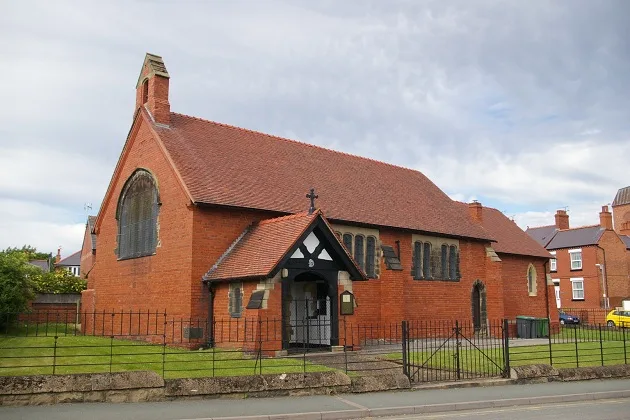
St David's Welsh Church
Historic churches · 1.7 km
Nearby
📷 5📷 5Vineyards · North Wales
Y Gardden, Ruabon
Y Gardden, Ruabon — a UK vineyard in wales north, producing English or Welsh wine from cool-climate grape varieties.
📷 5Memorials & monuments · North Wales
Pen-y-Cae War Memorial
Pen-y-Cae War Memorial — Grade II listed building-listed memorial in wales-north, United Kingdom.
📷 5Historic churches · North Wales
Church of Saint John Evangelist
Church of Saint John Evangelist — Grade II listed building-listed church in wales-north, United Kingdom.
📷 4Heritage railway stations · North Wales
Ruabon railway station
Ruabon railway station — a Grade II-listed railway station in wales-north, United Kingdom.
📷 3Memorials & monuments · North Wales
Rhos War Memorial
Rhos War Memorial — a memorial in wales-north, United Kingdom.
Where to eat & stay near Wynn Hall
Places to stay
📷 5📷 5 📷 5
📷 5 📷 4
📷 4Caravan parks · North Wales
Plassey Holiday Park
Plassey Holiday Park — a caravan park in wales north.
 📷 5
📷 5 📷 5
📷 5Places to eat & drink
📷 5Historic pubs · North Wales
Bridge End Inn
Bridge End Inn in Wales North, United Kingdom.
 📷 5
📷 5Cafés · North Wales
Chapel Tearoom
Chapel Tearoom — a café in wales north.
 📷 5
📷 5 📷 5
📷 5 📷 5
📷 5Historic pubs · North Wales
Saith Seren
Saith Seren in Wales North, United Kingdom.
 📷 7
📷 7More historic houses in this region
 📷 3
📷 3Historic houses · North Wales
2 & 2A Record Street, Ruthin
2 & 2A Record Street, Ruthin — Grade II listed house in Ruthin, Denbighshire.
 📷 3
📷 3Historic houses · North Wales
Aberconwy House
Aberconwy House — historic house in Conwy, Wales.
 📷 3
📷 3 📷 3
📷 3Frequently asked questions
- Where is Wynn Hall?
- Wynn Hall is in North Wales, United Kingdom (postcode LL14 1TW), in the parish of Penycae.
- What is Wynn Hall?
- Wynn Hall — house in Penycae, United Kingdom.
- How do I get to Wynn Hall?
- The nearest railway station is Ruabon, about 1.4 km away. The nearest town is Ruabon. Drivers can use postcode LL14 1TW.
- Is Wynn Hall a listed building?
- Wynn Hall is officially recognised as Grade II* listed building listed.
- Is Wynn Hall a protected site?
- Yes — Wynn Hall is part of the River Dee (England) SSSI Site of Special Scientific Interest.
- How do I get to Wynn Hall?
- The nearest railway station is Ruabon, about 1.4 km away. Drivers can navigate to postcode LL14 1TW.