
Abbeys & priories · London
Westminster Abbey
Also known as: Abaty Westminster, Abtheach Westminster
In or near City of Westminster.
Coronation and burial church of British monarchs since 1066.

Robert Lamb — CC BY-SA 2.0 via Wikimedia Commons licence

Plan your visit
- Typical visit
- 45 min–1.5 h
- Nearest railway station
- Westminster · 0.3 km
- Family-friendly
- Wheelchair accessible
Getting there & planning your visit
To visit Westminster Abbey, the nearest railway station is Westminster, which is 0.3 km away. The postcode for sat-nav is SW1P 3PA. The abbey is wheelchair accessible.
About
Westminster Abbey is the coronation church of every English and British monarch since William the Conqueror in 1066, and the burial place of seventeen of them. It is also the resting place of Newton, Darwin, Hawking, Chaucer, Dickens and the Unknown Warrior. Largely 13th-century French Gothic, with a perpendicular nave and Sir Christopher Wren's western towers. A working Church of England 'royal peculiar' and a UNESCO World Heritage Site.
Photo gallery
360° viewimagery from 2018
Imagery © Mapillary contributors, CC BY-SA 4.0
Summary from the official site
Westminster Abbey is an architectural masterpiece and a UNESCO World Heritage Site, known for its rich history and as the coronation church of British monarchs. Visitors can explore the Abbey's extensive collection of artefacts and the final resting places of many significant figures in British history.
Read more on the official property page.
From the Wikipedia article
Westminster Abbey, formally titled the Collegiate Church of Saint Peter at Westminster, is an Anglican church in the City of Westminster, London, England. Since 1066, it has been the location of the coronations of 40 English and British monarchs and a burial site for 18 English, Scottish, and British monarchs. At least 16 royal weddings have taken place at the abbey since 1100. Although the origins of the church are obscure, an abbey housing Benedictine monks was on the site by the mid-10th century. The church got its first large building from the 1040s, commissioned by King Edward the Confessor, who is buried inside. Construction of the present church began in 1245 on the orders of Henry III. The monastery was dissolved in 1559, and the church was made a royal peculiar – a Church of England church, accountable directly to the sovereign – by Elizabeth I. The abbey, the Palace of Westminster and St Margaret's Church became a UNESCO World Heritage Site in 1987 because of their historic and symbolic significance. The church's Gothic architecture is chiefly inspired by 13th-century French and English styles, although some sections of the church have earlier Romanesque styles or later Baroque and modern styles. The Henry VII Chapel, at the east end of the church, is a typical example of Perpendicular Gothic architecture; antiquarian John Leland called it orbis miraculum ("the wonder of the world"). The abbey is the burial site of more than 3,300 people, many prominent in British history: monarchs, prime ministers, poets laureate, actors, musicians, scientists, military leaders, and the Unknown Warrior. Due to the fame of the figures buried there, artist William Morris described the abbey as a "National Valhalla".
Excerpt from Wikipedia under CC BY-SA 4.0. See the source article linked in Sources below.
Background
History
Historians agree that there was a monastery dedicated to Saint Peter on the site prior to the 11th century, though its exact origin is somewhat obscure. One legend claims that it was founded by the Saxon king Sæberht of Essex, and another claims that its founder was the fictional 2nd-century British king Lucius. One tradition claims that a young fisherman on the River Thames had a vision of Saint Peter near the site. The Fishmongers' Company still gives the abbey a salmon each year in recognition of this story. The origins of the abbey are generally thought to date to about 959, when Dunstan and King Edgar installed a community of Benedictine monks on the site. At that time, the location…
Architecture
The building is chiefly built in a Geometric Gothic style, using Reigate stone for facings. The church has an eleven-bay nave with aisles, transepts, and a chancel with ambulatory and radiating chapels. The building is supported with two tiers of flying buttresses. The western end of the nave and the west front were designed by Henry Yevele in a Perpendicular Gothic style. The Henry VII Chapel was built in a late Perpendicular style in Huddlestone stone, probably by Robert and William Vertue. The west towers were designed by Nicholas Hawksmoor and blend the Gothic style of the abbey with the Baroque style fashionable during his lifetime. The tower has a star-shaped floorplan and leaded…
Description
On the floor, just inside the Great West Door in the centre of the nave, is the grave of the Unknown Warrior: an unidentified soldier killed on a European battlefield during the First World War. Although many countries have a Tomb of the Unknown Soldier (or Warrior), the one in Westminster Abbey was the first; it came about as a response to the unprecedented death toll of the war. The idea came from army chaplain David Railton, who suggested it in 1920. The funeral was held on 11 November 1920, the second anniversary of the end of the war. The Unknown Warrior lay in state for a week afterwards, and an estimated 1.25 million people viewed his gravesite in that time. This grave is the only…
Sourced from Wikipedia under CC BY-SA 4.0.
- Coordinates
- 51.4994, -0.1273
- District
- Westminster
- Parish
- Westminster, unparished area
- Postcode
- SW1P 3PA
- Parliamentary constituency
- Cities of London and Westminster
- Established
- 959
- Nearest railway station
- Westminster — 0.3 km
- Opening
- Mo-Sa 09:30-16:00
- Official site
- www.westminster-abbey.org
Sources
- manual: westminster-abbey (manual)
- wikipedia: Westminster Abbey (CC BY-SA 4.0)
Featured in these 3 guides
Itinerary
Every UNESCO World Heritage Site in the UK
Thirty-three sites of outstanding universal value, from Hadrian's Wall to the Forth Bridge.
Itinerary
World Heritage Sites of Great Britain
The most authoritative places in the country.
Itinerary
Tudor trail in London
Hampton Court, the Tower, Westminster Abbey — Henry VIII's London.
Other places nearby

Poets' Corner
Memorials & monuments · 0.0 km

Charles Darwin
Follies · 0.0 km

Sir Isaac Newton
Follies · 0.0 km
Stephen Hawking
Follies · 0.0 km

Chapter House and Pyx Chamber
Historic houses · 0.0 km

Henry VII Chapel
Chapels · 0.0 km

William Malcolm Hailey
Memorials & monuments · 0.1 km
Peter Manson
Memorials & monuments · 0.1 km
Czechoslovak army and Air Force
Memorials & monuments · 0.1 km
The Old Contemptibles
Memorials & monuments · 0.1 km

Westminster Abbey Museum
Museums · 0.1 km

St Margaret's Church, Westminster
Cathedrals · 0.1 km
Nearby
📷 5📷 5📷 5📷 5📷 5Historic houses · London
Chapter House and Pyx Chamber
Chapter House and Pyx Chamber — a other in england-london, United Kingdom.
📷 5Where to eat & stay near Westminster Abbey
Places to stay
 📷 5
📷 5Hotels · London
Conrad London St. James
Conrad London St. James — a hotel in england london.
 📷 5
📷 5Hotels · London
London Marriott Hotel County Hall
London Marriott Hotel County Hall — a hotel in england london.
 📷 5
📷 5Hotels · London
Hotel Riu Plaza London The Westminster
Hotel Riu Plaza London The Westminster — a hotel in england london. 4-star. Brand: RIU.
 📷 5
📷 5Hotels · London
The Royal Horseguards Hotel, London
The Royal Horseguards Hotel, London — a hotel in england london.
 📷 5
📷 5Hotels · London
Taj 51 Buckingham Gate Suites and Residences
Taj 51 Buckingham Gate Suites and Residences — a hotel in england london. Brand: Taj.
 📷 7
📷 7Hotels · London
Park Plaza Westminster Bridge
Park Plaza Westminster Bridge — a hotel in england london.
Places to eat & drink
 📷 5
📷 5 📷 7
📷 7Historic pubs · London
The Tattershall Castle
The Tattershall Castle — Historic pub — listed building or notable heritage status.
 📷 5
📷 5Cafés · London
Regency Cafe
Regency Cafe — a café in england london. Cuisine: fish and chips;tea;breakfast;local.
📷 7 📷 5
📷 5 📷 5
📷 5More abbeys in this region
 📷 5
📷 5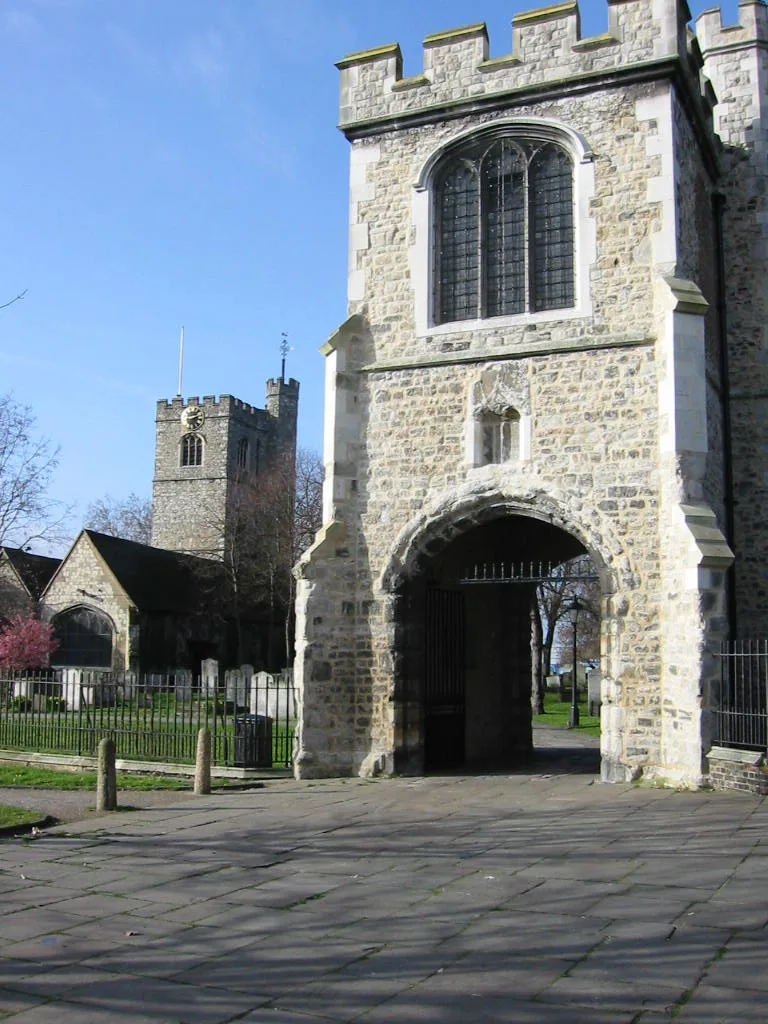 ★ Iconic📷 5
Abbeys & priories · London
Barking Abbey
Barking Abbey — building in London, England, UK.
 📷 5
📷 5.jpg?width=1200) 📷 5
📷 5Abbeys & priories · London
Bermondsey Farmers' Market
Bermondsey Farmers' Market is a place of interest in the United Kingdom.
Frequently asked questions
- Where is Westminster Abbey?
- Westminster Abbey is in London, United Kingdom (postcode SW1P 3PA), in the parish of Westminster, unparished area.
- What is Westminster Abbey?
- Coronation and burial church of British monarchs since 1066.
- How do I get to Westminster Abbey?
- The nearest railway station is Westminster, about 0.3 km away. The nearest town is City of Westminster. Drivers can use postcode SW1P 3PA.
- When was Westminster Abbey built?
- Built or established in 959.
- Who owns Westminster Abbey?
- Westminster Abbey is owned by | designation1 = WHS.
- Is Westminster Abbey a listed building?
- Westminster Abbey is officially recognised as Grade I listed.
- How do I get to Westminster Abbey?
- The nearest railway station is Westminster, about 0.3 km away. Drivers can navigate to postcode SW1P 3PA.