
Mountains & hills · South East England
The Trundle
In or near Boxgrove.
The Trundle — Named summit at 206 m.

Wikimedia Commons contributors — see linked file page for photographer and licence licence

Plan your visit
- Typical visit
- 3 h–8 h
- Best time of year
- Late spring – early autumn (May–Oct)
- Nearest railway station
- Chichester · 7.0 km
- Free entry
- Dog-friendly
Getting there & planning your visit
To visit The Trundle, the nearest railway station is Chichester, located 7 km away. The postcode for your sat-nav is PO18 0PT, and entry is free.
About
The Trundle is a named summit in the United Kingdom. Wikidata describes it as: "Named summit at 206 m.". Coordinates: 50.8925°, -0.7538°.
Photo gallery
From the Wikipedia article
The Trundle is a hillfort on St Roche's Hill about 4 miles (6 km) north of Chichester, West Sussex, England. It was built in the Iron Age on the site of a causewayed enclosure, a form of early Neolithic earthwork found in northwestern Europe. A chapel dedicated to St Roche was built on the hill around the end of the 14th century; it was in ruins by 1570. A windmill and a beacon were subsequently built on the hill. The site was occasionally used as a meeting place in the post-medieval period. Causewayed enclosures were built in England from shortly before 3700 BC until at least 3500 BC; they are characterized by the full or partial enclosure of an area with ditches that are interrupted by gaps, or causeways. Their purpose is not known; they may have been settlements, meeting places, or ritual sites. Hillforts were built as early as 1000 BC, in the Late Bronze Age, and continued to be built through the Iron Age until shortly before the Roman occupation. The hillfort is still a substantial earthwork, but the Neolithic site was unknown until 1925 when archaeologist O.G.S. Crawford obtained an aerial photograph of the Trundle, clearly showing additional structures inside the ramparts of the hillfort. Causewayed enclosures were new to archaeology at the time, with only five known by 1930, and the photograph persuaded archaeologist E. Cecil Curwen to excavate the site in 1928 and 1930. These early digs established a construction date of about 500 BC to 100 BC for the hillfort and proved the existence of the Neolithic site. In 2011, the Gathering Time project published an analysis of radiocarbon dates from almost forty British causewayed enclosures, including some from the Trundle. The conclusion was that the Neolithic part of the site was probably constructed no earlier than the mid-fourth millennium BC. A review of the site in 1995 by Alastair Oswald noted the presence of fifteen possible Iron Age house platforms within the hillfort's ramparts.
Excerpt from Wikipedia under CC BY-SA 4.0. See the source article linked in Sources below.
Background
History
The Trundle archaeological site includes a causewayed enclosure and a hillfort. Causewayed enclosures are a form of earthwork that was built in northwestern Europe, including the southern British Isles, in the early Neolithic. Causewayed enclosures are areas that are fully or partially enclosed by ditches interrupted by gaps, or causeways, of unexcavated ground, often with earthworks and palisades in some combination. The use to which these enclosures were put has long been a matter of debate. The causeways are difficult to explain in military terms since they would have provided multiple ways for attackers to pass through the ditches to the inside of the camp, though it was suggested they…
Architecture
The summit on which both the causewayed enclosure and the hillfort stand is St Roche's Hill, an outcrop of the Upper Chalk that lies at the western end of a ridge. The hill is four miles north of Chichester, near to Goodwood Racecourse. It rises above the neighbouring hills and so is clearly visible from all sides. an earlier trigonometrical station, placed on the hill in 1791, was probably at the same location. The innermost ditch, which encloses an area of , has an internal bank, and may have been the first of the Neolithic ditches to be dug. Concentric with this is a second ditch that lies a short distance outside the innermost ditch; this second ditch was thought by E. Cecil Curwen (who…
Sourced from Wikipedia under CC BY-SA 4.0.
- Coordinates
- 50.8925, -0.7538
- County
- West Sussex
- District
- Chichester
- Parish
- Singleton
- Postcode
- PO18 0PT
- Parliamentary constituency
- Arundel and South Downs
- Nearest railway station
- Chichester — 7 km
Sources
- osm: n29269186 (ODbL)
- wikipedia: The Trundle (CC BY-SA 4.0)
- commons: The Trundle, earthworks and view north.jpg (CC BY-SA 4.0)
Other places nearby
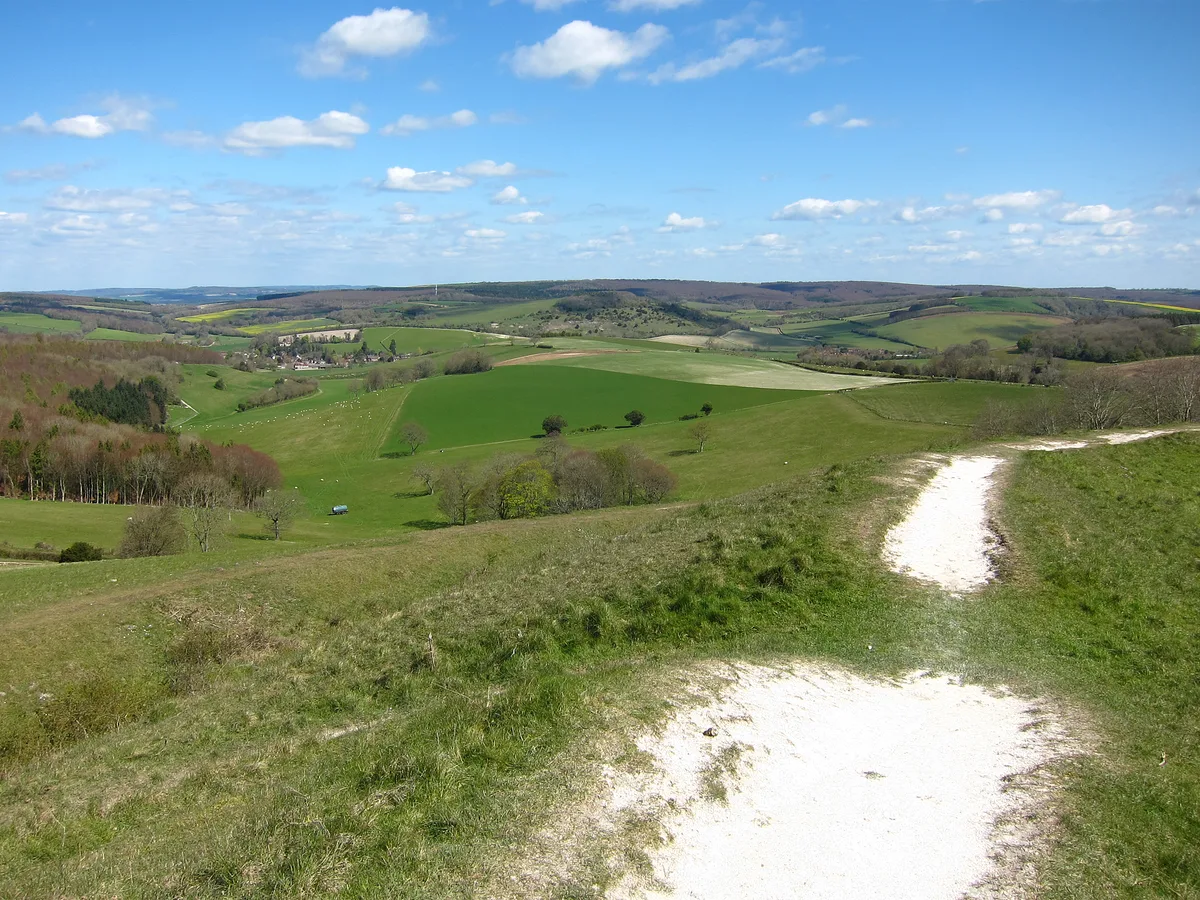
Trundle
Hill forts · 0.0 km

St Roche's Hill
Mountains & hills · 0.0 km

St. Roche's Hill
Viewpoints · 0.6 km
John Green Memorial
Memorials & monuments · 0.6 km

Goodwood Racecourse
Racecourses · 0.7 km

West Dean Gardens
Gardens · 1.4 km
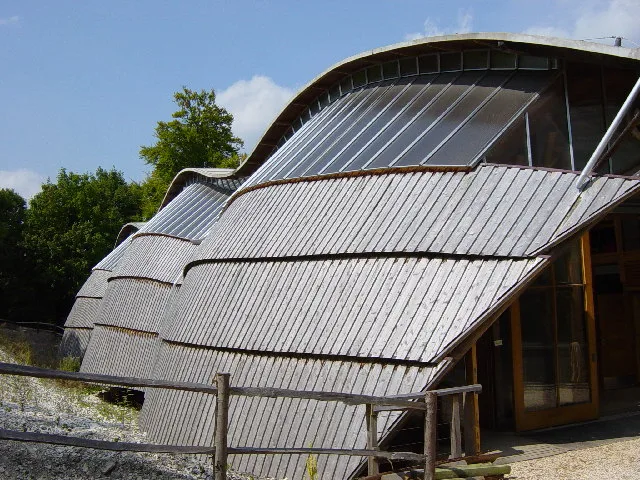
Weald and Downland Gridshell
Museums · 1.6 km

Weald & Downland Open Air Museum
Museums · 1.7 km

Goodwood Country Park
Racecourses · 1.8 km

Pevensey Windpump
Windmills · 1.8 km

Weald and Downland Living Museum
Museums · 1.8 km

The Shell Grotto To The North West Of Carne's Seat
Historic houses · 1.8 km
Nearby
📷 5📷 5Mountains & hills · South East England
St Roche's Hill
St Roche's Hill — a hill or mountain in england south east.
📷 5Viewpoints · South East England
St. Roche's Hill
St. Roche's Hill is a viewpoint in the United Kingdom.
📷 5Memorials & monuments · South East England
John Green Memorial
John Green Memorial — a memorial in england-south-east, United Kingdom.
📷 5Racecourses · South East England
Goodwood Racecourse
Goodwood Racecourse — a other in england-south-east, United Kingdom.
📷 5Gardens · South East England
West Dean Gardens
West Dean Gardens — a garden in england-south-east, United Kingdom.
Where to eat & stay near The Trundle
Places to stay
 📷 7
📷 7Hotels · South East England
Woodstock House Hotel
Woodstock House Hotel — a hotel in england south east.
 📷 5
📷 5Campsites · South East England
West Dean Campsite
West Dean Campsite — a campsite in england south east.
 📷 5
📷 5Hotels · South East England
The Goodwood Hotel
The Goodwood Hotel — a hotel in england south east.
 📷 5
📷 5Caravan parks · South East England
New House Farm
New House Farm — a caravan park in england south east.
 📷 5
📷 5Campsites · South East England
Newhouse Farm Camping
Newhouse Farm Camping — a campsite in england south east.
 📷 5
📷 5Hotels · South East England
The Ship Hotel
The Ship Hotel — a hotel in england south east.
Places to eat & drink
 📷 5
📷 5Historic pubs · South East England
The Partridge Inn
The Partridge Inn in England South East, United Kingdom.
 📷 5
📷 5Historic pubs · South East England
The Earl Of March Public House
The Earl Of March Public House in England South East, United Kingdom.
 📷 5
📷 5Historic pubs · South East England
The Coach And Horses Public House
The Coach And Horses Public House in England South East, United Kingdom.
 📷 5
📷 5Historic pubs · South East England
The Winterton Arms Public House
The Winterton Arms Public House in England South East, United Kingdom.
 📷 5
📷 5Historic pubs · South East England
Prince Arthur Public House
Prince Arthur Public House in England South East, United Kingdom.
 📷 5
📷 5Historic pubs · South East England
The East Gate Public House
The East Gate Public House in England South East, United Kingdom.
More mountains in this region
 📷 5
📷 5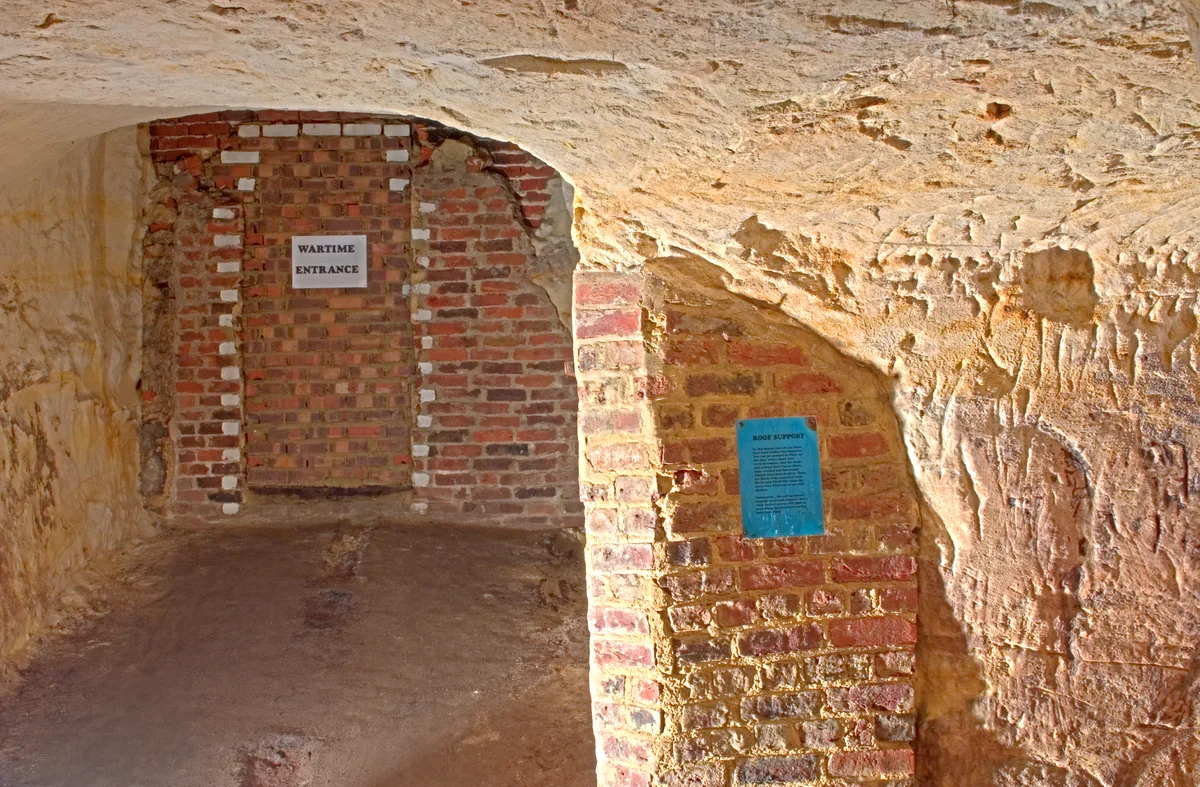 📷 5
📷 5Mountains & hills · South East England
Reigate Caves
Reigate Caves is a mountain or hill in the United Kingdom.
 📷 5
📷 5Mountains & hills · South East England
North Downs
North Downs — a hill or mountain in england london.
 📷 5
📷 5Mountains & hills · South East England
Blue Bell Hill
Blue Bell Hill — a hill or mountain in england london.
Frequently asked questions
- Where is The Trundle?
- The Trundle is in West Sussex, South-East England, United Kingdom (postcode PO18 0PT), in the parish of Singleton.
- What is The Trundle?
- The Trundle — Named summit at 206 m.
- How do I get to The Trundle?
- The nearest railway station is Chichester, about 7.0 km away. The nearest town is Boxgrove. Drivers can use postcode PO18 0PT.
- Who owns The Trundle?
- The Trundle is owned by | designation1 = Scheduled Ancient Monument.
- Is The Trundle free to visit?
- Yes, The Trundle is free to enter.
- How do I get to The Trundle?
- The nearest railway station is Chichester, about 7.0 km away. Drivers can navigate to postcode PO18 0PT.