
Memorials & monuments · North East England
The Response
In or near Newcastle upon Tyne.
The Response is a memorial in the United Kingdom.

Wikimedia Commons contributors — see linked file page for photographer and licence licence

Plan your visit
- Typical visit
- 15 min–45 min
- Nearest railway station
- Haymarket · 0.1 km
- Free entry
- Dog-friendly
- Wheelchair accessible
Getting there & planning your visit
The Response is located in Newcastle upon Tyne, postcode NE1 7RE, and is accessible via Haymarket railway station, which is just 0.1 km away. Entry to the memorial is free.
About
The Response is a public memorial or monument in the United Kingdom. Records date its origin to 1923. Coordinates: 54.9786°, -1.6128°.
Photo gallery
Heritage listing
The Response 1914 (also known as the Northumberland Fusiliers Memorial) is a war memorial in the public gardens to the north of the Church of St Thomas the Martyr in Barras Bridge, Newcastle upon Tyne, and to the west of Newcastle Civic Centre. Designed by Sir William Goscombe John, the memorial was commissioned by Sir George Renwick, 1st Baronet, and unveiled in 1923. It primarily commemorates the Territorial Army "Pals" battalions of the Northumberland Fusiliers raised by the local Chamber of Commerce in late 1914 for service in the First World War, which became known as the "Commercials".
From the Historic England List Entry under OGL v3.
Official information
The Farrell Centre is a venue dedicated to discussions about the built environment, architecture, and urban planning. Visitors can explore various exhibitions and participate in workshops that engage with contemporary issues related to housing and urban living.
From the Wikipedia article
The Response 1914 (also known as the Northumberland Fusiliers Memorial) is a war memorial in the public gardens to the north of the Church of St Thomas the Martyr in Barras Bridge, Newcastle upon Tyne, and to the west of Newcastle Civic Centre. Designed by Sir William Goscombe John, the memorial was commissioned by Sir George Renwick, 1st Baronet, and unveiled in 1923. It primarily commemorates the Territorial Army "Pals" battalions of the Northumberland Fusiliers raised by the local Chamber of Commerce in late 1914 for service in the First World War, which became known as the "Commercials". It also commemorates the safe return of Renwick's five sons from service in the war, and his 50 years in business as a ship-owner (he was also elected as the Member of Parliament for Newcastle-upon-Tyne and then Newcastle upon Tyne Central on three occasions between 1900 and 1922). The memorial was designed by Sir W. Goscombe John, who also designed the Port Sunlight War Memorial.
Excerpt from Wikipedia under CC BY-SA 4.0. See the source article linked in Sources below.
Background
Architecture
The memorial has a large base of Shap granite, with three steps up to a rusticated plinth and screen wall. In total the pedestal and decoration is 8 m high x 14 m wide x 2.5 m deep. The large black bronze sculpture, 3 m high x 10 m wide, was founded by A.B. Burton at the Thames Ditton Foundry of Thames Ditton. The sculpture portrays dozen of figures, including two drummer boys and men saying goodbye to their loved ones, expressing both patriotism and anguish. An angel—an allegorical depiction of Renown—blows a trumpet and flies over the crowd. and: and was advanced to Grade I listed status in October 2014. <gallery> File:'The Response', World War I Memorial, Barras Bridge (detail) -…
Sourced from Wikipedia under CC BY-SA 4.0.
- Coordinates
- 54.9786, -1.6128
- District
- Newcastle upon Tyne
- Parish
- Newcastle upon Tyne, unparished area
- Postcode
- NE1 7RE
- Parliamentary constituency
- Newcastle upon Tyne Central and West
- Phone
- +44 (0)191 208 0071
- Established
- 1923
- Nearest railway station
- Haymarket — 0.1 km
Sources
- osm: w883156212 (ODbL)
- wikipedia: Northumberland Fusiliers Memorial (CC BY-SA 4.0)
- commons: Monument Response Newcastle Tyne 4.jpg (CC BY-SA 4.0)
Other places nearby
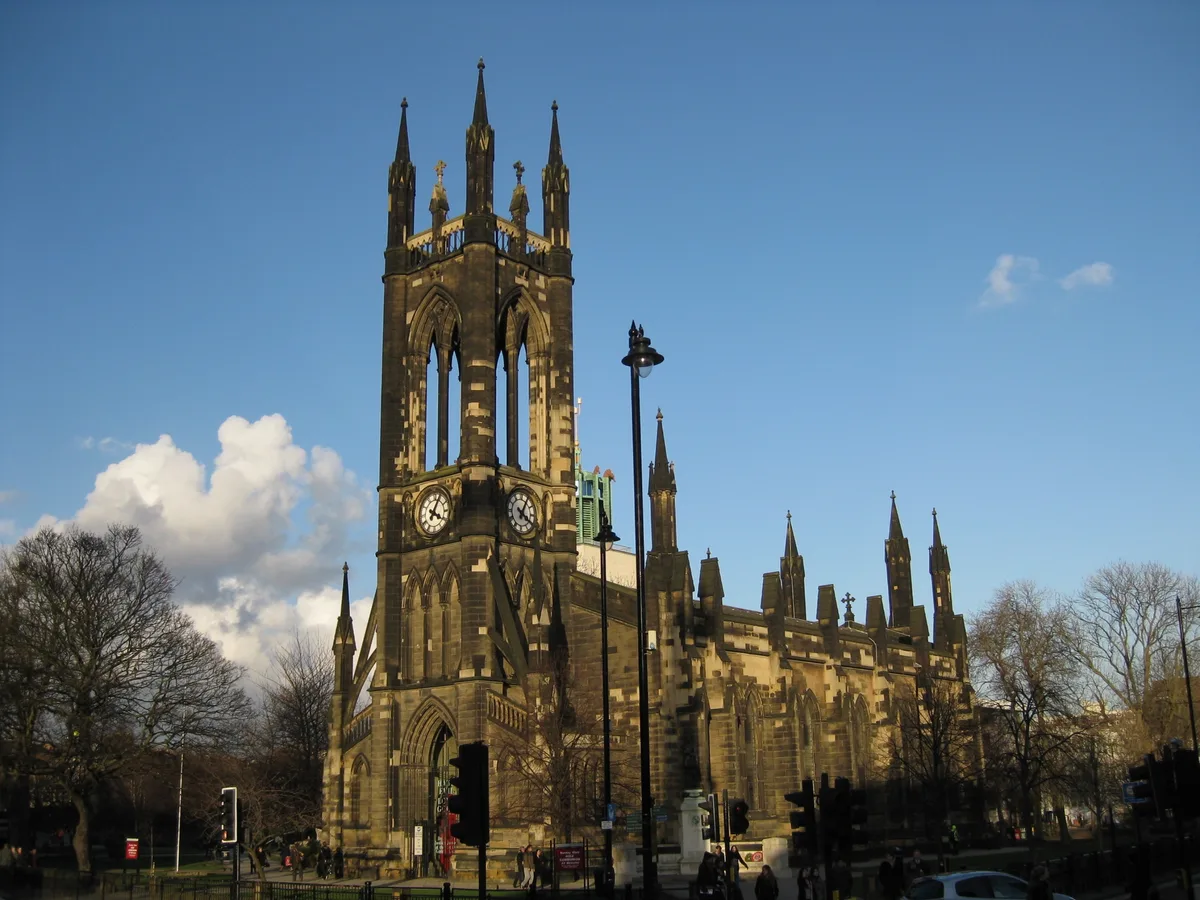
Church of St Thomas the Martyr
Historic churches · 0.0 km

Royal Tank Regiment War Memorial
Memorials & monuments · 0.1 km

River God Tyne
Public art & sculpture · 0.1 km

Culture Lab
Other places · 0.1 km
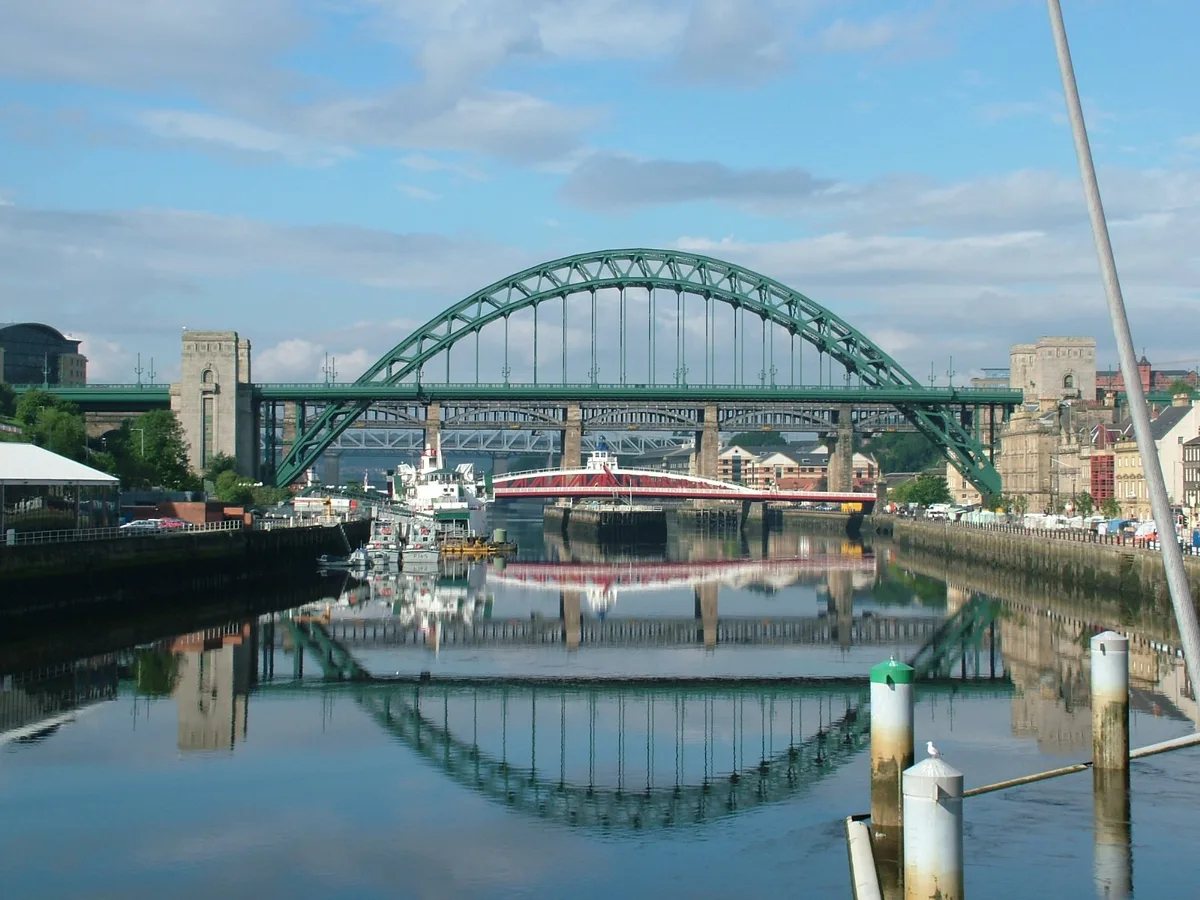
Newcastle upon Tyne
Towns & cities · 0.1 km

Farrell Centre
Galleries · 0.1 km

Haymarket bus station
Heritage railway stations · 0.1 km

Armstrong Memorial
Memorials & monuments · 0.1 km

Northern Stage, Newcastle upon Tyne
Open-air theatres · 0.1 km

Boer War Memorial
Memorials & monuments · 0.1 km
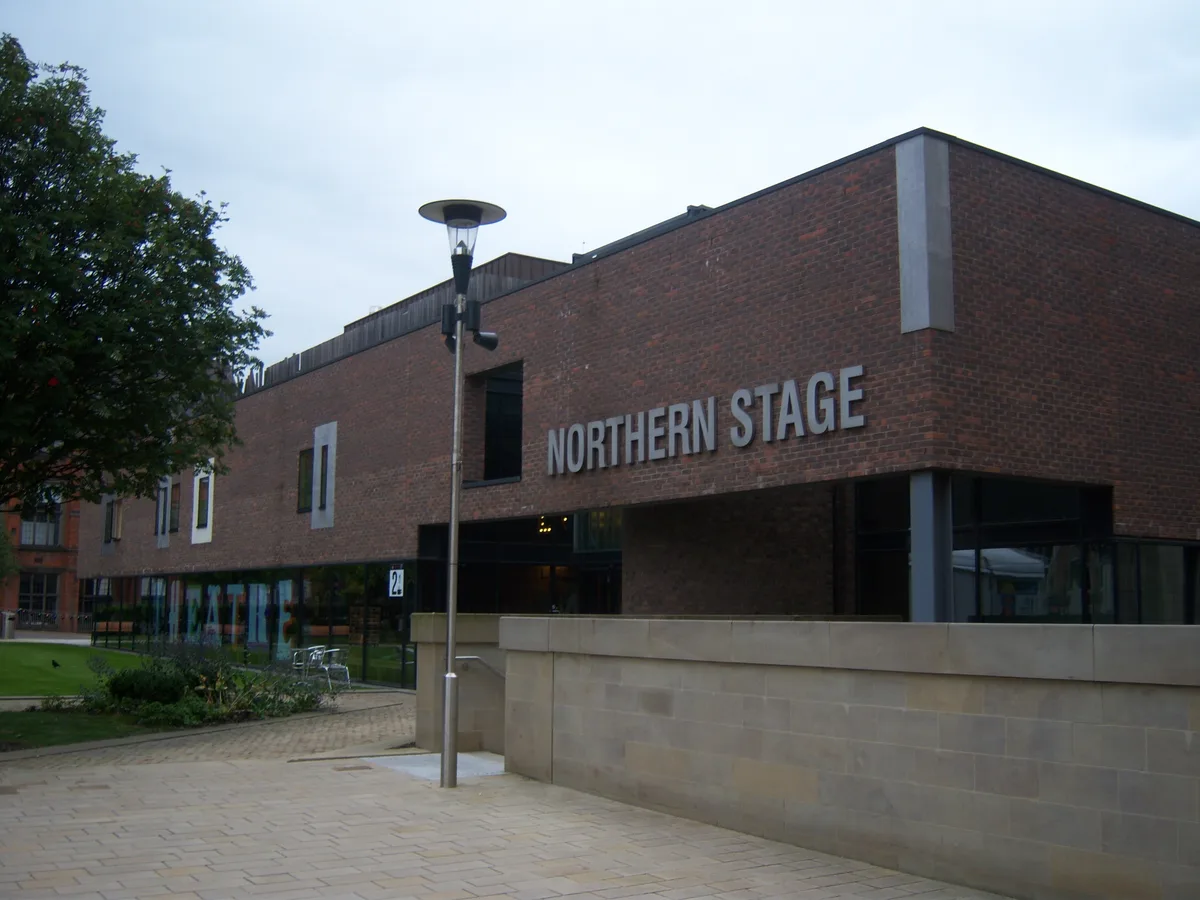
Northern Stage
Theatres · 0.1 km

Clasp
Other places · 0.1 km
Nearby
📷 3Historic churches · North East England
Church of St Thomas the Martyr
Church of St Thomas the Martyr — church in Newcastle upon Tyne, Tyne and Wear, England, UK.
📷 3Memorials & monuments · North East England
Royal Tank Regiment War Memorial
Royal Tank Regiment War Memorial — Grade II listed building-listed memorial in scotland-lowlands, United Kingdom.
📷 5Public art & sculpture · North East England
River God Tyne
River God Tyne in Scotland Lowlands, United Kingdom.
📷 4Other places · North East England
Culture Lab
Culture Lab in England North East, United Kingdom.
Flagship📷 5Towns & cities · North East England
Newcastle upon Tyne
Newcastle upon Tyne — city in Tyne and Wear, England, UK.
📷 3Galleries · North East England
Farrell Centre
Farrell Centre — a gallery in scotland-lowlands, United Kingdom.
Where to eat & stay near The Response
Places to stay

Hostels · North East England
Kabannas Newcastle
Kabannas Newcastle — a hostel in scotland lowlands.
Hotels · North East England
Maldron Hotel Newcastle
Maldron Hotel Newcastle — a hotel in scotland lowlands. 4-star. Brand: Maldron Hotels.
 📷 5
📷 5Hostels · North East England
Heroes Bunkz
Heroes Bunkz — a hostel in scotland lowlands.
 📷 5
📷 5Hotels · North East England
Grey Street Hotel
Grey Street Hotel — a hotel in scotland lowlands.
 📷 5
📷 5Hostels · North East England
Albatross Hostel
Albatross Hostel — a hostel in scotland lowlands.
 📷 5
📷 5Places to eat & drink
 📷 5
📷 5Historic pubs · North East England
The Cordwainers' Public House
The Cordwainers' Public House in Scotland Lowlands, United Kingdom.
 📷 5
📷 5Historic pubs · North East England
Theatre Royal Lounge And Restaurant; The Royal Public House
Theatre Royal Lounge And Restaurant; The Royal Public House in Scotland Lowlands, United Kingdom.
 📷 5
📷 5Historic pubs · North East England
Liberty House
Liberty House in Scotland Lowlands, United Kingdom.
 📷 5
📷 5Restaurants · North East England
Cilantro
Cilantro — a restaurant in scotland lowlands.
 📷 3
📷 3Historic pubs · North East England
The Crown Posada
Newcastle's Quayside Victorian pub, with William Morris stained glass.
 📷 5
📷 5Restaurants · North East England
Sambuca
Sambuca — a restaurant in scotland lowlands.
Other memorials from this era
.jpg?width=1200) 📷 5
📷 5Memorials & monuments · London
1st Surrey Rifles War Memorial
1st Surrey Rifles War Memorial is a memorial in the United Kingdom.
 📷 5
📷 5Memorials & monuments · London
24th East Surrey Division War Memorial
24th East Surrey Division War Memorial is a memorial in the United Kingdom.
.jpg?width=1200) 📷 5
📷 5Memorials & monuments · London
Alan Brooke, 1st Viscount Alanbrooke
Alan Brooke, 1st Viscount Alanbrooke is a memorial in the United Kingdom.
 📷 5
📷 5Memorials & monuments · London
All Saints Fulham war memorial
All Saints Fulham war memorial is a memorial in the United Kingdom.
More memorials in this region
 📷 3
📷 3Memorials & monuments · North East England
Hurworth and Neasham War Memorial
Hurworth and Neasham War Memorial — Grade II listed building-listed memorial in england-yorkshire, United Kingdom.
 📷 3
📷 3Memorials & monuments · North East England
Fryingpan Stone
Fryingpan Stone — a memorial in england-yorkshire, United Kingdom.
 📷 3
📷 3Memorials & monuments · North East England
Yoak Stone
Yoak Stone — a memorial in england-yorkshire, United Kingdom.
 📷 3
📷 3Memorials & monuments · North East England
Pump Cottage 1680
Pump Cottage 1680 — a memorial in england-yorkshire, United Kingdom.
Frequently asked questions
- Where is The Response?
- The Response is in North-East England, United Kingdom (postcode NE1 7RE), in the parish of Newcastle upon Tyne, unparished area.
- What is The Response?
- The Response is a memorial in the United Kingdom.
- How do I get to The Response?
- The nearest railway station is Haymarket, about 0.1 km away. The nearest town is Newcastle upon Tyne. Drivers can use postcode NE1 7RE.
- When was The Response built?
- Built or established in 1923.
- Is The Response a listed building?
- The Response is officially recognised as listed building listed.
- Is The Response free to visit?
- Yes, The Response is free to enter.
- How do I get to The Response?
- The nearest railway station is Haymarket, about 0.1 km away. Drivers can navigate to postcode NE1 7RE.