
Other places · Scottish Islands
SMS Prinzregent Luitpold
In or near Stromness.
SMS Prinzregent Luitpold in Orkney + Shetland, United Kingdom.

Wikimedia Commons licence
Plan your visit
- Typical visit
- 1 h–2 h
About
SMS Prinzregent Luitpold is a place of interest in Orkney + Shetland, United Kingdom — drawn from open-data sources for visitor reference. See the linked Wikipedia article for the full description.
Photo gallery
From the Wikipedia article
SMS Prinzregent Luitpold was the fifth and final vessel of the Kaiser class of dreadnought battleships of the Imperial German Navy. Prinzregent Luitpold's keel was laid in October 1910 at the Germaniawerft dockyard in Kiel. She was launched on 17 February 1912 and was commissioned into the navy on 19 August 1913. The ship was equipped with ten 30.5-centimeter (12 in) guns in five twin turrets, and had a top speed of 21.7 knots (40.2 km/h; 25.0 mph). Prinzregent Luitpold was assigned to III Battle Squadron of the High Seas Fleet for the majority of her career; in December 1916, she was transferred to IV Battle Squadron. Along with her four sister ships, Kaiser, Friedrich der Grosse, Kaiserin, and König Albert, Prinzregent Luitpold participated in all of the major fleet operations of World War I, including the Battle of Jutland on 31 May – 1 June 1916. The ship was also involved in Operation Albion, an amphibious assault on the Russian-held islands in the Gulf of Riga, in late 1917. After Germany's defeat in the war and the signing of the Armistice in November 1918, Prinzregent Luitpold and most of the capital ships of the High Seas Fleet were interned by the Royal Navy in Scapa Flow. The ships were disarmed and reduced to skeleton crews while the Allied powers negotiated the final version of the Treaty of Versailles. On 21 June 1919, days before the treaty was signed, the commander of the interned fleet, Rear Admiral Ludwig von Reuter, ordered the fleet to be scuttled to ensure that the British would not be able to seize the ships. Prinzregent Luitpold was raised in July 1931 and subsequently broken up for scrap in 1933.
Excerpt from Wikipedia under CC BY-SA 4.0. See the source article linked in Sources below.
Background
Architecture
The German 1909 construction program included the last two members of the s, along with two additional dreadnoughts to be built to a new design. The primary change was intended to be the adoption of steam turbines in favor of triple-expansion steam engines used in the earlier vessels. The space savings of turbines permitted a more efficient superfiring arrangement of the main battery, along the same model as the s. The new ships' armor layout was significant improved over earlier designs; the Kaiser class was also far superior in defensive characteristics to their British counterparts of the and es, even if markedly inferior in terms of firepower.
Description
was 172.4 m long overall and displaced a maximum of 27,000 t at full load. She had a beam of 29 m and a draft of 9.1 m forward and 8.8 m aft. The ship had an inverted bow and a long forecastle deck that extended for two-thirds the length of the hull. Her superstructure was fairly minimal, consisting primarily of a short, armored conning tower forward and a smaller, secondary conning tower aft. was fitted with a pair of pole masts for observation and signaling purposes. She had a crew of 41 officers and 1,043 enlisted men. was powered by two sets of Parsons steam turbines, which drove two screw propellers. The turbines were supplied with steam by fourteen coal-fired water-tube boilers that…
Sourced from Wikipedia under CC BY-SA 4.0.
- Coordinates
- 58.8838, -3.1925
Sources
- wikidata: Q551918 (CC0)
- wikipedia: SMS Prinzregent Luitpold (CC BY-SA 4.0)
Other places nearby

SMS Kaiser
Other places · 0.3 km

SMS Kaiserin
Other places · 0.6 km
.jpg?width=1200)
SMS Karlsruhe
Other places · 0.6 km
SMS Von der Tann
Other places · 0.8 km

SMS Hindenburg
Battlefields & battle sites · 0.9 km
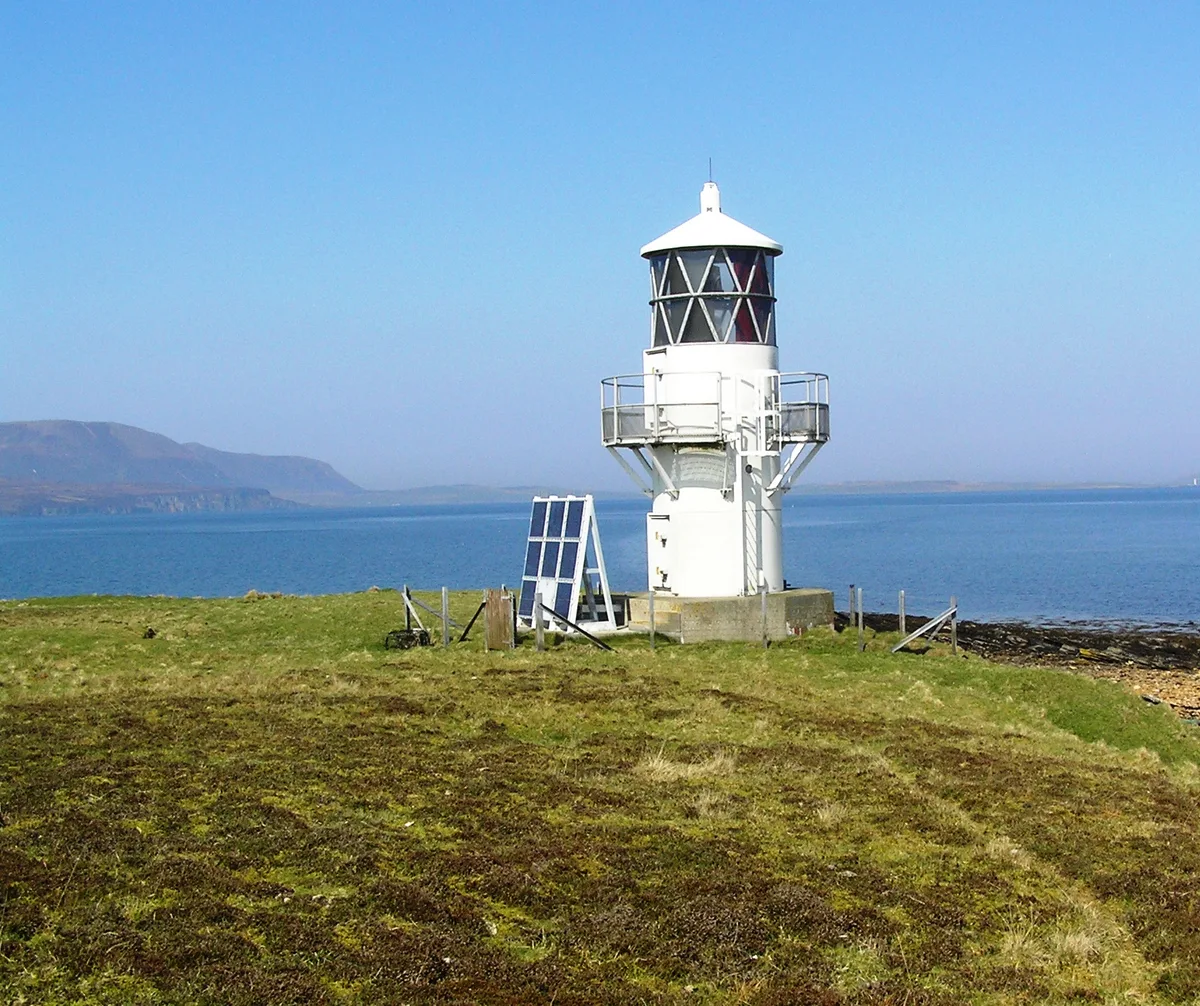
Cava Lighthouse
Lighthouses · 0.9 km

SMS Nürnberg
Battlefields & battle sites · 1.0 km
SMS Moltke
Other places · 1.3 km
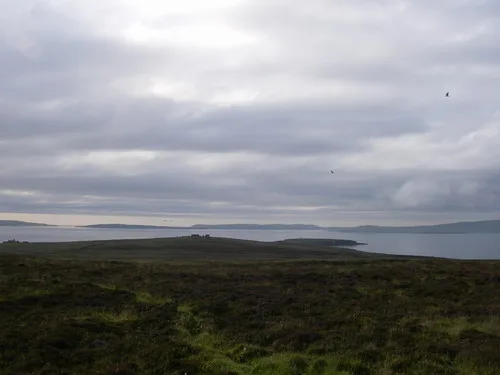
Cava
Islands · 1.4 km

SMS Grosser Kurfürst
Natural landmarks · 1.5 km

SMS Friedrich der Grosse
Other places · 1.6 km
SMS König Albert
Other places · 1.6 km
Nearby
📷 3📷 3📷 3📷 3Other places · Scottish Islands
SMS Von der Tann
SMS Von der Tann in Orkney + Shetland, United Kingdom.
📷 3Battlefields & battle sites · Scottish Islands
SMS Hindenburg
SMS Hindenburg in Orkney + Shetland, United Kingdom.
📷 3Lighthouses · Scottish Islands
Cava Lighthouse
Cava Lighthouse — lighthouse in Orkney Islands, Scotland, UK.
Where to eat & stay near SMS Prinzregent Luitpold
Places to stay
 📷 5
📷 5 📷 5
📷 5Campsites · Scottish Islands
Point of Ness Campsite
Point of Ness Campsite — a campsite in scotland islands.
 📷 5
📷 5 📷 5
📷 5Hostels · Scottish Islands
Browns Hostel
Browns Hostel — a hostel in scotland islands.
 📷 7
📷 7Hotels · Scottish Islands
The Stromness Hotel
The Stromness Hotel — a hotel in scotland islands.
 📷 5
📷 5Places to eat & drink
 📷 4
📷 4More places in this region
 📷 3
📷 3Other places · Scottish Islands
Mosaic Mackerel
Mosaic Mackerel — Public artwork (sculpture) by Rosalind Waites.
 📷 3
📷 3Other places · Scottish Islands
TEF-20 Ferguson Sculpture
TEF-20 Ferguson Sculpture — Public artwork (sculpture).
 📷 3
📷 3Other places · Scottish Islands
Time and Tide Bell
Time and Tide Bell — Public artwork (sculpture) by Marcus Vergette.
 📷 3
📷 3Frequently asked questions
- Where is SMS Prinzregent Luitpold?
- SMS Prinzregent Luitpold is in the Scottish Islands, United Kingdom.
- What is SMS Prinzregent Luitpold?
- SMS Prinzregent Luitpold in Orkney + Shetland, United Kingdom.
- How do I get to SMS Prinzregent Luitpold?
- The nearest town is Stromness. Its coordinates are 58.8838°, -3.1925°.