
Mountains & hills · Scottish Lowlands
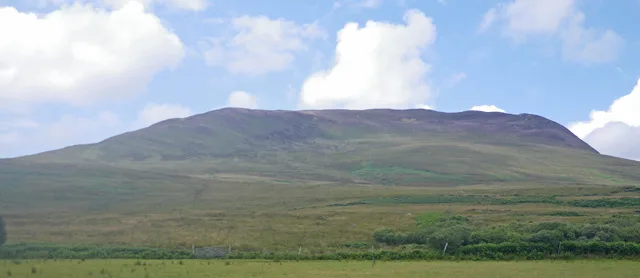
Rubers Law
In or near Denholm.
Rubers Law — Named summit at 424 m.

Wikimedia Commons contributors — see linked file page for photographer and licence licence

Plan your visit
- Typical visit
- 3 h–8 h
- Best time of year
- Late spring – early autumn (May–Oct)
- Free entry
- Dog-friendly
About
Rubers Law is a named summit in the United Kingdom. Wikidata describes it as: "Named summit at 424 m.". Coordinates: 55.4323°, -2.6647°.
Photo gallery
From the Wikipedia article
Rubers Law (or locally probably more often Ruberslaw) is a prominent, conical hill in the Scottish Borders area of south-east Scotland. It stands on the south bank of the River Teviot, between the towns of Hawick and Jedburgh, and south of the village of Denholm. The hill is on the border between the historic parishes of Cavers and Hobkirk, and until 1975 it stood within the historic county of Roxburghshire. Much of the hill is agricultural land with coniferous plantations, and with rough grazing land around the top. A number of routes to the rocky summit of the hill are possible for walkers, from which there is a wide view in all directions. The summit rocks represent the remains of a volcano, formed by a volcanic eruption during the Carboniferous Period, roughly 330 million years ago. On and around the summit are the remains of several historical structures: an Iron Age hill fort, a Roman signal station, and a "nuclear fort" of the Early Middle Ages. Alexander Peden may have preached to illegal conventicles of Covenanters from a place known as "Peden's Pulpit" among the summit rocks. The poet Dr John Leyden, who was born in Denholm, climbed the hill in his youth, and described it in a poem of 1803.
Excerpt from Wikipedia under CC BY-SA 4.0. See the source article linked in Sources below.
Background
History
A number of structures have been built on or around the summit of Rubers Law. The earliest may have been an Early Iron Age hill fort or oppidum, represented by the remains of an outer wall, running at the same level around the hilltop, enclosing an area of 7 acre with a well-marked entrance to the south. No Roman masonry has been incorporated into this wall, suggesting an early date, though it is also possible that it could be the wall of a cattle compound associated with a later post-Roman fort.
Sourced from Wikipedia under CC BY-SA 4.0.
- Coordinates
- 55.4323, -2.6647
- District
- Scottish Borders
- Postcode
- TD9 8PA
- Parliamentary constituency
- Berwickshire, Roxburgh and Selkirk
Sources
- osm: n1401007680 (ODbL)
- wikipedia: Rubers Law (CC BY-SA 4.0)
- commons: Rubers Law from Hawick.jpg (CC BY-SA 4.0)
Other places nearby

Rubers Law
Vineyards · 0.0 km

Wells
Vineyards · 1.9 km

Hallrule
Forests & woodlands · 2.0 km

Wells House(site of)
Archaeological sites · 2.1 km

Spital Tower
Historic houses · 2.2 km

Ruberslaw Wild Woods Camping
Campsites · 2.2 km
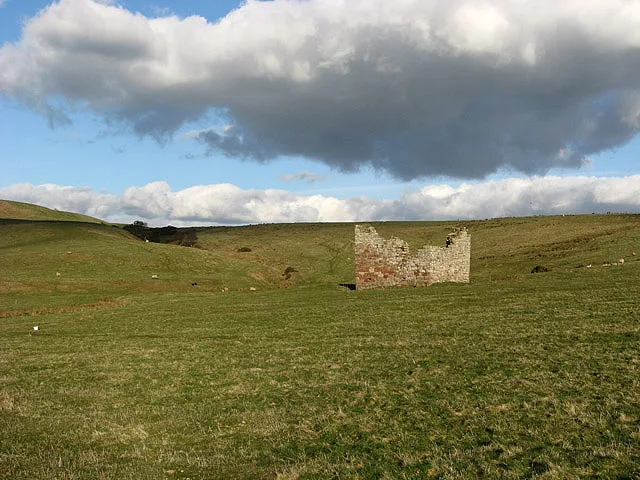
Fulton Tower
Castles · 2.5 km

Sclaterford 1513 Battle Memorial
Memorials & monuments · 2.5 km

Bedrule Bridge
Historic bridges · 2.8 km

Hentlawshiel Obelisk
Memorials & monuments · 2.9 km

Henlawshiel Obelisk
Forts · 2.9 km

Westgate Hall, Denholm
Historic houses · 3.0 km
Nearby
📷 5Vineyards · Scottish Lowlands
Rubers Law
Rubers Law — a UK vineyard in scotland lowlands, producing English or Welsh wine from cool-climate grape varieties.
📷 5Vineyards · Scottish Lowlands
Wells
Wells — a UK vineyard in scotland lowlands, producing English or Welsh wine from cool-climate grape varieties.
📷 4Forests & woodlands · Scottish Lowlands
Hallrule
Hallrule in England North East, United Kingdom.
📷 3Archaeological sites · Scottish Lowlands
Wells House(site of)
Wells House(site of) — a archaeological in scotland-lowlands, United Kingdom.
📷 3Historic houses · Scottish Lowlands
Spital Tower
Spital Tower — near Jedburgh (nothing remains of much).
📷 5Campsites · Scottish Lowlands
Ruberslaw Wild Woods Camping
Ruberslaw Wild Woods Camping — a campsite in scotland lowlands.
Where to eat & stay near Rubers Law
Places to stay
📷 5Campsites · Scottish Lowlands
Ruberslaw Wild Woods Camping
Ruberslaw Wild Woods Camping — a campsite in scotland lowlands.
 📷 5
📷 5Caravan parks · Scottish Lowlands
Riverside Park Hawick
Riverside Park Hawick — a caravan park in scotland lowlands.
 📷 7
📷 7Hotels · Scottish Lowlands
Mansfield House Hotel
Mansfield House Hotel — a hotel in scotland lowlands.
 📷 5
📷 5Campsites · Scottish Lowlands
Feather Down - Chesters
Feather Down - Chesters — a campsite in scotland lowlands.
 📷 5
📷 5Caravan parks · Scottish Lowlands
Haugh Caravan Park
Haugh Caravan Park — a caravan park in scotland lowlands.
 📷 5
📷 5Caravan parks · North East England
Jedwater Caravan Park
Jedwater Caravan Park — a caravan park in scotland lowlands.
Places to eat & drink
 📷 6
📷 6Historic pubs · Scottish Lowlands
Town Arms Inn, 1 Market Place, Selkirk
Town Arms Inn, 1 Market Place, Selkirk in Scotland Central, United Kingdom.
 📷 7
📷 7Historic pubs · Scottish Lowlands
Clovenfords Hotel, Clovenfords
Clovenfords Hotel, Clovenfords in Scotland Central, United Kingdom.
More mountains in this region
 📷 3
📷 3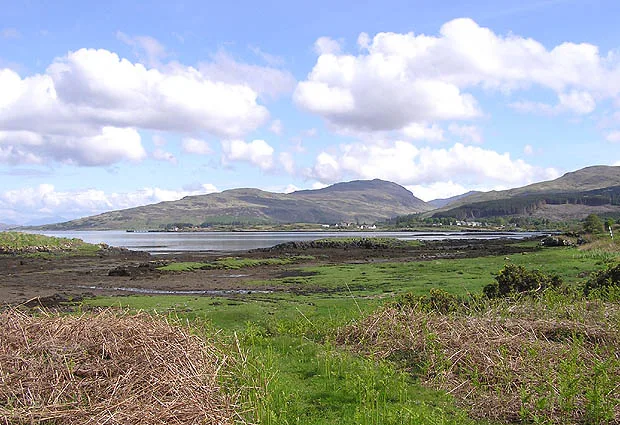 📷 5
📷 5Mountains & hills · Scottish Lowlands
Aros Bay
Aros Bay — bay on Islay, Argyll and Bute, Scotland, UK.
 📷 3
📷 3Mountains & hills · Scottish Lowlands
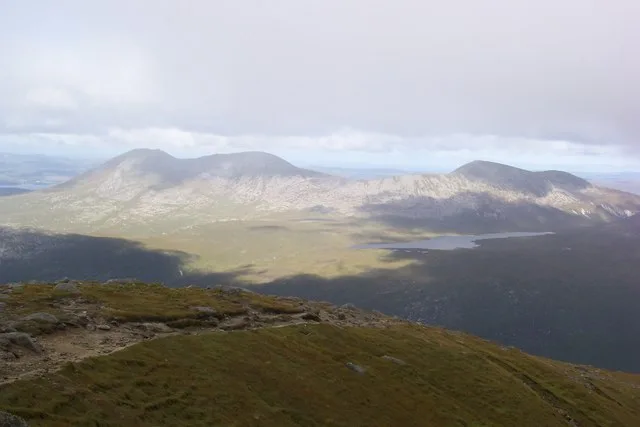
Beinn Bharrain
Beinn Bharrain — Named summit at 717 m.
 📷 5
📷 5Frequently asked questions
- Where is Rubers Law?
- Rubers Law is in the Scottish Lowlands, United Kingdom (postcode TD9 8PA).
- What is Rubers Law?
- Rubers Law — Named summit at 424 m.
- How do I get to Rubers Law?
- The nearest town is Denholm. Drivers can use postcode TD9 8PA.
- Is Rubers Law free to visit?
- Yes, Rubers Law is free to enter.
- How do I get to Rubers Law?
- Drivers can navigate to postcode TD9 8PA. It sits within the Berwickshire, Roxburgh and Selkirk parliamentary constituency.