
Memorials & monuments · London
Royal Artillery Memorial
In or near City of Westminster.
Royal Artillery Memorial — War memorial, dating to 1925.

Wikimedia Commons contributors — see linked file page for photographer and licence licence

Plan your visit
- Typical visit
- 15 min–45 min
- Nearest railway station
- Hyde Park Corner · 0.2 km
- Free entry
- Dog-friendly
- Wheelchair accessible
Getting there & planning your visit
The Royal Artillery Memorial is located in Westminster, London, with the nearest railway station being Hyde Park Corner, just 0.2 km away. Entry is free, and the site is wheelchair accessible. The postcode for navigation is SW1X 7TA.
About
Royal Artillery Memorial is a public memorial or monument in the United Kingdom. Records date its origin to 1925. OpenStreetMap heritage rating: 2/5. Address: London, SW1X 7TA. Wheelchair accessible (per OpenStreetMap). Wikidata describes it as: "War memorial, dating to 1925.". Coordinates: 51.5026°, -0.1520°.
Photo gallery
360° viewimagery from 2026
Imagery © Mapillary contributors, CC BY-SA 4.0
Heritage listing
The Royal Artillery Memorial is a First World War memorial located on Hyde Park Corner in London, England. Designed by Charles Sargeant Jagger, with architectural work by Lionel Pearson, and unveiled in 1925, the memorial commemorates the 49,076 soldiers from the Royal Artillery killed in the First World War. The static nature of the conflict, particularly on the Western Front, meant that artillery played a major role in the war, though physical reminders of the fighting were often avoided in the years after the war. The Royal Artillery War Commemoration Fund (RAWCF) was formed in 1918 to preside over the regiment's commemorations, aware of some dissatisfaction with memorials to previous wars.
From the Historic England List Entry under OGL v3.
From the Wikipedia article
The Royal Artillery Memorial is a First World War memorial located on Hyde Park Corner in London, England. Designed by Charles Sargeant Jagger, with architectural work by Lionel Pearson, and unveiled in 1925, the memorial commemorates the 49,076 soldiers from the Royal Artillery killed in the First World War. The static nature of the conflict, particularly on the Western Front, meant that artillery played a major role in the war, though physical reminders of the fighting were often avoided in the years after the war. The Royal Artillery War Commemoration Fund (RAWCF) was formed in 1918 to preside over the regiment's commemorations, aware of some dissatisfaction with memorials to previous wars. The RAWCF approached several eminent architects but its insistence on a visual representation of artillery meant that none was able to produce a satisfactory design. Thus they approached Jagger, himself an ex-soldier who had been wounded in the war. Jagger produced a design which was accepted in 1922, though he modified it several times before construction. The memorial consists of a cruciform base in Portland stone supporting a one-third over-lifesize sculpture of a howitzer (a type of artillery field gun), which Jagger based on a gun in the Imperial War Museum. At the end of each arm of the cross is a sculpture of a soldier—an officer at the front (south side), a shell carrier on the east side, a driver on the west side, and at the rear (north) a dead soldier. The sides of the base are decorated with relief sculptures showing wartime scenes. The realism of the memorial, with the depiction of the howitzer and the dead soldier, differed significantly from other First World War memorials, notably the influential Cenotaph, which used pure architectural forms and classical symbolism. The design was controversial when unveiled; some critics viewed the dead soldier as too graphic or felt that the howitzer did not lend itself to rendition in stone. Nonetheless, the memorial was…
Excerpt from Wikipedia under CC BY-SA 4.0. See the source article linked in Sources below.
Background
History
The First World War, which took place between 1914 and 1918, saw the extensive use of artillery, particularly on the Western Front. Technical advances, combined with the relatively static nature of trench warfare, made these guns a key element of the conflict: over half the casualties in the war were caused by artillery. Artillery guns and their crews were themselves targets, and 49,076 members of the Royal Artillery died during the conflict. In the years after the war, many former servicemen, including gunners, found the scale of the losses difficult to deal with, or felt that their trust in the political leadership that had led them into the war had been challenged. Visual reminders of…
Architecture
The Royal Artillery Memorial is located in what Malcolm Miles has termed the "leafy traffic island" of Hyde Park Corner in central London. It is one of several war memorials which dominate the roundabout and its surrounds; it is directly opposite the Wellington Arch while at the north end is another memorial to the Duke of Wellington in the form of an equestrian statue. Other memorials in the vicinity include the Machine Gun Corps Memorial, the Australian and New Zealand war memorials, and the Commonwealth Memorial Gates. The Royal Artillery Memorial is 43 feet long, 21 feet wide and 30 feet high (13 metres by 6 metres by 9 metres); the pedestal and the one-third over-lifesize replica of a…
Sourced from Wikipedia under CC BY-SA 4.0.
- Coordinates
- 51.5026, -0.1520
- District
- Westminster
- Parish
- Westminster, unparished area
- Postcode
- SW1X 7TA
- Parliamentary constituency
- Cities of London and Westminster
- Established
- 1925
- Nearest railway station
- Hyde Park Corner — 0.2 km
Sources
- osm: w185084284 (ODbL)
- wikipedia: Royal Artillery Memorial (CC BY-SA 4.0)
- commons: Royal Artillery Monument corner view.jpg (CC BY-SA 4.0)
Other places nearby

Wellington Monument
Memorials & monuments · 0.1 km

The Lanesborough
Hotels · 0.1 km

Australia War Memorial
Memorials & monuments · 0.1 km

Wellington Arch
Memorials & monuments · 0.1 km

Forecourt Railings, Piers And Gates To Apsley House
Piers · 0.1 km
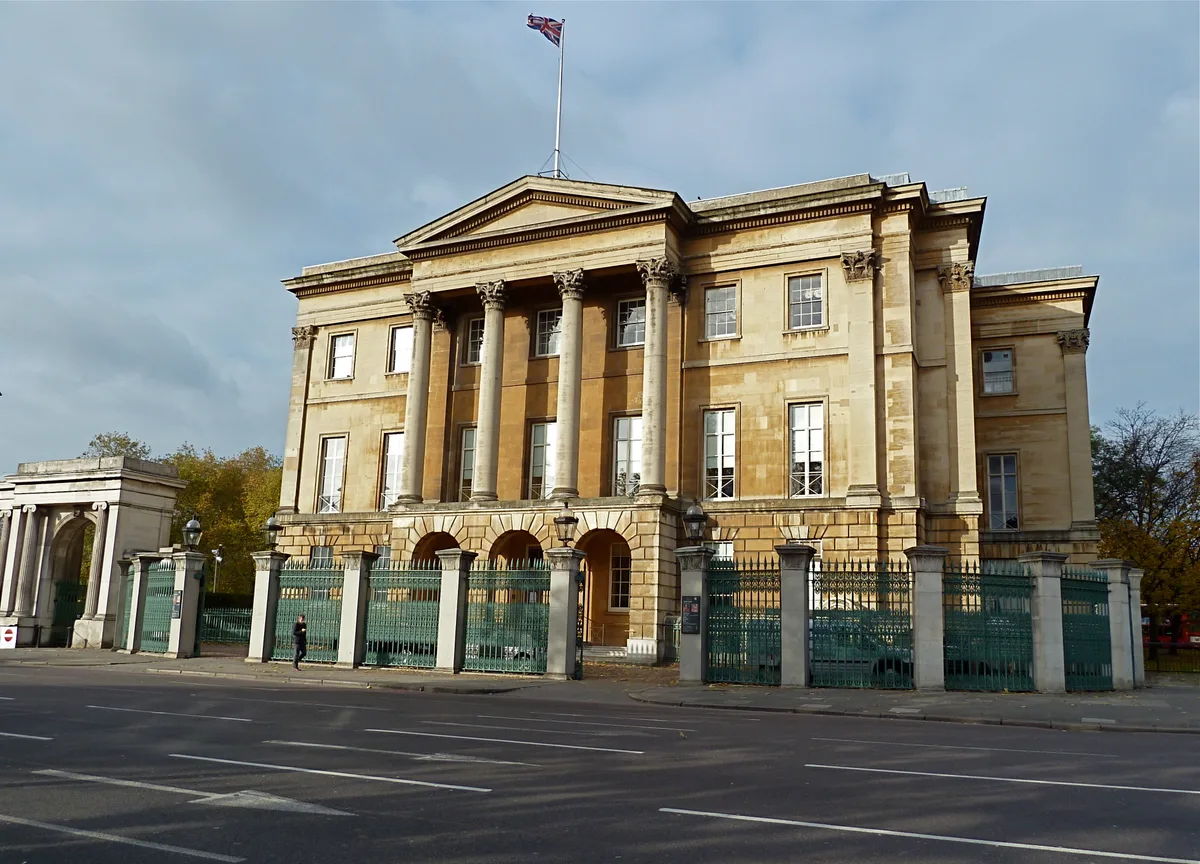
Apsley House
Galleries · 0.1 km

Machine Gun Corps Memorial
Memorials & monuments · 0.1 km

Napoleon as Mars the Peacemaker
Public art & sculpture · 0.1 km

New Zealand War Memorial
Memorials & monuments · 0.1 km

Forbes House
Historic houses · 0.2 km

Intercontinental London Park Lane
Hotels · 0.2 km

Lord Byron
Memorials & monuments · 0.2 km
Nearby
📷 5Memorials & monuments · London
Wellington Monument
Wellington Monument is a memorial in the United Kingdom.
📷 5📷 5Memorials & monuments · London
Australia War Memorial
Australia War Memorial — a memorial in england-london, United Kingdom.
📷 5📷 5Piers · London
Forecourt Railings, Piers And Gates To Apsley House
Forecourt Railings, Piers And Gates To Apsley House — a Grade I-listed pier in england-london, United Kingdom.
📷 5Galleries · London
Apsley House
Apsley House — London townhouse of the Dukes of Wellington.
Where to eat & stay near Royal Artillery Memorial
Places to stay
📷 5📷 7Hotels · London
Intercontinental London Park Lane
Intercontinental London Park Lane — a hotel in england london. 5-star. Brand: InterContinental.
 📷 5
📷 5 📷 5
📷 5Hotels · London
Four Seasons Hotel, Park Lane
Four Seasons Hotel, Park Lane — a hotel in england london. 5-star. Brand: Four Seasons.
 📷 5
📷 5 📷 5
📷 5Places to eat & drink
 📷 5
📷 5Historic pubs · London
The Grenadier
The Grenadier in England London, United Kingdom.
 📷 5
📷 5Restaurants · London
Galvin at Windows
Galvin at Windows — a restaurant in england london. Cuisine: french;fine dining.
 📷 5
📷 5 📷 5
📷 5 📷 5
📷 5 📷 5
📷 5Restaurants · London
Alain Ducasse at The Dorchester
Alain Ducasse at The Dorchester — a restaurant in england london.
Other memorials from this era
.jpg?width=1200) 📷 5
📷 5Memorials & monuments · London
1st Surrey Rifles War Memorial
1st Surrey Rifles War Memorial is a memorial in the United Kingdom.
 📷 5
📷 5Memorials & monuments · London
24th East Surrey Division War Memorial
24th East Surrey Division War Memorial is a memorial in the United Kingdom.
.jpg?width=1200) 📷 5
📷 5Memorials & monuments · London
Alan Brooke, 1st Viscount Alanbrooke
Alan Brooke, 1st Viscount Alanbrooke is a memorial in the United Kingdom.
 📷 5
📷 5Memorials & monuments · London
All Saints Fulham war memorial
All Saints Fulham war memorial is a memorial in the United Kingdom.
More memorials in this region
 📷 5
📷 5Memorials & monuments · London
Abney Park Cemetery CWGC Cross
Abney Park Cemetery CWGC Cross is a memorial in the United Kingdom.
 📷 5
📷 5Memorials & monuments · London
Admiral Sir John Franklin
Admiral Sir John Franklin is a memorial in the United Kingdom.
 📷 5
📷 5Memorials & monuments · London
Albert Edward McKenzie
Albert Edward McKenzie is a memorial in the United Kingdom.
 📷 5
📷 5Memorials & monuments · London
Animals in War
Animals in War is a memorial in the United Kingdom.
Frequently asked questions
- Where is Royal Artillery Memorial?
- Royal Artillery Memorial is in London, United Kingdom (postcode SW1X 7TA), in the parish of Westminster, unparished area.
- What is Royal Artillery Memorial?
- Royal Artillery Memorial — War memorial, dating to 1925.
- How do I get to Royal Artillery Memorial?
- The nearest railway station is Hyde Park Corner, about 0.2 km away. The nearest town is City of Westminster. Drivers can use postcode SW1X 7TA.
- When was Royal Artillery Memorial built?
- Built or established in 1925.
- Is Royal Artillery Memorial a listed building?
- Royal Artillery Memorial is officially recognised as Grade I listed building listed.
- Is Royal Artillery Memorial free to visit?
- Yes, Royal Artillery Memorial is free to enter.
- How do I get to Royal Artillery Memorial?
- The nearest railway station is Hyde Park Corner, about 0.2 km away. Drivers can navigate to postcode SW1X 7TA.