
Historic bridges · London
Richmond Railway Bridge
In or near Thames Ditton.
Richmond Railway Bridge — a Grade II-listed bridge in england-london, United Kingdom.

Martin Addison — CC BY-SA 2.0 via Wikimedia Commons licence

Plan your visit
- Typical visit
- 15 min–30 min
- Nearest railway station
- St Margarets · 0.7 km
- Free entry
- Dog-friendly
Getting there & planning your visit
To visit Richmond Railway Bridge, the nearest railway station is St Margarets, located 0.7 km away. The postcode for the area is TW1 2DB. Entry to the bridge is free.
About
Richmond Railway Bridge is a Grade II-listed building in england-london, United Kingdom. Grade II status is conferred by Historic England (or Cadw, Historic Environment Scotland or NIEA equivalents) on buildings of exceptional national interest. See the linked Wikipedia article for full historical and architectural details.
Photo gallery
360° view
Imagery © Mapillary contributors, CC BY-SA 4.0
Official information
Richmond Railway Bridge is a historic bridge located on the Thames, offering scenic views and a connection between Richmond and Hampton Court Palace. Visitors can enjoy boat trips along the river, with various vessels available for private hire or public cruises.
From the Wikipedia article
Richmond Railway Bridge in Richmond, Greater London, crosses the River Thames immediately upstream of Twickenham Bridge. It carries National Rail services operated by South Western Railway (SWR) on the Waterloo to Reading Line, and lies between Richmond and St Margarets stations. The bridge was amongst the first railway crossings of the Thames. The first Richmond Railway Bridge was built by the contractor Thomas Brassey and designed by the civil engineers Joseph Locke and J. E. Errington on behalf of the London and South Western Railway (L&SWR). Opened during 1848, it was originally known as the Richmond Windsor and Staines Railway Bridge. Due to concerns over the bridge's use of cast iron in its construction, it was rebuilt during the 1900s, the principal change being the substitution of iron elements for steel counterparts. This second bridge, which heavily reused elements of the original, was designed by the L&SWR's then-chief engineer, John Wykeham Jacomb-Hood, and constructed by the Horseley Bridge Company between 1906 and 1908. The second bridge is visually similar to the earlier structure, retaining much of its aesthetics and original features despite subsequent refurbishment and maintenance programmes, including the replacement of its decking and girders during the 1980s. Since 2008, both the bridge itself and its brick approach viaduct have been Grade II listed structures, protecting them from unsympathetic alterations.
Excerpt from Wikipedia under CC BY-SA 4.0. See the source article linked in Sources below.
Background
History
Shortly after the arrival of the London and South Western Railway (L&SWR) at Richmond station in 1846, ambitions to extend the line through to Windsor, facilitating a direct connection between Clapham Junction, Richmond and Waterloo, would be put into action. In accompaniment to the bridge itself, a sizable arched brick viaduct crossing Richmond's Old Deer Park, was built for the bridge's eastern approach. This viaduct features ornamentation and decorative features, which was inserted into the design at the insistence of the Crown commissioners of the park. This new design was sympathetic to the original bridge's design, with the distinctive open spandrels having been intentionally…
Sourced from Wikipedia under CC BY-SA 4.0.
- Coordinates
- 51.4600, -0.3136
- District
- Richmond upon Thames
- Parish
- Richmond upon Thames, unparished area
- Postcode
- TW1 2DB
- Parliamentary constituency
- Twickenham
- Phone
- 0208 546 2434
- Nearest railway station
- St Margarets — 0.7 km
- Opening
- 1848; rebuilt 1908
Sources
- wikidata: Q2151220 (CC0)
- wikipedia: Richmond Railway Bridge (CC BY-SA 4.0)
Other places nearby

Twickenham Bridge
Historic bridges · 0.1 km

Asgill House
Historic houses · 0.1 km

Meridian Line Marker
Viewpoints · 0.1 km

Lilian
Maritime museums · 0.2 km
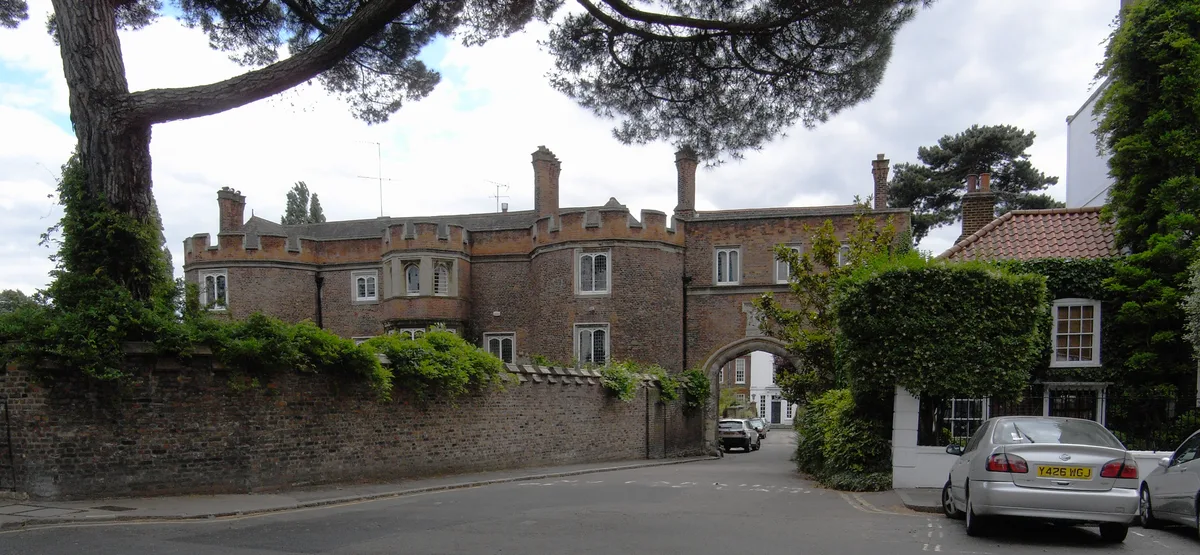
Richmond Palace
Palaces · 0.2 km

The Trumpeters' House
Historic houses · 0.3 km

The Wardrobe
Historic houses · 0.3 km

Richmond Theatre
Open-air theatres · 0.3 km

Richmond Lock and Footbridge
Canal locks · 0.4 km

Richmond St. Helena Pier
Marinas · 0.4 km

Turk Launches - St. Helena Pier
Piers · 0.4 km

White Cross
Historic houses · 0.4 km
Nearby
📷 5Historic bridges · London
Twickenham Bridge
Twickenham Bridge is a historic bridge in the United Kingdom.
📷 5📷 5Viewpoints · London
Meridian Line Marker
Meridian Line Marker is a viewpoint in the United Kingdom.
📷 5★ Iconic📷 5Palaces · London
Richmond Palace
Richmond Palace — former royal residence in London, England, UK.
📷 5Historic houses · London
The Trumpeters' House
The Trumpeters' House — Grade I listed house in Richmond, London.
Where to eat & stay near Richmond Railway Bridge
Places to stay
 📷 5
📷 5Hotels · London
Richmond Hill Hotel
Richmond Hill Hotel — a hotel in england london.
 📷 5
📷 5 📷 5
📷 5 📷 6
📷 6Hotels · London
Novotel London Brentford
Novotel London Brentford — a hotel in england london.
 📷 7
📷 7Hotels · London
Park Grand London Heathrow
Park Grand London Heathrow — a hotel in england london.
 📷 5
📷 5Places to eat & drink
📷 5Historic pubs · London
White Cross
White Cross in England London, United Kingdom.
 📷 5
📷 5 📷 7
📷 7 📷 7
📷 7 📷 7📷 5
More bridges in this region
 📷 5
📷 5 📷 5
📷 5Historic bridges · London
Albert Bridge
Albert Bridge is a historic bridge in the United Kingdom.
 📷 5
📷 5Historic bridges · London
Arnos Park Viaduct
Arnos Park Viaduct is a historic bridge in the United Kingdom.
 📷 5
📷 5Historic bridges · London
Barnes Bridge
Barnes Bridge is a historic bridge in the United Kingdom.
Frequently asked questions
- Where is Richmond Railway Bridge?
- Richmond Railway Bridge is in London, United Kingdom (postcode TW1 2DB), in the parish of Richmond upon Thames, unparished area.
- What is Richmond Railway Bridge?
- Richmond Railway Bridge — a Grade II-listed bridge in england-london, United Kingdom.
- How do I get to Richmond Railway Bridge?
- The nearest railway station is St Margarets, about 0.7 km away. The nearest town is Thames Ditton. Drivers can use postcode TW1 2DB.
- Is Richmond Railway Bridge a listed building?
- Richmond Railway Bridge is officially recognised as Grade II listed.
- Is Richmond Railway Bridge free to visit?
- Yes, Richmond Railway Bridge is free to enter.
- How do I get to Richmond Railway Bridge?
- The nearest railway station is St Margarets, about 0.7 km away. Drivers can navigate to postcode TW1 2DB.