
Public art & sculpture · London
Richard Coeur de Lion
In or near City of Westminster.
Richard Coeur de Lion in England London, United Kingdom.

George Evans — CC BY-SA 2.0 via Wikimedia Commons licence

Plan your visit
- Typical visit
- 1 h–2 h
- Nearest railway station
- Westminster · 0.2 km
- Free entry
- Dog-friendly
Getting there & planning your visit
You can visit the Richard Coeur de Lion public art located in Westminster, London, with the nearest railway station being Westminster, just 0.2 km away. Entry is free, and the postcode for sat-nav is SW1P 3JY.
About
Richard Coeur de Lion is a public sculpture in England London, United Kingdom, dating from 1856. Britain's public art ranges from Henry Moore reclining figures and Anthony Gormley installations to the Angel of the North and the surviving statues of empire.
Photo gallery
From the Wikipedia article
Richard Coeur de Lion is a Grade II listed equestrian statue of the 12th-century English monarch Richard I, also known as Richard the Lionheart, who reigned from 1189 to 1199. It stands on a granite pedestal in Old Palace Yard outside the Palace of Westminster in London, facing south towards the entrance to the House of Lords. It was created by Baron Carlo Marochetti, an Italian sculptor whose works were popular with European royalty and the nobility, though often less well regarded by critics and the artistic establishment. The statue was first produced in clay and displayed at The Great Exhibition in 1851, where it was located outside the west entrance to the Crystal Palace. It was well received at the time and two years later Queen Victoria and Prince Albert headed a list of illustrious subscribers to a fund that aimed to raise money for the casting of the statue in bronze. Although the money was duly raised and the bronze cast of the statue was finally completed in 1856, a lengthy dispute delayed its installation for several years. The original idea had been to erect the statue as a memorial to the Great Exhibition. This prompted opposition, as did proposals to place it outside Charles Barry's newly completed Palace of Westminster. Various other locations to display the statue were initially considered before agreement was reached that it would be placed in Old Palace Yard, Marochetti's preferred location. It was installed in October 1860, though it was not until March 1867 that it was finally completed with the addition of bronze bas-reliefs on either side of the pedestal. The quality of the statue's workmanship caused problems during its first half-century; the horse's tail fell off the day after it was installed at the Great Exhibition, and forty years after its installation it was discovered to be riddled with holes and to have never been properly attached to its pedestal. It narrowly escaped destruction during the Second World War when a German bomb…
Excerpt from Wikipedia under CC BY-SA 4.0. See the source article linked in Sources below.
Background
Description
The statue was created by Baron Carlo Marochetti and is located in Old Palace Yard outside the Palace of Westminster, opposite Westminster Abbey in London. With its pedestal, it stands 9 m high, showing King Richard I on horseback. The king is depicted wearing a crowned helmet and a chainmail shirt with a surcoat, and lifting a sword into the air. The horse paws the ground, as if preparing for a charge into battle. Marochetti described his work as being inspired by Richard I rather than accurately depicting a 12th-century knight.
Sourced from Wikipedia under CC BY-SA 4.0.
- Coordinates
- 51.4992, -0.1256
- District
- Westminster
- Parish
- Westminster, unparished area
- Postcode
- SW1P 3JY
- Parliamentary constituency
- Cities of London and Westminster
- Established
- 1856
- Nearest railway station
- Westminster — 0.2 km
Sources
- wikidata: Q7324819 (CC0)
- wikipedia: Richard Coeur de Lion (statue) (CC BY-SA 4.0)
Other places nearby

Richard the Lionheart
Cathedrals · 0.0 km

St Stephen's Chapel
Chapels · 0.0 km
_(14591271170).jpg?width=1200)
St Mary Undercroft
Chapels · 0.0 km
.jpg?width=1200)
George V
Cathedrals · 0.1 km

Houses of Parliament
Palaces · 0.1 km

Parliament of the United Kingdom
Other places · 0.1 km

Henry VII Chapel
Chapels · 0.1 km

Palace of Westminster
Castles · 0.1 km

Oliver Cromwell
Cathedrals · 0.1 km

Westminster Hall
Gardens · 0.1 km

Statue of Winston Churchill
Public art & sculpture · 0.1 km
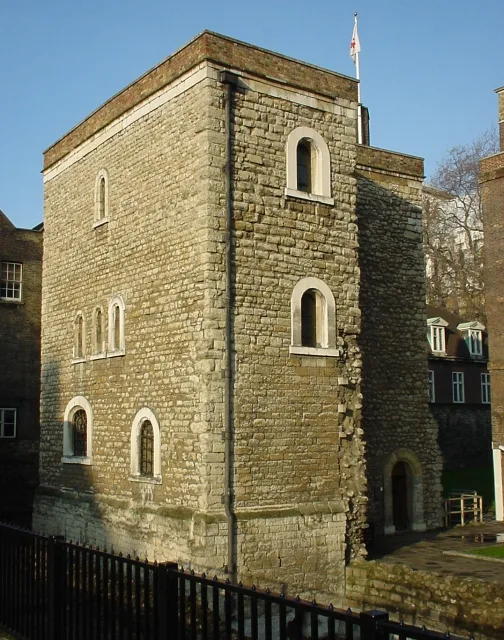
Jewel Tower
Museums · 0.1 km
Nearby
📷 5📷 5Chapels · London
St Stephen's Chapel
St Stephen's Chapel — chapel in the old Palace of Westminster, London, England, destroyed 1834.
📷 5📷 5★ Iconic📷 10Palaces · London
Houses of Parliament
Charles Barry's Gothic Revival meeting place of the UK Parliament.
📷 5Other places · London
Parliament of the United Kingdom
Parliament of the United Kingdom — a other in england-london, United Kingdom.
Where to eat & stay near Richard Coeur de Lion
Places to stay
 📷 5
📷 5Hotels · London
Conrad London St. James
Conrad London St. James — a hotel in england london.
 📷 5
📷 5Hotels · London
London Marriott Hotel County Hall
London Marriott Hotel County Hall — a hotel in england london.
 📷 7
📷 7Hotels · London
Park Plaza Westminster Bridge
Park Plaza Westminster Bridge — a hotel in england london.
 📷 5
📷 5Hotels · London
Hotel Riu Plaza London The Westminster
Hotel Riu Plaza London The Westminster — a hotel in england london. 4-star. Brand: RIU.
 📷 5
📷 5Hotels · London
Novotel London Waterloo
Novotel London Waterloo — a hotel in england london.
 📷 5
📷 5Hotels · London
Park Plaza County Hall London
Park Plaza County Hall London — a hotel in england london.
Places to eat & drink
 📷 7
📷 7Historic pubs · London
The Tattershall Castle
The Tattershall Castle — Historic pub — listed building or notable heritage status.
 📷 5
📷 5 📷 5
📷 5Cafés · London
Regency Cafe
Regency Cafe — a café in england london. Cuisine: fish and chips;tea;breakfast;local.
 📷 5
📷 5 📷 7
📷 7.jpg?width=1200) 📷 7
📷 7Historic pubs · London
Morpeth Arms
Morpeth Arms — Historic pub — listed building or notable heritage status.
More places in this region
 📷 5
📷 5 📷 5
📷 5Public art & sculpture · London
A Conversation with Oscar Wilde
A Conversation with Oscar Wilde — Public artwork (sculpture).
 📷 5
📷 5Public art & sculpture · London
A Sculpture for Mary Wollstonecraft
A Sculpture for Mary Wollstonecraft — Public artwork (sculpture) by Maggi Hambling.
 📷 5
📷 5Public art & sculpture · London
A Slice of Reality
A Slice of Reality — Public artwork (installation) by Richard Wilson.
Frequently asked questions
- Where is Richard Coeur de Lion?
- Richard Coeur de Lion is in London, United Kingdom (postcode SW1P 3JY), in the parish of Westminster, unparished area.
- What is Richard Coeur de Lion?
- Richard Coeur de Lion in England London, United Kingdom.
- How do I get to Richard Coeur de Lion?
- The nearest railway station is Westminster, about 0.2 km away. The nearest town is City of Westminster. Drivers can use postcode SW1P 3JY.
- When was Richard Coeur de Lion built?
- Built or established in 1856.
- Is Richard Coeur de Lion free to visit?
- Yes, Richard Coeur de Lion is free to enter.
- How do I get to Richard Coeur de Lion?
- The nearest railway station is Westminster, about 0.2 km away. Drivers can navigate to postcode SW1P 3JY.