
Harbours & ports · Yorkshire & the Humber
Port of Grimsby
In or near Old Clee.
Port of Grimsby — Port in United Kingdom.

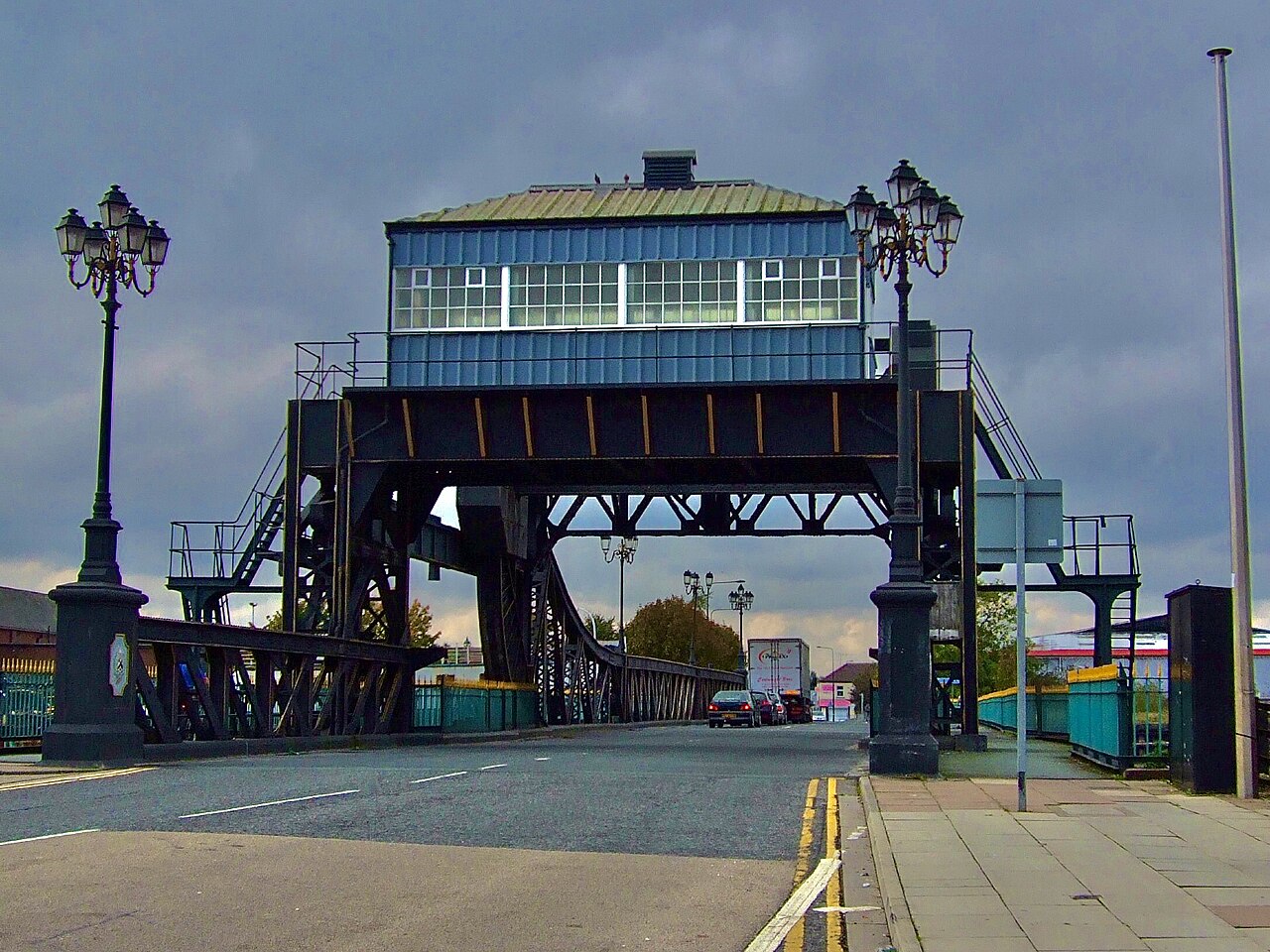
Wikimedia Commons contributors — see linked file page for photographer and licence licence

Plan your visit
- Typical visit
- 45 min–1.5 h
- Nearest railway station
- Grimsby Docks · 0.4 km
- Free entry
- Family-friendly
- Dog-friendly
Getting there & planning your visit
To visit the Port of Grimsby, the nearest railway station is Grimsby Docks, located 0.4 km away. The postcode for your sat-nav is DN31 3LL. Entry details regarding accessibility are not provided.
About
Port of Grimsby is a harbour in the United Kingdom. Wikidata describes it as: "Port in United Kingdom". Coordinates: 53.5778°, -0.0743°.
Photo gallery
Official information
The Port of Grimsby is a significant operational port in the UK, providing facilities for various maritime activities. Visitors can observe the bustling operations and maintenance activities that take place at the port.
Protected designations
- Site of Special Scientific Interest: Humber Estuary - 2000480 SSSI
- Ramsar wetland: Humber Estuary
Designations sourced from Natural England open data under OGL v3.
From the Wikipedia article
The Port of Grimsby is located on the south bank of the Humber Estuary at Grimsby in North East Lincolnshire. Sea trade out of Grimsby dates to at least the medieval period. The Grimsby Haven Company began dock development in the late 1700s, and the port was further developed from the 1840s onwards by the Manchester, Sheffield and Lincolnshire Railway (MSLR) and its successors. The port has had three main dock systems: The earliest dock, or Old Dock was developed in the 1790s, downriver from the medieval Haven, on the outfall of the same water course; in around 1880 it was expanded westwards, and renamed Alexandra Dock, being connected to the Royal Dock system by a short canal, named the Union Dock. From the 1880s the dock's focus was coal, later timber. From the 1970s onwards the dock has been used for large-scale car importation. The Royal Dock was developed from the 1840s onwards, contemporary with the arrival of the railway – it was built on a large area of land reclaimed from the Humber Estuary north-east of the original town and harbour. The dock's trade has included a wide variety of goods including coal, timber and general merchandise. The third dock system is the Fish docks, all of which exit(ed) from the same lock(s) onto the Humber close to and east of the Royal Dock lock. The first fish dock ("No.1") was built 1857, and expanded southward in 1878 with the addition of a second ("No.2"); both were built within the land reclaimed as part of the Royal Dock development. In 1934 a third fish ("No.3") dock substantially expanded the No.1 dock, and reclaimed additional land from the Humber. The Fish docks and nearby estate were devoted to the landing of fish, and maintenance, supply and repair of the Grimsby fishing fleet, which grew into one of the largest in Britain. The fishing industry collapsed in the 1970s due to outside factors. The Grimsby Haven Company was re-incorporated as the Grimsby Dock Company, which amalgamated in 1846 with several railway…
Excerpt from Wikipedia under CC BY-SA 4.0. See the source article linked in Sources below.
Background
History
James Rendel was requested to draw up plans for new docks in 1843. His design placed docks on the extensive mudflats between high and low water north of the town – as planned 132 acres were to be enclosed or reclaimed, of which 27 acres would be water within the docks, with 20 acre for wharfage, and 85 acre of land for other buildings. The main dock was to be connected to the Humber by a basin of 11 acre bounded by piers of open construction to the east and west each of approximately 600 ft. The dock's entrance was to have two locks, one large and one small, Rendel also proposed a canal connecting the old and new docks, both for ships and to supply the new docks with fresh water. Part of…
Architecture
17 April 1849 Albert, Prince Consort laid the first stone of the dock, an 11-ton stone forming part of the structure of the lock gates. The enclosed area had been drained by two 35 hp pumps – on a number of occasions fresh water springs were encountered, which were managed by enclosing the spring in a cast-iron pipe, and by surrounding the area with chalkstone. Two main locks were constructed, adjacent to one another, of 300 by and 200 by with the bases 6 and below low water respectively. The lock's foundations were excavated to 8 ft below the bottom of the locks, supported on wooden piles 1 by square by long, and a bed of concrete. The lock pit invert and supports for the lock gates were…
Description
| repeal_date = 1 August 1849 | amendments = | repealing_legislation = Manchester, Sheffield and Lincolnshire Railway Act 1849 | related_legislation = | status = Repealed | original_text = https://books.google.co.uk/books?id=OPkIekjA89oC&pg=PA809 | collapsed = yes }} Plans to re-engineer the haven and create a new dock were put forward from the late 1800s. Pickernell produced a plan for a dock in 1787. It was not until the (36 Geo. 3. c. 98) was enacted, creating the Grimsby Haven company. The act noted that the River ('Haven') at Grimsby was warped (silted) up, preventing most ships docking transferring cargo subject to the state of the tides, and so, suggested widening, deepening, and…
Sourced from Wikipedia under CC BY-SA 4.0.
- Coordinates
- 53.5778, -0.0743
- District
- North East Lincolnshire
- Parish
- North East Lincolnshire, unparished area
- Postcode
- DN31 3LL
- Parliamentary constituency
- Great Grimsby and Cleethorpes
- Nearest railway station
- Grimsby Docks — 0.4 km
- Official site
- www.portofgrimsby.com
Sources
- wikidata: Q16969848 (CC0)
- wikipedia: Port of Grimsby (CC BY-SA 4.0)
- commons: Grimsby Dock Tower From Ross House - geograph.org.uk - 716947.jpg (CC BY-SA 4.0)
Other places nearby

Caxton Theatre
Theatres · 0.4 km

Grimsby Dock Tower
Historic houses · 0.6 km
Hydraulic Accumulator Tower To West Of The Dock Tower
Memorials & monuments · 0.7 km

Freeman Street Market
Farmers’ markets · 0.7 km

Grimsby Central Hall
Theatres · 0.8 km

Alexandra Dock
Historic houses · 0.8 km
Grimsby Castle
Literary houses · 0.9 km

Corporation Bridge
Historic bridges · 1.0 km

Special Educational Needs Support Service (Senss)
Natural landmarks · 1.0 km

Ross Tiger
Maritime museums · 1.1 km
Sir Moses Montefiore Synagogue
Historic churches · 1.1 km
St Mary's Church, Grimsby
Historic churches · 1.1 km
Nearby
📷 3Theatres · Yorkshire & the Humber
Caxton Theatre
Caxton Theatre is a theatre in the United Kingdom.
📷 5Historic houses · Yorkshire & the Humber
Grimsby Dock Tower
Grimsby Dock Tower — a Grade I-listed historic house in england-yorkshire, United Kingdom.
📷 3Memorials & monuments · Yorkshire & the Humber
Hydraulic Accumulator Tower To West Of The Dock Tower
Hydraulic Accumulator Tower To West Of The Dock Tower — Grade II* listed building-listed memorial in england-yorkshire, United Kingdom.
📷 5Farmers’ markets · Yorkshire & the Humber
Freeman Street Market
Freeman Street Market — a UK farmers' market in england yorkshire.
📷 3Theatres · Yorkshire & the Humber
Grimsby Central Hall
Grimsby Central Hall is a theatre in the United Kingdom.
📷 3Historic houses · Yorkshire & the Humber
Alexandra Dock
Alexandra Dock — a historic house in england-yorkshire, United Kingdom.
Where to eat & stay near Port of Grimsby
Places to stay
 📷 6
📷 6Hotels · Yorkshire & the Humber
Humber Royal Hotel
Humber Royal Hotel — a hotel in england yorkshire.
 📷 5
📷 5Hotels · Yorkshire & the Humber
Dovedale Hotel
Dovedale Hotel — a hotel in england yorkshire.
 📷 5
📷 5Hotels · Yorkshire & the Humber
Burlington Hotel
Burlington Hotel — a hotel in england yorkshire.
📷 5Hotels · Yorkshire & the Humber
Mallow View Hotel
Mallow View Hotel — a hotel in england yorkshire.
 📷 5
📷 5Hotels · Yorkshire & the Humber
The Kingsway Hotel
The Kingsway Hotel — a hotel in england yorkshire.
 📷 5
📷 5Campsites · East Midlands
Cleethorpes Showground Caravan Park (Camping)
Cleethorpes Showground Caravan Park (Camping) — a campsite in england yorkshire.
Places to eat & drink
 📷 3
📷 3Historic pubs · Yorkshire & the Humber
Tivoli Tavern
Tivoli Tavern — Historic pub — listed building or notable heritage status.
 📷 5
📷 5Historic pubs · East Midlands
The Signal Box Inn
The Signal Box Inn in England East Midlands, United Kingdom.
 📷 5
📷 5More places in this region
 📷 5
📷 5Harbours & ports · Yorkshire & the Humber
North Killingholme Haven
North Killingholme Haven — harbour in Lincolnshire, England, UK.
 📷 5
📷 5Harbours & ports · Yorkshire & the Humber
Port of Hull
Port of Hull — port in Kingston upon Hull, England.
.jpeg?width=1200) 📷 3
📷 3Harbours & ports · Yorkshire & the Humber
Port of Whitby
Port of Whitby — Port in North Yorkshire, England.
 📷 5
📷 5Harbours & ports · Yorkshire & the Humber
Scarborough Harbour
Scarborough Harbour — harbour in Scarborough, North Yorkshire, England.
Frequently asked questions
- Where is Port of Grimsby?
- Port of Grimsby is in Yorkshire, United Kingdom (postcode DN31 3LL), in the parish of North East Lincolnshire, unparished area.
- What is Port of Grimsby?
- Port of Grimsby — Port in United Kingdom.
- How do I get to Port of Grimsby?
- The nearest railway station is Grimsby Docks, about 0.4 km away. The nearest town is Old Clee. Drivers can use postcode DN31 3LL.
- Who owns Port of Grimsby?
- Port of Grimsby is owned by | type =.
- Is Port of Grimsby a protected site?
- Yes — Port of Grimsby is part of the Humber Estuary - 2000480 SSSI Site of Special Scientific Interest and the Humber Estuary Ramsar wetland.
- Is Port of Grimsby free to visit?
- Yes, Port of Grimsby is free to enter.
- How do I get to Port of Grimsby?
- The nearest railway station is Grimsby Docks, about 0.4 km away. Drivers can navigate to postcode DN31 3LL.