
Public art & sculpture · South East England
Patcham Pylons
In or near Hangleton.
Patcham Pylons in England South East, United Kingdom.

Dave Spicer — CC BY-SA 2.0 via Wikimedia Commons licence

Plan your visit
- Typical visit
- 1 h–2 h
- Nearest railway station
- Preston Park · 3.9 km
- Free entry
- Dog-friendly
Getting there & planning your visit
To visit Patcham Pylons, the nearest railway station is Preston Park, located 3.9 km away. The postcode for sat-nav is BN45 7FH. Entry is free.
About
Patcham Pylons is a public sculpture in England South East, United Kingdom. Britain's public art ranges from Henry Moore reclining figures and Anthony Gormley installations to the Angel of the North and the surviving statues of empire.
Photo gallery
360° viewimagery from 2026
Imagery © Mapillary contributors, CC BY-SA 4.0
Protected designations
- Area of Outstanding Natural Beauty: High Weald
Designations sourced from Natural England open data under OGL v3.
From the Wikipedia article
The Patcham Pylons are a monumental gateway erected in 1928 near Patcham in East Sussex, England. Designed by local architect John Leopold Denman and paid for by public subscription, they commemorated the extension of the County Borough of Brighton on 1 April 1928, and stood close to the new northern boundary. The gateway consists of two stone towers known locally as "the Pylons", with built-in seats around their bases. They still stand and are clearly visible to travellers on either carriageway of the A23 road to London. They straddle the southbound carriageway of the A23 just inside the city of Brighton and Hove and are individually listed at Grade II along with the benches that were rebuilt in 1992.
Excerpt from Wikipedia under CC BY-SA 4.0. See the source article linked in Sources below.
Background
History
The pylons were built as a symbolic gateway to Brighton and was intended to extend a welcome to travellers approaching from the north along the A23. They were commissioned by Sir Herbert Carden, a local councillor, and were unveiled on 30 May 1928. He paid £2,255 towards them, and the public raised a further £993. They stand either side of what was, at the time of construction, a single carriageway road. Because the road is now a dual carriageway, one pylon now "stands forlornly in the central reservation, although a third was planned". In the spirit of welcome, the north face of the western tower bears the inscription: The pylons and seats were listed at Grade II by English Heritage on 26…
Architecture
The pylons are of limestone with slightly concave north and south faces. Small buttresses protrude at the corners. Carvings and inscriptions include the coat of arms of the Duke and Duchess of York, who laid the foundation stone, the emblems of Brighton and Sussex, a female figure and a galleon. Details of the date, architect, builders, founders and other descriptive information, and a short poem, are also carved on the flat panels which are mounted on the concave faces. Next to each pylon is a seat, also made of stone and wrapping around but not touching the base. They are about 3+1/2 ft off the ground, supported on small columns, and have decorative moulding. They are separately listed as…
Sourced from Wikipedia under CC BY-SA 4.0.
- Coordinates
- 50.8806, -0.1653
- County
- West Sussex
- District
- Mid Sussex
- Parish
- Pyecombe
- Postcode
- BN45 7FH
- Parliamentary constituency
- Mid Sussex
- Established
- 1928
- Nearest railway station
- Preston Park — 3.9 km
Sources
- wikidata: Q7144345 (CC0)
- wikipedia: Patcham Pylons (CC BY-SA 4.0)
Other places nearby
West Pylon
Memorials & monuments · 0.0 km
East Pylon
Memorials & monuments · 0.0 km

Sweet Hill
Mountains & hills · 0.6 km

Sweethill Barn
Historic houses · 0.9 km

Varncombe Hill
Mountains & hills · 1.0 km

Holt Hill
Mountains & hills · 1.1 km

The Chattri
Memorials & monuments · 1.3 km

Chattri
Memorials & monuments · 1.3 km

West Hill
Mountains & hills · 1.7 km
West Hill
Mountains & hills · 1.7 km
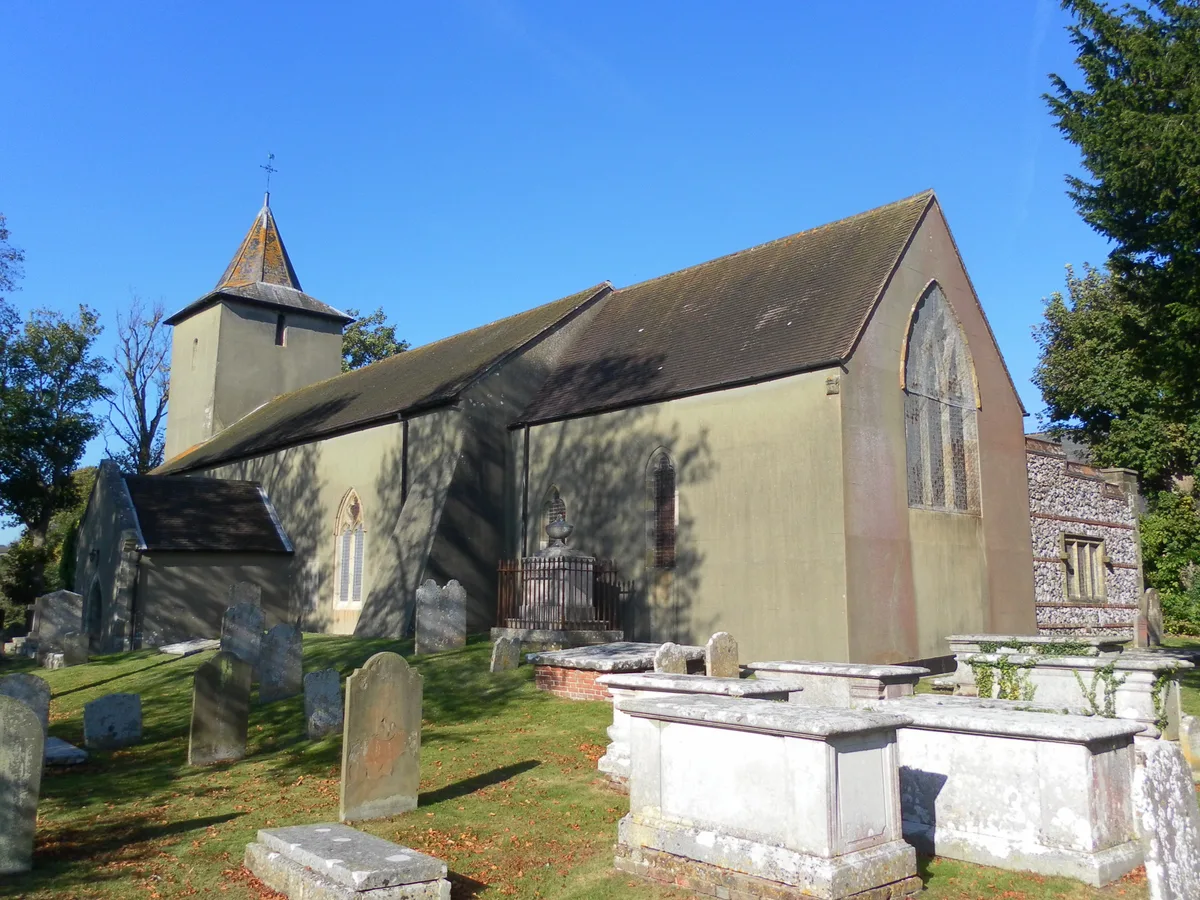
All Saints Church, Patcham
Historic churches · 1.9 km

Coney Hill
Mountains & hills · 1.9 km
Nearby
📷 5Memorials & monuments · South East England
West Pylon
West Pylon — Grade II listed building-listed memorial in england-south-east, United Kingdom.
📷 5Memorials & monuments · South East England
East Pylon
East Pylon — Grade II listed building-listed memorial in england-south-east, United Kingdom.
📷 5Mountains & hills · South East England
Sweet Hill
Sweet Hill — mountain in england south east. Elevation: 131 m.
📷 5Historic houses · South East England
Sweethill Barn
Sweethill Barn — a historic house in england-south-east, United Kingdom.
📷 5Mountains & hills · South East England
Varncombe Hill
Varncombe Hill — mountain in england south east. Elevation: 156 m.
📷 5Mountains & hills · South East England
Holt Hill
Holt Hill — mountain in england south east. Elevation: 177 m.
Where to eat & stay near Patcham Pylons
Places to stay
 📷 5
📷 5Campsites · South East England
Saddlescombe Campsite
Saddlescombe Campsite — a campsite in england south east.
 📷 5
📷 5 📷 5
📷 5Campsites · South East England
Southdown Way Caravan & Camping Park
Southdown Way Caravan & Camping Park — a campsite in england south east.
 📷 5
📷 5Hotels · South East England
The Courtlands
The Courtlands — a hotel in england south east.
 📷 5
📷 5B&Bs · South East England
The Claremont
The Claremont — a bed-and-breakfast in england south east.
 📷 5
📷 5Hostels · South East England
Seadragons Backpackers
Seadragons Backpackers — a hostel in england south east.
Places to eat & drink
.jpg?width=1200) 📷 5
📷 5Historic pubs · South East England
Hangleton Manor
Hangleton Manor — Historic pub — listed building or notable heritage status.
 📷 5
📷 5Historic pubs · South East England
The Stags Head Public House
The Stags Head Public House in England South East, United Kingdom.
 📷 5
📷 5Cafés · South East England
Cowley Club Café
Cowley Club Café — a café in england south east.
 📷 5
📷 5Historic pubs · South East England
Kissing Coppers
Kissing Coppers — Public artwork (graffiti) by Banksy.
 📷 5
📷 5Historic pubs · South East England
Freemasons Tavern
Freemasons Tavern in England South East, United Kingdom.
 📷 5
📷 5Historic pubs · South East England
King and Queen, Brighton
King and Queen, Brighton in England South East, United Kingdom.
More places in this region
 📷 5
📷 5Public art & sculpture · South East England
The Jurors
The Jurors — Public artwork (installation) by Hew Locke.
 📷 5
📷 5Public art & sculpture · South East England
The Woking Martian
The Woking Martian — a public art in england-london, United Kingdom.
 📷 5
📷 5Public art & sculpture · South East England
The Golf Ball
The Golf Ball — a public art in england-london, United Kingdom.
 📷 5
📷 5Public art & sculpture · South East England
Memorial to Alan Turing
Memorial to Alan Turing — a public art in england-london, United Kingdom.
Frequently asked questions
- Where is Patcham Pylons?
- Patcham Pylons is in West Sussex, South-East England, United Kingdom (postcode BN45 7FH), in the parish of Pyecombe.
- What is Patcham Pylons?
- Patcham Pylons in England South East, United Kingdom.
- How do I get to Patcham Pylons?
- The nearest railway station is Preston Park, about 3.9 km away. The nearest town is Hangleton. Drivers can use postcode BN45 7FH.
- When was Patcham Pylons built?
- Built or established in 1928.
- Who owns Patcham Pylons?
- Patcham Pylons is owned by Brighton and Hove City Council.
- Is Patcham Pylons a protected site?
- Yes — Patcham Pylons is part of the High Weald National Landscape (AONB).
- Is Patcham Pylons free to visit?
- Yes, Patcham Pylons is free to enter.
- How do I get to Patcham Pylons?
- The nearest railway station is Preston Park, about 3.9 km away. Drivers can navigate to postcode BN45 7FH.