
Historic bridges · South Wales
Monmouth Viaduct
Also known as: Traphont Trefynwy
In or near Wyesham.
Monmouth Viaduct is a historic bridge in the United Kingdom.

Wikimedia Commons contributors — see linked file page for photographer and licence licence

Plan your visit
- Typical visit
- 15 min–30 min
- Nearest railway station
- Rookwood · 6.9 km
- Free entry
- Dog-friendly
Getting there & planning your visit
To visit Monmouth Viaduct, the nearest railway station is Rookwood, located 6.9 km away. The postcode for the viaduct is NP25 3LZ, which you can use for sat-nav. Entry to the viaduct is free.
About
Monmouth Viaduct is a named historic bridge in the United Kingdom. Records date its origin to 1861. Also known as: Traphont Trefynwy. Coordinates: 51.8044°, -2.7081°.
Photo gallery
Protected designations
- Site of Special Scientific Interest: River Wye SSSI
- Area of Outstanding Natural Beauty: Wye Valley
Designations sourced from Natural England open data under OGL v3.
From the Wikipedia article
The Monmouth Viaduct or Chippenham Meadow Viaduct is a 20-arch, 183-metre (600 ft) red sandstone viaduct, with two 23-metre (75 ft) steel lattice-girder spans over the river. It carried the Coleford, Monmouth, Usk & Pontypool Railway line across the River Wye at Monmouth, Wales. A further river crossing by the Ross and Monmouth Railway was later built nearby. The Coleford, Monmouth, Usk & Pontypool Railway was opened in 1857, running from Pontypool to Monmouth Troy. The single-track line was extended in 1861 to Wyesham Halt on the east side of the viaduct. The bridge which was originally planned to carry the line onwards to Coleford. However, the line terminated at Wyesham and was not extended to Coleford as the Great Western Railway and West Midland Railway did not pursue the extension. The bridge was not heavily used until 1876 when the Wye Valley Railway completed its line from Chepstow and south Wales. In 1883 the Coleford Railway was constructed from Wyesham Junction to Coleford but was closed as being uneconomical in 1916. The viaduct was originally planned to be constructed of wood, but the 1852 floods influenced the engineers to change to stone. The building of the viaduct took exactly ten months. It contains 9,000 cubic yards (6,900 m3) of masonry and 3,000 cubic yards (2,300 m3) of concrete. Two arches form the 20-metre (66 ft)-long eastern element of the structure. The bridge was designed by Christopher Firbank and built by Kennards of Crumlin. It was about 50 feet (15 m) above the water and lay on two 150-foot (46 m) girders resting on the stone arches. Large crowds assembled to watch the bridge being put into place in 1861. Only the stone parts of the viaduct remain extant.
Excerpt from Wikipedia under CC BY-SA 4.0. See the source article linked in Sources below.
- Coordinates
- 51.8044, -2.7081
- District
- Monmouthshire
- Parish
- Monmouth
- Postcode
- NP25 3LZ
- Parliamentary constituency
- Monmouthshire
- Established
- 1861
- Nearest railway station
- Rookwood — 6.9 km
- Opening
- | inaugurated = {{Start date|1861}}
Sources
- osm: w1106825259 (ODbL)
- wikipedia: Monmouth Viaduct (CC BY-SA 4.0)
- commons: Monmouth viaduct.jpg (CC BY-SA 4.0)
Other places nearby

Duke of Beaufort Bridge
Historic bridges · 0.2 km

Monnow Valley Walk
Military museums · 0.3 km

Monmouthshire Show
Other places · 0.5 km

Wyesham
Towns & cities · 0.6 km

Trothy Bridge
Historic bridges · 0.7 km

Wye Bridge, Monmouth
Historic bridges · 0.8 km
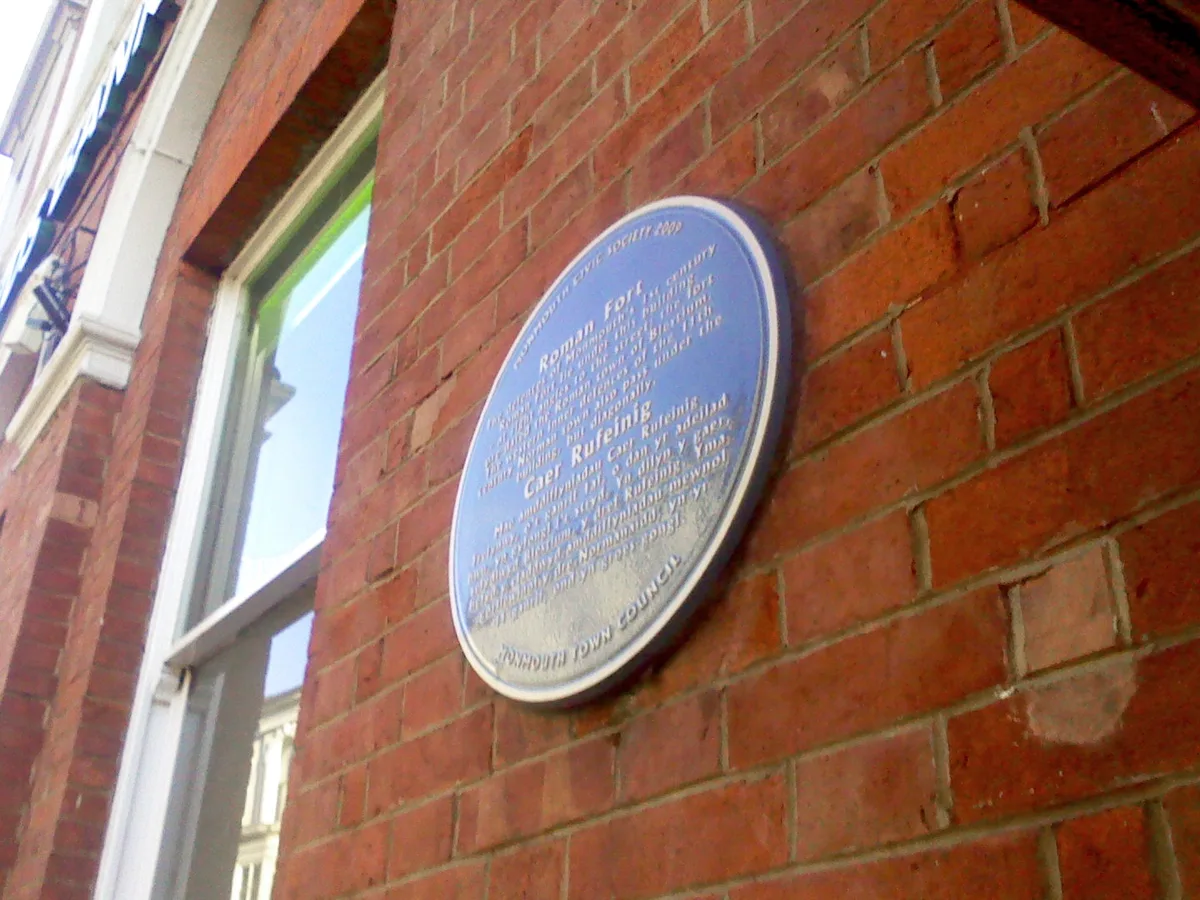
Blestium
Hill forts · 0.8 km

Druid's Head Inn
Historic pubs · 0.8 km

Haberdashers' Monmouth School
Natural landmarks · 0.8 km

Monmouth Police Station
Historic houses · 0.8 km

Blake Theatre
Theatres · 0.8 km

Blake Theatre
Open-air theatres · 0.8 km
Nearby
📷 3Historic bridges · South Wales
Duke of Beaufort Bridge
Duke of Beaufort Bridge is a historic bridge in the United Kingdom.
📷 5Military museums · South Wales
Monnow Valley Walk
Monnow Valley Walk — a military museum in wales south.
📷 5Other places · South Wales
Monmouthshire Show
The Monmouthshire Show is a one-day agricultural show in Wales, taking place annually in Monmouth on the 3rd Sunday in August. Historically it is the largest one-day agricultural show in Wales.
📷 5📷 5Historic bridges · South Wales
Trothy Bridge
Trothy Bridge — Grade II listed building-listed bridge in wales-south, United Kingdom.
📷 5Historic bridges · South Wales
Wye Bridge, Monmouth
Wye Bridge, Monmouth — a Grade II-listed bridge in wales-south, United Kingdom.
Where to eat & stay near Monmouth Viaduct
Places to stay
 📷 5
📷 5Hotels · South Wales
The Riverside Hotel
The Riverside Hotel — a hotel in wales south.
 📷 5
📷 5Campsites · South Wales
Monnow Bridge Caravan Site
Monnow Bridge Caravan Site — a campsite in wales south.
 📷 5
📷 5Campsites · South Wales
Glen Trothy C. & C. Park
Glen Trothy C. & C. Park — a campsite in wales south.
 📷 5
📷 5Campsites · South Wales
Broadstone Park Camping and Fishery
Broadstone Park Camping and Fishery — a campsite in wales south.
 📷 5
📷 5Campsites · South Wales
Biblins Youth Campsite
Biblins Youth Campsite — a campsite in wales south.
 📷 4
📷 4Campsites · South Wales
Highlands Camping and Caravan Site
Highlands Camping and Caravan Site — a campsite in wales south.
Places to eat & drink
📷 6 📷 6
📷 6Historic pubs · South Wales
Queens Head
Queens Head in Wales South, United Kingdom.
 📷 5
📷 5Historic pubs · South Wales
The Gatehouse
The Gatehouse in Wales South, United Kingdom.
 📷 5
📷 5 📷 5
📷 5 📷 5
📷 5Historic pubs · South Wales
The Green Dragon, Monmouth
The Green Dragon, Monmouth in Wales South, United Kingdom.
Other bridges from this era
 📷 5
📷 5Historic bridges · London
Blackfriars Bridge
Blackfriars Bridge is a historic bridge in the United Kingdom.
 📷 5
📷 5Historic bridges · London
Cannon Street Railway Bridge
Cannon Street Railway Bridge is a historic bridge in the United Kingdom.
_-_geograph.org.uk_-_1735445.jpg?width=1200) 📷 5
📷 5Historic bridges · London
Eynsford Viaduct
Eynsford Viaduct is a historic bridge in the United Kingdom.
 📷 5
📷 5Historic bridges · London
Hungerford Bridge
Hungerford Bridge is a historic bridge in the United Kingdom.
More bridges in this region
.jpg?width=1200) 📷 3
📷 3Historic bridges · South Wales
Afon Taff Viaduct
Afon Taff Viaduct is a historic bridge in the United Kingdom.
 📷 3
📷 3Historic bridges · South Wales
Avonmouth Bridge
Avonmouth Bridge is a historic bridge in the United Kingdom.
 📷 5
📷 5Historic bridges · South Wales
Biblins Bridge
Biblins Bridge is a historic bridge in the United Kingdom.
 📷 3
📷 3Historic bridges · South Wales
Blackweir Bridge
Blackweir Bridge is a historic bridge in the United Kingdom.
Frequently asked questions
- Where is Monmouth Viaduct?
- Monmouth Viaduct is in South Wales, United Kingdom (postcode NP25 3LZ), in the parish of Monmouth.
- What is Monmouth Viaduct?
- Monmouth Viaduct is a historic bridge in the United Kingdom.
- How do I get to Monmouth Viaduct?
- The nearest railway station is Rookwood, about 6.9 km away. The nearest town is Wyesham. Drivers can use postcode NP25 3LZ.
- When was Monmouth Viaduct built?
- Built or established in 1861.
- Who owns Monmouth Viaduct?
- Monmouth Viaduct is owned by | maint =.
- Is Monmouth Viaduct a protected site?
- Yes — Monmouth Viaduct is part of the River Wye SSSI Site of Special Scientific Interest and the Wye Valley National Landscape (AONB).
- Is Monmouth Viaduct free to visit?
- Yes, Monmouth Viaduct is free to enter.
- How do I get to Monmouth Viaduct?
- The nearest railway station is Rookwood, about 6.9 km away. Drivers can navigate to postcode NP25 3LZ.