
Follies · Central Scotland
McCaig's Tower
Also known as: McCaig's Folly
In or near Dunbeg.
Oban's Colosseum-inspired granite folly (1897), never quite finished.

The Carlisle Kid — CC BY-SA 2.0 via Wikimedia Commons licence

Plan your visit
- Typical visit
- 20 min–45 min
- Nearest railway station
- Oban · 0.8 km
- Free entry
- Dog-friendly
Getting there & planning your visit
To visit McCaig's Tower, the nearest railway station is Oban, located 0.8 km away. Entry is free. The postcode for sat-nav is PA34 5DL.
About
McCaig's Tower above Oban is the granite circular folly built between 1897 and 1902 by John Stuart McCaig, an Oban banker who wanted to give work to local stonemasons during winter. Modelled on Rome's Colosseum but never finished — the proposed central monument and museum were abandoned at McCaig's death. Free to visit; spectacular view of Oban Bay and the Inner Hebrides.
Photo gallery
Summary from the official site
McCaig's Tower is a prominent landmark in Oban, Scotland, offering visitors stunning views of the surrounding area. The tower, built in the late 19th century, is a tribute to the local community and provides a glimpse into the region's history and architecture.
Read more on the official property page.
From the Wikipedia article
McCaig's Tower or McCaig's Folly is a prominent tower on Battery Hill overlooking the town of Oban in Argyll, Scotland. It is built of Bonawe granite taken from the quarries across Airds Bay, on Loch Etive, from Muckairn, with a circumference of about 200 metres (660 ft) with two tiers of lancet arches, 94 in total (44 on the bottom and 50 on top). It is a Grade B Listed historic monument. The structure was commissioned, at a cost of £5,000 sterling (equivalent to £700,000 in 2024), by the wealthy, philanthropic banker (North of Scotland Bank), John Stuart McCaig. John Stuart McCaig was his own architect. The tower was erected between 1897 and his death, aged 78 from cardiac arrest, on 29 June 1902 at John Square House in Oban. McCaig's intention was to provide a lasting monument to his family, and provide work for the local stonemasons during the winter months. McCaig was an admirer of Roman and Greek architecture, and had planned for an elaborate structure, based on the Colosseum in Rome. His plans allowed for a museum and art gallery with a central tower to be incorporated. Inside the central tower he planned to commission statues of himself, his siblings and their parents. His death brought an end to construction, with only the outer walls completed. Although his will included £1,000 per year for maintenance, the will was disputed by his heirs; their appeal to the court was successful.
Excerpt from Wikipedia under CC BY-SA 4.0. See the source article linked in Sources below.
- Coordinates
- 56.4181, -5.4667
- District
- Argyll and Bute
- Postcode
- PA34 5DL
- Parliamentary constituency
- Argyll, Bute and South Lochaber
- Nearest railway station
- Oban — 0.8 km
Sources
- manual: mccaigs-tower-oban (manual)
- wikipedia: McCaig's Tower (CC BY-SA 4.0)
Featured in this guide
Other places nearby

Roman Catholic Diocese of Argyll and the Isles
Historic churches · 0.2 km
Lorne
Islands · 0.2 km

Battery Hill
Mountains & hills · 0.3 km

Oban Backpackers Hostel
Hostels · 0.4 km

Backpackers Plus
Hostels · 0.4 km

Oban
Villages · 0.4 km

St John's Cathedral
Cathedrals · 0.4 km
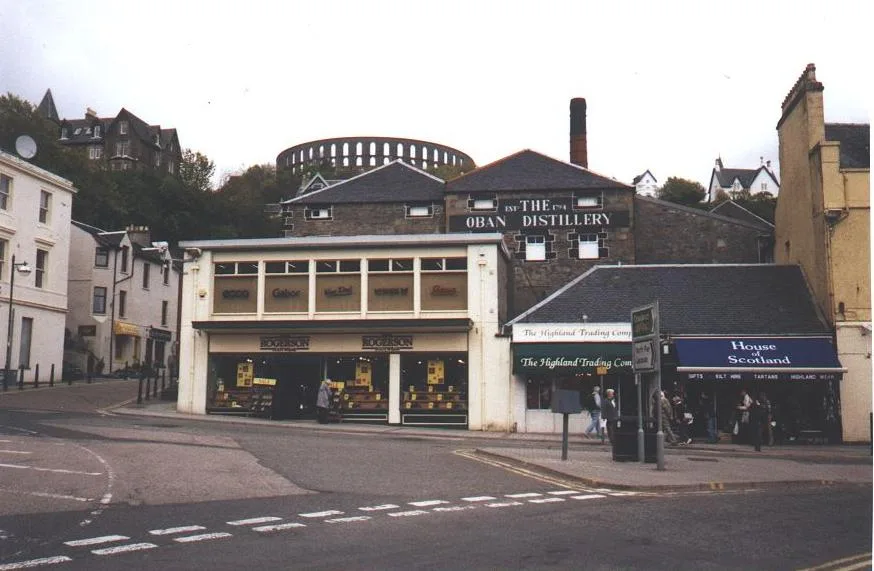
Oban Distillery
Distilleries · 0.5 km

Congregational Church, Tweeddale Street, Oban
Historic churches · 0.5 km

Oban War & Peace Museum
Museums · 0.5 km

Oban Inn
Historic pubs · 0.5 km

Oban 51st Highland Division War Memorial
Memorials & monuments · 0.6 km
Nearby
📷 3Historic churches · Central Scotland
Roman Catholic Diocese of Argyll and the Isles
Roman Catholic Diocese of Argyll and the Isles in Scotland Islands, United Kingdom.
📷 4📷 5Mountains & hills · Central Scotland
Battery Hill
Battery Hill — mountain in scotland highlands. Elevation: 55 m.
📷 5Hostels · Central Scotland
Oban Backpackers Hostel
Oban Backpackers Hostel — a hostel in scotland highlands.
📷 5Hostels · Central Scotland
Backpackers Plus
Backpackers Plus — a hostel in scotland highlands.
📷 5Where to eat & stay near McCaig's Tower
Places to stay
📷 5Hostels · Central Scotland
Oban Backpackers Hostel
Oban Backpackers Hostel — a hostel in scotland highlands.
📷 5Hostels · Central Scotland
Backpackers Plus
Backpackers Plus — a hostel in scotland highlands.
 📷 7
📷 7Hotels · Central Scotland
Alexandra Hotel
Alexandra Hotel — a hotel in scotland highlands.
 📷 7
📷 7Hotels · Central Scotland
The Lancaster Hotel
The Lancaster Hotel — a hotel in scotland highlands.
 📷 5
📷 5Hostels · Central Scotland
Oban Youth Hostel
Oban Youth Hostel — a hostel in scotland highlands.
📷 7Places to eat & drink
📷 7 📷 7
📷 7Historic pubs · Central Scotland
King's Arms Flats, 28 George Street, Oban
King's Arms Flats, 28 George Street, Oban in Scotland Central, United Kingdom.
 📷 7
📷 7Historic pubs · Central Scotland
Caledonian Hotel, George Street, Oban
Caledonian Hotel, George Street, Oban in Scotland Central, United Kingdom.
 📷 5
📷 5Historic pubs · Central Scotland
Tigh an Truish Inn
Tigh an Truish Inn — Historic pub — listed building or notable heritage status.
 📷 3
📷 3Historic pubs · Central Scotland
Ardbrecknish House
Ardbrecknish House — Historic pub — listed building or notable heritage status.
Other follies from this era
 📷 5
📷 5Follies · South West England
Belvedere Tower
Belvedere Tower — Folly or eyecatcher.
 📷 3
📷 3Follies · Central Scotland
Hamilton Mausoleum
Hamilton Mausoleum is a folly in the United Kingdom.
More follies in this region
 📷 3
📷 3 📷 3
📷 3 📷 3
📷 3Follies · Central Scotland
Campbell of Inverneil Mausoleum
Campbell of Inverneil Mausoleum is a folly in the United Kingdom.
 📷 3
📷 3Follies · Central Scotland
Campbell of Jura Mausoleum
Campbell of Jura Mausoleum is a folly in the United Kingdom.
Frequently asked questions
- Where is McCaig's Tower?
- McCaig's Tower is in central Scotland, United Kingdom (postcode PA34 5DL).
- What is McCaig's Tower?
- Oban's Colosseum-inspired granite folly (1897), never quite finished.
- How do I get to McCaig's Tower?
- The nearest railway station is Oban, about 0.8 km away. The nearest town is Dunbeg. Drivers can use postcode PA34 5DL.
- When was McCaig's Tower built?
- Dates from the Victorian period.
- Is McCaig's Tower free to visit?
- Yes, McCaig's Tower is free to enter.
- How do I get to McCaig's Tower?
- The nearest railway station is Oban, about 0.8 km away. Drivers can navigate to postcode PA34 5DL.