
Maritime museums · South East England
Mary Rose
In or near Portsmouth.
Mary Rose in England South East, United Kingdom.

Colin Smith — CC BY-SA 2.0 via Wikimedia Commons licence

Plan your visit
- Typical visit
- 2 h–3 h
- Nearest railway station
- Portsmouth Harbour · 0.4 km
- Family-friendly
- Limited wheelchair access
Getting there & planning your visit
To visit the Mary Rose, the nearest railway station is Portsmouth Harbour, which is 0.4 km away. The postcode for sat-nav is PO1 3DT. Accessibility is limited for wheelchair users.
About
Mary Rose is a preserved museum ship in England South East, United Kingdom — a vessel of historic significance preserved as a public visitor attraction. Britain's museum ships span Tudor warships (Mary Rose), tea clippers (Cutty Sark), Victorian battleships (HMS Warrior) and 20th-century submarines.
Photo gallery
See it from the streetimagery from 2026
Imagery © Mapillary contributors, CC BY-SA 4.0
Heritage listing
The Mary Rose as depicted in the Anthony Roll. She has the distinct carrack profile with high "castles" fore and aft. Although the number of guns and gun ports is not exact, this is an overall accurate illustration of the ship as she appeared in the 1540s.
Protected designations
- Site of Special Scientific Interest: Portsmouth Harbour SSSI
Designations sourced from Natural England open data under OGL v3.
From the Wikipedia article
The Mary Rose was a carrack in the English Tudor navy of King Henry VIII. She was launched in 1511 and served for 34 years in several wars against France, Scotland, and Brittany. After being substantially rebuilt in 1536, she saw her last action on 19 July 1545. She led the attack on the galleys of a French invasion fleet, but sank off Spithead in the Solent, the strait north of the Isle of Wight. The wreck of the Mary Rose was located in 1971 and was raised on 11 October 1982 by the Mary Rose Trust in one of the most complex and expensive maritime salvage projects in history. The surviving section of the ship and thousands of recovered artefacts are of significance as a Tudor period time capsule. The excavation and raising of the Mary Rose was a milestone in the field of maritime archaeology, comparable in complexity and cost to the raising of the 17th-century Swedish warship Vasa in 1961. The Mary Rose site is designated under the Protection of Wrecks Act 1973 by statutory instrument 1974/55. The wreck is a Protected Wreck managed by Historic England. The finds include weapons, sailing equipment, naval supplies, and a wide array of objects used by the crew. Many of the artefacts are unique to the Mary Rose and have provided insights into topics ranging from naval warfare to the history of musical instruments. The remains of the hull have been on display at the Portsmouth Historic Dockyard since the mid-1980s while undergoing restoration. An extensive collection of well-preserved artefacts is on display at the Mary Rose Museum, built to display the remains of the ship and her artefacts. Mary Rose was one of the largest ships in the English navy through more than three decades of intermittent war, and she was one of the earliest examples of a purpose-built sailing warship. She was armed with new types of heavy guns that could fire through the recently invented gun-ports. She was substantially rebuilt in 1536 and was also one of the earliest ships that could fire a…
Excerpt from Wikipedia under CC BY-SA 4.0. See the source article linked in Sources below.
Background
History
, brother-in-law of King Henry VIII through marriage with Mary Tudor, who took charge of the failed salvage operation in 1545]] A salvage attempt was ordered by Secretary of State William Paget only days after the sinking, and the Duke of Suffolk, the king's brother-in-law, took charge of practical details. The operation followed the standard procedure for raising ships in shallow waters: strong cables were attached to the sunken ship and fastened to two empty ships, or hulks. At low tide, the ropes were pulled taut with capstans. When the high tide came in, the hulks rose and with them the wreck. It would then be towed into shallower water and the procedure repeated until the whole ship…
Architecture
The Mary Rose was substantially rebuilt in 1536. The 1536 rebuilding turned a ship of 500 tons into one of 700 tons, and added an entire extra tier of broadside guns to the old carrack-style structure. By consequence, modern research is based mostly on interpretations of the concrete physical evidence of this version of the Mary Rose. The construction of the original design from 1509 is less known. The Mary Rose was built according to the carrack-style with high "castles" fore and aft with a low waist of open decking in the middle. The hull has tumblehome: above the waterline, the hull gradually narrows. This makes boarding more difficult and reduces the quantity (and so weight) of heavy…
Sourced from Wikipedia under CC BY-SA 4.0.
- Coordinates
- 50.7997, -1.1067
- District
- Portsmouth
- Parish
- Portsmouth, unparished area
- Postcode
- PO1 3DT
- Parliamentary constituency
- Portsmouth South
- Phone
- +44 23 9229 3988
- Established
- 1512
- Nearest railway station
- Portsmouth Harbour — 0.4 km
Sources
Other places nearby
William III Statue
Memorials & monuments · 0.0 km

Action Stations
Natural landmarks · 0.0 km

36 Hours Jutland 1916
Natural landmarks · 0.1 km

R F Scott Statue
Memorials & monuments · 0.1 km
The Jutland Gun
Memorials & monuments · 0.1 km
No. 6 Cinema
Theatres · 0.1 km

Thomas Telford
Memorials & monuments · 0.2 km

Genesis Expo
Museums · 0.2 km
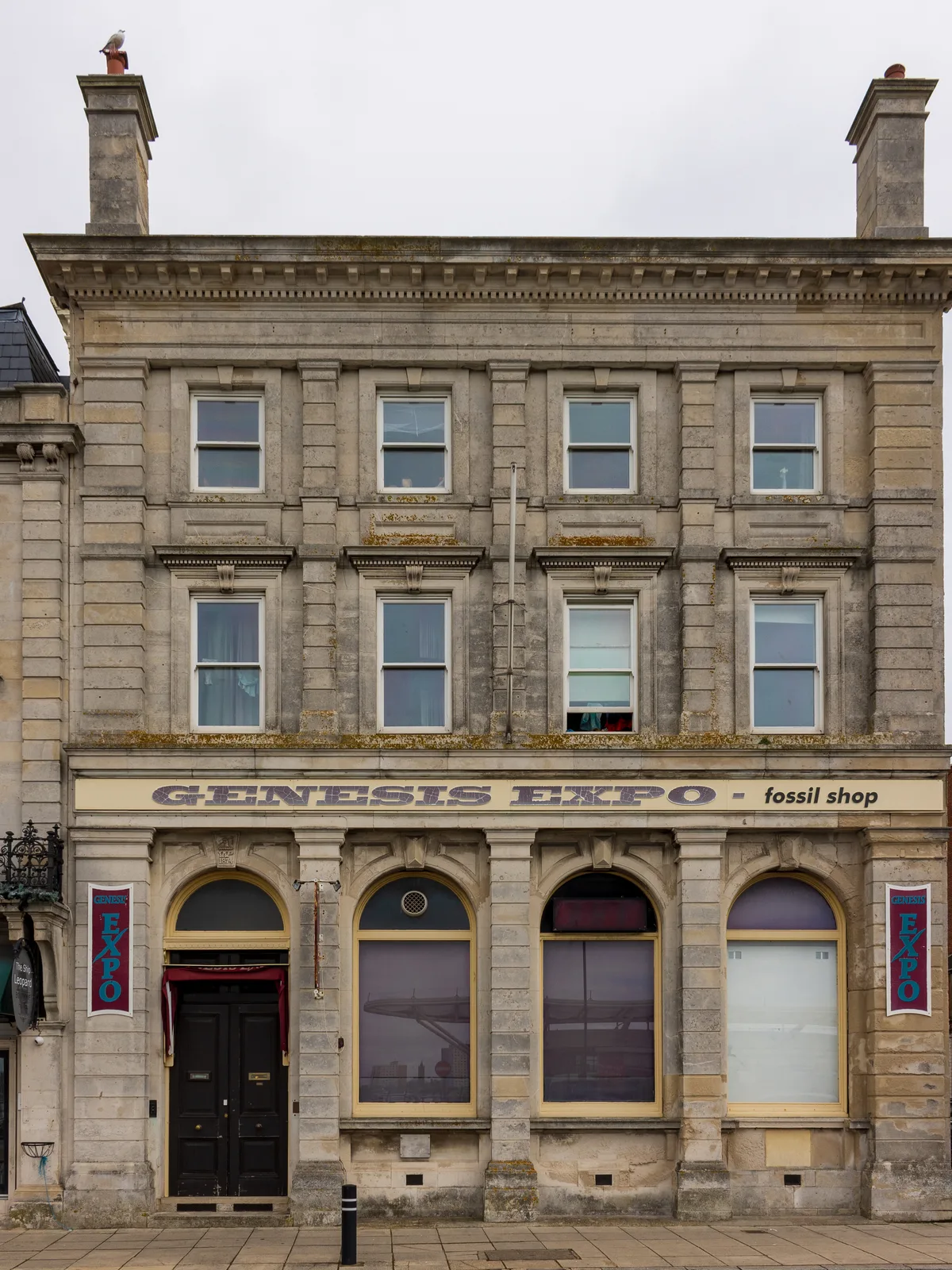
Genesis Expo Creationist Museum
Museums · 0.2 km

Harbour Tours
Harbours & ports · 0.2 km
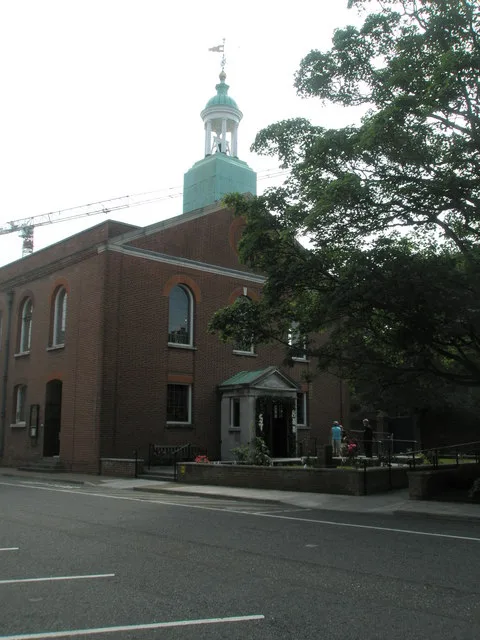
St Ann's Church, HMNB Portsmouth
Historic churches · 0.2 km

New Queen's Cinema
Theatres · 0.2 km
Nearby
📷 5Memorials & monuments · South East England
William III Statue
William III Statue — a memorial in england-south-east, United Kingdom.
📷 5Natural landmarks · South East England
Action Stations
Action Stations — a other in england-south-east, United Kingdom.
📷 5Natural landmarks · South East England
36 Hours Jutland 1916
36 Hours Jutland 1916 — a other in england-south-east, United Kingdom.
📷 5Memorials & monuments · South East England
R F Scott Statue
R F Scott Statue — a memorial in england-south-east, United Kingdom.
📷 5Memorials & monuments · South East England
The Jutland Gun
The Jutland Gun — a memorial in england-south-east, United Kingdom.
📷 5Where to eat & stay near Mary Rose
Places to stay
 📷 7
📷 7Hotels · South East England
The Queens Hotel
The Queens Hotel — a hotel in england south east.
 📷 5
📷 5Hotels · South East England
Spitbank Fort
Spitbank Fort — a hotel in england south east.
 📷 5
📷 5 📷 5
📷 5Caravan parks · South East England
Stokes Bay Home Park
Stokes Bay Home Park — a caravan park in england south east.
 📷 5
📷 5Caravan parks · South East England
Kingfisher Caravan Park
Kingfisher Caravan Park — a caravan park in england south east.
 📷 5
📷 5Caravan parks · South East England
Southsea Leisure Park
Southsea Leisure Park — a caravan park in england south east.
Places to eat & drink
 📷 5
📷 5Historic pubs · South East England
The Old Customs House
The Old Customs House — Historic pub — listed building or notable heritage status.
 📷 7
📷 7 📷 5
📷 5Restaurants · South East England
Leliamezze
Leliamezze — a restaurant in england south east.
 📷 5
📷 5Historic pubs · South East England
Yorkshire Grey Public House
Yorkshire Grey Public House in England South East, United Kingdom.
 📷 5
📷 5Historic pubs · South East England
King Street Tavern
King Street Tavern in England South East, United Kingdom.
 📷 5
📷 5Historic pubs · South East England
Jubilee Tavern
Jubilee Tavern in England South East, United Kingdom.
More places in this region
 📷 5
📷 5Maritime museums · South East England
Russian Foxtrot B-39 (U 475)
Russian Foxtrot B-39 (U 475) — a maritime museum in england-london, United Kingdom.
 📷 5
📷 5Maritime museums · South East England
HMS Victory
HMS Victory in England South East, United Kingdom.
 📷 5
📷 5Maritime museums · South East England
HMS Warrior
HMS Warrior in England South East, United Kingdom.
 📷 5
📷 5Maritime museums · South East England
Dover Bronze Age Boat
Dover Bronze Age Boat in England South East, United Kingdom.
Frequently asked questions
- Where is Mary Rose?
- Mary Rose is in South-East England, United Kingdom (postcode PO1 3DT), in the parish of Portsmouth, unparished area.
- What is Mary Rose?
- Mary Rose in England South East, United Kingdom.
- How do I get to Mary Rose?
- The nearest railway station is Portsmouth Harbour, about 0.4 km away. The nearest town is Portsmouth. Drivers can use postcode PO1 3DT.
- When was Mary Rose built?
- Built or established in 1512.
- Is Mary Rose a protected site?
- Yes — Mary Rose is part of the Portsmouth Harbour SSSI Site of Special Scientific Interest.
- How do I get to Mary Rose?
- The nearest railway station is Portsmouth Harbour, about 0.4 km away. Drivers can navigate to postcode PO1 3DT.