
Maritime museums · South East England
HMS Warrior
In or near Portsmouth.
HMS Warrior in England South East, United Kingdom.

Dr Neil Clifton — CC BY-SA 2.0 via Wikimedia Commons licence

Plan your visit
- Typical visit
- 2 h–3 h
- Nearest railway station
- Portsmouth Harbour · 0.2 km
- Family-friendly
- Limited wheelchair access
Getting there & planning your visit
HMS Warrior is located in Portsmouth, with the nearest railway station being Portsmouth Harbour, just 0.2 km away. The postcode for sat-nav is PO1 3QX. Accessibility is limited for wheelchair users.
About
HMS Warrior is a preserved museum ship in England South East, United Kingdom — a vessel of historic significance preserved as a public visitor attraction. Britain's museum ships span Tudor warships (Mary Rose), tea clippers (Cutty Sark), Victorian battleships (HMS Warrior) and 20th-century submarines.
Photo gallery
Official information
HMS Warrior is a historic warship from 1860, known as the world's most powerful warship of its time. Visitors can explore the ship, meet the crew in period costume, and learn about life at sea during the Victorian era.
Protected designations
- Site of Special Scientific Interest: Portsmouth Harbour SSSI
Designations sourced from Natural England open data under OGL v3.
From the Wikipedia article
HMS Warrior is a 40-gun steam-powered armoured frigate built for the Royal Navy in 1859–1861. She was the name ship of the Warrior-class ironclads. Warrior and her sister ship HMS Black Prince were the first armour-plated, iron-hulled warships, and were built in response to France's launching in 1859 of the first ocean-going ironclad warship, the wooden-hulled Gloire. Warrior conducted a publicity tour of Great Britain in 1863 and spent her active career with the Channel Squadron. Obsolescent following the 1873 commissioning of the mastless and more capable HMS Devastation, she was placed in reserve in 1875, and was "paid off" – decommissioned – in 1883. She subsequently served as a storeship and depot ship, and in 1904 was assigned to the Royal Navy's torpedo training school. The ship was converted into an oil jetty in 1927 and remained in that role until 1979, at which point she was donated by the Navy to The Maritime Trust for restoration. The restoration process took eight years, during which many of her features and fittings were either restored or recreated. When this was finished she returned to Portsmouth as a museum ship. Listed as part of the National Historic Fleet, Warrior has been based in Portsmouth since 1987.
Excerpt from Wikipedia under CC BY-SA 4.0. See the source article linked in Sources below.
Background
History
The launching of the steam-powered ship of the line by France in 1850 began an arms race between France and Britain that lasted for a decade. The destruction of a wooden Ottoman fleet by a Russian fleet firing explosive shells in the Battle of Sinop, early in the Crimean War, followed by the destruction of Russian coastal fortifications during the Battle of Kinburn in the Crimean War by French armoured floating batteries, and tests against armour plates, showed the superiority of ironclads over unarmoured ships. France's launching in 1859 of the first ocean-going ironclad warship, the wooden-hulled , upset the balance of power by neutralising the British investment in wooden ships of the…
Architecture
Warrior was ordered on 11 May 1859 from Thames Ironworks and Shipbuilding Company in Blackwall, London. The ship was laid down some time after 6 June 1859 on the West Ham side of Bow Creek when the P&O ocean liner Seine was launched, and the slipway was reinforced to support Warriors weight. Full-scale production of the ship's iron began in August, and the construction probably began in mid-August. Indecision by the Admiralty and frequent design changes caused many delays and nearly drove her builders bankrupt before a grant of £50,000 was awarded to keep them solvent. Her launching on 29 December 1860 was during the coldest winter for 50 years. She was frozen to her slipway and required…
Description
The Chief Constructor of the Navy Isaac Watts and the Chief Engineer Thomas Lloyd designed the ship. To minimise risk they copied the hull design of the large wooden frigate , modifying it for iron construction and to accommodate an armoured box, or citadel, amidships along the single gun deck, which protected most of the ship's guns. Ships with this configuration of guns and armour are classified as broadside ironclads. Faster, better armoured and harder to hit than her rivals, she was superior to any existing naval ship. The Admiralty stopped construction of all wooden ships of the line, and ordered another 11 ironclads over the next few years. Jacky Fisher, who was the ship's gunnery…
Sourced from Wikipedia under CC BY-SA 4.0.
- Coordinates
- 50.7983, -1.1089
- District
- Portsmouth
- Parish
- Portsmouth, unparished area
- Postcode
- PO1 3QX
- Parliamentary constituency
- Portsmouth South
- Established
- 1861
- Nearest railway station
- Portsmouth Harbour — 0.2 km
- Opening
- Mo-Su 10:00-17:30
- Official site
- www.nmrn.org.uk
Sources
- wikidata: Q609925 (CC0)
- wikipedia: HMS Warrior (1860) (CC BY-SA 4.0)
Other places nearby

Harbour Tours
Harbours & ports · 0.0 km

No. 6 Cinema
Theatres · 0.1 km

The Jutland Gun
Memorials & monuments · 0.1 km
R F Scott Statue
Memorials & monuments · 0.2 km
36 Hours Jutland 1916
Natural landmarks · 0.2 km

Thomas Telford
Memorials & monuments · 0.2 km

Genesis Expo
Museums · 0.2 km

William III Statue
Memorials & monuments · 0.2 km
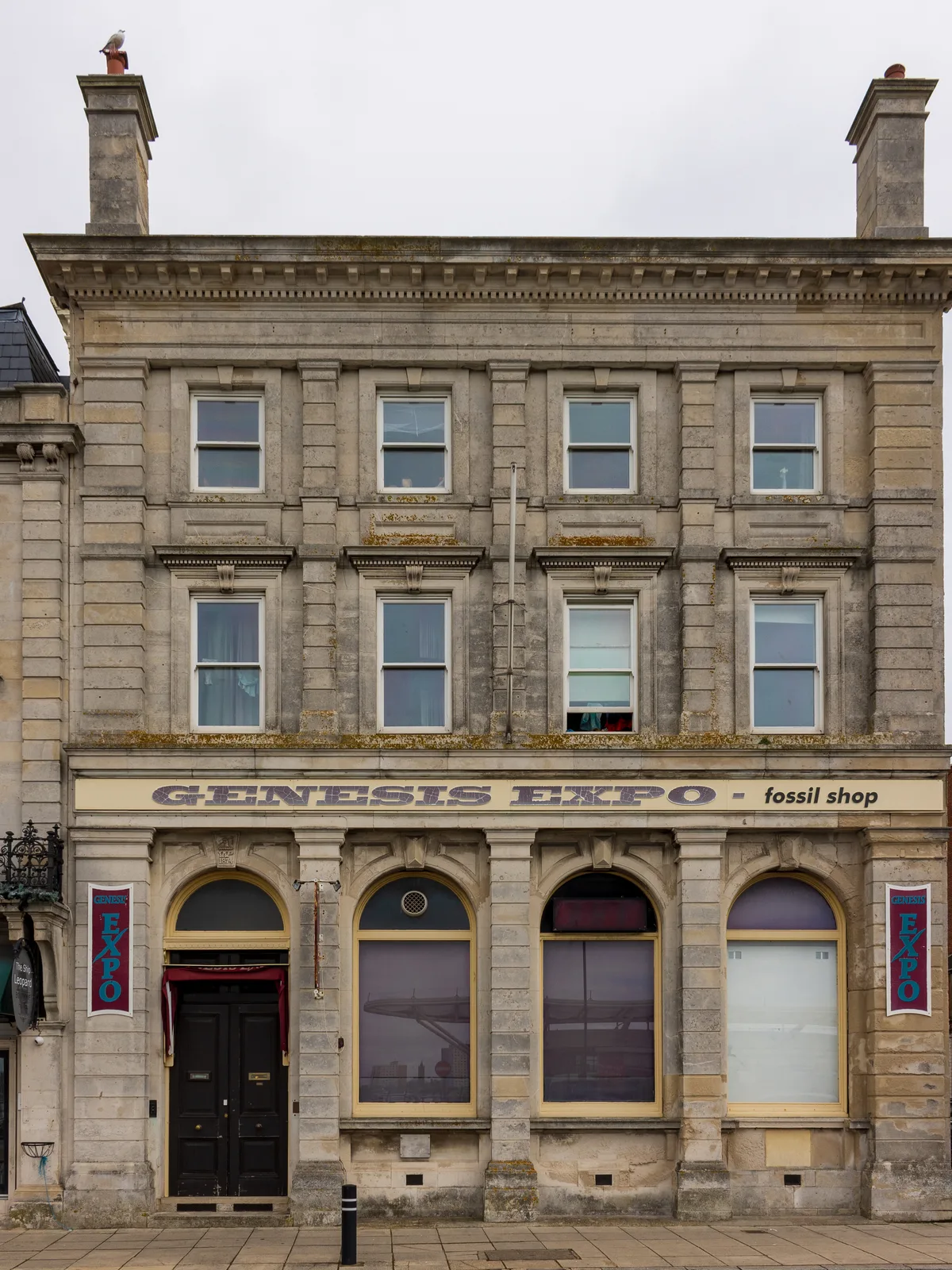
Genesis Expo Creationist Museum
Museums · 0.2 km

Action Stations
Natural landmarks · 0.2 km
Mary Rose
Maritime museums · 0.2 km

National Museum of the Royal Navy, Portsmouth
Museums · 0.3 km
Nearby
📷 5Harbours & ports · South East England
Harbour Tours
Harbour Tours — a other in england-south-east, United Kingdom.
📷 5📷 5Memorials & monuments · South East England
The Jutland Gun
The Jutland Gun — a memorial in england-south-east, United Kingdom.
📷 5Memorials & monuments · South East England
R F Scott Statue
R F Scott Statue — a memorial in england-south-east, United Kingdom.
📷 5Natural landmarks · South East England
36 Hours Jutland 1916
36 Hours Jutland 1916 — a other in england-south-east, United Kingdom.
📷 5Memorials & monuments · South East England
Thomas Telford
Thomas Telford — a memorial in england-south-east, United Kingdom.
Where to eat & stay near HMS Warrior
Places to stay
 📷 7
📷 7Hotels · South East England
The Queens Hotel
The Queens Hotel — a hotel in england south east.
 📷 5
📷 5Hotels · South East England
Spitbank Fort
Spitbank Fort — a hotel in england south east.
 📷 5
📷 5 📷 5
📷 5Caravan parks · South East England
Stokes Bay Home Park
Stokes Bay Home Park — a caravan park in england south east.
 📷 5
📷 5Caravan parks · South East England
Kingfisher Caravan Park
Kingfisher Caravan Park — a caravan park in england south east.
 📷 5
📷 5Caravan parks · South East England
Southsea Leisure Park
Southsea Leisure Park — a caravan park in england south east.
Places to eat & drink
 📷 5
📷 5Historic pubs · South East England
The Old Customs House
The Old Customs House — Historic pub — listed building or notable heritage status.
 📷 7
📷 7 📷 5
📷 5Restaurants · South East England
Leliamezze
Leliamezze — a restaurant in england south east.
 📷 5
📷 5Historic pubs · South East England
Yorkshire Grey Public House
Yorkshire Grey Public House in England South East, United Kingdom.
 📷 5
📷 5Historic pubs · South East England
Jubilee Tavern
Jubilee Tavern in England South East, United Kingdom.
 📷 5
📷 5Historic pubs · South East England
King Street Tavern
King Street Tavern in England South East, United Kingdom.
More places in this region
 📷 5
📷 5Maritime museums · South East England
Russian Foxtrot B-39 (U 475)
Russian Foxtrot B-39 (U 475) — a maritime museum in england-london, United Kingdom.
 📷 5
📷 5Maritime museums · South East England
HMS Victory
HMS Victory in England South East, United Kingdom.
📷 5 📷 5
📷 5Maritime museums · South East England
Dover Bronze Age Boat
Dover Bronze Age Boat in England South East, United Kingdom.
Frequently asked questions
- Where is HMS Warrior?
- HMS Warrior is in South-East England, United Kingdom (postcode PO1 3QX), in the parish of Portsmouth, unparished area.
- What is HMS Warrior?
- HMS Warrior in England South East, United Kingdom.
- How do I get to HMS Warrior?
- The nearest railway station is Portsmouth Harbour, about 0.2 km away. The nearest town is Portsmouth. Drivers can use postcode PO1 3QX.
- When was HMS Warrior built?
- Built or established in 1861.
- Is HMS Warrior a protected site?
- Yes — HMS Warrior is part of the Portsmouth Harbour SSSI Site of Special Scientific Interest.
- How do I get to HMS Warrior?
- The nearest railway station is Portsmouth Harbour, about 0.2 km away. Drivers can navigate to postcode PO1 3QX.