
Memorials & monuments · London
London and North Western Railway War Memorial
In or near Covent Garden.
London and North Western Railway War Memorial is a memorial in the United Kingdom.
.jpg?width=1200)
Wikimedia Commons contributors — see linked file page for photographer and licence licence
.jpg)
Plan your visit
- Typical visit
- 15 min–45 min
- Nearest railway station
- Euston · 0.1 km
- Free entry
- Dog-friendly
- Limited wheelchair access
Getting there & planning your visit
The London and North Western Railway War Memorial is located at postcode NW1 2EF, with the nearest railway station being Euston, just 0.1 km away. Entry is free, but wheelchair access is limited.
About
London and North Western Railway War Memorial is a public memorial or monument in the United Kingdom. Records date its origin to 1921. Coordinates: 51.5272°, -0.1325°.
Photo gallery
360° viewimagery from 2025
Imagery © Mapillary contributors, CC BY-SA 4.0
Heritage listing
The London and North Western Railway War Memorial is a First World War memorial located outside Euston station in London, England. The memorial was designed by Reginald Wynn Owen, architect to the London and North Western Railway (LNWR), and commemorates employees of the LNWR who were killed in the First World War. Some 37,000 LNWR employees left to fight in the war—around a third of the company's workforce—of whom over 3,000 were killed. As well as personnel, much of the company's infrastructure was turned over to the war effort. Of the £12,500 cost of the memorial, £4,000 was contributed by the employees and the company paid the remainder. The memorial consists of a single 13-metre (43-foot) tall obelisk on a pedestal. At the top, on each side, is a cross in relief and a bronze wreath.
From the Historic England List Entry under OGL v3.
From the Wikipedia article
The London and North Western Railway War Memorial is a First World War memorial located outside Euston station in London, England. The memorial was designed by Reginald Wynn Owen, architect to the London and North Western Railway (LNWR), and commemorates employees of the LNWR who were killed in the First World War. Some 37,000 LNWR employees left to fight in the war—around a third of the company's workforce—of whom over 3,000 were killed. As well as personnel, much of the company's infrastructure was turned over to the war effort. Of the £12,500 cost of the memorial, £4,000 was contributed by the employees and the company paid the remainder. The memorial consists of a single 13-metre (43-foot) tall obelisk on a pedestal. At the top, on each side, is a cross in relief and a bronze wreath. At the four corners of the base are four over-life-size statues of military figures—an artilleryman, an infantryman, a sailor, and an airman. The memorial was unusual among those from the First World War in featuring an airman so prominently. The memorial was unveiled on 21 October 1921. Over 8,000 people attended the ceremony, mostly LNWR employees and their families, including three who earned the Victoria Cross in the war. Tensions remained following a strike two years earlier and the speeches focused on patriotism and duty, encouraging the workers to follow the example of their dead comrades. The memorial and two entrance lodges are all that remain of the former Euston station complex, the station having been rebuilt in the 1960s. An office building was erected between the memorial and the station in the 1970s, obscuring the view of it from the station entrance. The memorial is a grade II* listed building.
Excerpt from Wikipedia under CC BY-SA 4.0. See the source article linked in Sources below.
Background
History
and shortly before the redevelopment of the station|alt=Obelisk with classical frontage in background]] for scale|alt=Obelisk with red bus in front]] The LNWR memorial was unveiled at a ceremony on 21 October 1921. Field Marshal Douglas Haig, 1st Earl Haig, the commander of British forces on the Western Front during the war, presided. Haig gave a speech in which he praised the LNWR's contribution to the war effort and its "splendid conduct and loyal support throughout the great struggle". The Archbishop of Canterbury, Randall Davidson, gave a dedication. Among the other speakers were Ernest Sykes VC and the LNWR company chairman, Charles Lawrence. Christie and Wood, the LNWR's other two…
Architecture
in 1920, before the memorial was built. The station lodges can be seen in the background.|alt=sketch of the obelisk]] The memorial consists of a single obelisk, 13 m high in Portland stone, which stands on a tall pedestal and a circular base of grey granite. At its foot, the obelisk is moulded to the base and decorated with a reed band. On each side of the obelisk, near the top, is a bronze wreath and a stone cross in relief. The only inscription on the obelisk is <small>IN MEMORY OF OUR GLORIOUS DEAD</small> on the south face (the front as one walks towards Euston station), though a granite tablet in front of the memorial contains the further inscription: Further tablets were added later…
Sourced from Wikipedia under CC BY-SA 4.0.
- Coordinates
- 51.5272, -0.1325
- District
- Camden
- Parish
- Camden, unparished area
- Postcode
- NW1 2EF
- Parliamentary constituency
- Holborn and St Pancras
- Established
- 1921
- Nearest railway station
- Euston — 0.1 km
Sources
- osm: n1519252920 (ODbL)
- wikipedia: London and North Western Railway War Memorial (CC BY-SA 4.0)
- commons: Euston Station War Memorial (cropped).jpg (CC BY-SA 4.0)
Other places nearby

Erwin Piscator sculpture
Theatres · 0.0 km

Piscator
Public art & sculpture · 0.1 km

Captain Matthew Flinders
Public art & sculpture · 0.1 km

David Breuer-Weil
Public art & sculpture · 0.2 km
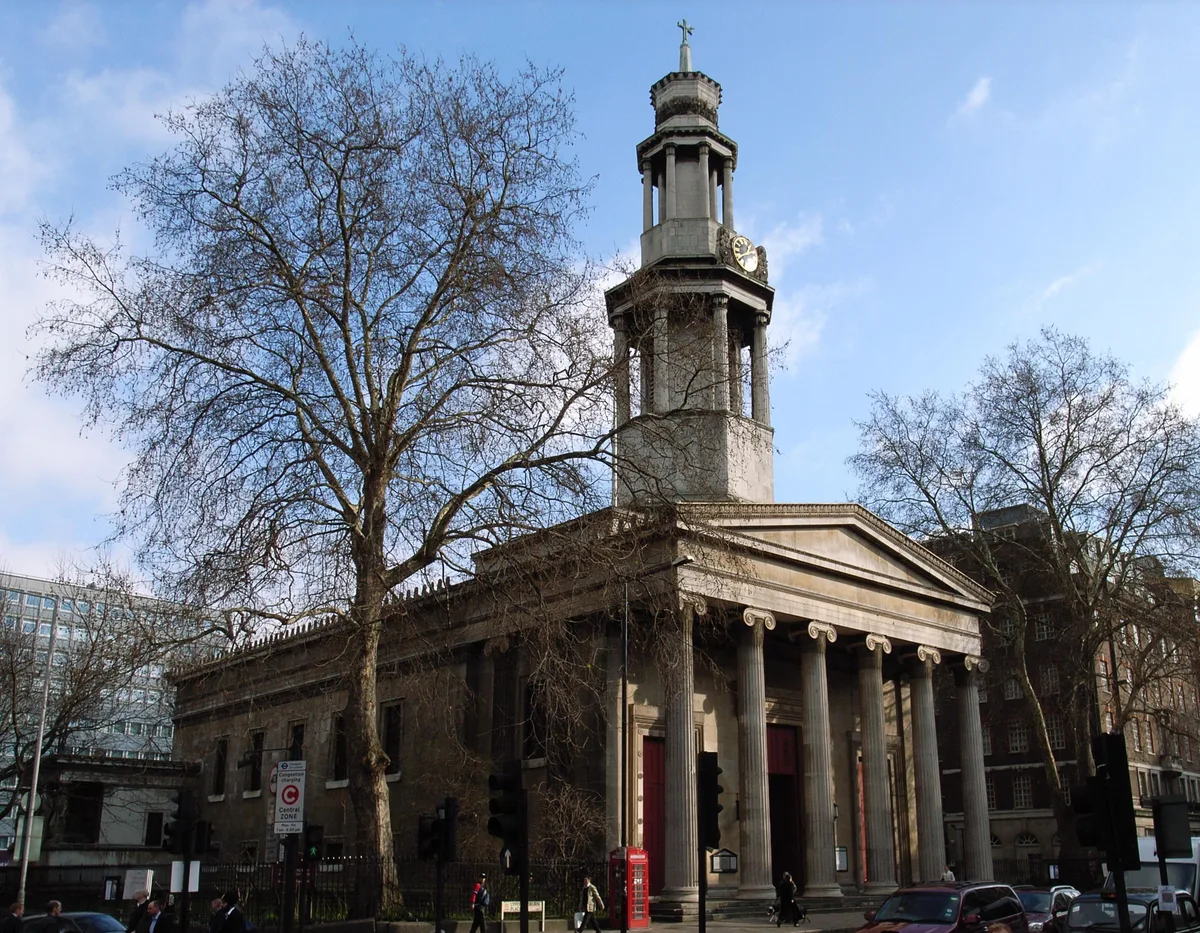
St Pancras New Church
Historic churches · 0.2 km

Archangel Michael
Public art & sculpture · 0.2 km

Hilton London Euston
Hotels · 0.2 km
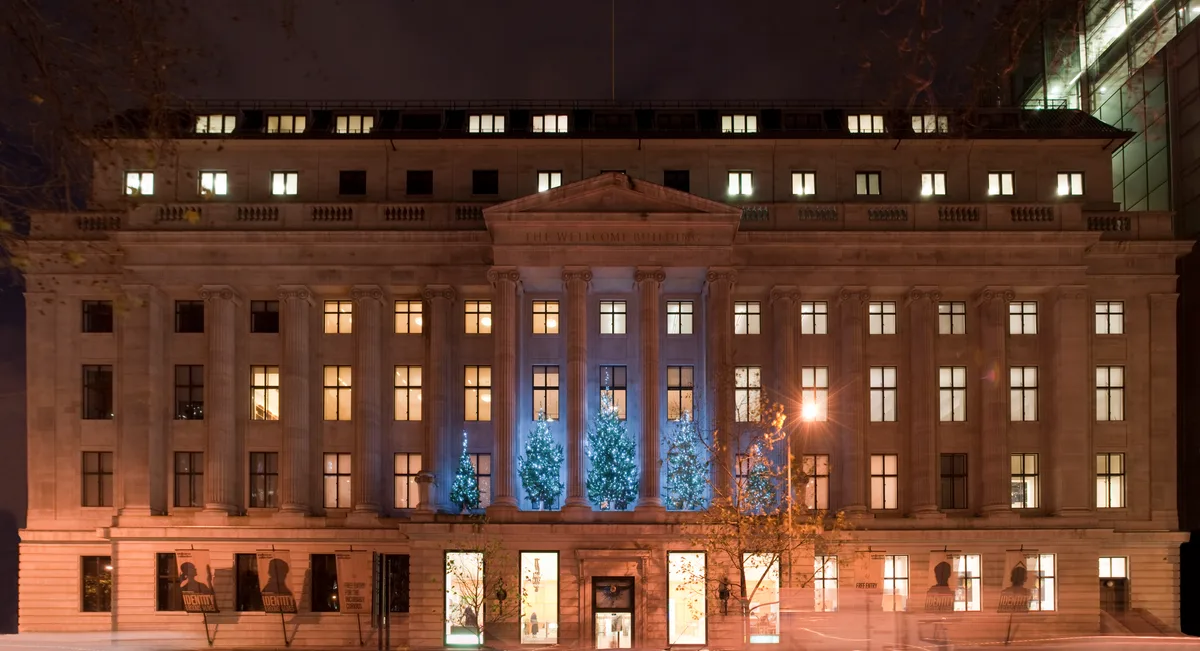
Wellcome Collection
Museums · 0.2 km

Hugh Price Hughes
Memorials & monuments · 0.2 km

Professor Sir Christopher Ingold
Memorials & monuments · 0.2 km

Royal Asiatic Society of Great Britain and Ireland
Museums · 0.2 km
UCL School of Slavonic and East European Studies
Natural landmarks · 0.2 km
Nearby
📷 5Theatres · London
Erwin Piscator sculpture
Erwin Piscator sculpture is a place of interest in the United Kingdom.
📷 5📷 5Public art & sculpture · London
Captain Matthew Flinders
Captain Matthew Flinders — a public art in england-london, United Kingdom.
📷 5Public art & sculpture · London
David Breuer-Weil
David Breuer-Weil — a public art in england-london, United Kingdom.
📷 5Historic churches · London
St Pancras New Church
St Pancras New Church — church in London Borough of Camden, UK.
📷 5Public art & sculpture · London
Archangel Michael
Archangel Michael in England London, United Kingdom.
Where to eat & stay near London and North Western Railway War Memorial
Places to stay
📷 5 📷 5
📷 5 📷 5
📷 5Hotels · London
Pullman London St Pancras
Pullman London St Pancras — a hotel in england london.
 📷 5
📷 5 📷 5
📷 5 📷 5
📷 5Places to eat & drink
 📷 5
📷 5Historic pubs · London
The Huntley
The Huntley — Historic pub — listed building or notable heritage status.
 📷 5
📷 5Historic pubs · London
Crown and Anchor
Crown and Anchor in England London, United Kingdom.
 📷 6
📷 6Historic pubs · London
Prince of Wales, Euston
Prince of Wales, Euston in England London, United Kingdom.
 📷 5
📷 5 📷 7
📷 7 📷 5
📷 5Cafés · London
Russell Square Cabmen's Shelter
Russell Square Cabmen's Shelter — a café in england london.
Other memorials from this era
.jpg?width=1200) 📷 5
📷 5Memorials & monuments · London
1st Surrey Rifles War Memorial
1st Surrey Rifles War Memorial is a memorial in the United Kingdom.
 📷 5
📷 5Memorials & monuments · London
24th East Surrey Division War Memorial
24th East Surrey Division War Memorial is a memorial in the United Kingdom.
.jpg?width=1200) 📷 5
📷 5Memorials & monuments · London
Alan Brooke, 1st Viscount Alanbrooke
Alan Brooke, 1st Viscount Alanbrooke is a memorial in the United Kingdom.
 📷 5
📷 5Memorials & monuments · London
All Saints Fulham war memorial
All Saints Fulham war memorial is a memorial in the United Kingdom.
More memorials in this region
 📷 5
📷 5Memorials & monuments · London
Abney Park Cemetery CWGC Cross
Abney Park Cemetery CWGC Cross is a memorial in the United Kingdom.
 📷 5
📷 5Memorials & monuments · London
Admiral Sir John Franklin
Admiral Sir John Franklin is a memorial in the United Kingdom.
 📷 5
📷 5Memorials & monuments · London
Albert Edward McKenzie
Albert Edward McKenzie is a memorial in the United Kingdom.
 📷 5
📷 5Memorials & monuments · London
Animals in War
Animals in War is a memorial in the United Kingdom.
Frequently asked questions
- Where is London and North Western Railway War Memorial?
- London and North Western Railway War Memorial is in London, United Kingdom (postcode NW1 2EF), in the parish of Camden, unparished area.
- What is London and North Western Railway War Memorial?
- London and North Western Railway War Memorial is a memorial in the United Kingdom.
- How do I get to London and North Western Railway War Memorial?
- The nearest railway station is Euston, about 0.1 km away. The nearest town is Covent Garden. Drivers can use postcode NW1 2EF.
- When was London and North Western Railway War Memorial built?
- Built or established in 1921.
- Is London and North Western Railway War Memorial a listed building?
- London and North Western Railway War Memorial is officially recognised as Grade II* listed building listed.
- Is London and North Western Railway War Memorial free to visit?
- Yes, London and North Western Railway War Memorial is free to enter.
- How do I get to London and North Western Railway War Memorial?
- The nearest railway station is Euston, about 0.1 km away. Drivers can navigate to postcode NW1 2EF.