
Natural landmarks · Scottish Highlands
Loch Maree
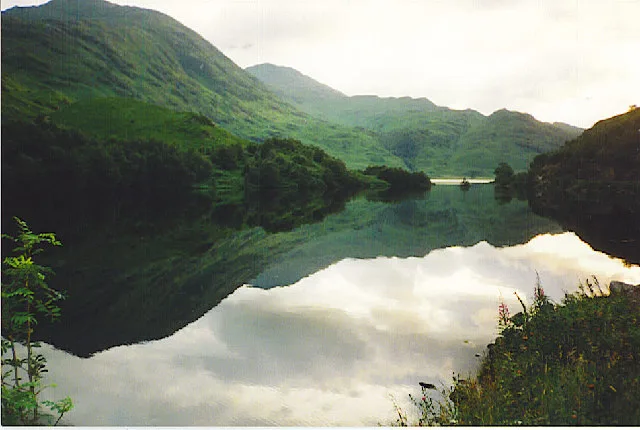
Loch Maree — lake in Highland, Scotland, UK, outflows to the River Ewe.

Wikimedia Commons contributors — see linked file page for photographer and licence licence

Plan your visit
- Typical visit
- 1 h–2 h
- Free entry
- Dog-friendly
Getting there & planning your visit
Loch Maree is located in the Scottish Highlands, with the postcode IV22 2HH. Entry is free, and there are no specific details on accessibility provided.
About
Loch Maree is a named natural landmark in the United Kingdom. It covers approximately 29 km². Wikidata describes it as: "lake in Highland, Scotland, UK, outflows to the River Ewe". Coordinates: 57.6897°, -5.4575°.
Photo gallery
Summary from the official site
Loch Maree is a large nutrient-poor loch in Scotland, designated as a National Nature Reserve and Special Protection Area. It is known for its diverse flora and fauna, including rare aquatic plants and a significant population of Black-throated Divers, making it an important site for wildlife and tourism.
Read more on the official property page.
From the Wikipedia article
Loch Maree (Scottish Gaelic: Loch Ma-ruibhe) is a loch in Wester Ross in the Northwest Highlands of Scotland. At 21.7 km (13.46 mi) long and with a maximum width of four kilometres (2+1⁄2 mi), it is the fourth-largest freshwater loch in Scotland; it is the largest north of Loch Ness. Its surface area is 28.7 km2 (11.08 mi2). Loch Maree contains five large wooded islands and over 60 smaller ones, many of which have their own lochans. The largest island, Eilean Sùbhainn, contains a loch that itself contains an island, a situation that occurs nowhere else in Great Britain. Isle Maree holds the remains of a Pre-Reformation chapel and Christian pilgrimage shrine believed to be the 8th century hermitage of Saint Máel Ruba (d. 722), a Celtic Church missionary from Bangor Abbey in Gaelic Ireland who also founded the monastery of Applecross in 672. It is after him that Loch Maree is named; prior to the saint's arrival in the area the loch is believed to have been named Loch Ewe, as evidenced by the name of the village of Kinlochewe (Scottish Gaelic: Ceann Loch Iù, meaning "Head of Loch Ewe") which is located at the eastern end of Loch Maree. The loch is important for wildlife. It is the site of one of the largest breeding concentrations of black-throated diver in Great Britain, and also holds an important population of otter. The islands of Loch Maree are the location of some of the best native Caledonian pinewood in Scotland, and are particularly noted for their dragonflies, with 12 species having been recorded. The waters, islands and shoreline of Loch Maree are protected by several overlapping conservation designations.
Excerpt from Wikipedia under CC BY-SA 4.0. See the source article linked in Sources below.
Background
History
.]] Between 671 and 722, Celtic Church missionary St Máel Ruba arrived at Loch Maree, and founded a chapel and Christian pilgrimage shrine on Eilean Maolruibhe. Remains of this chapel were reportedly still visible in 1861 but no traces now remain, although the burial ground associated with the chapel is still extant. A small covered holy well on the island is said to have been consecrated by the saint. Due to its remote location there is now little industry surrounding Loch Maree, however the area was formerly a centre for ironworking. During the seventeenth century up to 8 hectares of oak woodlands a day were turned into charcoal to fuel the smelting of bog iron at Letterewe on the…
Sourced from Wikipedia under CC BY-SA 4.0.
- Coordinates
- 57.6897, -5.4575
- District
- Highland
- Postcode
- IV22 2HH
- Parliamentary constituency
- Inverness, Skye and West Ross-shire
- Official site
- rsis.ramsar.org
Sources
- wikidata: Q1310646 (CC0)
- wikipedia: Loch Maree (CC BY-SA 4.0)
- commons: Loch Maree.jpg (CC BY-SA 4.0)
Other places nearby

Isle Maree
Islands · 1.0 km

Eilean Sùbhainn
Islands · 1.6 km

Letterewe
Reservoirs & lochs · 1.7 km

Loch Maree
Lakes · 2.8 km

Talladale
Reservoirs & lochs · 2.9 km

Garbh Eilean
Islands · 2.9 km
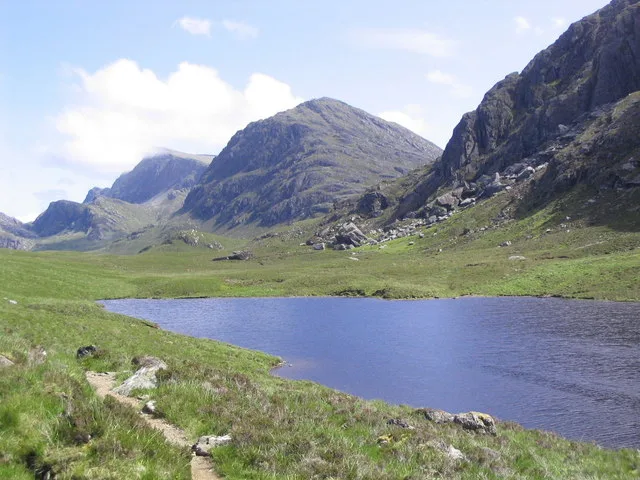
Meall Mhèinnidh
Mountains & hills · 3.3 km

Meall Mheinnidh
Mountains & hills · 3.3 km

Loch Bad an Sgalaig
Lakes · 3.6 km

Leth Chreag
Mountains & hills · 4.0 km

Sron a' Choit
Mountains & hills · 4.2 km

Beinn Lair
Mountains & hills · 4.4 km
Nearby
📷 5📷 3Islands · Scottish Highlands
Eilean Sùbhainn
Eilean Sùbhainn — island in Highland, Scotland, UK.
📷 3📷 5📷 3📷 3Islands · Scottish Highlands
Garbh Eilean
Garbh Eilean — island in Loch Maree, Scotland, United Kingdom.
Where to eat & stay near Loch Maree
Places to stay
 📷 5
📷 5Campsites · Scottish Highlands
Beinn Eighe Campsite
Beinn Eighe Campsite — a campsite in scotland highlands.
 📷 5
📷 5Campsites · Scottish Highlands
Poolewe Caravan & Camping Club
Poolewe Caravan & Camping Club — a campsite in scotland highlands.
 📷 5
📷 5Caravan parks · Scottish Highlands
Kinlochewe Caravan Club Site
Kinlochewe Caravan Club Site — a caravan park in scotland highlands.
 📷 5
📷 5Hostels · Scottish Highlands
Kinlochewe Bunkhouse
Kinlochewe Bunkhouse — a hostel in scotland highlands.
 📷 7
📷 7Hotels · Scottish Highlands
Myrtle Bank Hotel
Myrtle Bank Hotel — a hotel in scotland highlands.
 📷 5
📷 5Campsites · Scottish Highlands
Gairloch Caravan & Camp Site
Gairloch Caravan & Camp Site — a campsite in scotland highlands.
More natural landmarks in this region
 Flagship📷 3
Natural landmarks · Scottish Highlands
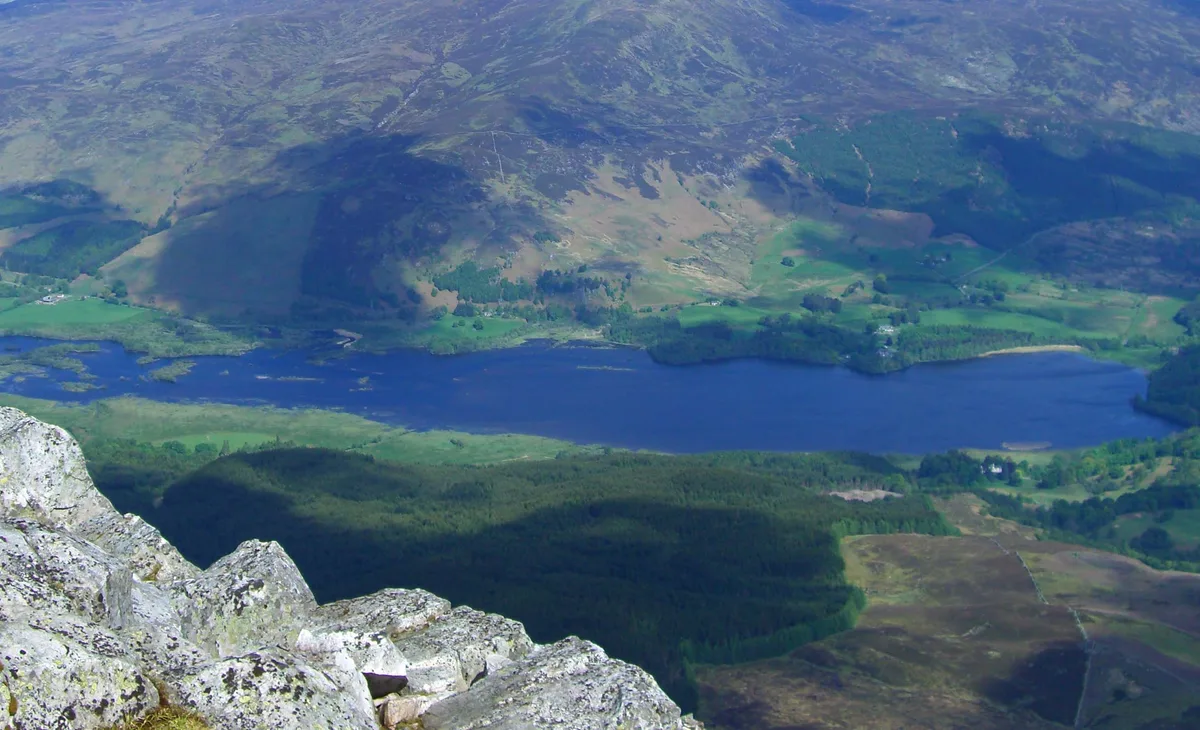
Dunalastair Water
Dunalastair Water — lake in Perth and Kinross, Scotland, UK, on the River Tummel.
 Flagship📷 3
Natural landmarks · Scottish Highlands
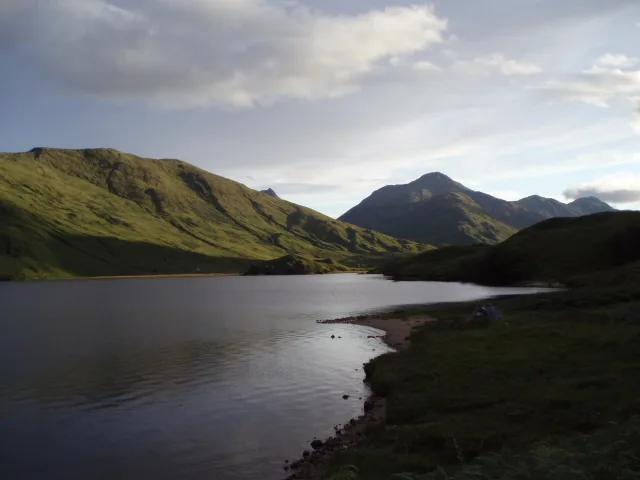
Loch Arkaig
Loch Arkaig — lake in Highland, Scotland, UK, outflows east to River Arkaig.
 Flagship📷 3
Natural landmarks · Scottish Highlands
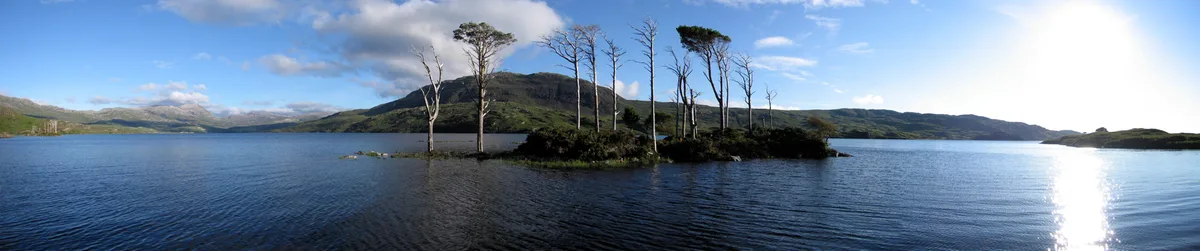
Loch Assynt
Loch Assynt — lake in Highland, Scotland, UK, outflows to the River Inver and Loch na Garbh Uidhe.
 Flagship📷 5
Natural landmarks · Scottish Highlands
Loch Eilt
Loch Eilt — lake in Highland, Scotland, UK, outflows west to River Ailort.
Frequently asked questions
- Where is Loch Maree?
- Loch Maree is in the Scottish Highlands, United Kingdom (postcode IV22 2HH).
- What is Loch Maree?
- Loch Maree — lake in Highland, Scotland, UK, outflows to the River Ewe.
- How do I get to Loch Maree?
- Drivers can use postcode IV22 2HH.
- Is Loch Maree free to visit?
- Yes, Loch Maree is free to enter.
- How do I get to Loch Maree?
- Drivers can navigate to postcode IV22 2HH. It sits within the Inverness, Skye and West Ross-shire parliamentary constituency.