
Historic houses · Yorkshire & the Humber
Leeds Town Hall
In or near Adel.
Leeds Town Hall — a Grade I-listed historic house in england-yorkshire, United Kingdom.

Dave Pickersgill — CC BY-SA 2.0 via Wikimedia Commons licence

Plan your visit
- Typical visit
- 1 h–2 h
- Nearest railway station
- Leeds · 0.7 km
- Free entry
- Family-friendly
- Wheelchair accessible
Getting there & planning your visit
Leeds Town Hall is located at postcode LS1 9SA and is approximately 0.7 km from Leeds railway station. Entry is paid, and the venue is wheelchair accessible.
About
Leeds Town Hall is a Grade I-listed building in england-yorkshire, United Kingdom. Grade I status is conferred by Historic England (or Cadw, Historic Environment Scotland or NIEA equivalents) on buildings of exceptional national interest. See the linked Wikipedia article for full historical and architectural details.
Photo gallery
See it from the streetimagery from 2018
Imagery © Mapillary contributors, CC BY-SA 4.0
Summary from the official site
Leeds Art Gallery is a cultural venue showcasing a diverse range of artworks and exhibitions. Visitors can explore various collections, participate in family-friendly events, and engage in interactive activities throughout the year.
Read more on the official property page.
From the Wikipedia article
Leeds Town Hall is a 19th-century municipal building on The Headrow (formerly Park Lane), Leeds, West Yorkshire, England. Planned to include law courts, a council chamber, offices, a public hall, and a suite of ceremonial rooms, it was built between 1853 and 1858 to a design by the architect Cuthbert Brodrick. With the building of the Civic Hall in 1933, some of these functions were relocated, and after the construction of the Leeds Combined Court Centre in 1993, the Town Hall now serves mainly as a concert, conference and wedding venue, its offices still used by some council departments. It was designated a Grade I listed building in 1951. Imagined as a municipal palace to demonstrate the power and success of Victorian Leeds, and opened by Queen Victoria in a lavish ceremony in 1858, it is one of the largest town halls in the United Kingdom. With a height of 225 feet (68.6 m) it was the tallest building in Leeds for 108 years from 1858 until 1966, when it lost the title to the Park Plaza Hotel, which stands 26 feet (8 m) taller at 253 feet (77 m). The distinctive baroque clock tower, which serves as a landmark and a symbol of Leeds, was not part of the initial design but was added by Brodrick in 1856 as the civic leaders sought to make an even grander statement. The project to build the Town Hall came about as Leeds underwent rapid growth and industrialisation during the 19th century, helped by a desire to compete with Bradford and symbolise Leeds's dominance within the region. Proceedings began in July 1850, carried through by a dedicated committee of the Town Council, which held a competition selecting the relatively unknown Brodrick to prepare a design, with construction underway by July 1853. The building cost much more than the original estimates due to rising prices and constant additions to its design throughout construction. The form of Leeds Town Hall has been used as a model for civic buildings across Britain and the British Empire, being one of the…
Excerpt from Wikipedia under CC BY-SA 4.0. See the source article linked in Sources below.
Background
History
Until 1813, the seat of Leeds Corporation was the Moot Hall of 1618, on Briggate, which was also used for judicial purposes. Leeds went through a period of rapid growth in the first half of the 19th century and by the mid-19th century it became apparent that the court house was no longer large enough for the functions it performed; it was demolished in 1825 and replaced by a new court house on Park Row. The neighbouring town of Bradford, the "wool capital of the world", took the lead in trying to elevate industrial Yorkshire towns with stately, grand architecture by building St George's Hall in 1851–53. It was a new status symbol, and as there was perpetual competition between Leeds and…
Architecture
Leeds Town Council tendered for designs from architects in 1852, in an open competition, a common method of selecting architects for important buildings in the 19th century. The brief was for a kind of building that did not yet exist in England, combining under one roof the functions of moot halls, concert rooms, and courthouses, along with municipal offices and a suite of reception rooms for the mayor. Even the monumental edifice of St George's Hall, Liverpool, only contained a public hall, a small concert hall, and assize courts. The ambitious brief also asked for space for 8,000 people, but the relatively modest budget attracted ridicule, and costs did indeed rise throughout the project.…
Description
and stage|alt=A large decorated hall with a pipe organ and stage]] The Town Hall is classical in style but suggestive of power and drama. It stands at the top of a flight of steps on a mound made specially for the purpose of increasing its prominent position. The south, principal facade to The Headrow has a deeply recessed portico of ten Corinthian columns, a frieze and then the 225 ft clock tower, which has a concave dome and was not in the original design. The three other sides of the building are similar to the south front, except that the columns and pilasters that surround them are near to the walls, and the spaces between them have two tiers of circular-headed windows. The smaller,…
Sourced from Wikipedia under CC BY-SA 4.0.
- Coordinates
- 53.8003, -1.5497
- District
- Leeds
- Parish
- Leeds, unparished area
- Postcode
- LS1 9SA
- Parliamentary constituency
- Leeds Central and Headingley
- Established
- 1858
- Nearest railway station
- Leeds — 0.7 km
- Official site
- museumsandgalleries.leeds.gov.uk
Sources
- wikidata: Q2017744 (CC0)
- wikipedia: Leeds Town Hall (CC BY-SA 4.0)
Other places nearby

City of Leeds
Museums · 0.1 km

Reclining Woman: Elbow
Public art & sculpture · 0.1 km
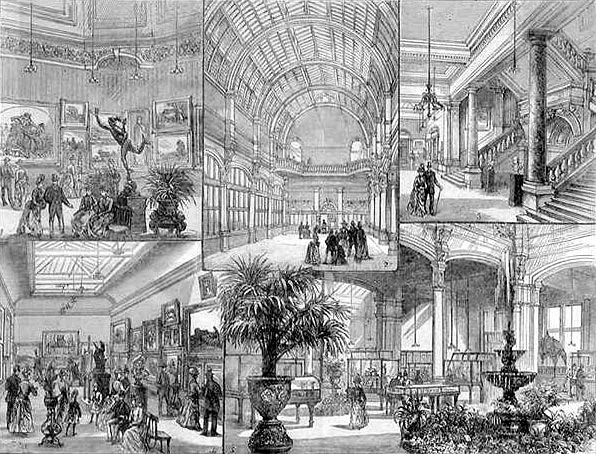
Leeds Art Gallery
Galleries · 0.1 km
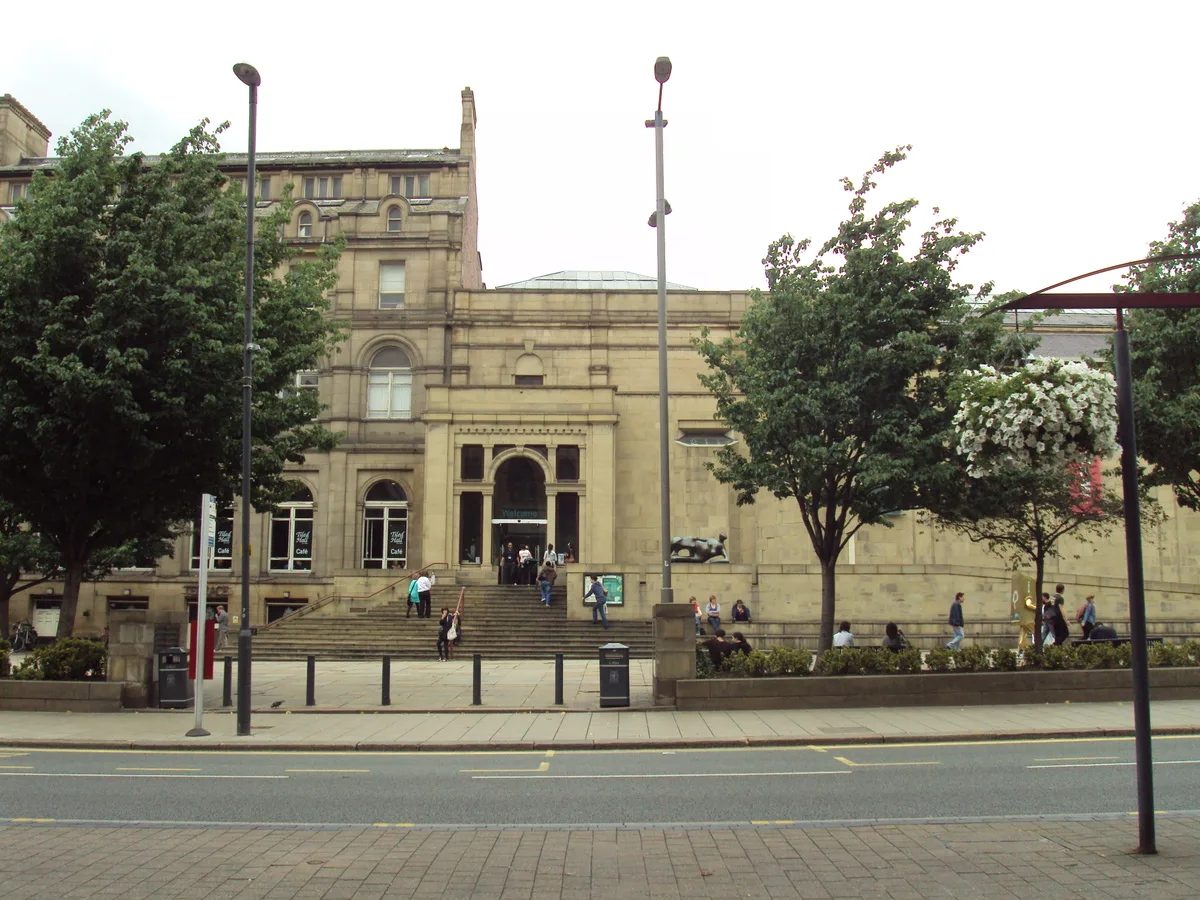
City Art Gallery And Henry Moore Centre
Galleries · 0.1 km

Hepper House
Memorials & monuments · 0.1 km

The Carriageworks
Theatres · 0.1 km

Leeds War Memorial
Memorials & monuments · 0.1 km

Leeds War Memorial
Memorials & monuments · 0.1 km
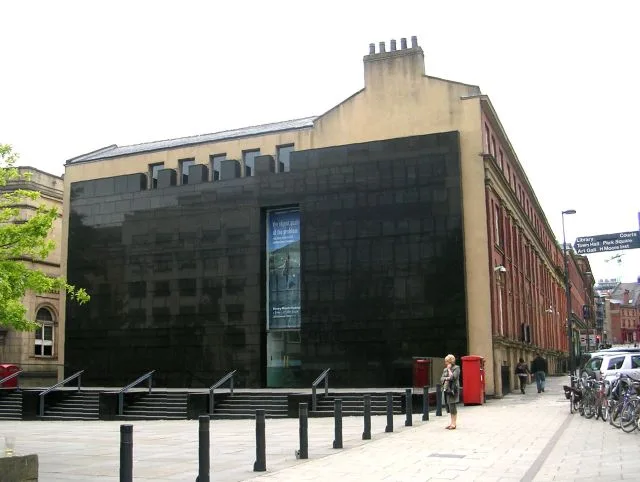
Henry Moore Institute
Galleries · 0.1 km

Victoria Cross Memorial
Memorials & monuments · 0.2 km

Permanent House
Memorials & monuments · 0.2 km

The Light
Historic houses · 0.2 km
Nearby
📷 5Museums · Yorkshire & the Humber
City of Leeds
The City of Leeds, also known officially as Leeds, is a metropolitan borough with city status in West Yorkshire, England. It occupies the north east of the county and includes Leeds and its surroundin
📷 3Public art & sculpture · Yorkshire & the Humber
Reclining Woman: Elbow
Reclining Woman: Elbow — a public art in england-yorkshire, United Kingdom.
📷 4Galleries · Yorkshire & the Humber
Leeds Art Gallery
Leeds Art Gallery — municipal art gallery in England, United Kingdom.
📷 3Galleries · Yorkshire & the Humber
City Art Gallery And Henry Moore Centre
City Art Gallery And Henry Moore Centre — art museum in Leeds, West Yorkshire, England, UK.
📷 3Memorials & monuments · Yorkshire & the Humber
Hepper House
Hepper House — a memorial in england-yorkshire, United Kingdom.
📷 3Theatres · Yorkshire & the Humber
The Carriageworks
The Carriageworks is a theatre in the United Kingdom.
Where to eat & stay near Leeds Town Hall
Places to stay
 📷 7
📷 7Hotels · Yorkshire & the Humber
Dakota Deluxe
Dakota Deluxe — a hotel in england yorkshire.
 📷 5
📷 5Hotels · Yorkshire & the Humber
Park Plaza Hotel
Park Plaza Hotel — a hotel in england yorkshire.
 📷 7
📷 7Hotels · Yorkshire & the Humber
The Queens Hotel
The Queens Hotel — a hotel in england yorkshire.
 📷 5
📷 5Hotels · Yorkshire & the Humber
Crowne Plaza Leeds
Crowne Plaza Leeds — a hotel in england yorkshire.
 📷 5
📷 5Hotels · Yorkshire & the Humber
Hyatt House Leeds
Hyatt House Leeds — a hotel in england yorkshire.
 📷 5
📷 5Hotels · Yorkshire & the Humber
Ibis Leeds Centre
Ibis Leeds Centre — a hotel in england yorkshire.
Places to eat & drink
 📷 5
📷 5Historic pubs · Yorkshire & the Humber
Becketts Bank
Becketts Bank in England Yorkshire, United Kingdom.
 📷 5
📷 5Restaurants · Yorkshire & the Humber
Meet Fresh
Meet Fresh — a restaurant in england yorkshire.
 📷 5
📷 5Historic pubs · Yorkshire & the Humber
North Bar
North Bar in England Yorkshire, United Kingdom.
 📷 5
📷 5Historic pubs · Yorkshire & the Humber
Pack Horse Public House
Pack Horse Public House in England Yorkshire, United Kingdom.
 📷 5
📷 5Restaurants · Yorkshire & the Humber
Good Luck Club
Good Luck Club — a restaurant in england yorkshire.
 📷 5
📷 5Restaurants · Yorkshire & the Humber
The Man Behind The Curtain
The Man Behind The Curtain — a restaurant in england yorkshire.
Other works by Cuthbert Brodrick
 📷 5
📷 5Historic houses · Yorkshire & the Humber
Leeds Corn Exchange
Leeds Corn Exchange — a Grade I-listed historic house in england-yorkshire, United Kingdom.
 📷 5
📷 5Hotels · Yorkshire & the Humber
Grand Hotel
Grand Hotel — a hotel in england yorkshire.
More historic houses in this region
 📷 3
📷 3Historic houses · Yorkshire & the Humber
213, Chestergate
213, Chestergate — Grade II listed house in Stockport, Greater Manchester, England, UK.
 📷 3
📷 3Historic houses · Yorkshire & the Humber
96, Churchgate
96, Churchgate — Grade II listed house in Stockport, Greater Manchester, England, UK.
 📷 3
📷 3Historic houses · Yorkshire & the Humber
Broadbottom Hall
Broadbottom Hall — Grade II* listed house in Broadbottom, Tameside, Greater Manchester, England, UK.
.jpg?width=1200) 📷 3
📷 3Historic houses · Yorkshire & the Humber
Charles Head House
Charles Head House — house in Rainow, Cheshire East, England, UK.
Frequently asked questions
- Where is Leeds Town Hall?
- Leeds Town Hall is in Yorkshire, United Kingdom (postcode LS1 9SA), in the parish of Leeds, unparished area.
- What is Leeds Town Hall?
- Leeds Town Hall — a Grade I-listed historic house in england-yorkshire, United Kingdom.
- How do I get to Leeds Town Hall?
- The nearest railway station is Leeds, about 0.7 km away. The nearest town is Adel. Drivers can use postcode LS1 9SA.
- When was Leeds Town Hall built?
- Built or established in 1858. Designed by Cuthbert Brodrick.
- Is Leeds Town Hall a listed building?
- Leeds Town Hall is officially recognised as Grade I listed.
- Is Leeds Town Hall free to visit?
- Yes, Leeds Town Hall is free to enter.
- How do I get to Leeds Town Hall?
- The nearest railway station is Leeds, about 0.7 km away. Drivers can navigate to postcode LS1 9SA.