
Memorials & monuments · South East England
Kit's Coty House
In or near Aylesford.
Kit's Coty House or Kit's Coty is a chambered long barrow near the village of Aylesford in the southeastern English county of Kent. Constructed circa 4000 BCE, during the Early Neolithic period of Bri

tristan forward — CC BY-SA 2.0 via Wikimedia Commons licence

Plan your visit
- Typical visit
- 15 min–45 min
- Nearest railway station
- Aylesford · 3.3 km
- Free entry
- Dog-friendly
Getting there & planning your visit
To visit Kit's Coty House, the nearest railway station is Aylesford, located 3.3 km away. Entry to the site is free.
About
Kit's Coty House or Kit's Coty is a chambered long barrow near the village of Aylesford in the southeastern English county of Kent. Constructed circa 4000 BCE, during the Early Neolithic period of British prehistory, today it survives in a ruined state. Archaeologists have established that the monument was built by pastoralist communities shortly after the introduction of agriculture to Britain from continental Europe. Although representing part of an architectural tradition of long barrow building that was widespread across Neolithic Europe, Kit's Coty House belongs to a localised regional variant of barrows produced in the vicinity of the River Medway, now known as the Medway Megaliths. Of these, it lies near to both Little Kit's Coty House and the Coffin Stone on the eastern side of the river. Three further surviving long barrows, Addington Long Barrow, Chestnuts Long Barrow, and Coldrum Long Barrow, are located west of the Medway. They were among the first ancient British remains to be protected by the state, on the advice of General Augustus Pitt-Rivers, the first Inspector of Ancient Monuments. The site is now under the ownership of non-departmental public body English Heritage, and is open to visitors all year round. Kit's Coty can be reached on foot along a track that appears at the junction where the Pilgrim's Way and Rochester Road meet. The chamber is encircled by iron railings. It lies approximately 2 kilometres north of another of the Medway Megaliths, Little…
Photo gallery
Protected designations
- Site of Special Scientific Interest: Wouldham to Detling Escarpment SSSI
- Area of Outstanding Natural Beauty: Kent Downs
Designations sourced from Natural England open data under OGL v3.
From the Wikipedia article
Kit's Coty House or Kit's Coty is a chambered long barrow near the village of Aylesford in the southeastern English county of Kent. Constructed circa 4000 BCE, during the Early Neolithic period of British prehistory, today it survives in a ruined state. Archaeologists have established that the monument was built by pastoralist communities shortly after the introduction of agriculture to Britain from continental Europe. Although representing part of an architectural tradition of long barrow building that was widespread across Neolithic Europe, Kit's Coty House belongs to a localised regional variant of barrows produced in the vicinity of the River Medway, now known as the Medway Megaliths. Of these, it lies near to both Little Kit's Coty House and the Coffin Stone on the eastern side of the river. Three further surviving long barrows, Addington Long Barrow, Chestnuts Long Barrow, and Coldrum Long Barrow, are located west of the Medway. They were among the first ancient British remains to be protected by the state, on the advice of General Augustus Pitt-Rivers, the first Inspector of Ancient Monuments. The site is now under the ownership of non-departmental public body English Heritage, and is open to visitors all year round. Kit's Coty can be reached on foot along a track that appears at the junction where the Pilgrim's Way and Rochester Road meet. The chamber is encircled by iron railings. It lies approximately 2 kilometres north of another of the Medway Megaliths, Little Kit's Coty House. The name Kit's Coty allegedly means "Tomb in the Forest" according to signs at the site, possibly related to the Ancient British *kaitom, later *keiton, meaning "forest". The site is the namesake of Kitscoty, a village in Alberta, Canada. The inclusion of the term "House" in the site's name has confused some visitors, who have gone to the site expecting a built dwelling.
Excerpt from Wikipedia under CC BY-SA 4.0. See the source article linked in Sources below.
Background
Architecture
The surviving part of the monument represents three stones covered by a capstone. The H-shaped entrance to the tomb survives. It is made of sarsen (a fine-grained, crystalline sandstone) and consists of three orthostats supporting a horizontal capstone. The archaeologist Timothy Champion suggested that these stones "give some idea of the scale of the sculpture". The front part of the chamber, as well as a possible façade, are now gone. The mound and flanking ditches have largely been ploughed flat but remain visible from aerial photographs. A 1981 survey found the mound to be circa 70 metres long and 1 metre high. Champion suggested that in total, the long-barrow would have been about 80m…
Description
At the western end of the monument was a megalith known as "the General's Tombstone", which was destroyed in 1867. This may once have been part of the long barrow's structure.
Sourced from Wikipedia under CC BY-SA 4.0.
- Coordinates
- 51.3199, 0.5029
- County
- Kent
- District
- Tonbridge and Malling
- Parish
- Aylesford
- Postcode
- ME20 7EZ
- Parliamentary constituency
- Chatham and Aylesford
- Nearest railway station
- Aylesford — 3.3 km
Sources
- wikipedia: Kit's Coty House (CC BY-SA 4.0)
Other places nearby

Kit's Coty House
Archaeological sites · 0.0 km
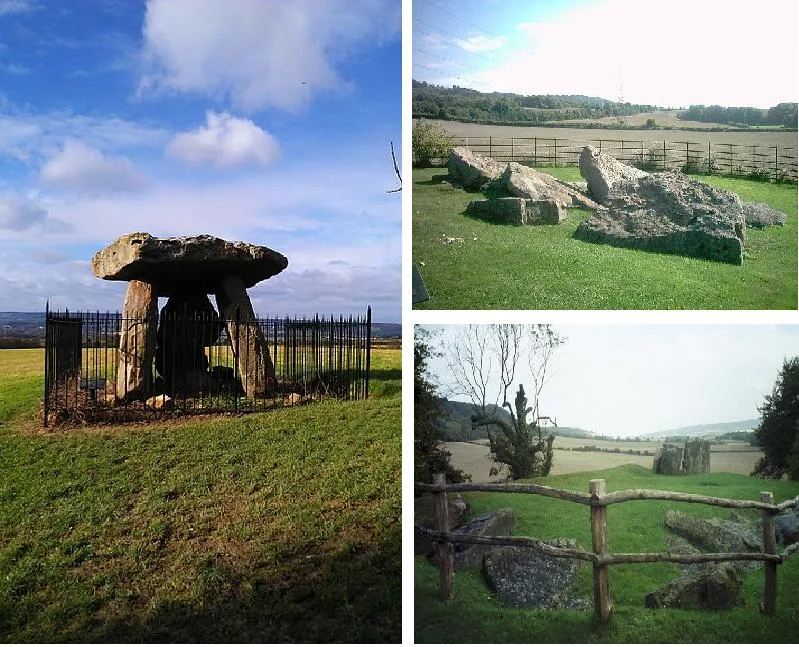
Medway megaliths
Museums · 0.4 km

Little Kit's Coty House
Historic houses · 0.5 km

Little Kit's Coty House
Archaeological sites · 0.5 km

Kits Coty Glamping
Campsites · 0.5 km

Coffin Stone
Natural landmarks · 0.6 km

Coffin Stone
Archaeological sites · 0.6 km

Tottington Stone
Archaeological sites · 0.7 km
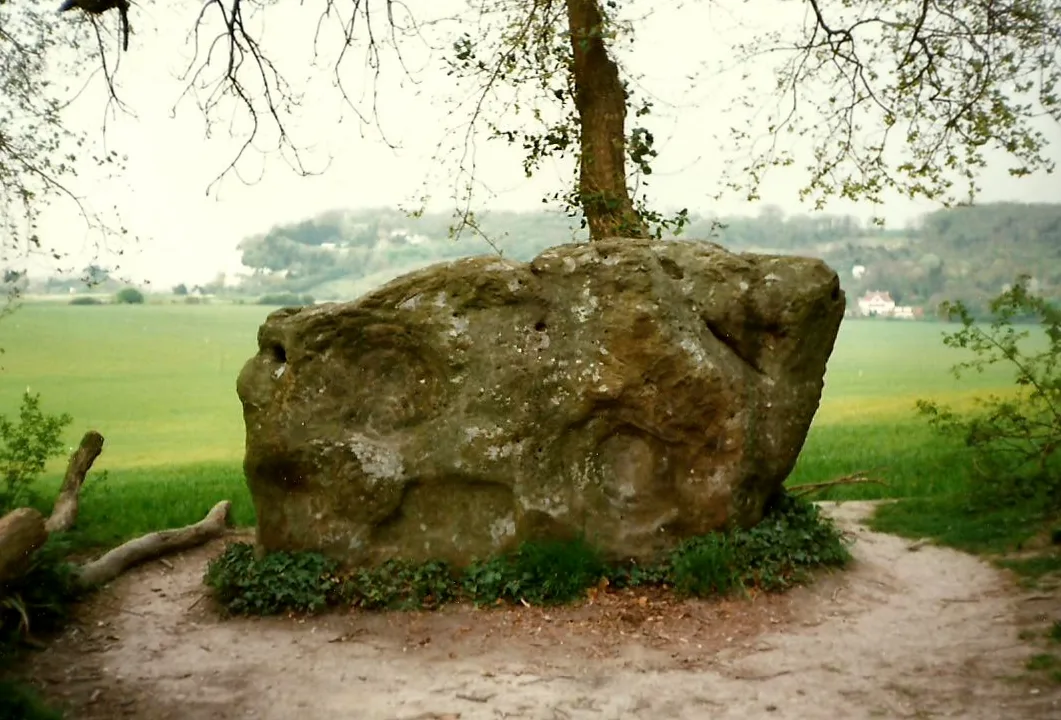
White Horse Stone
Hill forts · 1.0 km
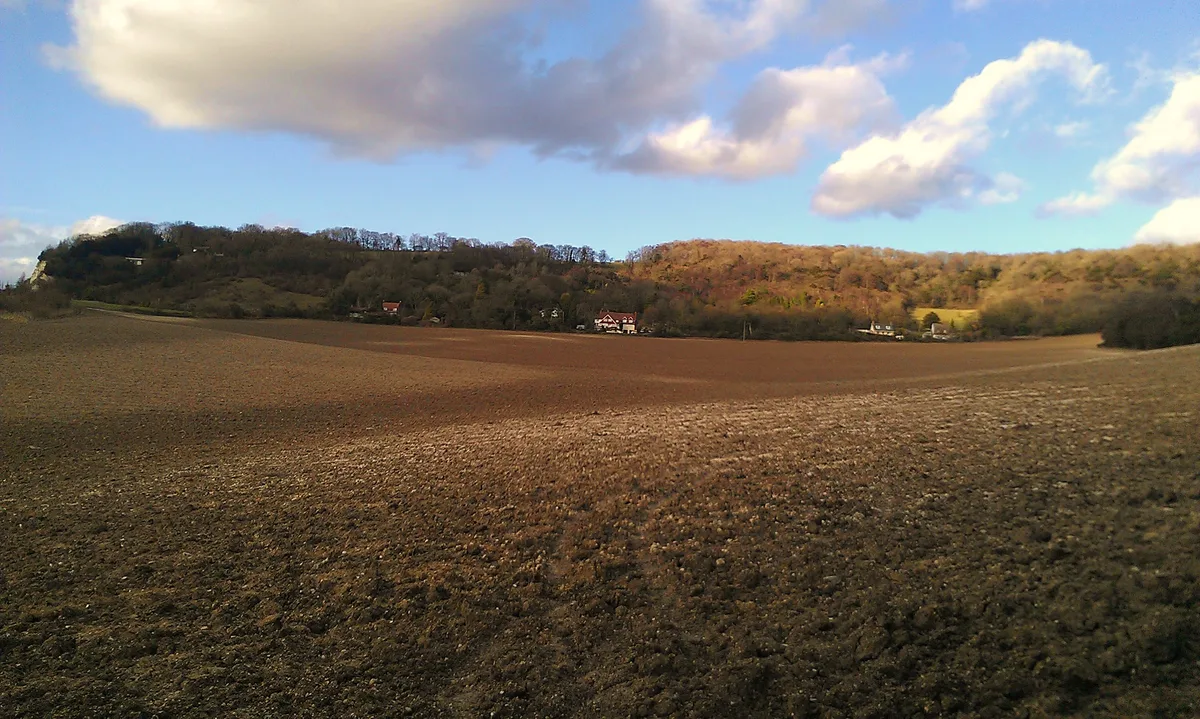
Smythe's Megalith
Hill forts · 1.0 km

Bluebell Hill Picnic Area
Natural landmarks · 1.3 km

Bluebell Hill
Mountains & hills · 1.3 km
Nearby
📷 5Archaeological sites · South East England
Kit's Coty House
Kit's Coty House — archaeological in england london.
📷 5Museums · South East England
Medway megaliths
Medway megaliths — group of long barrows in Kent, England.
📷 5Historic houses · South East England
Little Kit's Coty House
Little Kit's Coty House — a other in england-london, United Kingdom.
📷 5Archaeological sites · South East England
Little Kit's Coty House
Little Kit's Coty House — archaeological in england london.
📷 5Campsites · South East England
Kits Coty Glamping
Kits Coty Glamping — a campsite in england london.
📷 5Natural landmarks · South East England
Coffin Stone
Coffin Stone — a other in england-london, United Kingdom.
Where to eat & stay near Kit's Coty House
Places to stay
📷 5Campsites · South East England
Kits Coty Glamping
Kits Coty Glamping — a campsite in england london.
 📷 5
📷 5Campsites · South East England
Buckmore Park Scout Campsite
Buckmore Park Scout Campsite — a campsite in england london. Brand: The Scout Association.
 📷 5
📷 5 📷 5
📷 5Campsites · South East England
Lower Grange Farm Scout Activity Centre
Lower Grange Farm Scout Activity Centre — a campsite in england london.
 📷 5
📷 5Caravan parks · South East England
Oak View Caravan Park
Oak View Caravan Park — a caravan park in england london.
 📷 5
📷 5Places to eat & drink
 📷 5
📷 5Historic pubs · South East England
Robin Hood Public House
Robin Hood Public House in England South East, United Kingdom.
 📷 5
📷 5 📷 7
📷 7Cafés · South East England
The Little Old Toll House
The Little Old Toll House — a café in england london.
 📷 6
📷 6Historic pubs · South East England
The King's Arms
The King's Arms in England South East, United Kingdom.
 📷 7
📷 7Historic pubs · South East England
The Hollybush Public House
The Hollybush Public House in England South East, United Kingdom.
 📷 5
📷 5Historic pubs · South East England
The Royal Albion Inn
The Royal Albion Inn in England South East, United Kingdom.
More memorials in this region
 📷 5
📷 5Memorials & monuments · South East England
Air Forces Memorial
Air Forces Memorial is a memorial in the United Kingdom.
 📷 5
📷 5Memorials & monuments · South East England
All Saints Church
All Saints Church is a memorial in the United Kingdom.
 📷 5
📷 5Memorials & monuments · South East England
Bevans War Memorial
Bevans War Memorial is a memorial in the United Kingdom.
.jpg?width=1200) 📷 5
📷 5Memorials & monuments · South East England
Cumberland Obelisk
Cumberland Obelisk is a memorial in the United Kingdom.
Frequently asked questions
- Where is Kit's Coty House?
- Kit's Coty House is in Kent, South-East England, United Kingdom (postcode ME20 7EZ), in the parish of Aylesford.
- What is Kit's Coty House?
- Kit's Coty House or Kit's Coty is a chambered long barrow near the village of Aylesford in the southeastern English county of Kent. Constructed circa 4000 BCE, during the Early Neolithic period of Bri
- How do I get to Kit's Coty House?
- The nearest railway station is Aylesford, about 3.3 km away. The nearest town is Aylesford. Drivers can use postcode ME20 7EZ.
- Is Kit's Coty House a protected site?
- Yes — Kit's Coty House is part of the Wouldham to Detling Escarpment SSSI Site of Special Scientific Interest and the Kent Downs National Landscape (AONB).
- Is Kit's Coty House free to visit?
- Yes, Kit's Coty House is free to enter.
- How do I get to Kit's Coty House?
- The nearest railway station is Aylesford, about 3.3 km away. Drivers can navigate to postcode ME20 7EZ.