
Reservoirs & lochs · Scottish Highlands
Glen Roy
Glen Roy in Scotland Islands, United Kingdom.

Dorothy Carse — CC BY-SA 2.0 via Wikimedia Commons licence

Plan your visit
- Typical visit
- 1 h–2.5 h
- Free entry
- Dog-friendly
About
Glen Roy is a place of interest in Scotland Islands, United Kingdom — drawn from open-data sources for visitor reference. See the linked Wikipedia article for the full description.
Photo gallery
Official information
Glen Roy is a scenic glen known for its unique geological features, including the famous 'parallel roads' formed by ancient lake shorelines. Visitors can enjoy walking trails that offer stunning views of the surrounding landscape and opportunities for wildlife observation.
From the Wikipedia article
Glen Roy (Scottish Gaelic: Gleann Ruaidh, meaning "red glen") in the Lochaber area of the Highlands of Scotland is a glen noted for the geological phenomenon of three loch terraces known as the Parallel Roads of Glen Roy. The terraces formed along the shorelines of an ancient ice-dammed loch that existed during a brief period (some 900–1,100 years in duration) of climatic deterioration, during a much longer period of deglaciation, subsequent to the last main ice age (the Devensian). From a distance they resemble man-made roads running along the side of the glen, hence the name. Much of the glen is designated as a national nature reserve. Glen Roy runs north from Glen Spean which takes the main A86 trunk road and the railway of the West Highland Line, both running about a further 23 kilometres (14 mi) southwest via Spean Bridge to Fort William. The village of Roybridge and Roy Bridge railway station are sited where the River Roy joins the River Spean, and from there a narrow single-track road runs north up the glen for almost 16 kilometres (10 mi) to Brae Roy Lodge.
Excerpt from Wikipedia under CC BY-SA 4.0. See the source article linked in Sources below.
Background
History
In the 19th century, the Parallel Roads attracted the attention of many early geologists, including the Reverend William Buckland, Charles Lyell, James Nicol, Charles Babbage, James Geikie, and Joseph Prestwich. This interest ensured that the Parallel Roads featured prominently in the development of geological science. Charles Darwin visited the glen in June 1838 and, drawing on his recent findings in South America during the Beagle expedition concluded that the shorelines were raised beaches of marine origin. His paper on the subject was published in 1839 in the Philosophical Transactions of the Royal Society. This was contradicted in 1840 by Louis Agassiz's Glacial theory which postulated…
Description
The Parallel Roads of Glen Roy, Scottish Highlands, represent a series of ice-dammed proglacial lake shorelines produced during the cold climate of the Younger Dryas (GS1). It has been demonstrated by Dawson, Hampton, Harrison, Greengrass and Fretwell (2002) that each lake shoreline exhibits evidence of glacio-isostatic tilting associated with the decay of the last (Late Devensian) ice sheet. The directions of tilting of the three shorelines (in the quadrant between north and east), are at variance with published glacio-isostatic uplift isobases based on marine shoreline data that suggest a pattern of decreased uplift towards the northwest. The gradient of shoreline tilting (between 0.11…
Sourced from Wikipedia under CC BY-SA 4.0.
- Coordinates
- 56.9700, -4.7600
- Address
- Roybridge, Lochaber, Scotland
- Established
- 1970
- Official site
- sitelink.nature.scot
Sources
Other places nearby
Easan Bhunachain
Natural landmarks · 0.1 km

Carn Bhrunachain
Mountains & hills · 1.2 km

Leana Mhòr
Mountains & hills · 2.2 km

Glen Roy
Gorges · 2.3 km

Turret Bridge
Historic bridges · 2.4 km

Carn Dearg
Mountains & hills · 2.5 km

Beinn Iaruinn
Mountains & hills · 2.6 km

Beinn Iaruinn
Mountains & hills · 2.7 km

Carn Dearg North Top
Mountains & hills · 2.7 km

Leckroy Bridge
Historic bridges · 3.6 km

Meall a' Chomhlain
Mountains & hills · 3.7 km

Falls of Roy
Natural landmarks · 4.3 km
Nearby
📷 3Natural landmarks · Scottish Highlands
Easan Bhunachain
Easan Bhunachain in Scotland Islands, United Kingdom.
📷 5Mountains & hills · Scottish Highlands
Carn Bhrunachain
Carn Bhrunachain — a mountain in scotland-highlands, United Kingdom.
📷 5Mountains & hills · Scottish Highlands
Leana Mhòr
Leana Mhòr — mountain in scotland highlands. Elevation: 676 m.
📷 5📷 5Historic bridges · Scottish Highlands
Turret Bridge
Turret Bridge — category B listed building-listed bridge in scotland-highlands, United Kingdom.
📷 5Mountains & hills · Scottish Highlands
Carn Dearg
Carn Dearg — mountain in scotland highlands. Elevation: 834 m.
Where to eat & stay near Glen Roy
Places to stay
 📷 5
📷 5Campsites · Scottish Highlands
Laggan Locks informal campsite
Laggan Locks informal campsite — a campsite in scotland highlands.
 📷 5
📷 5Campsites · Scottish Highlands
Glas-dhoire Trailblazer Rest
Glas-dhoire Trailblazer Rest — a campsite in scotland highlands.
 📷 5
📷 5Hostels · Scottish Highlands
Great Glen Hostel
Great Glen Hostel — a hostel in scotland highlands.
 📷 5
📷 5 📷 5
📷 5 📷 5
📷 5Campsites · Scottish Highlands
Bunroy Caravan & Camping Park
Bunroy Caravan & Camping Park — a campsite in scotland highlands.
Places to eat & drink
 📷 5
📷 5Historic pubs · Scottish Highlands
The Lovat Hotel
The Lovat Hotel in Scotland Highlands, United Kingdom.
More places in this region
 Flagship📷 3
Reservoirs & lochs · Scottish Highlands
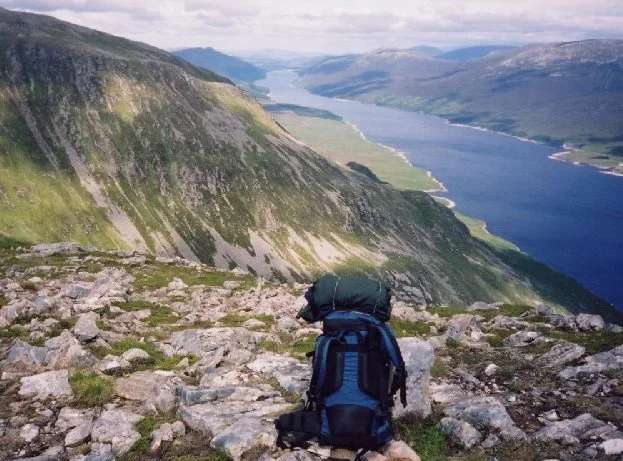
Loch Ericht
Loch Ericht — lake in Perth and Kinross, and Highland, Scotland, UK, outflows to River Ericht.
 Flagship📷 3
Reservoirs & lochs · Scottish Highlands
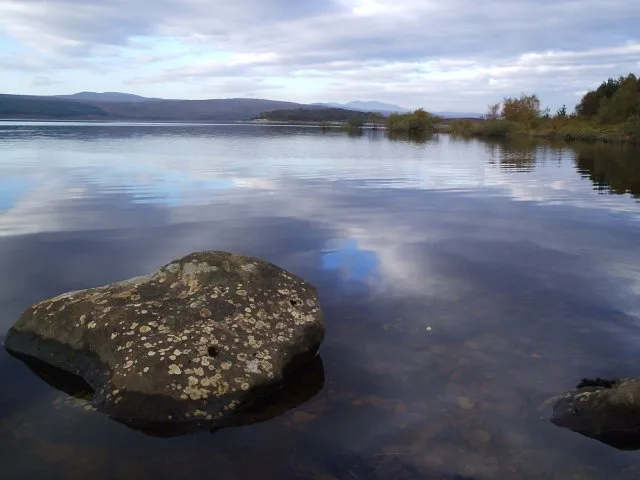
Loch Shin
Loch Shin — reservoir in Highland, Scotland, UK, outflows to the River Shin.
 📷 4
📷 4Reservoirs & lochs · Scottish Highlands
Backwater Reservoir
Backwater Reservoir — lake in Angus, Scotland, UK.
 📷 3
📷 3Reservoirs & lochs · Scottish Highlands
Blackwater Reservoir
Blackwater Reservoir — reservoir in Highland, Scotland, UK, outflows to the River Leven.
Frequently asked questions
- Where is Glen Roy?
- Glen Roy is in the Scottish Highlands, United Kingdom.
- What is Glen Roy?
- Glen Roy in Scotland Islands, United Kingdom.
- How do I get to Glen Roy?
- Its coordinates are 56.9700°, -4.7600°.
- When was Glen Roy built?
- Built or established in 1970.
- Who owns Glen Roy?
- Glen Roy is owned by NatureScot.
- Is Glen Roy free to visit?
- Yes, Glen Roy is free to enter.