
Historic houses · North Wales
Gayton Hall
In or near Thingwall.
Gayton Hall — house in Gayton, Wirral, Merseyside, England, UK.

Colin Pyle — CC BY-SA 2.0 via Wikimedia Commons licence

Plan your visit
- Typical visit
- 1 h–2 h
- Nearest railway station
- Heswall · 2.0 km
- Family-friendly
- Limited wheelchair access
Getting there & planning your visit
To visit Gayton Hall, the nearest railway station is Heswall, located 2 km away. The postcode for sat-nav is CH60 8NW. Accessibility is limited for wheelchair users.
About
Gayton Hall is a historic house in the United Kingdom — typically a country seat, manor, or town house with notable architecture or history. Heritage designation: Grade II* listed building. Wikidata describes it as: "house in Gayton, Wirral, Merseyside, England, UK". Coordinates: 53.3157°, -3.0922°.
Photo gallery
Protected designations
- Site of Special Scientific Interest: Dee Estuary SSSI
- Ramsar wetland: The Dee Estuary
Designations sourced from Natural England open data under OGL v3.
From the Wikipedia article
Gayton Hall is a country house on Gayton Farm Road in Gayton, Merseyside, England. It was built in the 17th century and refaced in the following century. The house is constructed in brick with stone dressings, and has an Ionic doorcase. William of Orange stayed in the house in 1690. In the grounds is a dovecote dated 1663. Both the house and the dovecote are recorded in the National Heritage List for England as designated Grade II* listed buildings.
Excerpt from Wikipedia under CC BY-SA 4.0. See the source article linked in Sources below.
Background
History
Gayton Hall was built in the 17th century, and refaced in the early 18th century. It was the home of the Glegg family. William of Orange stayed with William Glegg in the house on his way to Ireland in 1690. During the 20th century, the house was converted into flats and the stables into garages.
Architecture
The house is constructed in brick on a moulded stone base, and has stone dressings and a slate roof. It is in three storeys, and has a southwest front of nine bays, the central three bays projecting forward. There are stone bands between the storeys, quoins on the corners, and at the top of the house is a cornice and a parapet. There is a central doorcase with engaged fluted Ionic columns and an open pediment with scrolls and in the seventh bay there is a projecting porch. The windows are sashes with keystones, the windows on the lower two floors having 12 panes, and those on the top floor have 16 panes. The northwest face is in four bays, and contains similar windows. The southeast face…
Sourced from Wikipedia under CC BY-SA 4.0.
- Coordinates
- 53.3157, -3.0922
- District
- Wirral
- Parish
- Wirral, unparished area
- Postcode
- CH60 8NW
- Parliamentary constituency
- Wirral West
- Nearest railway station
- Heswall — 2 km
Sources
- wikidata: Q17547201 (CC0)
- wikipedia: Gayton Hall, Wirral (CC BY-SA 4.0)
Other places nearby
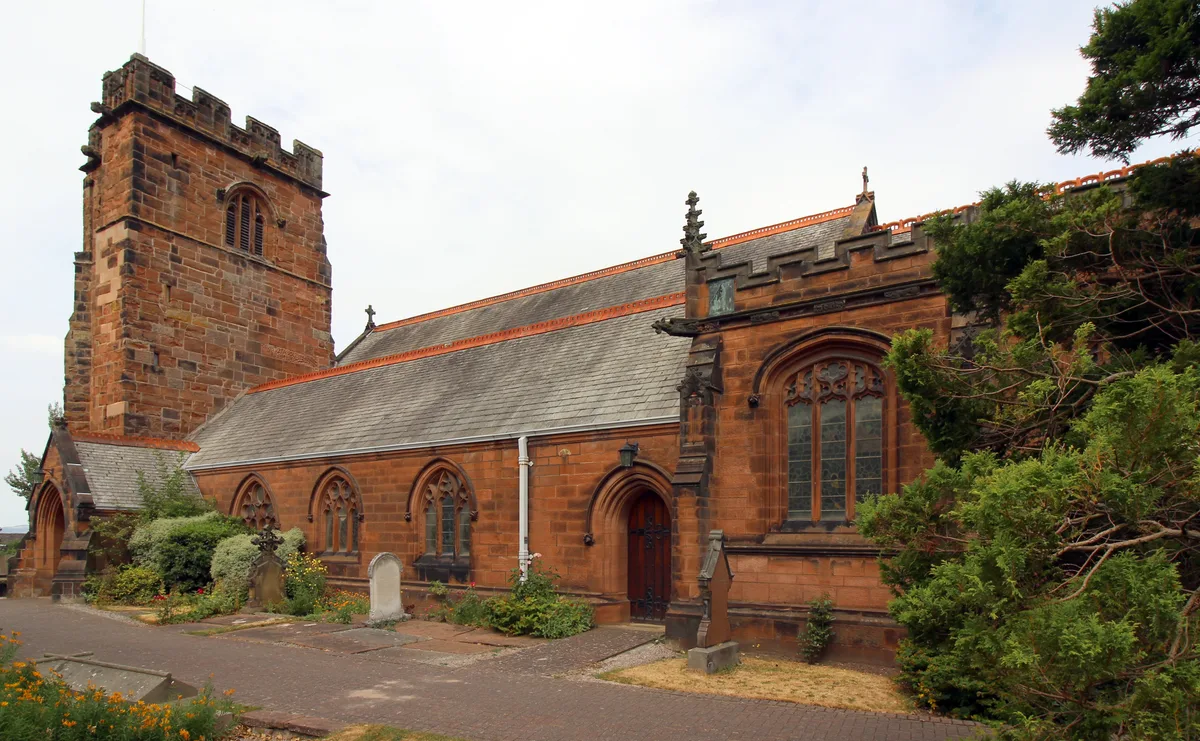
St Peter's Church, Heswall
Historic churches · 1.1 km

Heswall War Memorial
Memorials & monuments · 1.2 km
Hill House Garden Memorial
Memorials & monuments · 1.2 km

Short-Eared Owl
Public art & sculpture · 1.4 km
Parkgate Old Baths
Historic houses · 1.4 km

Heswall
Museums · 1.4 km

Parkgate
Villages · 2.0 km

Poll Hill
Mountains & hills · 2.0 km
Poll Hill
Mountains & hills · 2.0 km

Slipway Boat
Memorials & monuments · 2.1 km

Henry & Nina Latham
Memorials & monuments · 2.2 km
Kay Ridle
Memorials & monuments · 2.2 km
Nearby
📷 3Historic churches · North West England
St Peter's Church, Heswall
St Peter's Church, Heswall — Grade II* listed church in Wirral, UK.
📷 3Memorials & monuments · North West England
Heswall War Memorial
Heswall War Memorial — Grade II listed building-listed memorial in wales-north, United Kingdom.
📷 3Memorials & monuments · North West England
Hill House Garden Memorial
Hill House Garden Memorial — a memorial in wales-north, United Kingdom.
📷 5Public art & sculpture · North Wales
Short-Eared Owl
Short-Eared Owl — a public art in wales-north, United Kingdom.
📷 3Historic houses · North Wales
Parkgate Old Baths
Parkgate Old Baths — a historic house in wales-north, United Kingdom.
📷 5Where to eat & stay near Gayton Hall
Places to stay
 📷 5
📷 5 📷 5
📷 5Caravan parks · North Wales
Fiveways Caravan Park
Fiveways Caravan Park — a caravan park in wales north.
 📷 5
📷 5Hotels · North West England
Thornton Manor
Thornton Manor — a hotel in wales north.
 📷 5
📷 5 📷 5
📷 5 📷 5
📷 5Places to eat & drink
 📷 5
📷 5Historic pubs · North West England
Eastham Ferry Hotel
Eastham Ferry Hotel in Wales North, United Kingdom.
 📷 5
📷 5Historic pubs · North West England
The Copperfield Public House
The Copperfield Public House in Wales North, United Kingdom.
 📷 5
📷 5Historic pubs · North West England
Grapes Public House And Higsons Brewery
Grapes Public House And Higsons Brewery in Wales North, United Kingdom.
 📷 5
📷 5Historic pubs · North West England
Baltic Fleet
Baltic Fleet — Historic pub — listed building or notable heritage status.
 📷 7
📷 7Historic pubs · North West England
Royal Park Hotel, Toxteth
Royal Park Hotel, Toxteth in Wales North, United Kingdom.
 📷 5
📷 5Historic pubs · North West England
That Part Of The Brighton Public House Contained Within Buchanan Road The Brighton Public House
That Part Of The Brighton Public House Contained Within Buchanan Road The Brighton Public House in Wales North, United Kingdom.
More historic houses in this region
 📷 3
📷 3Historic houses · North Wales
2 & 2A Record Street, Ruthin
2 & 2A Record Street, Ruthin — Grade II listed house in Ruthin, Denbighshire.
 📷 3
📷 3Historic houses · North Wales
Aberconwy House
Aberconwy House — historic house in Conwy, Wales.
 📷 3
📷 3 📷 3
📷 3Frequently asked questions
- Where is Gayton Hall?
- Gayton Hall is in North Wales, United Kingdom (postcode CH60 8NW), in the parish of Wirral, unparished area.
- What is Gayton Hall?
- Gayton Hall — house in Gayton, Wirral, Merseyside, England, UK.
- How do I get to Gayton Hall?
- The nearest railway station is Heswall, about 2.0 km away. The nearest town is Thingwall. Drivers can use postcode CH60 8NW.
- Is Gayton Hall a listed building?
- Gayton Hall is officially recognised as Grade II* listed building listed.
- Is Gayton Hall a protected site?
- Yes — Gayton Hall is part of the Dee Estuary SSSI Site of Special Scientific Interest and the The Dee Estuary Ramsar wetland.
- How do I get to Gayton Hall?
- The nearest railway station is Heswall, about 2.0 km away. Drivers can navigate to postcode CH60 8NW.