
Castles · Central Scotland
Fingask Castle
In or near Inchture.
Fingask Castle — castle in Perth and Kinross, Scotland, UK.

Wikimedia Commons contributors — see linked file page for photographer and licence licence

Plan your visit
- Typical visit
- 1.5 h–3 h
- Family-friendly
- Limited wheelchair access
About
Fingask Castle is a castle in the United Kingdom — fortified architecture from the medieval, Tudor, or Victorian-revival period. Heritage designation: category B listed building. Wikidata describes it as: "castle in Perth and Kinross, Scotland, UK". Coordinates: 56.4331°, -3.2536°.
Photo gallery
Heritage listing
Fingask Castle is a country house in Perth and Kinross, Scotland. It is perched 200 feet (61 m) above Rait, three miles (5 km) north-east of Errol, in the Braes of the Carse, on the fringes of the Sidlaw Hills. Thus it overlooks both the Carse of Gowrie and the Firth of Tay and beyond into the Kingdom of Fife. The name derives from Gaelic fionn-gasg: a white or light-coloured appendage. Fingask was once an explicitly holy place, a convenient and numinous stop-off between the abbeys at Falkirk and Scone. It was later held by the Bruce family, and then by the Threiplands. In the eighteenth century it was owned by Jacobites and was forfeited.
From Historic Environment Scotland under OGL v3.
Official information
Fingask Castle is a rural estate in Scotland that serves as a venue for weddings and events. Visitors can explore the historic castle and its gardens, which feature unique topiary and literary characters. The estate also offers self-catering accommodations for larger gatherings.
From the Wikipedia article
Fingask Castle is a country house in Perth and Kinross, Scotland. It is perched 200 feet (61 m) above Rait, three miles (5 km) north-east of Errol, in the Braes of the Carse, on the fringes of the Sidlaw Hills. Thus it overlooks both the Carse of Gowrie and the Firth of Tay and beyond into the Kingdom of Fife. The name derives from Gaelic fionn-gasg: a white or light-coloured appendage. Fingask was once an explicitly holy place, a convenient and numinous stop-off between the abbeys at Falkirk and Scone. It was later held by the Bruce family, and then by the Threiplands. In the eighteenth century it was owned by Jacobites and was forfeited. The castle is a Category B listed building, and the estate is included on the Inventory of Historic Gardens and Designed Landscapes, the national register of significant gardens.
Excerpt from Wikipedia under CC BY-SA 4.0. See the source article linked in Sources below.
Background
History
There are mentions of the lands of Fingask in the Foundation Charter of the Abbey of Scone by Alexander I. The date of the charter is said to be 1114 or 1115. The Bruce family owned the lands of Rait, including Fingask, from the 15th century. The Bruces were descended from the senior line of the Bruces of Clackmannan, which included Sir David Bruce who married Janet, daughter of Sir William Stirling of Keir. Their son, Robert Bruce held charter of Rate (Rait) in 1484, confirmed 1488, and his son David resigned his right to Clackmannan to his uncle in February 1506/7. At the time when Patrick Bruce was laird, a stone was set into the house showing the date 1594. A tombstone near the ruined…
Description
The castle itself is dated 1592, and was built around a 12th-century structure. Between 1828 and 1840 additions were made to the south and west of the castle. Sir Patrick Threipland, 4th Baronet (1762–1837) laid out the park, and his son planted the topiary gardens and installed statuary.
Sourced from Wikipedia under CC BY-SA 4.0.
- Coordinates
- 56.4331, -3.2536
- District
- Perth and Kinross
- Postcode
- PH2 7SA
- Parliamentary constituency
- Perth and Kinross-shire
- Phone
- 01821 670 777
- Official site
- www.fingaskcastle.com
Sources
- wikidata: Q5450189 (CC0)
- wikipedia: Fingask Castle (CC BY-SA 4.0)
- commons: Fingask Castle - geograph.org.uk - 1243868.jpg (CC BY-SA 4.0)
Other places nearby

St Peter's Well
Archaeological sites · 0.1 km
Craig Burn Bridge, Fingask Castle
Historic bridges · 0.2 km

standing stone 320m SSE of Fingask Castle
Windmills · 0.3 km

Old curling clubhouse
Historic houses · 0.5 km

Fingask Sawmill (disused)
Archaeological sites · 0.5 km

Rait Church
Historic houses · 0.6 km
Rait, Old Parish Church
Historic churches · 0.6 km
The Monument, Flawcraig Farm
Memorials & monuments · 0.6 km
Rait Hill Fort
Hill forts · 0.6 km

Rait
Historic churches · 0.7 km

Rait
Vineyards · 0.7 km

Kinnaird
Villages · 1.2 km
Nearby
📷 3Archaeological sites · Central Scotland
St Peter's Well
St Peter's Well — a archaeological in scotland-central, United Kingdom.
📷 5Historic bridges · Central Scotland
Craig Burn Bridge, Fingask Castle
Craig Burn Bridge, Fingask Castle — category C listed building-listed bridge in scotland-central, United Kingdom.
📷 5Windmills · Central Scotland
standing stone 320m SSE of Fingask Castle
standing stone 320m SSE of Fingask Castle — a post mill in scotland-central, United Kingdom.
📷 3Historic houses · Central Scotland
Old curling clubhouse
Old curling clubhouse — a historic house in scotland-central, United Kingdom.
📷 3Archaeological sites · Central Scotland
Fingask Sawmill (disused)
Fingask Sawmill (disused) — a archaeological in scotland-central, United Kingdom.
📷 3Historic houses · Central Scotland
Rait Church
Rait Church — a historic house in scotland-central, United Kingdom.
Where to eat & stay near Fingask Castle
Places to stay
 📷 5
📷 5Caravan parks · Central Scotland
South Valleyfield
South Valleyfield — a caravan park in scotland central.
 📷 5
📷 5Caravan parks · Central Scotland
Inchmartine Caravan Park
Inchmartine Caravan Park — a caravan park in scotland central.
 📷 5
📷 5Caravan parks · Central Scotland
Fernlea CL Caravan Site
Fernlea CL Caravan Site — a caravan park in scotland central.
 📷 5
📷 5Caravan parks · Central Scotland
Beech Hedge Caravan Site
Beech Hedge Caravan Site — a caravan park in scotland highlands.
 📷 5
📷 5Caravan parks · Central Scotland
Scone Camping and Caravanning Club Site
Scone Camping and Caravanning Club Site — a caravan park in scotland central.
 📷 5
📷 5Hostels · Central Scotland
Perth Youth Hostel
Perth Youth Hostel — a hostel in scotland central.
Places to eat & drink
 📷 5
📷 5Historic pubs · Central Scotland
57, 59, 61 West Port, Dundee
57, 59, 61 West Port, Dundee in Scotland Central, United Kingdom.
 📷 7
📷 7Historic pubs · Central Scotland
The Counting House
The Counting House in Scotland Central, United Kingdom.
 📷 5
📷 5 📷 7
📷 7Historic pubs · Central Scotland
The Pillars Bar, 9, 11 Crichton Street, Dundee
The Pillars Bar, 9, 11 Crichton Street, Dundee in Scotland Central, United Kingdom.
 📷 7
📷 7Historic pubs · Central Scotland
Windmill Bar, 113 Hilltown, Dundee
Windmill Bar, 113 Hilltown, Dundee in Scotland Central, United Kingdom.
 📷 7
📷 7Historic pubs · Central Scotland
Ladywell Tavern, 16 Victoria Road, Dundee
Ladywell Tavern, 16 Victoria Road, Dundee in Scotland Central, United Kingdom.
More castles in this region
 📷 3
📷 3 📷 5
📷 5 📷 4
📷 4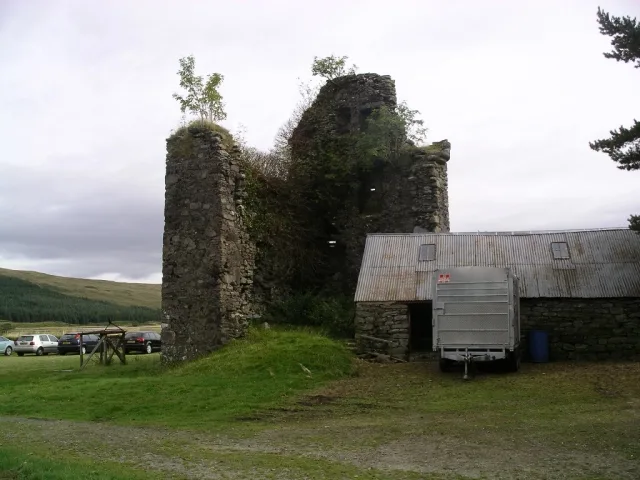 📷 3
📷 3Castles · Central Scotland
Achallader Castle
Achallader Castle — castle in Argyll and Bute, Scotland, UK.
Frequently asked questions
- Where is Fingask Castle?
- Fingask Castle is in central Scotland, United Kingdom (postcode PH2 7SA).
- What is Fingask Castle?
- Fingask Castle — castle in Perth and Kinross, Scotland, UK.
- How do I get to Fingask Castle?
- The nearest town is Inchture. Drivers can use postcode PH2 7SA.
- Is Fingask Castle a listed building?
- Fingask Castle is officially recognised as category B listed building listed.
- Does Fingask Castle charge admission?
- Fingask Castle typically charges admission. Check the official site for current ticket prices and opening hours.
- How do I get to Fingask Castle?
- Drivers can navigate to postcode PH2 7SA. It sits within the Perth and Kinross-shire parliamentary constituency.