
Historic bridges · Scottish Lowlands
Eglinton Tournament Bridge
In or near Crosshouse.
Eglinton Tournament Bridge — category B listed building-listed bridge in scotland-highlands, United Kingdom.

Mary and Angus Hogg — CC BY-SA 2.0 via Wikimedia Commons licence

Plan your visit
- Typical visit
- 15 min–30 min
- Nearest railway station
- Kilwinning · 2.8 km
- Free entry
- Dog-friendly
Getting there & planning your visit
Eglinton Tournament Bridge is located in the Scottish Highlands, with the nearest railway station being Kilwinning, which is 2.8 km away. Entry to the bridge is free. The postcode for sat-nav is KA13 7QD.
About
Eglinton Tournament Bridge is a category B listed building-listed bridge in scotland-highlands, United Kingdom, registered on the Historic Environment Scotland register (entry LB7570). Listed status protects buildings and structures of special architectural or historic interest. See the linked Wikipedia article for further details.
Photo gallery
Heritage listing
The Eglinton Tournament Bridge is a bridge located within Eglinton Country Park near Kilwinning, North Ayrshire, Scotland. The bridge crosses the Lugton Water a short distance northwest of Eglinton Castle (grid reference NS 3206 4224) and was named after the Eglinton Tournament of 1839. The castle and surrounding grounds were once home to the Montgomerie family, Earls of Eglinton and chiefs of the Clan Montgomery.
From Historic Environment Scotland under OGL v3.
From the Wikipedia article
The Eglinton Tournament Bridge is a bridge located within Eglinton Country Park near Kilwinning, North Ayrshire, Scotland. The bridge crosses the Lugton Water a short distance northwest of Eglinton Castle (grid reference NS 3206 4224) and was named after the Eglinton Tournament of 1839. The castle and surrounding grounds were once home to the Montgomerie family, Earls of Eglinton and chiefs of the Clan Montgomery.
Excerpt from Wikipedia under CC BY-SA 4.0. See the source article linked in Sources below.
Background
Architecture
The new bridge may have been erected by the 13th Earl at some time between 1843 and 1856 as part of the total re-modelling of the course of the Lugton Water which had been first undertaken by the 12th Earl (1740–1819) and which included the alteration of its course, the removal of the lakes or ponds and the creation of several weirs. The Lugton Water is liable to severe floods and damage to the easily broken cast-iron work by the force of the current, may have been a reason for its reconstruction at a different site; a severe 'Great Storm' in Ayrshire is recorded as having damaged or destroyed several buildings and structures in February 1856. The first Ordnance Survey map of 1856 shows the…
Description
The surviving 'Tournament Bridge' was built to provide an appropriate crossing point to gain access to the far side of the Lugton Water and the Eglinton Kennels, circa 1845. Archibald Montgomerie, the 13th Earl of Eglinton had the bridge built in a Gothic style, using cast iron for the arches, pinnacles, etc. and stone for the two pairs of miniature ornamental towers at either end. These towers have subtle design differences (see photographs) which are significant in the context of the extended history of the bridge. This 'Tournament' bridge is said to have been designed by the architect David Hamilton; agreement to build the original three arched bridge was reached on 16 October 1799 by…
Sourced from Wikipedia under CC BY-SA 4.0.
- Coordinates
- 55.6447, -4.6700
- District
- North Ayrshire
- Postcode
- KA13 7QD
- Parliamentary constituency
- Central Ayrshire
- Nearest railway station
- Kilwinning — 2.8 km
Sources
- wikidata: Q5348079 (CC0)
- wikipedia: Eglinton Tournament Bridge (CC BY-SA 4.0)
Other places nearby

Headless and Legless Statue
Public art & sculpture · 0.1 km

Park Bridge, Lugton Water, Eglinton Country Park, Irvine
Historic bridges · 0.3 km

Eglinton Camping and Touring Site
Campsites · 0.3 km
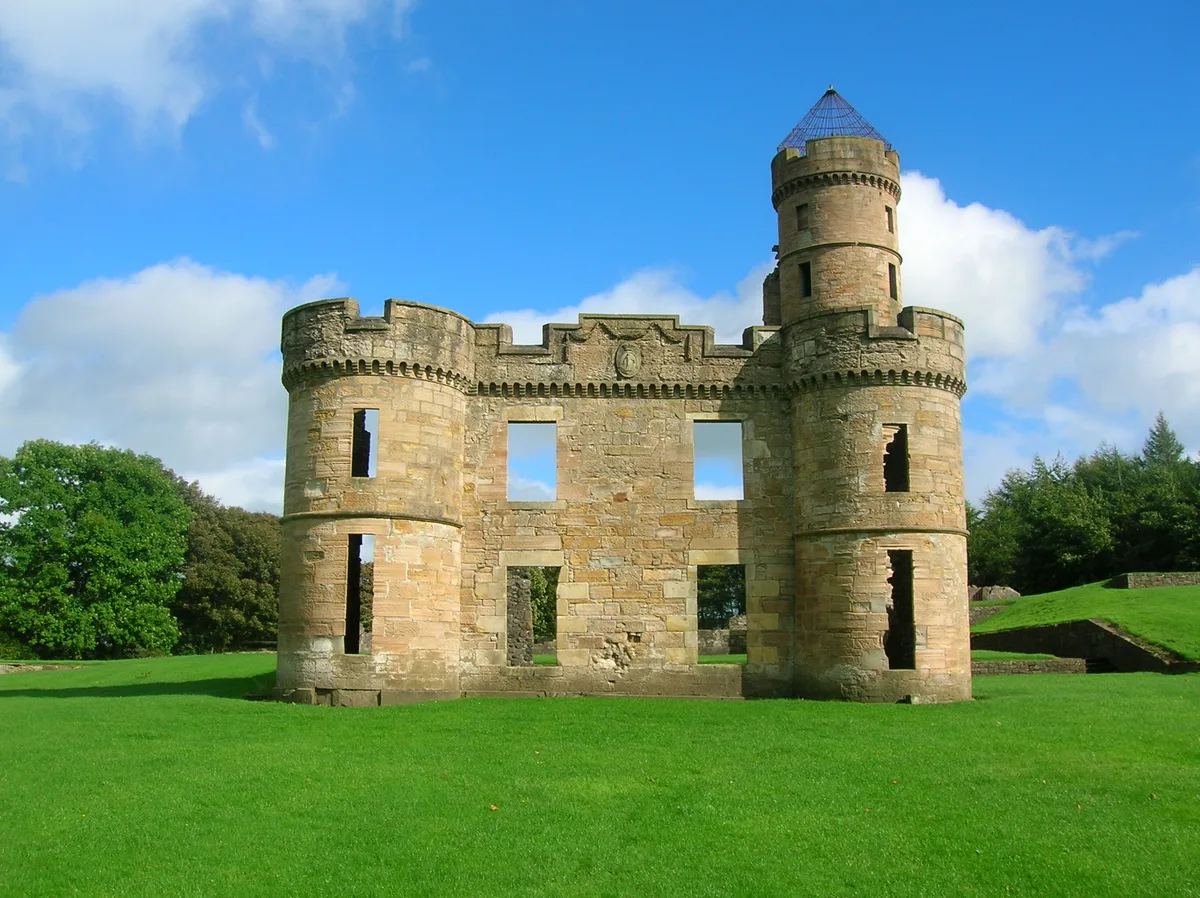
Eglinton Castle
Castles · 0.3 km

9/11 Memorial Cairn
Memorials & monuments · 0.4 km

Belvedere Hill
Historic houses · 0.4 km

Irvine New Town Trail
Wildlife reserves · 0.4 km

Bridge, Kilwinning
Historic bridges · 1.9 km

Circle of Life
Public art & sculpture · 1.9 km

Robert W Service Monument
Memorials & monuments · 1.9 km

Kingsway Bar, 26-28 Main Street, Kilwinning
Historic pubs · 2.0 km
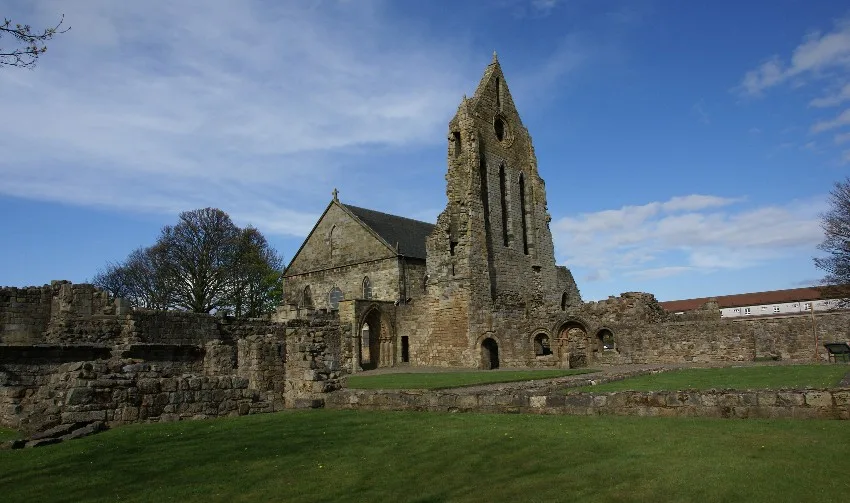
Kilwinning Abbey
Abbeys & priories · 2.0 km
Nearby
📷 3Public art & sculpture · Scottish Lowlands
Headless and Legless Statue
Headless and Legless Statue — a public art in scotland-highlands, United Kingdom.
📷 5Historic bridges · Scottish Lowlands
Park Bridge, Lugton Water, Eglinton Country Park, Irvine
Park Bridge, Lugton Water, Eglinton Country Park, Irvine — category B listed building-listed bridge in scotland-highlands, United Kingdom.
📷 5Campsites · Scottish Lowlands
Eglinton Camping and Touring Site
Eglinton Camping and Touring Site — a campsite in scotland highlands.
📷 5Castles · Scottish Lowlands
Eglinton Castle
Eglinton Castle — mansion in North Ayrshire, Scotland, UK.
📷 3Memorials & monuments · Scottish Lowlands
9/11 Memorial Cairn
9/11 Memorial Cairn — a memorial in scotland-highlands, United Kingdom.
📷 3Historic houses · Scottish Lowlands
Belvedere Hill
Belvedere Hill — a historic house in scotland-highlands, United Kingdom.
Where to eat & stay near Eglinton Tournament Bridge
Places to stay
📷 5Campsites · Scottish Lowlands
Eglinton Camping and Touring Site
Eglinton Camping and Touring Site — a campsite in scotland highlands.
 📷 5
📷 5 📷 5
📷 5Caravan parks · Scottish Lowlands
Viewfield Manor Leisure Park
Viewfield Manor Leisure Park — a caravan park in scotland highlands.
 📷 5
📷 5Caravan parks · Scottish Lowlands
Sandylands Holiday Park
Sandylands Holiday Park — a caravan park in scotland highlands. Brand: Parkdean Resorts.
 📷 5
📷 5Caravan parks · Scottish Lowlands
Glenview Caravan Park
Glenview Caravan Park — a caravan park in scotland highlands.
 📷 5
📷 5Caravan parks · Scottish Lowlands
Waterside Caravan Park
Waterside Caravan Park — a caravan park in scotland highlands.
Places to eat & drink
📷 5Historic pubs · Scottish Lowlands
Kingsway Bar, 26-28 Main Street, Kilwinning
Kingsway Bar, 26-28 Main Street, Kilwinning in Scotland Central, United Kingdom.
 📷 5
📷 5Historic pubs · Scottish Lowlands
Public House, Lawthorn, Irvine
Public House, Lawthorn, Irvine in Scotland Central, United Kingdom.
 📷 7
📷 7Historic pubs · Scottish Lowlands
Champion Shell Inn, 5 Schoolwell Street, Stevenston
Champion Shell Inn, 5 Schoolwell Street, Stevenston in Scotland Central, United Kingdom.
 📷 5
📷 5Restaurants · Scottish Lowlands
Braidwoods
Braidwoods — a restaurant in scotland highlands.
 📷 5
📷 5Historic pubs · Scottish Lowlands
The Auld Hoose Bar, 9 Main Street, Dalry
The Auld Hoose Bar, 9 Main Street, Dalry in Scotland Central, United Kingdom.
 📷 7
📷 7Historic pubs · Scottish Lowlands
Weston Tavern
Weston Tavern in Scotland Central, United Kingdom.
More bridges in this region
 📷 5
📷 5 📷 3
📷 3Historic bridges · Scottish Lowlands
Spittal-on-Rule
Spittal-on-Rule in England North East, United Kingdom.
 📷 4
📷 4Historic bridges · Scottish Lowlands
Coldstream Bridge
Coldstream Bridge in England North East, United Kingdom.
 📷 3
📷 3Frequently asked questions
- Where is Eglinton Tournament Bridge?
- Eglinton Tournament Bridge is in the Scottish Lowlands, United Kingdom (postcode KA13 7QD).
- What is Eglinton Tournament Bridge?
- Eglinton Tournament Bridge — category B listed building-listed bridge in scotland-highlands, United Kingdom.
- How do I get to Eglinton Tournament Bridge?
- The nearest railway station is Kilwinning, about 2.8 km away. The nearest town is Crosshouse. Drivers can use postcode KA13 7QD.
- Who owns Eglinton Tournament Bridge?
- Eglinton Tournament Bridge is owned by | maint = {{Hlist|North Ayrshire Council|Historic Environment Scotland}}.
- Is Eglinton Tournament Bridge a listed building?
- Eglinton Tournament Bridge is officially recognised as category B listed building listed.
- Is Eglinton Tournament Bridge free to visit?
- Yes, Eglinton Tournament Bridge is free to enter.
- How do I get to Eglinton Tournament Bridge?
- The nearest railway station is Kilwinning, about 2.8 km away. Drivers can navigate to postcode KA13 7QD.