
Canals · South West England
Claverton Pumping Station
In or near Bathford.
Claverton Pumping Station in the village of Claverton, in the English county of Somerset, pumps water from the River Avon to the Kennet and Avon Canal using power from the flow of the river. It is a G

Christine Johnstone — CC BY-SA 2.0 via Wikimedia Commons licence
_-_geograph.org.uk_-_4482145.jpg)
Plan your visit
- Typical visit
- 1 h–2 h
- Nearest railway station
- Bath Spa · 3.8 km
- Free entry
- Dog-friendly
Getting there & planning your visit
Claverton Pumping Station is located in Bath and North East Somerset, postcode BA2 7BH. The nearest railway station is Bath Spa, which is 3.8 km away. Entry to the site is free.
About
Claverton Pumping Station in the village of Claverton, in the English county of Somerset, pumps water from the River Avon to the Kennet and Avon Canal using power from the flow of the river. It is a Grade I listed building, having been upgraded from Grade II in 2019. The pumping station was built by John Rennie between 1809 and 1813 to overcome water supply problems on the canal. It uses a 24-foot (7 m) wide wooden breastshot water wheel to drive two Boulton and Watt 18-foot (5 m) long cast iron rocking beams, which power lift pumps to raise water 48 feet (15 m) up to the canal. The pumping station has undergone several modifications since its initial construction, including revising the wheel into two sections each 12 feet (3.7 m) wide separated by a 9-inch (23 cm) gap. The station's operational life ended in 1952, by which time its maintenance and repair had become uneconomical in the light of falling traffic on the canal. In the 1960s and 1970s restoration was carried out by students from the University of Bath and the Kennet and Avon Canal Trust, who replaced and repaired the buildings and equipment and returned the pumping station to a functional state by 1978. It is now owned by the Canal and River Trust and maintained by the Claverton Pumping Station Trust CIO, open to the public as an industrial heritage museum.
Photo gallery
360° viewimagery from 2021
Imagery © Mapillary contributors, CC BY-SA 4.0
Protected designations
- Area of Outstanding Natural Beauty: Cotswolds
Designations sourced from Natural England open data under OGL v3.
From the Wikipedia article
Claverton Pumping Station in the village of Claverton, in the English county of Somerset, pumps water from the River Avon to the Kennet and Avon Canal using power from the flow of the river. It is a Grade I listed building, having been upgraded from Grade II in 2019. The pumping station was built by John Rennie between 1809 and 1813 to overcome water supply problems on the canal. It uses a 24-foot (7 m) wide wooden breastshot water wheel to drive two Boulton and Watt 18-foot (5 m) long cast iron rocking beams, which power lift pumps to raise water 48 feet (15 m) up to the canal. The pumping station has undergone several modifications since its initial construction, including revising the wheel into two sections each 12 feet (3.7 m) wide separated by a 9-inch (23 cm) gap. The station's operational life ended in 1952, by which time its maintenance and repair had become uneconomical in the light of falling traffic on the canal. In the 1960s and 1970s restoration was carried out by students from the University of Bath and the Kennet and Avon Canal Trust, who replaced and repaired the buildings and equipment and returned the pumping station to a functional state by 1978. It is now owned by the Canal and River Trust and maintained by the Claverton Pumping Station Trust CIO, open to the public as an industrial heritage museum.
Excerpt from Wikipedia under CC BY-SA 4.0. See the source article linked in Sources below.
Background
Architecture
The idea of an east to west waterway link across southern England was first mentioned in Elizabethan times, between 1558 and 1603, to take advantage of the proximity of the rivers Avon and Thames, only 3 mi apart at their closest. Plans for a waterway were shelved until the early 18th century. In 1723 the Kennet Navigation through Reading opened. The Avon navigation from Bristol to Bath was opened in 1727. In 1788 the so-called "Western Canal" was proposed to improve trade and communication links to towns such as Hungerford, Marlborough, Wiltshire, Calne, Chippenham and Melksham. The following year the engineers Barns, Simcock and Weston submitted a proposed route for this canal, although…
Description
At Claverton, the Kennet and Avon Canal is cut into the side of the Avon valley above the River Avon. The pumping station is in a pump house built of Bath Stone, which is at river level and separated from the canal by the Wessex Main Line. It was designed by John Rennie and built by Fox of Bristol. The pump house has a slate hipped roof. The wheelhouse projects to the west of the pump house and has weatherboard sides. The east gable wall has three doors allowing access to the wheel itself. The water passes over depressing sluices which can be raised or lowered by hand cranking, and then powers a breastshot water wheel. The 24 ft wide wheel is in two sections, each 12 ft wide and 17 ft in…
Visiting
The pumping station is maintained by volunteers and is open regularly except during winter maintenance periods. Depending on volunteer numbers, the wheel may be either static or pumping. Pumping days are advertised in advance, but are always subject to river conditions and ageing machinery. There is also a working model of the pumping station in the pumphouse.
Sourced from Wikipedia under CC BY-SA 4.0.
- Coordinates
- 51.3781, -2.3017
- District
- Bath and North East Somerset
- Parish
- Claverton
- Postcode
- BA2 7BH
- Parliamentary constituency
- Frome and East Somerset
- Established
- 1813
- Nearest railway station
- Bath Spa — 3.8 km
Sources
- wikipedia: Claverton Pumping Station (CC BY-SA 4.0)
Other places nearby

Bridge Over A Leat To South Of Claverton Pumping Station
Historic bridges · 0.0 km

Bridge Over Kennet And Avon Canal At National Grid Reference St 7907 6421
Historic bridges · 0.2 km

Kennet and Avon Canal
Canals · 0.3 km

Bridge Over Kennet And Avon Canal At National Grid Reference St7876 6471
Historic bridges · 0.5 km
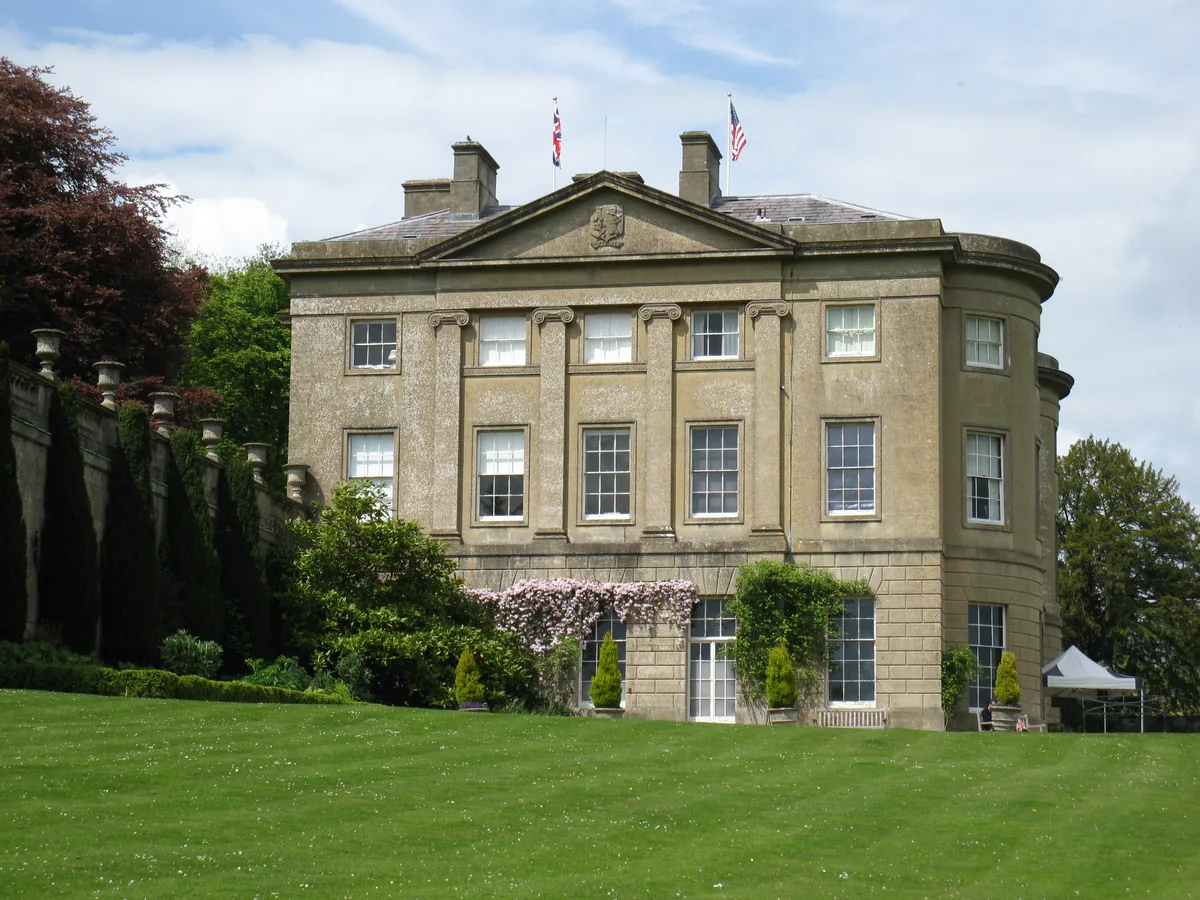
American Museum and Gardens
Museums · 0.7 km

Claverton, Somerset
Museums · 0.7 km

The American Museum (Claverton Manor)
Museums · 0.7 km

Disused mines
Historic houses · 1.5 km

The Edge
Theatres · 1.6 km

Rainbow Wood Farm
B&Bs · 1.7 km

Bathford Hill
Mountains & hills · 1.7 km

Browne's Folly
Follies · 1.7 km
Nearby
📷 5Historic bridges · South West England
Bridge Over A Leat To South Of Claverton Pumping Station
Bridge Over A Leat To South Of Claverton Pumping Station — Grade II listed building-listed bridge in england-south-east, United Kingdom.
📷 5Historic bridges · South West England
Bridge Over Kennet And Avon Canal At National Grid Reference St 7907 6421
Bridge Over Kennet And Avon Canal At National Grid Reference St 7907 6421 — Grade II listed building-listed bridge in england-south-east, United Kingdom.
📷 5Canals · South West England
Kennet and Avon Canal
Kennet and Avon Canal — South-England east-west coastal linking waterway via London, Reading & Bristol.
📷 5Historic bridges · South West England
Bridge Over Kennet And Avon Canal At National Grid Reference St7876 6471
Bridge Over Kennet And Avon Canal At National Grid Reference St7876 6471 — Grade II listed building-listed bridge in england-south-east, United Kingdom.
📷 5Museums · South West England
American Museum and Gardens
American Museum and Gardens — culture and arts museum near Bath, England, United Kingdom.
📷 5Museums · South West England
Claverton, Somerset
Claverton is a small village and civil parish about 2 miles (3 km) east of Bath at the southern end of the Cotswolds Area of Outstanding Natural Beauty, in Somerset, England. The parish has a populati
Where to eat & stay near Claverton Pumping Station
Places to stay
📷 5B&Bs · South West England
Rainbow Wood Farm
Rainbow Wood Farm — a bed-and-breakfast in england south east.
 📷 5
📷 5Campsites · South West England
The Blackberries Camping Park
The Blackberries Camping Park — a campsite in england south east.
 📷 5
📷 5Hotels · South West England
Combe Grove Manor Hotel
Combe Grove Manor Hotel — a hotel in england south east.
 📷 5
📷 5 📷 5
📷 5Hotels · South West England
The Bath Spa Hotel
The Bath Spa Hotel — a hotel in england south east. Brand: Macdonald Hotels and Resort.
 📷 5
📷 5B&Bs · South West England
Brindleys
Brindleys — a bed-and-breakfast in england south east.
Places to eat & drink
 📷 7
📷 7Historic pubs · South West England
The Inn And Public House
The Inn And Public House in England South West, United Kingdom.
 📷 7
📷 7Historic pubs · South West England
The Wheelwright's Arms
The Wheelwright's Arms in England South West, United Kingdom.
 📷 7
📷 7Restaurants · South West England
The Bathampton Mill
The Bathampton Mill — a restaurant in england south east.
 📷 7
📷 7Historic pubs · South West England
The Hop Pole Inn
The Hop Pole Inn in England South West, United Kingdom.
 📷 5
📷 5Cafés · South West England
The Darling Deli Kitchen
The Darling Deli Kitchen — a café in england south east.
 📷 7
📷 7Cafés · South West England
The Mad Hatter's Tea Party
The Mad Hatter's Tea Party — a café in england south east.
More places in this region
📷 5Canals · South West England
Kennet and Avon Canal
Kennet and Avon Canal — South-England east-west coastal linking waterway via London, Reading & Bristol.
 📷 5
📷 5Canals · South West England
Somerset Coal Canal
Somerset Coal Canal — canal in Somerset, England.
 📷 5
📷 5Canals · South West England
Weston Cut
Weston Cut — navigation cut on the River Avon in Bath, Somerset, England, UK.
 📷 5
📷 5Frequently asked questions
- Where is Claverton Pumping Station?
- Claverton Pumping Station is in South-West England, United Kingdom (postcode BA2 7BH), in the parish of Claverton.
- What is Claverton Pumping Station?
- Claverton Pumping Station in the village of Claverton, in the English county of Somerset, pumps water from the River Avon to the Kennet and Avon Canal using power from the flow of the river. It is a G
- How do I get to Claverton Pumping Station?
- The nearest railway station is Bath Spa, about 3.8 km away. The nearest town is Bathford. Drivers can use postcode BA2 7BH.
- When was Claverton Pumping Station built?
- Built or established in 1813.
- Who owns Claverton Pumping Station?
- Claverton Pumping Station is owned by Canal and River Trust.
- Is Claverton Pumping Station a protected site?
- Yes — Claverton Pumping Station is part of the Cotswolds National Landscape (AONB).
- Is Claverton Pumping Station free to visit?
- Yes, Claverton Pumping Station is free to enter.
- How do I get to Claverton Pumping Station?
- The nearest railway station is Bath Spa, about 3.8 km away. Drivers can navigate to postcode BA2 7BH.