
Public art & sculpture · North East England
China
In or near Durham.
China — a public art in scotland-lowlands, United Kingdom.

Eirian Evans — CC BY-SA 2.0 via Wikimedia Commons licence

Plan your visit
- Typical visit
- 1 h–2 h
- Nearest railway station
- Durham · 1.4 km
- Free entry
- Dog-friendly
Getting there & planning your visit
To visit China in County Durham, the nearest railway station is Durham, located 1.4 km away. Entry is free.
About
China is a public art located in scotland-lowlands, United Kingdom. Sourced from OpenStreetMap (ODbL licence); see local listings for visitor information, opening hours and admission details.
Photo gallery
Official information
The document outlines the Law on the Standard Spoken and Written Chinese Language in China, which aims to promote the use and normalization of Putonghua and standardized Chinese characters. It includes provisions for education, administration, and the rights of citizens to learn and use the language.
From the Wikipedia article
China, officially the People's Republic of China (PRC), is a country in East Asia. It is the second-most populous country after India, with a population exceeding 1.4 billion, representing 17% of the world's population. China borders fourteen countries by land across an area of 9.6 million square kilometers (3,700,000 sq mi), making it the third-largest country by area. The country is divided into 33 province-level divisions: 22 provinces, 5 autonomous regions, 4 municipalities, and 2 semi-autonomous special administrative regions. Beijing is the capital, while Shanghai is the most populous city by urban area and largest financial center. The first humans in China arrived during the Paleolithic era. By the 2nd millennium BCE dynastic states had emerged in the Yellow River basin. The 8th–3rd centuries BCE saw a breakdown in the authority of the Zhou dynasty, accompanied by the emergence of administrative and military techniques, literature and philosophy. In 221 BCE, China was unified under an emperor, ushering in two millennia of imperial rule. Chinese achievements include the invention of gunpowder, paper, printing and the compass, the establishment of the Silk Road, and the building of the Great Wall. Chinese culture has flourished and has had a great influence on the region and beyond. China began to cede parts of the country in the 19th century, to European powers through a series of unequal treaties. The 1911 Revolution overthrew the Qing dynasty and the Republic of China was established the following year. The country was unstable and fragmented during the Warlord Era; this came to an end with the Northern Expedition conducted by the Kuomintang to reunify the country. The Chinese Civil War began in 1927, when Kuomintang forces purged members of the Chinese Communist Party (CCP). China was invaded by the Empire of Japan in 1937, leading the CCP and Kuomintang to form the Second United Front to fight the Japanese. The Second Sino-Japanese War ended in a Chinese victory; however, the CCP and the Kuomintang resumed their civil war. In 1949, the CCP proclaimed the People's Republic of China and forced the Kuomintang-led government to retreat to the island of Taiwan. The country was split, with both sides claiming to be the legitimate government. Following the implementation of land reforms, attempts by the CCP to realize communism failed: the Great Leap Forward was responsible for the Great Chinese Famine which resulted in millions of deaths, and the Cultural Revolution was a period of turmoil and persecution. The reform and opening up that began in 1978 moved the country away from a planned economy towards a market-based economy, spurring an economic boom. A movement for political liberalization stalled after the 1989 Tiananmen Square protests and massacre. Since 1949, China has been a unitary communist state with the CCP as its sole ruling party. It is one of the five permanent members of the UN Security Council and a member of numerous multilateral and regional organizations. Making up around one-fifth of the world's economy, China is the second-wealthiest country in the world, with the Chinese economy being the largest when adjusted for PPP. However, China ranks poorly in measures of democracy and human rights. China has been one of the fastest-growing modern economies and is the world's largest manufacturer and exporter, as well as the second-largest importer. China has the world's largest standing army, second-largest defense…
Excerpt from Wikipedia under CC BY-SA 4.0. See the source article linked in Sources below.
Background
History
, from the Wujing Zongyao of 1044 CE]] China was a world leader in science and technology until the Ming dynasty. Ancient and medieval Chinese discoveries and inventions, such as papermaking, printing, the compass, and gunpowder (the Four Great Inventions), became widespread across East Asia, the Middle East and later Europe. Chinese mathematicians were the first to use negative numbers. By the 17th century, the Western World surpassed China in scientific and technological advancement. The causes of this early modern Great Divergence continue to be debated by scholars. After repeated military defeats by the European colonial powers and Imperial Japan in the 19th century, Chinese reformers…
Architecture
in Beijing, with the Gate of Divine Prowess at center]] Wood is the most commonly used material in traditional Chinese architecture. Buildings are often built around complex wooden frames with three layers. Usually made of ceramic tiles, the roofs of important buildings are often ornate and hipped, with additional sets of eaves below the main roof. Material for foundations range from rammed earth to brick to marble depending on the extravagance of the building. Traditional buildings are often arranged around cardinal directions, with grandeur expressed through large complexes of buildings rather than through height. Courtyards, enclosed by walls and covered corridors on three or four sides,…
Visiting
is one of the most popular tourist attractions in the world.]] China received 82 million international visitors in 2025, and in 2018 was the fourth-most-visited country in the world. It also experiences an enormous volume of domestic tourism; Chinese tourists made an estimated 6.5 billion travels within the country in 2025. China hosts the world's second-largest number of World Heritage Sites (60) after Italy, and is one of the most popular tourist destinations (first in the Asia-Pacific).
Sourced from Wikipedia under CC BY-SA 4.0.
- Coordinates
- 54.7690, -1.5913
- District
- County Durham
- Parish
- City of Durham
- Postcode
- DH1 4FL
- Parliamentary constituency
- City of Durham
- Nearest railway station
- Durham — 1.4 km
- Official site
- en.moe.gov.cn
Sources
- osm: node/10814770382 (ODbL)
- wikipedia: China (CC BY-SA 4.0)
Other places nearby
Italy
Public art & sculpture · 0.0 km
America
Public art & sculpture · 0.0 km
Neville House
Memorials & monuments · 0.0 km
Ustinov College
Memorials & monuments · 0.0 km
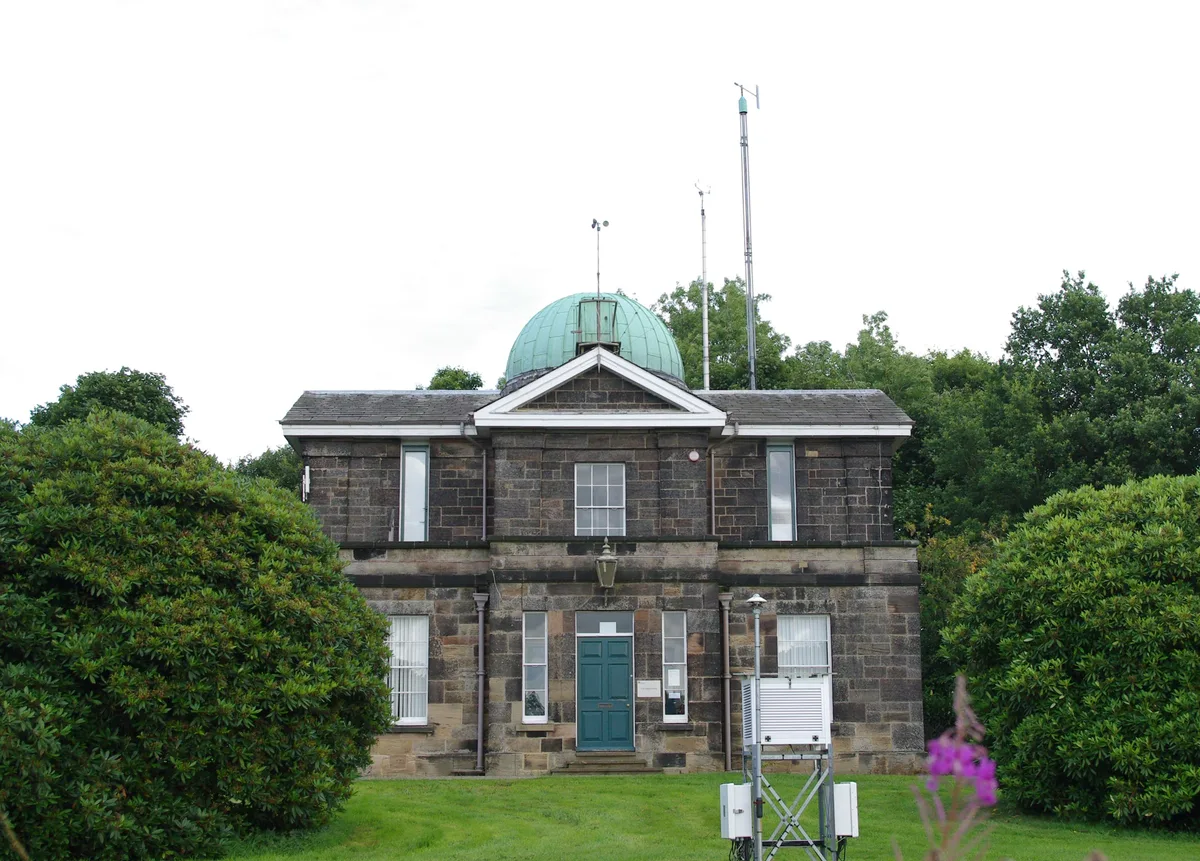
Durham University Observatory
Observatories · 0.3 km

Neville's Cross
Memorials & monuments · 0.4 km
Durham Miners Heritage Centre
Museums · 0.4 km
Lowes Barn
Memorials & monuments · 0.5 km

Observatory Hill
Mountains & hills · 0.5 km

Durham School
Cathedrals · 0.6 km
River Deerness
Natural landmarks · 0.6 km

Durham University Business School
Other places · 0.6 km
Nearby
📷 4Public art & sculpture · North East England
Italy
Italy — a public art in scotland-lowlands, United Kingdom.
📷 3Public art & sculpture · North East England
America
America — a public art in scotland-lowlands, United Kingdom.
📷 3Memorials & monuments · North East England
Neville House
Neville House — a memorial in scotland-lowlands, United Kingdom.
📷 4Memorials & monuments · North East England
Ustinov College
Ustinov College in England North East, United Kingdom.
📷 3Observatories · North East England
Durham University Observatory
Durham University Observatory — building in Durham, England, UK.
📷 4Memorials & monuments · North East England
Neville's Cross
Neville's Cross in England North East, United Kingdom.
Where to eat & stay near China
Places to stay
 📷 5
📷 5B&Bs · North East England
The Georgian Town House
The Georgian Town House — a bed-and-breakfast in scotland lowlands.
 📷 5
📷 5B&Bs · North East England
Castle View Guest House
Castle View Guest House — a bed-and-breakfast in scotland lowlands.
 📷 5
📷 5Caravan parks · North East England
Baxter Wood Farm Caravan Site
Baxter Wood Farm Caravan Site — a caravan park in scotland lowlands.
 📷 5
📷 5Hotels · North East England
Durham Marriott Hotel Royal County
Durham Marriott Hotel Royal County — a hotel in scotland lowlands.
 📷 5
📷 5Hotels · North East England
Hotel Indigo Durham
Hotel Indigo Durham — a hotel in scotland lowlands.
 📷 5
📷 5Hotels · North East England
Radisson Blu
Radisson Blu — a hotel in scotland lowlands.
Places to eat & drink
 📷 5
📷 5Historic pubs · North East England
Colpitts Hotel
Colpitts Hotel in England North East, United Kingdom.
 📷 5
📷 5Restaurants · North East England
Happiness 2 Barbeque
Happiness 2 Barbeque — a restaurant in scotland lowlands.
 📷 5
📷 5 📷 7
📷 7Restaurants · North East England
Shaheen's Indian
Shaheen's Indian — a restaurant in scotland lowlands.
 📷 5
📷 5Cafés · North East England
Caffè Nero
Caffè Nero — a café in scotland lowlands. Cuisine: coffee shop. Brand: Caffè Nero.
 📷 5
📷 5More places in this region
 📷 3
📷 3Public art & sculpture · North East England
Crossing Points
Crossing Points — a public art in england-yorkshire, United Kingdom.
.jpg?width=1200) 📷 3
📷 3Public art & sculpture · North East England
Stockton Flyer
Stockton Flyer — Public artwork (installation).
 📷 3
📷 3Public art & sculpture · North East England
Temenos
Temenos — Public artwork (sculpture) by Anish Kapoor.
 📷 4
📷 4Public art & sculpture · North East England
Apollo Pavilion
Apollo Pavilion in England North East, United Kingdom.
Frequently asked questions
- Where is China?
- China is in North-East England, United Kingdom (postcode DH1 4FL), in the parish of City of Durham.
- What is China?
- China — a public art in scotland-lowlands, United Kingdom.
- How do I get to China?
- The nearest railway station is Durham, about 1.4 km away. The nearest town is Durham. Drivers can use postcode DH1 4FL.
- Is China free to visit?
- Yes, China is free to enter.
- How do I get to China?
- The nearest railway station is Durham, about 1.4 km away. Drivers can navigate to postcode DH1 4FL.