
Historic houses · London
Chevening
In or near Pratt's Bottom.
Chevening — a Grade I-listed historic house in england-london, United Kingdom.

Marathon — CC BY-SA 2.0 via Wikimedia Commons licence

Plan your visit
- Typical visit
- 1 h–2 h
- Nearest railway station
- Dunton Green · 2.8 km
- Family-friendly
- Limited wheelchair access
Getting there & planning your visit
To visit Chevening, the nearest railway station is Dunton Green, located 2.8 km away. The postcode for sat-nav is TN14 6HG. Please note that wheelchair accessibility is limited.
About
Chevening is a Grade I-listed building in england-london, United Kingdom. Grade I status is conferred by Historic England (or Cadw, Historic Environment Scotland or NIEA equivalents) on buildings of exceptional national interest. See the linked Wikipedia article for full historical and architectural details.
Photo gallery
Protected designations
- Area of Outstanding Natural Beauty: Kent Downs
Designations sourced from Natural England open data under OGL v3.
From the Wikipedia article
Chevening House () is a large country house in the parish of Chevening in Kent, England. Built between 1617 and 1630 to a design reputedly by Inigo Jones and greatly extended after 1717, it is a Grade I listed building. The surrounding gardens, pleasure grounds and park are listed Grade II*. Formerly the principal seat of the earls Stanhope, the house and estate are owned and maintained at the expense of the trust of the Chevening Estate, under the Chevening Estate Act 1959 (amended 1987), to serve as a furnished country residence for a person nominated by the prime minister, so qualified by being a member of the Cabinet or a descendant of King George VI. The nominee pays for their own private living expenses when in residence but government departments arrange and carry out official business at the estate. Chevening House is not an official residence, but has been traditionally used by the Foreign Secretary.
Excerpt from Wikipedia under CC BY-SA 4.0. See the source article linked in Sources below.
Background
History
There has been a house on the site since at least 1199 and the estate originally formed part of the archiepiscopal manor of Otford. The present 15-bedroomed house is a three-storey, symmetrical red brick structure in the early English Palladian style, attributed to Inigo Jones, set at the foot of the North Downs in extensive parkland. A garden to the south encircles an artificial lake. The house was extended from 1717 by the addition of symmetrical wings by Thomas Fort, a master carpenter and royal clerk of works who had worked under Christopher Wren at Hampton Court. Much remodelled by Charles Stanhope, 3rd Earl Stanhope in the late 18th-century, the house was extensively restored in the…
Visiting
Under the terms of the Chevening Act, the prime minister has the responsibility of nominating a person to occupy the house privately as a furnished country residence. This person can be the prime minister, a minister who is a member of the Cabinet, a lineal descendant of King George VI or the spouse, widow or widower of such a descendant. The Canadian high commissioner, the American ambassador and the National Trust all have remainder interests in Chevening in the unlikely event that none of the others requires the house. The usual nominee is the Foreign Secretary. Under special arrangements with the board of trustees, the house is also available to the Secretary of State for International…
Sourced from Wikipedia under CC BY-SA 4.0.
- Coordinates
- 51.2987, 0.1316
- County
- Kent
- District
- Sevenoaks
- Parish
- Chevening
- Postcode
- TN14 6HG
- Parliamentary constituency
- Sevenoaks
- Nearest railway station
- Dunton Green — 2.8 km
Sources
Other places nearby
.jpg?width=1200)
Church of St Botolph, Chevening
Historic churches · 0.2 km

Chevening
Villages · 0.9 km

Earn
Memorials & monuments · 2.0 km
Earn
Memorials & monuments · 2.0 km

Halstead
Villages · 2.0 km
Combe Bank School
Natural landmarks · 2.0 km

Donington Manor Hotel
Hotels · 2.0 km
Rustic Arch And Bridge
Historic bridges · 2.0 km
Earn
Memorials & monuments · 2.1 km
Earn
Memorials & monuments · 2.1 km
Earn
Memorials & monuments · 2.1 km

Paterson Clarence Hughes Memorial Stone
Memorials & monuments · 2.1 km
Nearby
📷 5Historic churches · London
Church of St Botolph, Chevening
Church of St Botolph, Chevening — church in Chevening, Kent, England, UK.
📷 5📷 5📷 5📷 5📷 5Natural landmarks · London
Combe Bank School
Combe Bank School — a school heritage in england-london, United Kingdom.
Where to eat & stay near Chevening
Places to stay
📷 7 📷 5
📷 5 📷 5
📷 5Campsites · London
Cudham Shaws Outdoor Centre
Cudham Shaws Outdoor Centre — a campsite in england london.
 📷 7
📷 7Hotels · South East England
The Kings Arms
The Kings Arms — a hotel in england london.
 📷 7
📷 7 📷 5
📷 5Places to eat & drink
 📷 5
📷 5Historic pubs · London
The Beehive Public House
The Beehive Public House in England London, United Kingdom.
 📷 7
📷 7Historic pubs · London
The Riverhead Public House
The Riverhead Public House in England London, United Kingdom.
 📷 7
📷 7 📷 7
📷 7Historic pubs · South East England
The Black Boy Public House
The Black Boy Public House in England South East, United Kingdom.
 📷 7
📷 7 📷 7
📷 7Historic pubs · South East England
The Olde House At Home Public House
The Olde House At Home Public House in England South East, United Kingdom.
More historic houses in this region
 Flagship📷 10
Historic houses · London
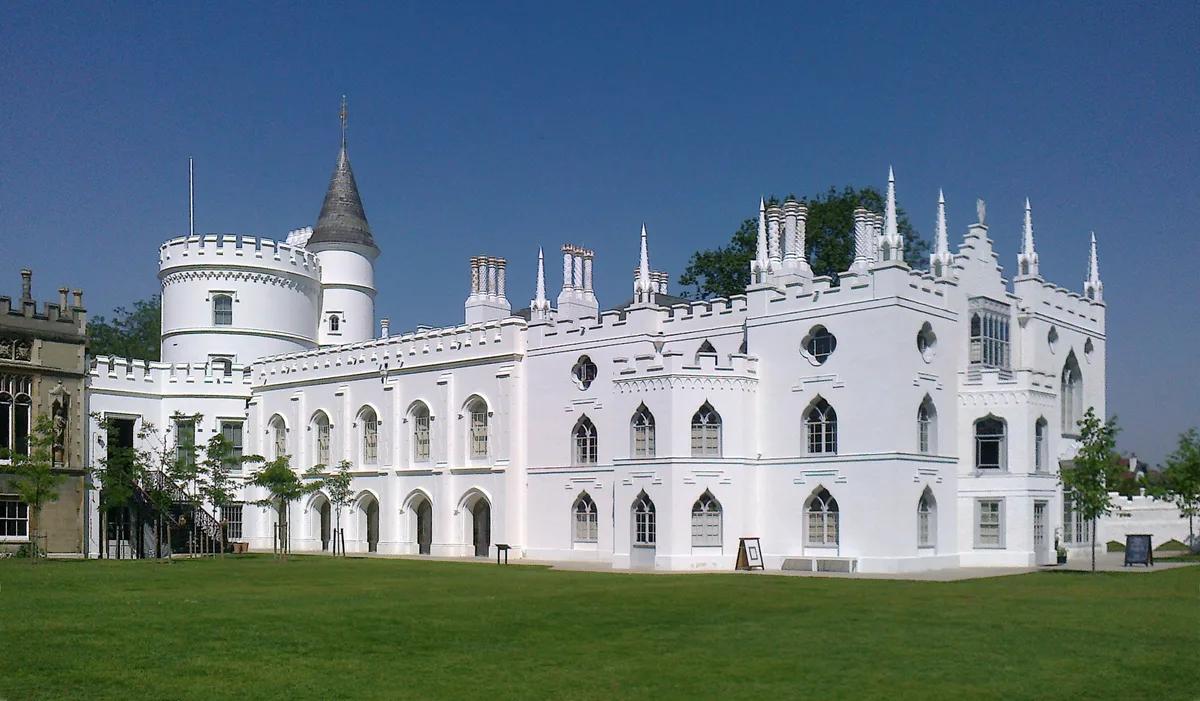
Strawberry Hill House
Strawberry Hill House — villa and house museum in Twickenham, London, United Kingdom.
 📷 5
📷 5Historic houses · London
1 Old Palace Terrace
1 Old Palace Terrace — house in Richmond upon Thames, London, United Kingdom.
 📷 5
📷 5Historic houses · London
1 Palace Green
1 Palace Green — house on Palace Green, Kensington, London.
 📷 5
📷 5Historic houses · London
1–2 Orme Square
1–2 Orme Square — pair of houses in Orme Square, Bayswater, London.
Frequently asked questions
- Where is Chevening?
- Chevening is in Kent, London, United Kingdom (postcode TN14 6HG), in the parish of Chevening.
- What is Chevening?
- Chevening — a Grade I-listed historic house in england-london, United Kingdom.
- How do I get to Chevening?
- The nearest railway station is Dunton Green, about 2.8 km away. The nearest town is Pratt's Bottom. Drivers can use postcode TN14 6HG.
- Who owns Chevening?
- Chevening is owned by The Chevening Trust.
- Is Chevening a listed building?
- Chevening is officially recognised as Grade I listed.
- Is Chevening a protected site?
- Yes — Chevening is part of the Kent Downs National Landscape (AONB).
- How do I get to Chevening?
- The nearest railway station is Dunton Green, about 2.8 km away. Drivers can navigate to postcode TN14 6HG.