
Canals · East Midlands
Chesterfield Canal
In or near Calow.
Chesterfield Canal — Canal in the East Midlands of England.

Wikimedia Commons licence
Plan your visit
- Typical visit
- 1 h–2 h
- Nearest railway station
- Chesterfield · 0.2 km
- Free entry
- Dog-friendly
Getting there & planning your visit
To visit Chesterfield Canal, the nearest railway station is Chesterfield, located just 0.2 km away. The postcode for navigation is S41 7UL, and entry to the canal is free.
About
Chesterfield Canal is a canal in the United Kingdom. Wikidata describes it as: "Canal in the East Midlands of England". Coordinates: 53.2399°, -1.4210°.
Photo gallery
From the Wikipedia article
The Chesterfield Canal is a narrow canal in the East Midlands of England and it is known locally as 'Cuckoo Dyke'. It was one of the last of the canals designed by James Brindley, who died while it was being constructed. It was opened in 1777 and ran for 46 miles (74 km) from the River Trent at West Stockwith, Nottinghamshire to Chesterfield, Derbyshire, passing through the Norwood Tunnel at Kiveton Park, at the time one of the longest tunnels on the British canal system. The canal was built to export coal, limestone, and lead from Derbyshire, iron from Chesterfield, and corn, deals, timber, groceries and general merchandise into Derbyshire. The stone for the Palace of Westminster was quarried in North Anston, Rotherham, and transported via the canal. It was reasonably profitable, paying dividends from 1789, and with the coming of the railways, some of the proprietors formed a railway company. It became part of the Manchester, Sheffield and Lincolnshire Railway company, and although there were intermittent plans to convert parts of it to a railway, it continued to thrive as a canal. In 1907, subsidence from local coal mines caused the collapse of the Norwood Tunnel, and the canal was effectively split in two. Subsequently, the main use of the Chesterfield end was the supply of water to the iron industry, while commercial carrying continued on the Worksop to West Stockwith section until the late 1950s. It was formally closed in 1961, but campaigners fought for it to be retained, and the Worksop to Stockwith section was designated as a "cruiseway" under the Transport Act 1968, meaning that it would be retained for leisure use. The rest was designated as a remainder waterway, and parts were sold off, with housing being built over the route through Killamarsh. The Chesterfield Canal Society was formed in 1978 to spearhead restoration, becoming the Chesterfield Canal Trust in 1997. They initially sought to extend the navigable section beyond Worksop, but when progress…
Excerpt from Wikipedia under CC BY-SA 4.0. See the source article linked in Sources below.
Background
History
Lead had been mined in Derbyshire on a commercial scale since at least 1300, but the industry was hampered by poor transport links. The pigs of lead were carried by pack horses to Bawtry, where there were wharves on the River Idle. Small boats carried them to the River Trent, where the cargo was transferred to larger vessels for onward distribution. There was no proper system of road maintenance, and so the use of carts and wagons for the over-land journey was not possible. The River Idle was also unreliable, being affected by floods and droughts, but there were no alternatives, and the industry flourished despite the difficulties. The Derwent Navigation was authorised in 1719, running from…
Description
What are often called "traditional" working narrowboats were the product of the main canal system – but the craft that plied the 46 miles between Chesterfield, Retford, and the River Trent were very different. Isolated on the fringes of the inland waterways network there were no outside canal influences to change the design of craft that were adequate for the job they had to do. The cabins were below-decks, and the boatmen always had a home ashore. Short journeys, usually with a crew of two, did not generate colourful decorations of roses-and-castles, nor did engines oust the towing horse, not even as late as the 1950s. None of the original "cuckoo" boats have survived, although the last…
Sourced from Wikipedia under CC BY-SA 4.0.
- Coordinates
- 53.2399, -1.4210
- County
- Derbyshire
- District
- Chesterfield
- Parish
- Chesterfield, unparished area
- Postcode
- S41 7UL
- Parliamentary constituency
- Chesterfield
- Established
- 1777
- Nearest railway station
- Chesterfield — 0.2 km
Sources
- wikidata: Q5093793 (CC0)
- wikipedia: Chesterfield Canal (CC BY-SA 4.0)
Featured in this guide
Other places nearby

The Snail
Public art & sculpture · 0.3 km

Chesterfield St Helena School
Natural landmarks · 0.4 km

Winding Wheel
Theatres · 0.4 km

Pomegranate Theatre
Theatres · 0.4 km

Pomegranate Theatre
Open-air theatres · 0.4 km

Chesterfield Museum
Museums · 0.4 km
Ginnners
Distilleries · 0.4 km
Chesterfield Museum and Art Gallery
Museums · 0.4 km

War Memorial in Churchyard to North East of St Mary's Church
Memorials & monuments · 0.4 km

Garden Wall At Number 28 Gatepiers And Corner Pier
Holy wells · 0.5 km
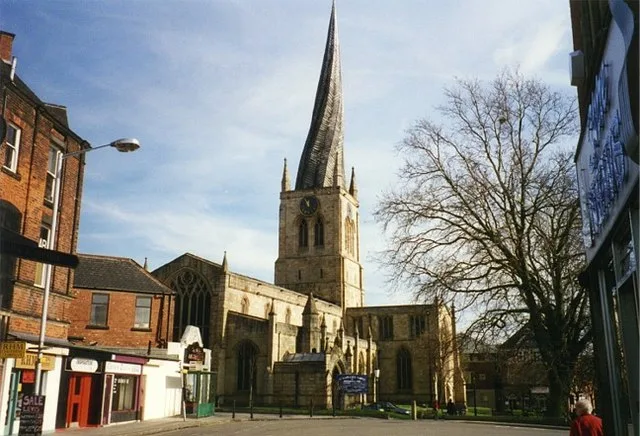
Church of St Mary and All Saints, Chesterfield
Historic churches · 0.5 km

Chesterfield Muslim Association
Historic churches · 0.5 km
Nearby
📷 3Public art & sculpture · East Midlands
The Snail
The Snail — a public art in england-east-midlands, United Kingdom.
📷 5Natural landmarks · East Midlands
Chesterfield St Helena School
Chesterfield St Helena School — a school heritage in england-east-midlands, United Kingdom.
📷 3📷 3📷 5Open-air theatres · East Midlands
Pomegranate Theatre
Pomegranate Theatre — a open-air theatre in england east midlands.
📷 3Museums · East Midlands
Chesterfield Museum
Chesterfield Museum — a museum in england-east-midlands, United Kingdom.
Where to eat & stay near Chesterfield Canal
Places to stay
 📷 7
📷 7 📷 5
📷 5Hotels · East Midlands
Ringwood Hall Hotel
Ringwood Hall Hotel — a hotel in england east midlands.
 📷 5
📷 5Caravan parks · East Midlands
Caravan Club Site - Poolsbrook
Caravan Club Site - Poolsbrook — a caravan park in england east midlands.
 📷 5
📷 5Caravan parks · East Midlands
Timberland Motorhomes
Timberland Motorhomes — a caravan park in england east midlands.
 📷 5
📷 5Caravan parks · East Midlands
Brookfield Mobile Home Park
Brookfield Mobile Home Park — a caravan park in england east midlands.
 📷 5
📷 5Caravan parks · East Midlands
Millfield Mobile Home Park
Millfield Mobile Home Park — a caravan park in england east midlands.
Places to eat & drink
 📷 5
📷 5Historic pubs · East Midlands
The Royal Oak Inn
The Royal Oak Inn in England East Midlands, United Kingdom.
 📷 7
📷 7Historic pubs · East Midlands
The Nags Head Public House
The Nags Head Public House in England East Midlands, United Kingdom.
 📷 5
📷 5Historic pubs · East Midlands
The Crispin Inn
The Crispin Inn in England East Midlands, United Kingdom.
 📷 3
📷 3Restaurants · East Midlands
The Old Vicarage, Derbyshire
The Old Vicarage is a restaurant located in Ridgeway, near Sheffield. The restaurant held one star in the Michelin Guide from 1998 to 2015. The head chef is TV chef Tessa Bramley.
 📷 5
📷 5Historic pubs · East Midlands
The Miners Arms Public House
The Miners Arms Public House in England East Midlands, United Kingdom.
 📷 5
📷 5Historic pubs · Yorkshire & the Humber
Bagshawe Arms Public House
Bagshawe Arms Public House in England Yorkshire, United Kingdom.
More places in this region
 📷 5
📷 5 📷 3
📷 3Canals · East Midlands
Bond End Canal
Bond End Canal — canal in Staffordshire, England, 1775–1874.
 📷 3
📷 3Canals · East Midlands
Catchwater Drain
Catchwater Drain — artificial watercourse in Lincolnshire, England.
 📷 3
📷 3Canals · East Midlands
Charnwood Forest Canal
Charnwood Forest Canal is a canal in the United Kingdom.
Frequently asked questions
- Where is Chesterfield Canal?
- Chesterfield Canal is in Derbyshire, the East Midlands, United Kingdom (postcode S41 7UL), in the parish of Chesterfield, unparished area.
- What is Chesterfield Canal?
- Chesterfield Canal — Canal in the East Midlands of England.
- How do I get to Chesterfield Canal?
- The nearest railway station is Chesterfield, about 0.2 km away. The nearest town is Calow. Drivers can use postcode S41 7UL.
- When was Chesterfield Canal built?
- Built or established in 1777.
- Is Chesterfield Canal free to visit?
- Yes, Chesterfield Canal is free to enter.
- How do I get to Chesterfield Canal?
- The nearest railway station is Chesterfield, about 0.2 km away. Drivers can navigate to postcode S41 7UL.