
Historic houses · South Wales
Cefntilla Court
In or near Raglan.
Cefntilla Court — house in Llandenny, Monmouthshire.

Wikimedia Commons contributors — see linked file page for photographer and licence licence

Plan your visit
- Typical visit
- 1 h–2 h
- Family-friendly
- Limited wheelchair access
About
Cefntilla Court is a historic house in the United Kingdom — typically a country seat, manor, or town house with notable architecture or history. Designed by Matthew Digby Wyatt. Built in the Gothic Revival style. Heritage designation: Grade II* listed building. Wikidata describes it as: "house in Llandenny, Monmouthshire". Coordinates: 51.7218°, -2.8617°.
Photo gallery
Protected designations
- Site of Special Scientific Interest: River Wye SSSI
- Site of Special Scientific Interest: Severn Estuary SSSI
Designations sourced from Natural England open data under OGL v3.
From the Wikipedia article
Cefntilla Court, (also Cefn Tilla), Llandenny, Monmouthshire, Wales, is a country house dating from the mid-19th century. Its origins date from 1616. During the English Civil War, the court was the headquarters of Thomas Fairfax during the siege of Raglan Castle and the terms of the castle's surrender were signed at the house in 1646. By the early 19th century, the court was derelict. In 1856 it was sold by Crawshay Bailey to the Memorial Committee established to commemorate the life of FitzRoy Somerset, 1st Baron Raglan, British commander during the Crimean War. The house was completely rebuilt by Thomas Henry Wyatt and donated to Lord Raglan's heir, Richard Somerset as a memorial to his father. The house is a Grade II* listed building.
Excerpt from Wikipedia under CC BY-SA 4.0. See the source article linked in Sources below.
Background
History
The original house at Cefntilla dates from 1616 and is recorded as the manor house of the Oates family. During the English Civil War, the Parliamentarian general Thomas Fairfax established his headquarters at Cefntilla while laying siege to Raglan Castle, some three miles to the north. In August 1646, the terms of surrender by the Marquess of Worcester were signed "in the dining room of Mr Roger Oates' house of Kevntilla". By the 18th century, the court had become a farmhouse, and when, in the 19th century, it was bought by Crawshay Bailey, the ironmaster, as part of his Monmouthshire estate at Llanfoist, the house was derelict. In 1856 Bailey sold the house to the Memorial Committee which…
Architecture
The house is built of Old Red Sandstone. John Newman, in his Gwent/Monmouthshire volume of the Pevsner Buildings of Wales describes Wyatt's design as "asymmetrical from every direction but not memorably grouped". Wyatt enveloped the original 17th-century building in his 19th-century reconstruction, but traces of the older house are still visible. The park surrounding the house is listed Grade II on the Cadw/ICOMOS Register of Parks and Gardens of Special Historic Interest in Wales.
Sourced from Wikipedia under CC BY-SA 4.0.
- Coordinates
- 51.7218, -2.8617
- District
- Monmouthshire
- Parish
- Raglan
- Postcode
- NP15 1DG
- Parliamentary constituency
- Monmouthshire
- Established
- 1858
Sources
- wikidata: Q5057283 (CC0)
- wikipedia: Cefntilla Court (CC BY-SA 4.0)
- commons: Cefntilla house - geograph.org.uk - 944837.jpg (CC BY-SA 4.0)
Other places nearby
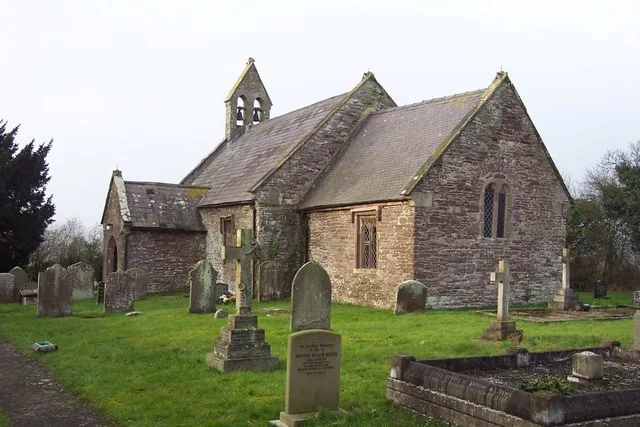
Church of St Michael and All Angels
Historic churches · 1.4 km

Llandenny
Villages · 1.4 km

Gwehelog
Other places · 2.0 km
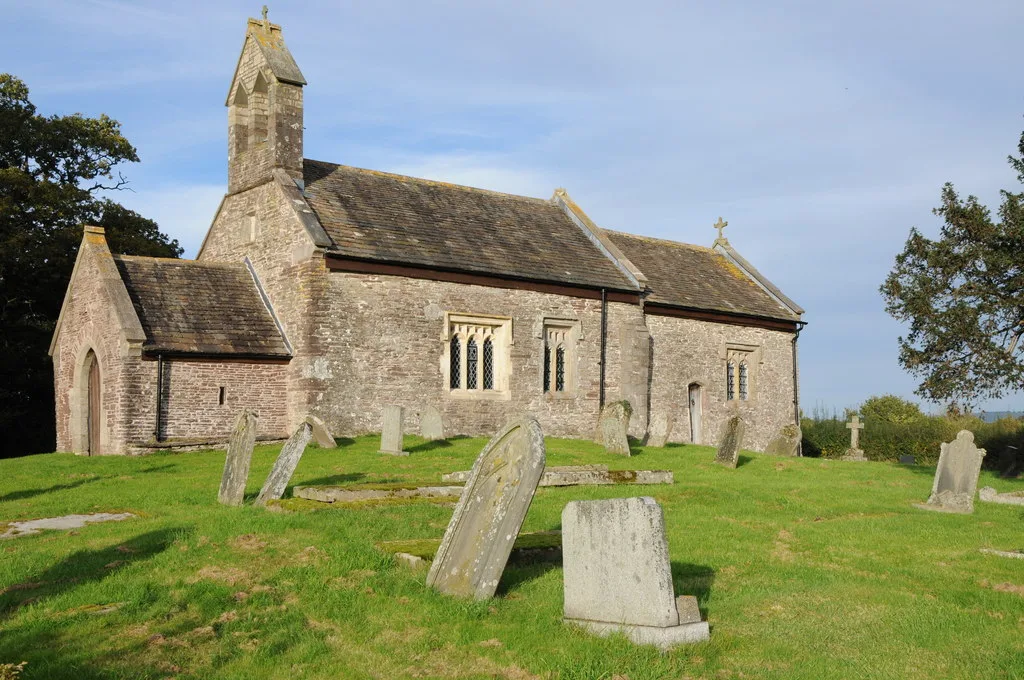
St David's Church
Historic churches · 2.4 km

Allt-y-Bela
Gardens · 2.4 km

Lady Hill
Mountains & hills · 2.5 km

Ringwork NE of New House
Literary houses · 2.6 km
Rockfield Farm Motte
Literary houses · 2.6 km

Great House Camp
Vineyards · 2.7 km

Llangaeo Hillfort
Vineyards · 2.9 km

The Olway Inn & Hotel
B&Bs · 2.9 km

Llancayo Hill
Mountains & hills · 3.0 km
Nearby
📷 3Historic churches · South Wales
Church of St Michael and All Angels
Church of St Michael and All Angels — church in Gwernesey, Monmouthshire, Wales.
📷 5📷 5Other places · South Wales
Gwehelog
Gwehelog — a other in wales-south, United Kingdom.
📷 3Historic churches · South Wales
St David's Church
St David's Church — church in Llangeview, Monmouthshire, Wales.
📷 4Gardens · South Wales
Allt-y-Bela
Allt-y-Bela — a garden in wales-south, United Kingdom.
📷 5Where to eat & stay near Cefntilla Court
Places to stay
📷 5B&Bs · South Wales
The Olway Inn & Hotel
The Olway Inn & Hotel — a bed-and-breakfast in wales south.
 📷 7
📷 7Hotels · South Wales
Three Salmons Hotel
Three Salmons Hotel — a hotel in wales south.
 📷 5
📷 5 📷 7
📷 7 📷 5
📷 5 📷 6
📷 6Hotels · South Wales
Greyhound Inn/ Hotel
Greyhound Inn/ Hotel — a hotel in wales south.
Places to eat & drink
 📷 3
📷 3 📷 5
📷 5Historic pubs · South Wales
The White Hart, Llangybi, Monmouthshire
The White Hart, Llangybi, Monmouthshire in Wales South, United Kingdom.
 📷 3
📷 3Restaurants · South Wales
Ego at The Groes Wen Inn
Ego at The Groes Wen Inn — a restaurant in wales south. Cuisine: mediterranean. Brand: Ego.
 📷 5
📷 5Restaurants · South Wales
The Whitebrook
The Whitebrook — a restaurant in wales south.
 📷 7
📷 7 📷 5
📷 5Restaurants · South Wales
Little Crown
Little Crown — a restaurant in wales south.
Other works by Matthew Digby Wyatt
 📷 5
📷 5Memorials & monuments · South East England
Crimean War Memorial Arch And Gates, Brompton Barracks
Crimean War Memorial Arch And Gates, Brompton Barracks — Grade II* listed building-listed memorial in england-london, United Kingdom.
More historic houses in this region
 📷 3
📷 3Historic houses · South Wales
Agincourt House
Agincourt House — Grade II* listed building in Monmouth. Building in Monmouth, Wales.
 📷 3
📷 3Historic houses · South Wales
Big House, Landshipping
Big House, Landshipping — house in Martletwy, Pembrokeshire, Wales, UK.
 📷 3
📷 3Historic houses · South Wales
Boverton Place
Boverton Place — building in Llantwit Major, United Kingdom.
 📷 3
📷 3Historic houses · South Wales
Brynderi House
Brynderi House — house in Llantilio Crossenny, Monmouthshire, Wales.
Frequently asked questions
- Where is Cefntilla Court?
- Cefntilla Court is in South Wales, United Kingdom (postcode NP15 1DG), in the parish of Raglan.
- What is Cefntilla Court?
- Cefntilla Court — house in Llandenny, Monmouthshire.
- How do I get to Cefntilla Court?
- The nearest town is Raglan. Drivers can use postcode NP15 1DG.
- When was Cefntilla Court built?
- Built or established in 1858. Designed by Matthew Digby Wyatt.
- Who owns Cefntilla Court?
- Cefntilla Court is owned by Privately owned.
- Is Cefntilla Court a listed building?
- Cefntilla Court is officially recognised as Grade II* listed building listed.
- Is Cefntilla Court a protected site?
- Yes — Cefntilla Court is part of the River Wye SSSI Site of Special Scientific Interest and the Severn Estuary SSSI Site of Special Scientific Interest.
- How do I get to Cefntilla Court?
- Drivers can navigate to postcode NP15 1DG. It sits within the Monmouthshire parliamentary constituency.