
Forts · Yorkshire & the Humber
Battle of Wakefield
Also known as: Brwydr Wakefield
In or near Wakefield.
Battle of Wakefield is a fort in the United Kingdom.

Wikimedia Commons contributors — see linked file page for photographer and licence licence

Plan your visit
- Typical visit
- 45 min–1.5 h
- Nearest railway station
- Sandal and Agbrigg · 0.7 km
Getting there & planning your visit
To visit the Battle of Wakefield, the nearest railway station is Sandal and Agbrigg, located 0.7 km away. The postcode for the site is WF2 7DN. Entry details are not provided, so please check in advance for accessibility information.
About
Battle of Wakefield is a historic fort or fortified site in the United Kingdom. Coordinates: 53.6608°, -1.4899°. This entry is part of The Great Britain Guide, a free, ad-free, open-data tourist directory.
Photo gallery
From the Wikipedia article
The 'Battle' of Wakefield has traditionally been said to have taken place in Sandal Magna near Wakefield in northern England, on 30 December 1460. Recent research demonstrates that it was not a battle in the proper sense of a word, but a small-scale skirmish that resulted in the capture and subsequent deaths of Richard of York, 3rd Duke of York, his second son, Edmund, Earl of Rutland, and Richard Neville, 5th Earl of Salisbury. For several years before the battle, the Duke of York – a descendant of two (both the second and fourth) of Edward III's surviving sons – had become increasingly opposed to the court of the mentally incapacitated Lancastrian King Henry VI (descended from Edward III's third surviving son) and his Queen, the formidable Margaret of Anjou. After open warfare broke out between the factions and Henry became his prisoner, he laid claim to the throne, but lacked sufficient support. Instead, in an agreement known as the Act of Accord, he was made Henry's heir to the throne, displacing from the succession Henry and Margaret's 7-year-old son Edward, Prince of Wales. Margaret of Anjou and several prominent nobles were irreconcilably opposed to this accord and massed their armies in the north. Richard of York marched north to deal with them. As the King’s Lancastrian supporters held Pontefract Castle, York made for his manor at nearby Wakefield. Later Yorkist and Tudor accounts claimed he took residence in Sandal Castle, but the manorial accounts show that he stayed in the town itself, probably at the Moot Hall. The traditional accounts give several unlikely reasons for him leaving the supposed safety of Sandal Castle to engage a larger Lancastrian army, but the earliest accounts, documentary and chronicle, are in agreement that the Duke and his followers were ambushed, captured and murdered on 29 December, probably as they left Wakefield for York.
Excerpt from Wikipedia under CC BY-SA 4.0. See the source article linked in Sources below.
Background
History
King Henry VI ascended the throne in 1422, when he was only nine months old. He grew up to be an ineffective king, and prone to spells of mental illness. There were increasingly bitter divisions among the officials and councillors who governed in Henry's name, mainly over the conduct of the Hundred Years' War with France. By the early 1450s, the most important rivalry was that between Richard, Duke of York, and Edmund Beaufort, Duke of Somerset. York argued for a more vigorous prosecution of the war, to recover territories recently lost to the French, while Somerset belonged to the party which tried to secure peace by making concessions. York had been Lieutenant in France for several years…
Description
Tradition has it that York reached Sandal Castle on 21 December. However, manorial accounts show that he was still at nearby Conisbrough Castle at Christmas and only reached the town of Wakefield, accompanied by a small riding household, after 25 December. The same manorial accounts show that Sandal was simply not equipped to accommodate the ducal party, let alone an army, and it seems certain that the duke remained in Wakefield until he set out to ride north to York on 29 December. What exactly happened next is unclear. According to Thomas Colt, one of the duke's closest servants and later administrator of his goods, York was ambushed on 29 December. He was robbed of goods, including his…
Sourced from Wikipedia under CC BY-SA 4.0.
- Coordinates
- 53.6608, -1.4899
- District
- Wakefield
- Parish
- Wakefield, unparished area
- Postcode
- WF2 7DN
- Parliamentary constituency
- Ossett and Denby Dale
- Nearest railway station
- Sandal and Agbrigg — 0.7 km
Sources
- osm: n3037002811 (ODbL)
- wikipedia: Battle of Wakefield (CC BY-SA 4.0)
- commons: Lancaster victory over York.svg (CC BY-SA 4.0)
Other places nearby
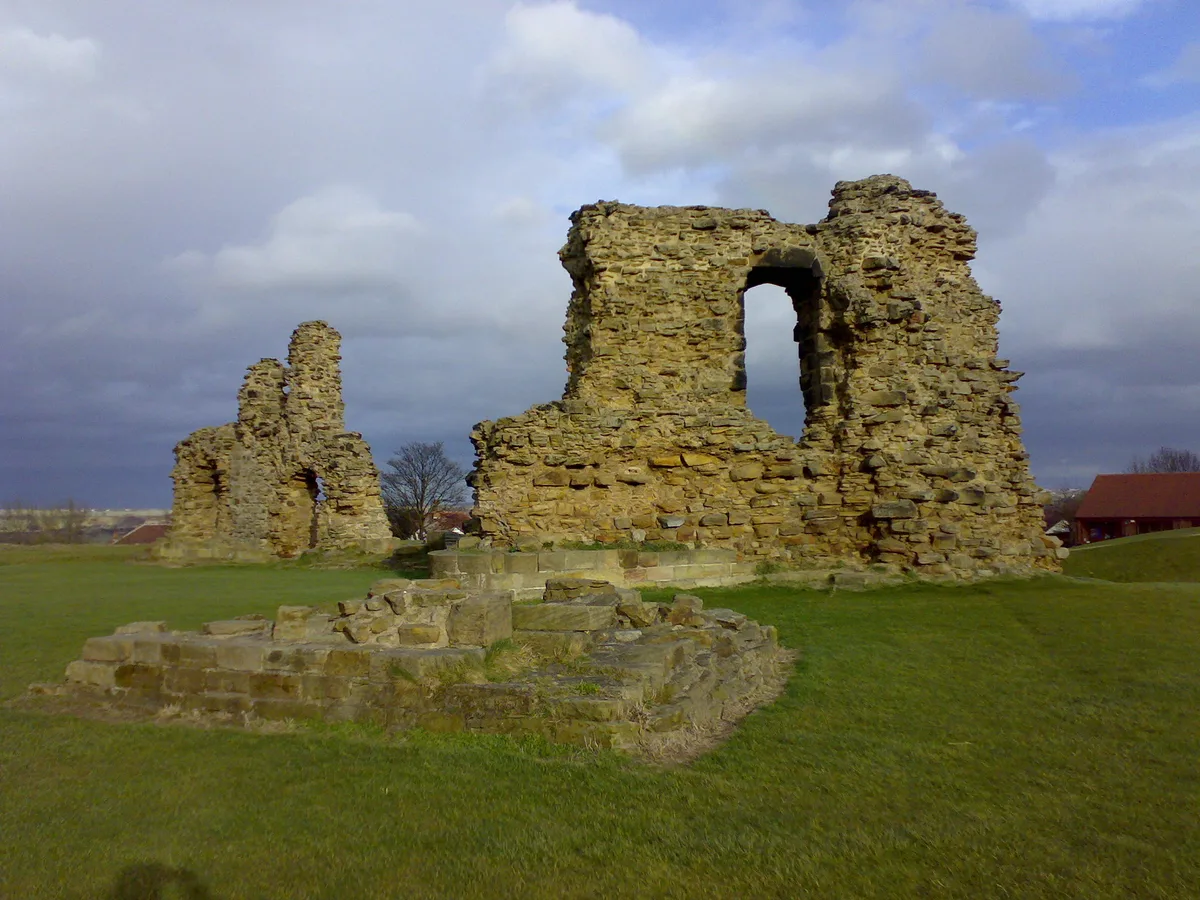
Sandal Castle
Castles · 0.2 km

Masjid Zakariya
Historic churches · 1.1 km

Sugar Lane Cemetery
Cemeteries · 1.1 km
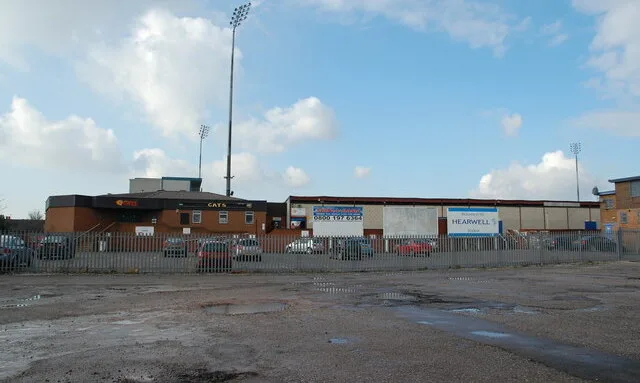
Belle Vue
Stadiums · 1.2 km

Escapable
Escape rooms · 1.3 km

Ninety-Nine Arches Viaduct
Historic bridges · 1.4 km

Abu Bakr Siddique Masjid
Historic churches · 1.5 km

Pugneys Light Railway
Miniature railways · 1.6 km
.jpg?width=1200)
Rutland Mill
Mills · 1.6 km

Watermill At Ng Se33662005
Watermills · 1.7 km

Wakefield Lowe Hill
Castles · 1.7 km

Minos
Public art & sculpture · 1.7 km
Nearby
📷 5Castles · Yorkshire & the Humber
Sandal Castle
Sandal Castle — medieval castle in England.
📷 5Historic churches · Yorkshire & the Humber
Masjid Zakariya
Masjid Zakariya — a church in england-yorkshire, United Kingdom.
📷 4Cemeteries · Yorkshire & the Humber
Sugar Lane Cemetery
Sugar Lane Cemetery is a cemetery in the United Kingdom.
📷 5Stadiums · Yorkshire & the Humber
Belle Vue
Belle Vue — stadium in Wakefield, United Kingdom.
📷 3Escape rooms · Yorkshire & the Humber
Escapable
Escapable — a escape room in england-yorkshire, United Kingdom.
📷 3Historic bridges · Yorkshire & the Humber
Ninety-Nine Arches Viaduct
Ninety-Nine Arches Viaduct is a historic bridge in the United Kingdom.
Where to eat & stay near Battle of Wakefield
Places to stay
 📷 5
📷 5Caravan parks · Yorkshire & the Humber
Heath Common Travelers Site
Heath Common Travelers Site — a caravan park in england yorkshire.
 📷 5
📷 5Caravan parks · Yorkshire & the Humber
Broadlands Farm Caravan Site
Broadlands Farm Caravan Site — a caravan park in england yorkshire.
 📷 5
📷 5Hotels · Yorkshire & the Humber
Bank House Hotel
Bank House Hotel — a hotel in england yorkshire.
 📷 5
📷 5Hotels · Yorkshire & the Humber
Premier Inn Wakefield City North
Premier Inn Wakefield City North — a hotel in england yorkshire. 3-star. Brand: Premier Inn.
 📷 7
📷 7Hotels · Yorkshire & the Humber
Dimple Well Lodge Hotel
Dimple Well Lodge Hotel — a hotel in england yorkshire.
 📷 5
📷 5Hotels · Yorkshire & the Humber
Mews Hotel
Mews Hotel — a hotel in england yorkshire.
Places to eat & drink
 📷 5
📷 5Historic pubs · Yorkshire & the Humber
The Wakefield Arms
The Wakefield Arms in England Yorkshire, United Kingdom.
 📷 5
📷 5Historic pubs · Yorkshire & the Humber
The Original Alfred Moody's Public House
The Original Alfred Moody's Public House in England Yorkshire, United Kingdom.
 📷 5
📷 5 📷 7
📷 7Historic pubs · Yorkshire & the Humber
The British Oak
The British Oak in England Yorkshire, United Kingdom.
 📷 5
📷 5Historic pubs · Yorkshire & the Humber
New Scarborough Inn
New Scarborough Inn in England Yorkshire, United Kingdom.
 📷 7
📷 7Historic pubs · Yorkshire & the Humber
The Black Bull Public House
The Black Bull Public House in England Yorkshire, United Kingdom.
More forts in this region
.jpg?width=1200) 📷 3
📷 3Forts · Yorkshire & the Humber
Battle Flat
Battle Flat is a fort in the United Kingdom.
 📷 3
📷 3Forts · Yorkshire & the Humber
Battle of Adwalton Moor
Battle of Adwalton Moor is a fort in the United Kingdom.
 📷 3
📷 3Forts · Yorkshire & the Humber
Battle of Boroughbridge
Battle of Boroughbridge is a fort in the United Kingdom.
 📷 3
📷 3Forts · Yorkshire & the Humber
Battle of Bramham Moor
Battle of Bramham Moor is a fort in the United Kingdom.
Frequently asked questions
- Where is Battle of Wakefield?
- Battle of Wakefield is in Yorkshire, United Kingdom (postcode WF2 7DN), in the parish of Wakefield, unparished area.
- What is Battle of Wakefield?
- Battle of Wakefield is a fort in the United Kingdom.
- How do I get to Battle of Wakefield?
- The nearest railway station is Sandal and Agbrigg, about 0.7 km away. The nearest town is Wakefield. Drivers can use postcode WF2 7DN.
- How do I get to Battle of Wakefield?
- The nearest railway station is Sandal and Agbrigg, about 0.7 km away. Drivers can navigate to postcode WF2 7DN.