
Public art & sculpture · Central Scotland
Woodlouse
In or near Perth.
Woodlouse — a public art in scotland-central, United Kingdom.

James Allan — CC BY-SA 2.0 via Wikimedia Commons licence

Plan your visit
- Typical visit
- 1 h–2 h
- Nearest railway station
- Perth · 3.6 km
- Free entry
- Dog-friendly
Getting there & planning your visit
To visit Woodlouse, the nearest railway station is Perth, located 3.6 km away. The postcode for your sat-nav is PH2 8PZ, and entry is free.
About
Woodlouse is a public art located in scotland-central, United Kingdom. Sourced from OpenStreetMap (ODbL licence); see local listings for visitor information, opening hours and admission details.
Photo gallery
From the Wikipedia article
Woodlice are terrestrial isopods in the suborder Oniscidea. Their name is derived from being often found in old wood, and from louse, a parasitic insect, although woodlice are neither parasitic nor insects. Other common names include slater, sow bug, and wood pig, common names varying widely by region. Woodlice are suggested to have colonised land during the late Paleozoic based on molecular clock analysis, though the oldest known fossils are from the mid-Cretaceous period around 100 million years ago. This makes them unusual among the crustaceans, being one of the few lineages to have transitioned into a fully terrestrial environment. Woodlice have many common names and although often referred to as terrestrial isopods, some species live semiterrestrially or have recolonised aquatic environments like those of the genus Ligia. Woodlice in the families Armadillidae, Armadillidiidae, Eubelidae, Tylidae and some other genera can roll up into a roughly spherical shape (conglobate) as a defensive mechanism or to conserve moisture; others have partial rolling ability, but most cannot conglobate at all. Woodlice are primarily detritivorous, and are a major contributor to the humification process by breaking down litter via ingestion. Woodlice have a basic morphology of a segmented, dorso-ventrally flattened body with seven pairs of jointed legs, and have some or all five pairs of their pleopods (swimming legs) adapted for respiration. Like other peracarids, female woodlice carry fertilised eggs in their marsupium, through which they provide developing embryos with water, oxygen and nutrients. The immature young hatch as mancae and receive further maternal care in some species. Juveniles then go through a series of moults before reaching maturity. Mancae are born with six pereon (thoraccic) segments and gain an additional one after their first molt. Key adaptations to terrestrial life have led to a highly diverse set of animals; from the marine littoral zone and subterranean lakes to arid deserts and desert slopes 4,725 m (15,500 ft) above sea-level, woodlice have established themselves in most terrestrial biomes and represent the full range of transitional forms and behaviours for living on land. Woodlice are widely studied in the contexts of evolutionary biology, behavioural ecology, and nutrient cycling. They are popular as terrarium pets often favoured because of their varied colour and texture forms, ease of care, or for the purpose of serving as a cleanup crew. Isopods are crustaceans, and as such Woodlice are more closely related to crabs, lobsters, and water fleas than they are to other terrestrial arthropods such as insects, spiders, or centipedes.
Excerpt from Wikipedia under CC BY-SA 4.0. See the source article linked in Sources below.
Background
Description
The woodlouse has a shell-like exoskeleton, which it must progressively shed as it grows. The moult takes place in two stages; The mother then appears to "give birth" to her offspring. A few species are also capable of reproducing asexually. Woodlice are attracted to small narrow places such as crevices or the underside of rocks in order to minimise water loss, likewise they are repulsed by bright light to avoid dessication under sunlight. They are usually nocturnal and are detritivores, feeding mostly on dead plant matter, preferring partially decayed or broken down material such as brown leafs. They break the plant material down by ingesting it, then later secrete it, and return to eat…
Sourced from Wikipedia under CC BY-SA 4.0.
- Coordinates
- 56.3638, -3.4092
- District
- Perth and Kinross
- Postcode
- PH2 8PZ
- Parliamentary constituency
- Perth and Kinross-shire
- Nearest railway station
- Perth — 3.6 km
Sources
- osm: node/2838351597 (ODbL)
- wikipedia: Woodlouse (CC BY-SA 4.0)
Other places nearby
Moncrieffe Hill Fort
Hill forts · 0.1 km

Moncreiffe Hill
Vineyards · 0.1 km
Spiders in the Wood
Public art & sculpture · 0.2 km

Bats
Public art & sculpture · 0.2 km
Totem
Public art & sculpture · 0.3 km

Stand Still To See Me
Public art & sculpture · 0.4 km
Hawk
Public art & sculpture · 0.4 km

Moncrieffe Hill
Mountains & hills · 0.5 km
Footsteps
Public art & sculpture · 0.6 km
Moredun
Archaeological sites · 0.6 km
Carnac, Moredun
Vineyards · 0.6 km
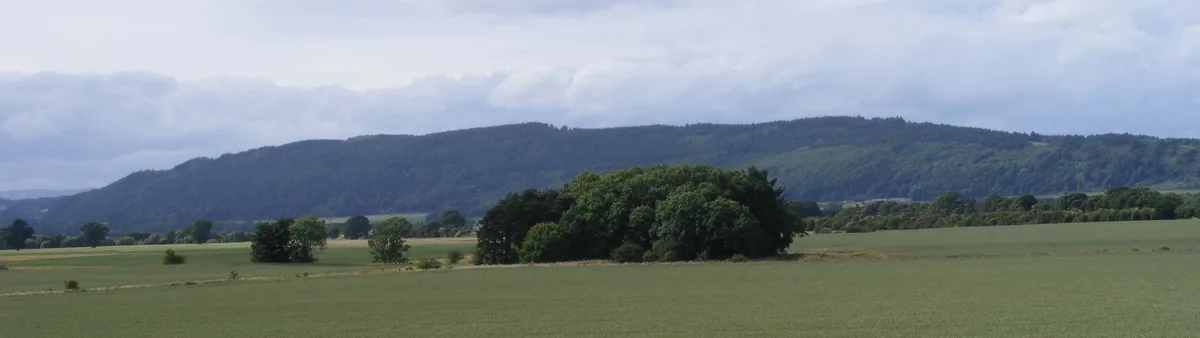
Moncreiffe Hill
Mountains & hills · 0.6 km
Nearby
📷 3Hill forts · Central Scotland
Moncrieffe Hill Fort
Moncrieffe Hill Fort — a hill fort in scotland-central, United Kingdom.
📷 5Vineyards · Central Scotland
Moncreiffe Hill
Moncreiffe Hill — a UK vineyard in scotland central, producing English or Welsh wine from cool-climate grape varieties.
📷 3Public art & sculpture · Central Scotland
Spiders in the Wood
Spiders in the Wood — a public art in scotland-central, United Kingdom.
📷 3Public art & sculpture · Central Scotland
Bats
Bats — a public art in scotland-central, United Kingdom.
📷 4Public art & sculpture · Central Scotland
Totem
Totem — a public art in scotland-central, United Kingdom.
📷 3Public art & sculpture · Central Scotland
Stand Still To See Me
Stand Still To See Me — a public art in scotland-central, United Kingdom.
Where to eat & stay near Woodlouse
Places to stay
 📷 5
📷 5Hostels · Central Scotland
Perth Youth Hostel
Perth Youth Hostel — a hostel in scotland central.
 📷 5
📷 5Caravan parks · Central Scotland
Noah's Ark Caravan Park
Noah's Ark Caravan Park — a caravan park in scotland central.
 📷 5
📷 5Caravan parks · Central Scotland
Scone Camping and Caravanning Club Site
Scone Camping and Caravanning Club Site — a caravan park in scotland central.
 📷 5
📷 5 📷 5
📷 5Caravan parks · Central Scotland
Lochmanor Holiday Lodge Park
Lochmanor Holiday Lodge Park — a caravan park in scotland central.
 📷 5
📷 5Caravan parks · Central Scotland
South Valleyfield
South Valleyfield — a caravan park in scotland central.
More places in this region
 📷 3
📷 3Public art & sculpture · Central Scotland
Arboreal
Arboreal — Public artwork (poem) by Richard Livermore.
 📷 3
📷 3Public art & sculpture · Central Scotland
Aspiration
Aspiration — Public artwork (sculpture) by Keith McCarter.
 📷 3
📷 3Public art & sculpture · Central Scotland
Casting
Casting — Public artwork (poem) by Morgan Downie.
 📷 3
📷 3Public art & sculpture · Central Scotland
Deserted Village
Deserted Village — Public artwork (poem) by Anne Connolly.
Frequently asked questions
- Where is Woodlouse?
- Woodlouse is in central Scotland, United Kingdom (postcode PH2 8PZ).
- What is Woodlouse?
- Woodlouse — a public art in scotland-central, United Kingdom.
- How do I get to Woodlouse?
- The nearest railway station is Perth, about 3.6 km away. The nearest town is Perth. Drivers can use postcode PH2 8PZ.
- Is Woodlouse free to visit?
- Yes, Woodlouse is free to enter.
- How do I get to Woodlouse?
- The nearest railway station is Perth, about 3.6 km away. Drivers can navigate to postcode PH2 8PZ.