
Public art & sculpture · Central Scotland
Wind Power
In or near Glasgow.
Wind Power — a public art in scotland-central, United Kingdom.

Thomas Nugent — CC BY-SA 2.0 via Wikimedia Commons licence

Plan your visit
- Typical visit
- 1 h–2 h
- Nearest railway station
- Glasgow Central · 0.2 km
- Free entry
- Dog-friendly
Getting there & planning your visit
To visit Wind Power, head to Glasgow Central railway station, which is just 0.2 km away. Entry to the public art installation is free.
About
Wind Power is a public art located in scotland-central, United Kingdom. Sourced from OpenStreetMap (ODbL licence); see local listings for visitor information, opening hours and admission details.
Photo gallery
From the Wikipedia article
Wind power is the use of wind energy to generate useful work. Historically, wind power was used by sails, windmills and windpumps, but today it is mostly used to generate electricity. This article deals only with wind power for electricity generation. Today, wind power is generated almost completely using wind turbines, generally grouped into wind farms and connected to the electrical grid. In 2025, wind supplied about 2,700 TWh of electricity, which was over 8% of world electricity. With about 100 GW added during 2021, mostly in China and the United States, global installed wind power capacity exceeded 800 GW. 30 countries generated more than a tenth of their electricity from wind power in 2024 and wind generation has nearly tripled since 2015. To help meet the Paris Agreement goals to limit climate change, analysts say it should expand much faster – by over 1% of electricity generation per year. Wind power is a sustainable, renewable energy source, and has a much smaller impact on the environment than burning fossil fuels. Wind power is variable, so it needs energy storage or other dispatchable generation energy sources to attain a reliable supply of electricity. Land-based (onshore) wind farms have a greater visual impact on the landscape than most other power stations per energy produced. Wind farms sited offshore have less visual impact and have higher capacity factors, although they are generally more expensive. Offshore wind power currently has a share of about 10% of new installations. Wind power is one of the lowest-cost electricity sources per unit of energy produced. In many locations, new onshore wind farms are cheaper than new coal or gas plants. Regions in the higher northern and southern latitudes have the highest potential for wind power. In most regions, wind power generation is higher in nighttime, and in winter when solar power output is low. So combinations of wind and solar power are suitable in many countries.
Excerpt from Wikipedia under CC BY-SA 4.0. See the source article linked in Sources below.
Background
History
's wind turbine of 1888, used for generating electric power.]] Wind power has been used as long as humans have put sails into the wind. Wind-powered machines used to grind grain and pump water, the windmill and wind pump, were developed in what is now Iran, Afghanistan, and Pakistan by the 9th century. Wind power was widely available and not confined to the banks of fast-flowing streams, or later, requiring sources of fuel. Wind-powered pumps drained the polders of the Netherlands, and in arid regions such as the American mid-west or the Australian outback, wind pumps provided water for livestock and steam engines. The first wind turbine used for the production of electric power was built…
Description
While the levelised costs of wind power may have reached that of traditional combustion based power technologies, the market value of the generated power is also lower due to the merit order effect, which implies that electricity market prices are lower in hours with substantial generation of variable renewable energy due to the low marginal costs of this technology. The effect has been identified in several European markets. For wind power plants exposed to electricity market pricing in markets with high penetration of variable renewable energy sources, profitability can be challenged.
Sourced from Wikipedia under CC BY-SA 4.0.
- Coordinates
- 55.8597, -4.2559
- District
- Glasgow City
- Postcode
- G1 3NU
- Parliamentary constituency
- Glasgow North
- Nearest railway station
- Glasgow Central — 0.2 km
- Opening
- Mo-Sa 10:30-17:00; Su 12:00-17:00
Sources
- osm: node/5636011052 (ODbL)
- wikipedia: Wind power (CC BY-SA 4.0)
Other places nearby

Mackintosh Tower
Viewpoints · 0.0 km
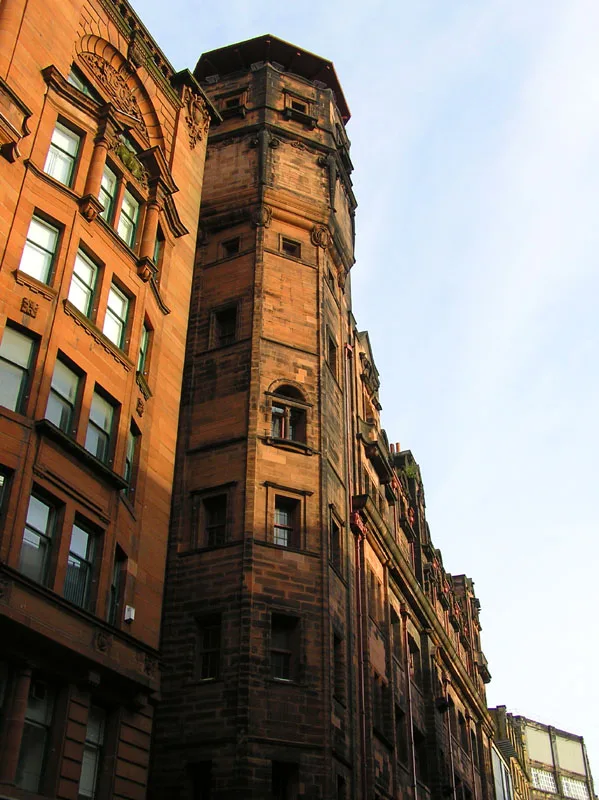
The Lighthouse
Galleries · 0.0 km

Glasgow's Panda
Public art & sculpture · 0.1 km

Honey... I Shrunk The Kids I'm Sorry!
Public art & sculpture · 0.1 km

Glasgow International Comedy Festival
Other places · 0.1 km

Horse Shoe Bar, 17-21 Drury Street, Glasgow
Historic pubs · 0.1 km

Taxi Balloon mural
Public art & sculpture · 0.1 km

Beacon of Hope
Public art & sculpture · 0.1 km

Voco Grand Central Hotel
Hotels · 0.1 km

Buchanan Street
Historic shopping arcades · 0.2 km

Everyman Glasgow
Cinemas · 0.2 km

The Arches
Open-air theatres · 0.2 km
Nearby
📷 3Viewpoints · Central Scotland
Mackintosh Tower
Mackintosh Tower is a viewpoint in the United Kingdom.
📷 4Galleries · Central Scotland
The Lighthouse
The Lighthouse — building in Glasgow, Scotland, UK.
📷 3Public art & sculpture · Central Scotland
Glasgow's Panda
Glasgow's Panda — a public art in scotland-central, United Kingdom.
📷 3Public art & sculpture · Central Scotland
Honey... I Shrunk The Kids I'm Sorry!
Honey... I Shrunk The Kids I'm Sorry! — a public art in scotland-central, United Kingdom.
📷 3Other places · Central Scotland
Glasgow International Comedy Festival
Glasgow International Comedy Festival is an annual comedy festival in Glasgow, Scotland which started in 2002. It is held in March in venues across the city. The festival's aim is to have the biggest
📷 5Historic pubs · Central Scotland
Horse Shoe Bar, 17-21 Drury Street, Glasgow
Horse Shoe Bar, 17-21 Drury Street, Glasgow in Scotland Central, United Kingdom.
Where to eat & stay near Wind Power
Places to stay
📷 5Hotels · Central Scotland
Voco Grand Central Hotel
Voco Grand Central Hotel — a hotel in scotland central.
 📷 7
📷 7 📷 5
📷 5Hotels · Central Scotland
Ibis Styles Glasgow Centre George Square
Ibis Styles Glasgow Centre George Square — a hotel in scotland central. 3-star. Brand: Ibis Styles.
 📷 5
📷 5Hotels · Central Scotland
Merchant City Inn
Merchant City Inn — a hotel in scotland central.
 📷 5
📷 5Hotels · Central Scotland
Millennium Hotel Glasgow
Millennium Hotel Glasgow — a hotel in scotland central.
 📷 7
📷 7Places to eat & drink
📷 5Historic pubs · Central Scotland
Horse Shoe Bar, 17-21 Drury Street, Glasgow
Horse Shoe Bar, 17-21 Drury Street, Glasgow in Scotland Central, United Kingdom.
 📷 5
📷 5Historic pubs · Central Scotland
27a, 29 St Vincent Place, Public House
27a, 29 St Vincent Place, Public House in Scotland Central, United Kingdom.
 📷 7
📷 7Historic pubs · Central Scotland
The Crystal Palace
The Crystal Palace in Scotland Central, United Kingdom.
 📷 7
📷 7Historic pubs · Central Scotland
Bank of Scotland, 2 St Vincent Place, Glasgow
Bank of Scotland, 2 St Vincent Place, Glasgow in Scotland Central, United Kingdom.
 📷 5
📷 5Historic pubs · Central Scotland
Public House, 69 Hutcheson Street, Glasgow
Public House, 69 Hutcheson Street, Glasgow in Scotland Central, United Kingdom.
 📷 5
📷 5Cafés · Central Scotland
Willow Tearooms
The Willow Tearooms are tearooms at 217 Sauchiehall Street, Glasgow, Scotland, designed by internationally renowned architect Charles Rennie Mackintosh, which opened for business in October 1903. They
More places in this region
 📷 3
📷 3Public art & sculpture · Central Scotland
Arboreal
Arboreal — Public artwork (poem) by Richard Livermore.
 📷 3
📷 3Public art & sculpture · Central Scotland
Aspiration
Aspiration — Public artwork (sculpture) by Keith McCarter.
 📷 3
📷 3Public art & sculpture · Central Scotland
Casting
Casting — Public artwork (poem) by Morgan Downie.
 📷 3
📷 3Public art & sculpture · Central Scotland
Deserted Village
Deserted Village — Public artwork (poem) by Anne Connolly.
Frequently asked questions
- Where is Wind Power?
- Wind Power is in central Scotland, United Kingdom (postcode G1 3NU).
- What is Wind Power?
- Wind Power — a public art in scotland-central, United Kingdom.
- How do I get to Wind Power?
- The nearest railway station is Glasgow Central, about 0.2 km away. The nearest town is Glasgow. Drivers can use postcode G1 3NU.
- Is Wind Power free to visit?
- Yes, Wind Power is free to enter.
- How do I get to Wind Power?
- The nearest railway station is Glasgow Central, about 0.2 km away. Drivers can navigate to postcode G1 3NU.