
Other places · Central Scotland
University of St Andrews
Also known as: Oilthigh Chill Rìmhinn
In or near Strathkinness.
University of St Andrews in Scotland Islands, United Kingdom.

Richard Law — CC BY-SA 2.0 via Wikimedia Commons licence

Plan your visit
- Typical visit
- 1 h–2 h
- Nearest railway station
- Leuchars · 7.2 km
Getting there & planning your visit
To visit the University of St Andrews, the nearest railway station is Leuchars, located 7.2 km away. The postcode for sat-nav is KY16 9AJ. Please check local resources for information on entry fees and accessibility options.
About
University of St Andrews is a place of interest in Scotland Islands, United Kingdom — drawn from open-data sources for visitor reference. See the linked Wikipedia article for the full description.
Photo gallery
See it from the streetimagery from 2024
Imagery © Mapillary contributors, CC BY-SA 4.0
Official information
The University of St Andrews is a prestigious institution known for its strong research programs and vibrant postgraduate community. Visitors can engage in a variety of academic events, cultural festivals, and concerts hosted by the university.
From the Wikipedia article
The University of St Andrews (Scots: University o St Andras, Scottish Gaelic: Oilthigh Chill Rìmhinn; abbreviated as St And in post-nominals) is a public research university in the town of St Andrews in Scotland. It is the oldest of the four ancient universities of Scotland and, following the universities of Oxford and Cambridge, the third-oldest university in the English-speaking world. St Andrews was founded in 1413 when the Avignon Antipope Benedict XIII issued a papal bull to a small founding group of Augustinian clergy. Along with the universities of Glasgow, Aberdeen, and Edinburgh, St Andrews was part of the Scottish Enlightenment during the 18th century. St Andrews is made up of a variety of institutions, comprising three colleges — United College (a union of St Salvator's and St Leonard's Colleges), St Mary's College, and St Leonard's College, the last named being a non-statutory revival of St Leonard's as a post-graduate society. There are 18 academic schools organised into four faculties. The university spans both historic and contemporary buildings scattered across the town. The academic year is divided into two semesters, Martinmas and Candlemas. In term time, over one-third of the town's population are either staff members or students of the university. The student body is known for preserving ancient traditions such as Raisin Weekend, May Dip, and the wearing of distinctive academic dress. The student body is also notably diverse: over 145 nationalities are represented with about 45% of its intake from countries outside the UK; a tenth of students are from Europe with the remainder from the rest of the world—20% from North America alone. Undergraduate admissions are among the most selective in the country, with the university having the third-lowest offer rate for 2022 entry (behind only Oxford and Cambridge) and the highest entry standards of new students, as measured by UCAS entry tariff, at 215 points. St Andrews has many notable alumni and…
Excerpt from Wikipedia under CC BY-SA 4.0. See the source article linked in Sources below.
Background
History
In 1410, a group of Augustinian clergy, driven from the University of Paris by the Avignon schism and from the universities of Oxford and Cambridge by the Anglo-Scottish Wars, formed a society of higher learning in St Andrews, offering courses of lectures in divinity, logic, philosophy, and law. A charter of privilege was bestowed upon the society of masters and scholars by the Bishop of St Andrews, Henry Wardlaw, on 28 February 1411–12. Wardlaw then successfully petitioned the Avignon Pope Benedict XIII to grant the school university status by issuing a series of papal bulls, which followed on 28 August 1413. King James I of Scotland confirmed the charter of the university in 1432.…
Architecture
The University of St Andrews is situated in the small town of St Andrews in rural Fife, Scotland. The university has teaching facilities, libraries, student housing and other buildings spread throughout the town. Generally, university departments and buildings are concentrated on North Street, South Street, The Scores, and the North Haugh. The university has two major sites within the town. The first is the United College, St Andrews (also known as the Quad or St Salvator's) on North Street, which functions both as a teaching space and venue for student events, incorporating the Departments of Social Anthropology and Modern Languages. The second is St Mary's College, St Andrews, based on…
Description
Situated around the town of St Andrews are cobblestone markings denoting where Protestant martyrs were burnt at the stake. To students, the most notable of these is the cobblestone initials "PH" located outside the main gate of St Salvator's College. These cobblestones denote where Patrick Hamilton was martyred in 1528. According to student tradition, stepping on the "PH" will cause a student to become cursed, with the effect that the offender will fail his or her degree and so students are known to jump over the cobblestones when passing. The 'curse' is said to be lifted by participating in the May Dip.
Visiting
The University of St Andrews has appeared in or been referenced by a number of popular media works, in film and literature.
Sourced from Wikipedia under CC BY-SA 4.0.
- Coordinates
- 56.3412, -2.7930
- District
- Fife
- Postcode
- KY16 9AJ
- Parliamentary constituency
- North East Fife
- Established
- 1413
- Nearest railway station
- Leuchars — 7.2 km
- Official site
- st-andrews.ac.uk
Sources
- wikidata: Q216273 (CC0)
- wikipedia: University of St Andrews (CC BY-SA 4.0)
Other places nearby

Younger Hall, North Street, St Andrews
Historic houses · 0.1 km

Martyr's Church and Halls, North Street, St Andrews
Historic churches · 0.1 km
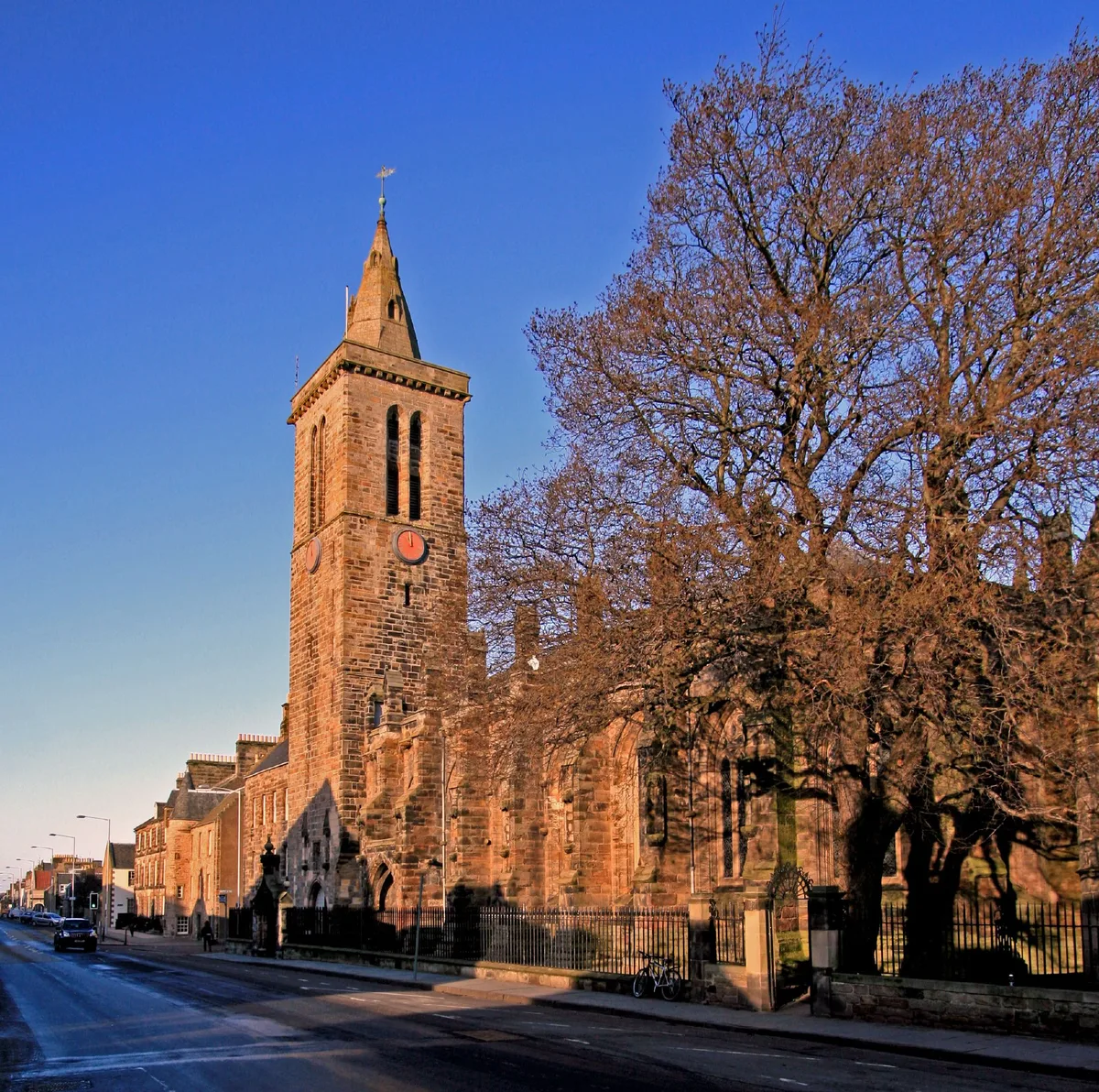
St Salvator's Chapel
Historic churches · 0.1 km

St Salvator's Hall
Historic churches · 0.1 km

Patrick Hamilton's Initials
Natural landmarks · 0.1 km

St Salvator's College
Historic churches · 0.1 km

19 College Street, St Andrews
Historic houses · 0.1 km
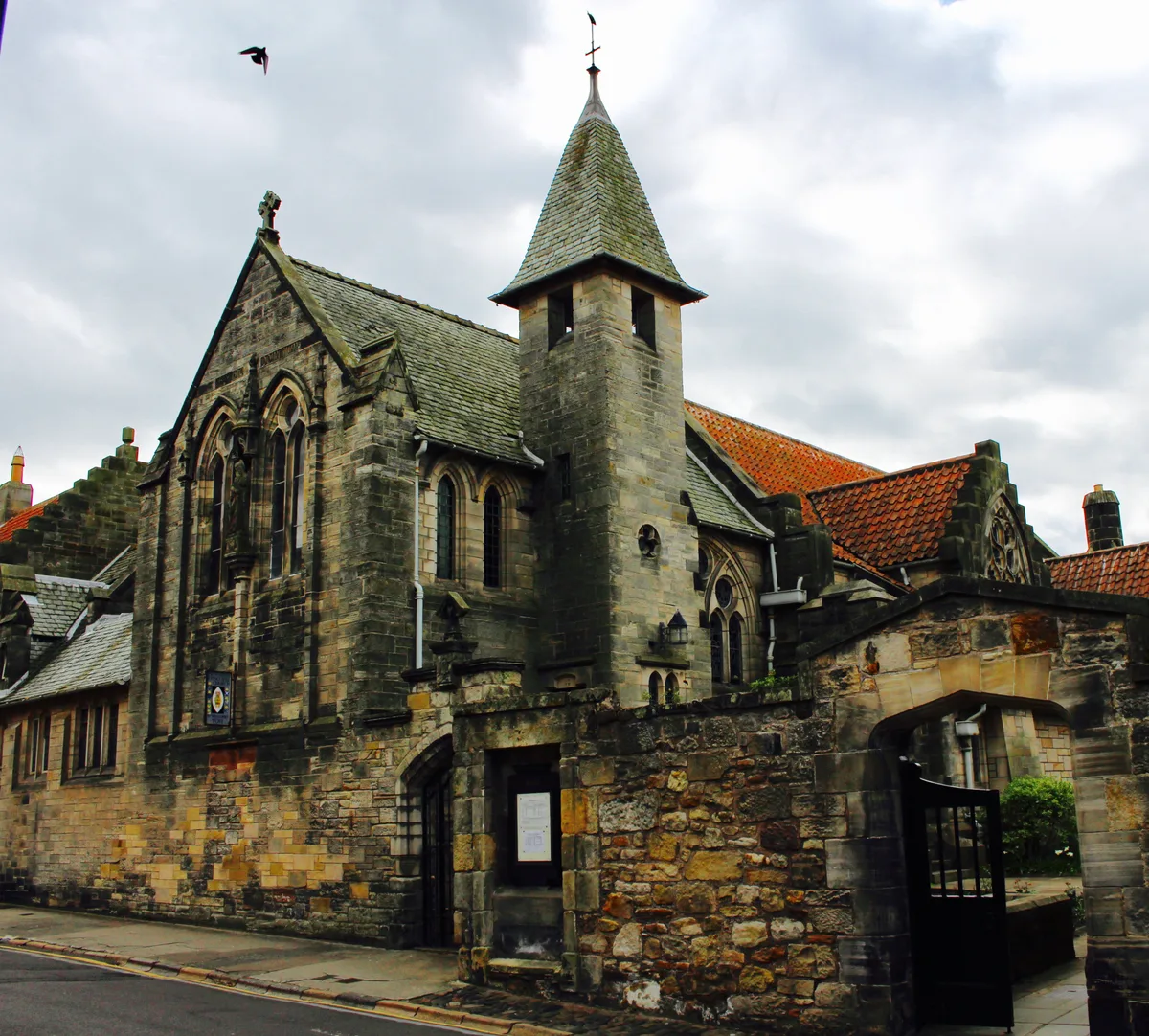
All Saints' Church, St Andrews
Historic churches · 0.1 km

15 College Street, St Andrews
Historic houses · 0.1 km

Chemical structures of simple sugars
Memorials & monuments · 0.1 km

22, 24 College Street, St Andrews
Historic houses · 0.1 km

Castle Wynd House, All Saints Episcopal Church, 28 North Castle Street, St Andrews
Historic houses · 0.1 km
Nearby
📷 4Historic houses · Central Scotland
Younger Hall, North Street, St Andrews
Younger Hall, North Street, St Andrews in Scotland Islands, United Kingdom.
📷 5Historic churches · Central Scotland
Martyr's Church and Halls, North Street, St Andrews
Martyr's Church and Halls, North Street, St Andrews — category B listed building-listed church in scotland-central, United Kingdom.
📷 3Historic churches · Central Scotland
St Salvator's Chapel
St Salvator's Chapel — chapel in Fife, Scotland, UK.
📷 4Historic churches · Central Scotland
St Salvator's Hall
St Salvator's Hall in Scotland Islands, United Kingdom.
📷 3Natural landmarks · Central Scotland
Patrick Hamilton's Initials
Patrick Hamilton's Initials — a other in scotland-central, United Kingdom.
📷 4Historic churches · Central Scotland
St Salvator's College
St Salvator's College in Scotland Islands, United Kingdom.
Where to eat & stay near University of St Andrews
Places to stay
 📷 5
📷 5Hotels · Central Scotland
Hazelbank Hotel
Hazelbank Hotel — a hotel in scotland central.
📷 5Hotels · Central Scotland
Hôtel du Vin & Bistro
Hôtel du Vin & Bistro — a hotel in scotland central. 4-star. Brand: Hôtel du Vin & Bistro.
 📷 5
📷 5Hostels · Central Scotland
St Andrews Tourist Hostel
St Andrews Tourist Hostel — a hostel in scotland central.
 📷 5
📷 5 📷 5
📷 5Caravan parks · Central Scotland
St. Andrews Holiday Park
St. Andrews Holiday Park — a caravan park in scotland central.
 📷 4
📷 4Caravan parks · Central Scotland
Cairnsmill Caravan Park
Cairnsmill Caravan Park — a caravan park in scotland central.
Places to eat & drink
 📷 6
📷 6 📷 7
📷 7 📷 7
📷 7Historic pubs · Central Scotland
Balcarres Arms Hotel, 59 Main Street, Colinsburgh
Balcarres Arms Hotel, 59 Main Street, Colinsburgh in Scotland Central, United Kingdom.
 📷 7
📷 7Historic pubs · Central Scotland
Railway Tavern, 14, 16 High Street West, Anstruther Wester
Railway Tavern, 14, 16 High Street West, Anstruther Wester in Scotland Central, United Kingdom.
 📷 7
📷 7Historic pubs · Central Scotland
12 Shore Street, Anstruther Easter
12 Shore Street, Anstruther Easter in Scotland Central, United Kingdom.
 📷 5
📷 5Historic pubs · Central Scotland
The Eagle Inn, 157-159 King Street, Broughty Ferry, Dundee
The Eagle Inn, 157-159 King Street, Broughty Ferry, Dundee in Scotland Central, United Kingdom.
More places in this region
 📷 3
📷 3 📷 3
📷 3 📷 5
📷 5 📷 5
📷 5Frequently asked questions
- Where is University of St Andrews?
- University of St Andrews is in central Scotland, United Kingdom (postcode KY16 9AJ).
- What is University of St Andrews?
- University of St Andrews in Scotland Islands, United Kingdom.
- How do I get to University of St Andrews?
- The nearest railway station is Leuchars, about 7.2 km away. The nearest town is Strathkinness. Drivers can use postcode KY16 9AJ.
- When was University of St Andrews built?
- Built or established in 1413.
- How do I get to University of St Andrews?
- The nearest railway station is Leuchars, about 7.2 km away. Drivers can navigate to postcode KY16 9AJ.