
Public art & sculpture · North West England
Through No.4
Also known as: Through the Looking-Glass, Lastall den Scáthán agus a bhFuair Eilís Ann Roimpi
In or near Manchester.
Through No.4 — a public art in england-west-midlands, United Kingdom.

David Dixon — CC BY-SA 2.0 via Wikimedia Commons licence

Plan your visit
- Typical visit
- 1 h–2 h
- Nearest railway station
- Trafford Park · 2.1 km
- Free entry
- Dog-friendly
- Wheelchair accessible
Getting there & planning your visit
To visit Through No.4, the nearest railway station is Trafford Park, located 2.1 km away. Entry is free, and the site is wheelchair accessible. The postcode for sat-nav is M50 3AZ.
About
Through No.4 is a public art located in england-west-midlands, United Kingdom. Sourced from OpenStreetMap (ODbL licence); see local listings for visitor information, opening hours and admission details.
Photo gallery
Official information
The Lowry is a cultural venue in Salford, showcasing a variety of art and performance. Visitors can explore galleries featuring works by L.S. Lowry and enjoy a range of live performances and events.
From the Wikipedia article
Through the Looking-Glass, and What Alice Found There is a novel published in December 1871 by Lewis Carroll, the pen name of Charles Lutwidge Dodgson, a mathematics lecturer at Christ Church, Oxford. It is the sequel to his Alice's Adventures in Wonderland (1865), in which many of the characters were anthropomorphic playing cards. In this second novel the theme is chess. As in the earlier book, the central figure, Alice, enters a fantastical world, this time by climbing through a large looking-glass (a mirror) into a world that she can see beyond it. There she finds that, just as in a reflection, things are reversed, including logic (for example, running helps one remain stationary, walking away from something brings one towards it, chessmen are alive and nursery-rhyme characters are real). Among the characters Alice meets are the severe Red Queen, the gentle and flustered White Queen, the quarrelsome twins Tweedledum and Tweedledee, the rude and opinionated Humpty Dumpty, and the kindly but impractical White Knight. Eventually, as in the earlier book, after a succession of strange adventures, Alice wakes and realises she has been dreaming. As in Alice's Adventures in Wonderland, the original illustrations are by John Tenniel. The book contains several verse passages, including "Jabberwocky", "The Walrus and the Carpenter" and the White Knight's ballad, "A-sitting On a Gate". Like Alice's Adventures in Wonderland, the book introduces phrases that have become common currency, including "jam to-morrow and jam yesterday – but never jam to-day", "sometimes I've believed as many as six impossible things before breakfast", "un-birthday presents", "portmanteau words" and "as large as life and twice as natural". Through the Looking Glass has been adapted for the stage and the screen and translated into many languages. Critical opinion of the book has generally been favourable and either ranked it on a par with its predecessor or else only just short of it.
Excerpt from Wikipedia under CC BY-SA 4.0. See the source article linked in Sources below.
Background
History
Although by 1871 Lewis Carroll had published several books and papers under his real name – Charles Lutwidge Dodgson – they had all been scholarly works about mathematics, on which he lectured at the University of Oxford. Under his pseudonym he had published Alice's Adventures in Wonderland (1865), the work for which he was known to the wider public. That book was greatly different from much Victorian literature for children, which was frequently didactic and moralistic, sometimes displaying religious fervour and emphasising human sinfulness. The Oxford Companion to English Literature describes Carroll's book as "a landmark 'nonsense' text, liberating children from didactic fiction". A…
Description
While the book was at proof stage Carroll made a substantial cut of about 1,400 words. The omitted section introduced a wasp wearing a yellow wig and includes a complete five-stanza poem that Carroll did not reuse elsewhere. If included in the book it would have followed, or been included at the end of, Chapter Eight – the chapter featuring the encounter with the White Knight.|}} The author cut the section. The manuscript has never been found and scholars searched unsuccessfully for years for traces of the missing material. Doubts arose whether it had ever existed, but in 1974 the London auction house Sotheby's offered for sale a batch of galley proofs with handwritten revisions and a note…
Sourced from Wikipedia under CC BY-SA 4.0.
- Coordinates
- 53.4718, -2.2975
- District
- Salford
- Parish
- Salford, unparished area
- Postcode
- M50 3AZ
- Parliamentary constituency
- Salford
- Phone
- +44 843 208 6000
- Nearest railway station
- Trafford Park — 2.1 km
Sources
- osm: node/12067060044 (ODbL)
- wikipedia: Through the Looking-Glass (CC BY-SA 4.0)
Other places nearby

Blue Peter Garden
Gardens · 0.1 km
Petra
Public art & sculpture · 0.1 km

Where the Wild Things Were
Public art & sculpture · 0.1 km

Upsy Daisy
Public art & sculpture · 0.1 km
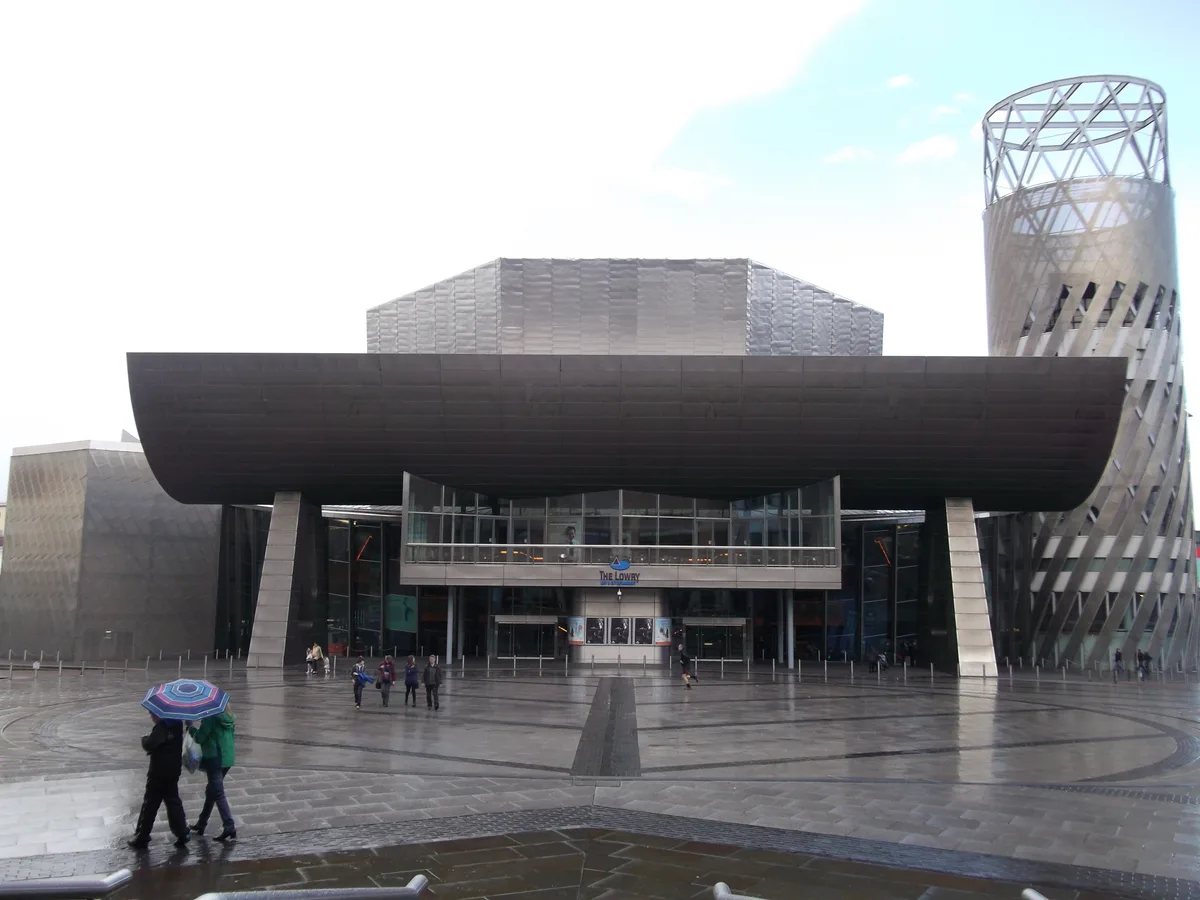
The Lowry
Theatres · 0.1 km
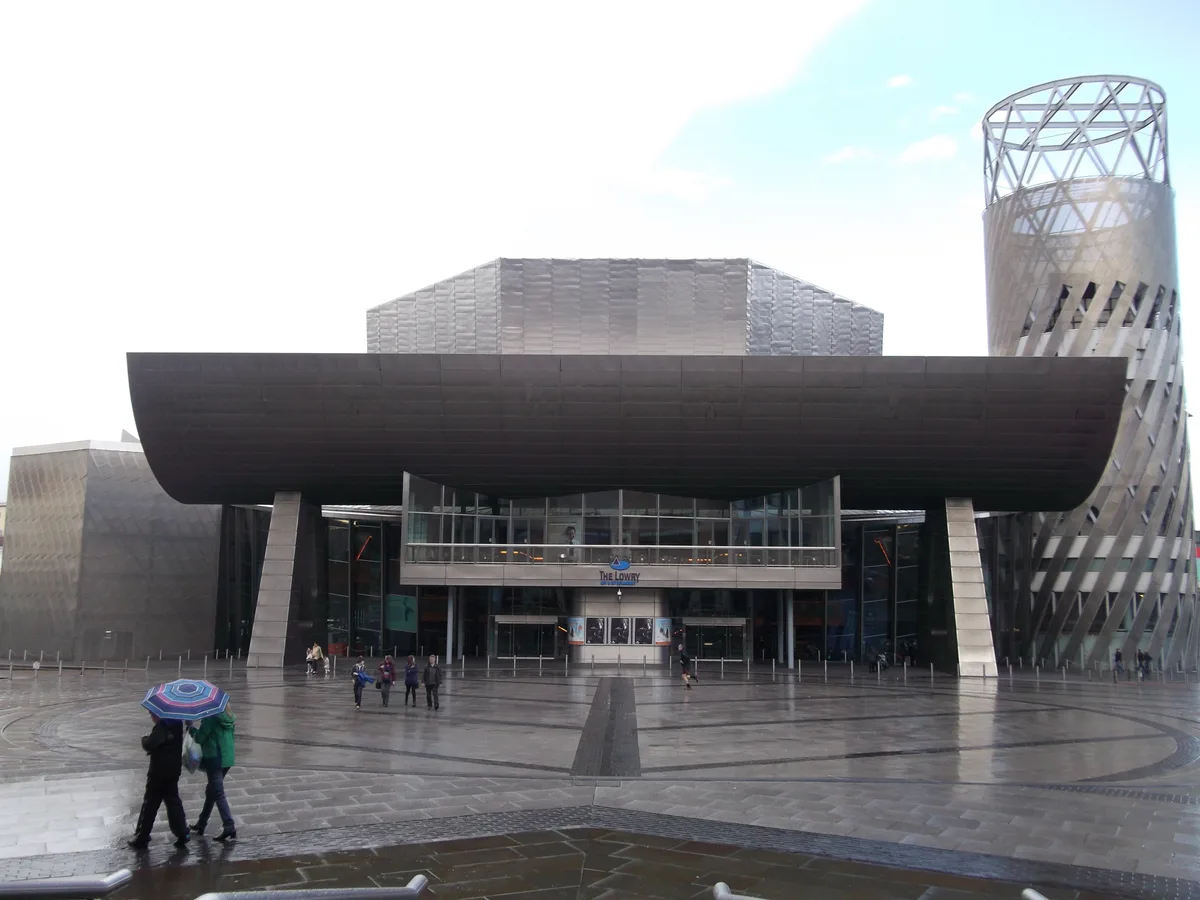
The Lowry
Galleries · 0.1 km

Media City Footbridge
Historic bridges · 0.2 km
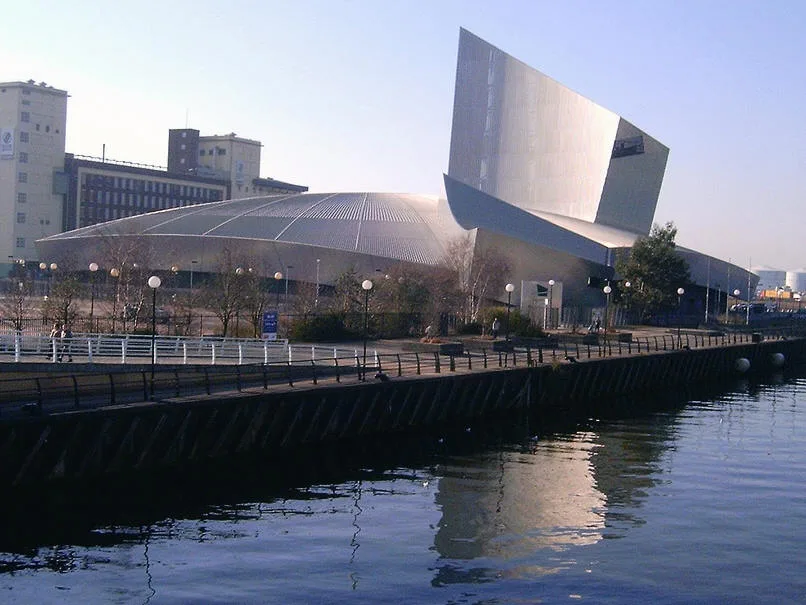
Imperial War Museum North
Museums · 0.3 km

Salford Quays Lift Bridge
Historic bridges · 0.3 km

Riley Foundation Gallery
Galleries · 0.3 km

T-55
Museums · 0.3 km
Salford Quays
Historic churches · 0.3 km
Nearby
📷 3Gardens · North West England
Blue Peter Garden
Blue Peter Garden — a garden in england-west-midlands, United Kingdom.
📷 4Public art & sculpture · North West England
Petra
Petra — a public art in england-west-midlands, United Kingdom.
📷 3Public art & sculpture · North West England
Where the Wild Things Were
Where the Wild Things Were — a public art in england-west-midlands, United Kingdom.
📷 3Public art & sculpture · North West England
Upsy Daisy
Upsy Daisy — a public art in england-west-midlands, United Kingdom.
📷 3Theatres · North West England
The Lowry
The Lowry is a theatre in the United Kingdom.
📷 3Galleries · North West England
The Lowry
The Lowry — arts centre and museum in Salford, England, United Kingdom.
Where to eat & stay near Through No.4
Places to stay
 📷 5
📷 5Hotels · North West England
Holiday Inn Express
Holiday Inn Express — a hotel in england west midlands. Brand: Holiday Inn Express.
 📷 7
📷 7Hotels · North West England
Hotel Football
Hotel Football — a hotel in england west midlands.
 📷 7
📷 7 📷 7
📷 7Hotels · North West England
Chesters Hotel & Restaurant
Chesters Hotel & Restaurant — a hotel in england west midlands.
 📷 5
📷 5Hotels · North West England
Hilton Garden Inn Manchester Emirates Old Trafford
Hilton Garden Inn Manchester Emirates Old Trafford — a hotel in england west midlands. 4-star. Brand: Hilton Garden Inn.
 📷 5
📷 5Places to eat & drink
 📷 6
📷 6Historic pubs · North West England
19, 20 And 21, The Crescent
19, 20 And 21, The Crescent in England North West, United Kingdom.
 📷 7
📷 7Historic pubs · North West England
Maypole Public House
Maypole Public House in England North West, United Kingdom.
 📷 5
📷 5Historic pubs · North West England
Lamb Hotel, Eccles
Lamb Hotel, Eccles in England North West, United Kingdom.
 📷 5
📷 5Historic pubs · North West England
The Briton's Protection
The Briton's Protection in England North West, United Kingdom.
 📷 7
📷 7Historic pubs · North West England
Sir Ralph Abercromby
Sir Ralph Abercromby in England North West, United Kingdom.
 📷 5
📷 5Historic pubs · North West England
The Punch Bowl Public House
The Punch Bowl Public House in England North West, United Kingdom.
More places in this region
 📷 3
📷 3Public art & sculpture · North West England
Anyone Who Has a Heart
Anyone Who Has a Heart — Public artwork (sculpture).
 📷 3
📷 3Public art & sculpture · North West England
Generation of Possibilities
Generation of Possibilities — Public artwork (sculpture) by Paul Frank Lewthwaite.
 📷 3
📷 3Public art & sculpture · North West England
Inhuman barriers
Inhuman barriers — Public artwork (mural) by Never Crew.
 📷 3
📷 3Public art & sculpture · North West England
James Fraser
James Fraser — Public artwork (statue) by Thomas Woolner.
Frequently asked questions
- Where is Through No.4?
- Through No.4 is in North-West England, United Kingdom (postcode M50 3AZ), in the parish of Salford, unparished area.
- What is Through No.4?
- Through No.4 — a public art in england-west-midlands, United Kingdom.
- How do I get to Through No.4?
- The nearest railway station is Trafford Park, about 2.1 km away. The nearest town is Manchester. Drivers can use postcode M50 3AZ.
- Is Through No.4 free to visit?
- Yes, Through No.4 is free to enter.
- How do I get to Through No.4?
- The nearest railway station is Trafford Park, about 2.1 km away. Drivers can navigate to postcode M50 3AZ.