
Memorials & monuments · London
Three Bridges
In or near Colnbrook.
Three Bridges — Monument, dating to 1859.
.jpg?width=1200)
Wikimedia Commons contributors — see linked file page for photographer and licence licence
.jpg)
Plan your visit
- Typical visit
- 15 min–45 min
- Nearest railway station
- Hanwell · 1.4 km
- Free entry
- Dog-friendly
Getting there & planning your visit
To visit the Three Bridges memorial, you can take the train to Hanwell station, which is 1.4 km away. Entry to the memorial is free. The postcode for sat-nav is UB2 4UT.
About
Three Bridges is a public memorial or monument in the United Kingdom. Records date its origin to 1859. Wikidata describes it as: "Monument, dating to 1859.". Coordinates: 51.5044°, -0.3553°.
Photo gallery
See it from the streetimagery from 2023
Imagery © Mapillary contributors, CC BY-SA 4.0
Protected designations
- Area of Outstanding Natural Beauty: Chilterns
Designations sourced from Natural England open data under OGL v3.
From the Wikipedia article
Three Bridges, known formally as Windmill Bridge, is a three-level crossing of transportation routes in Southall, Greater London, England. Despite its name, the landmark features only two bridges—a road bridge over a canal, which is carried in an aqueduct over a railway, which is in a cutting. A road bridge spanned the canal since the early 18th century but the structure was replaced when the railway was built in 1856. The road bridge is a cast-iron arch and the aqueduct is a cast-iron trough, all supported by brick piers, abutments, and retaining walls. The crossing was designed by Isambard Kingdom Brunel, the last major project before his death. The site is a scheduled monument.
Excerpt from Wikipedia under CC BY-SA 4.0. See the source article linked in Sources below.
Background
History
The crossing was built for the Great Western and Brentford Railway (GWBR, a subsidiary of the Great Western Railway, GWR), whose line ran from GWR's main line at Southall (nine miles—14.5 kilometres—west of Paddington station) to Brentford Dock on the River Thames. The railway crosses the Grand Junction Canal (which terminates at Brentford Dock) at the same point that the canal is crossed by Windmill Lane. The site was chosen to avoid Osterley Park, which was protected in the acts of parliament authorising both the canal and the railway, and St Bernard's Hospital. The structure was designed by Isambard Kingdom Brunel, his last major engineering work before his death. The contractors were E.…
Description
The road bridge is a cast-iron arch which replaced the original structure. Cast into the side plates are the name and address of the foundry: "Mattw T Shaw, 64 Cannon Street, City". Below the road bridge, at a right angle, the canal is carried over the railway in a cast-iron trough; the canal's towpath is cantilevered from the sides. The railway is in a cutting beneath both, which was built wide enough to carry a double-track broad gauge line. Various structural supports are in brick, including the retaining walls which support the cutting, the piers supporting the aqueduct, and wing walls, along with two strainer arches to support the retaining walls and relieve the load of the canal. The…
Sourced from Wikipedia under CC BY-SA 4.0.
- Coordinates
- 51.5044, -0.3553
- District
- Ealing
- Parish
- Ealing, unparished area
- Postcode
- UB2 4UT
- Parliamentary constituency
- Ealing Southall
- Established
- 1859
- Nearest railway station
- Hanwell — 1.4 km
Sources
- osm: n243841243 (ODbL)
- wikipedia: Three Bridges, London (CC BY-SA 4.0)
- commons: Brunel's road, canal and rail bridge (Three Bridges).jpg (CC BY-SA 4.0)
Other places nearby

Hanwell flight of locks and brick boundary wall of St Bernard's Hospital
Canal locks · 0.5 km

Sheep Family
Public art & sculpture · 0.5 km

Walls, Gates, Sluices And Bridge At Lock (90)
Historic bridges · 0.6 km

The Fox Inn, Hanwell
Historic pubs · 0.8 km

Wooden Sheep
Public art & sculpture · 0.9 km

Millennium Maze
Natural landmarks · 0.9 km

Wharncliffe Viaduct
Historic bridges · 1.0 km

Hanwell Zoo
Zoos & aquariums · 1.0 km

Southall Railway Centre
Natural landmarks · 1.2 km
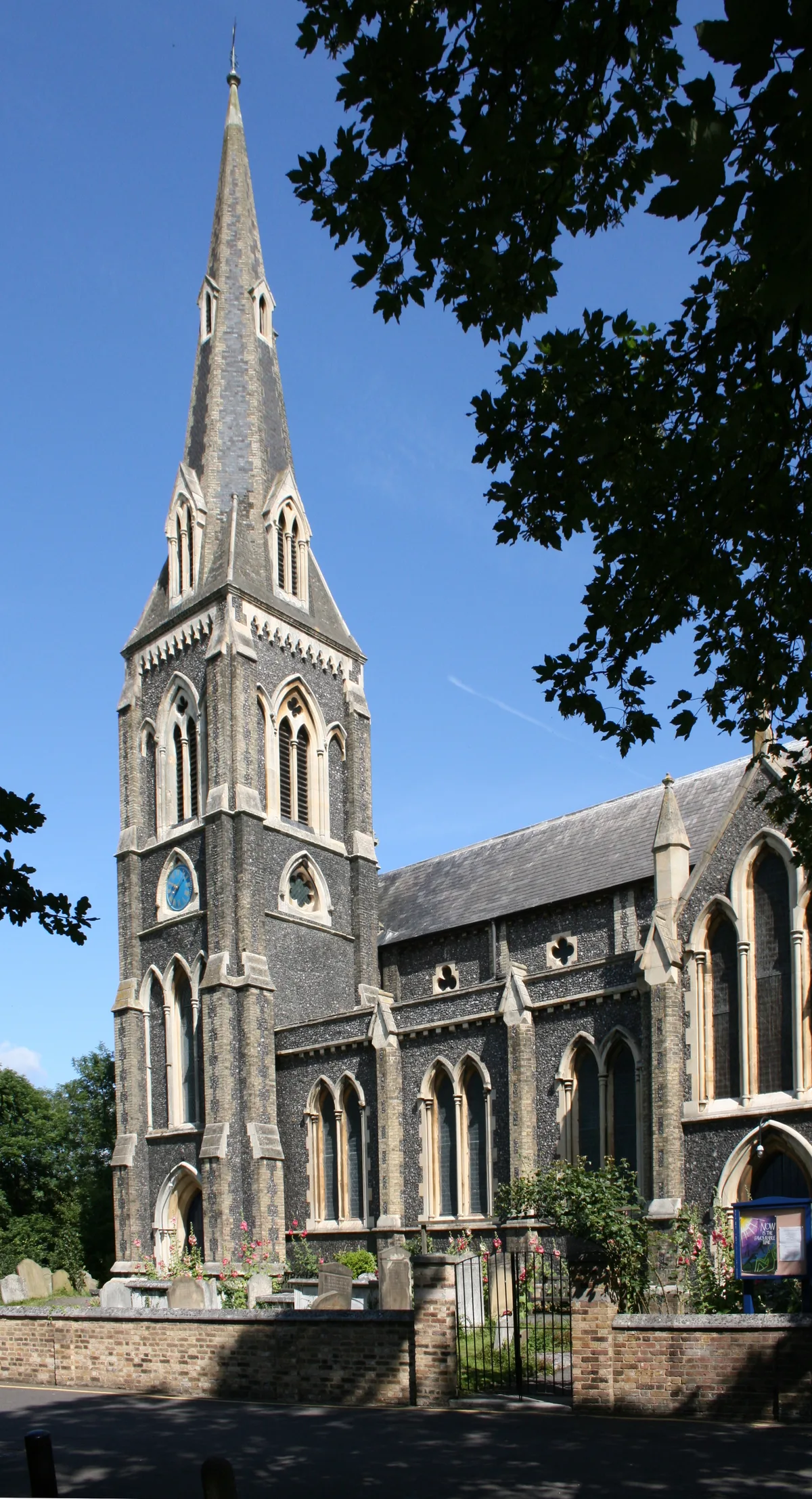
St. Mary's Church, Hanwell
Historic churches · 1.2 km

West Ealing
Chapels · 1.2 km

Weird Beard Brew Co.
Breweries · 1.3 km
Nearby
📷 5Canal locks · London
Hanwell flight of locks and brick boundary wall of St Bernard's Hospital
Hanwell flight of locks and brick boundary wall of St Bernard's Hospital — lock in London Borough of Ealing, London, England, UK.
📷 5Public art & sculpture · London
Sheep Family
Sheep Family — a public art in england-london, United Kingdom.
📷 5Historic bridges · London
Walls, Gates, Sluices And Bridge At Lock (90)
Walls, Gates, Sluices And Bridge At Lock (90) — Grade II listed building-listed bridge in england-london, United Kingdom.
📷 5Historic pubs · London
The Fox Inn, Hanwell
The Fox Inn, Hanwell in England London, United Kingdom.
📷 5Public art & sculpture · London
Wooden Sheep
Wooden Sheep — a public art in england-london, United Kingdom.
📷 5Natural landmarks · London
Millennium Maze
Millennium Maze — a other in england-london, United Kingdom.
Where to eat & stay near Three Bridges
Places to stay
 📷 7
📷 7Hotels · London
Boston Manor Hotel
Boston Manor Hotel — a hotel in england london.
 📷 5
📷 5 📷 7
📷 7Hotels · London
Park Grand London Heathrow
Park Grand London Heathrow — a hotel in england london.
 📷 5
📷 5Hotels · London
Hampton by Hilton London Ealing
Hampton by Hilton London Ealing — a hotel in england london. 4-star. Brand: Hampton.
 📷 7
📷 7 📷 5
📷 5Places to eat & drink
📷 5Historic pubs · London
The Fox Inn, Hanwell
The Fox Inn, Hanwell in England London, United Kingdom.
 📷 5
📷 5Historic pubs · London
The Plough
The Plough — Historic pub — listed building or notable heritage status.
 📷 7
📷 7 📷 7
📷 7 📷 7
📷 7 📷 7
📷 7Other memorials from this era
 📷 5
📷 5Memorials & monuments · London
Admiral Sir John Franklin
Admiral Sir John Franklin is a memorial in the United Kingdom.
 📷 5
📷 5Memorials & monuments · London
Baron de Stern Clock Tower
Baron de Stern Clock Tower is a memorial in the United Kingdom.
.jpg?width=1200) 📷 5
📷 5Memorials & monuments · London
Bringer of Peace
Bringer of Peace is a memorial in the United Kingdom.
 📷 5
📷 5Memorials & monuments · London
Charles George Gordon
Charles George Gordon — Public artwork (statue).
More memorials in this region
.jpg?width=1200) 📷 5
📷 5Memorials & monuments · London
1st Surrey Rifles War Memorial
1st Surrey Rifles War Memorial is a memorial in the United Kingdom.
 📷 5
📷 5Memorials & monuments · London
24th East Surrey Division War Memorial
24th East Surrey Division War Memorial is a memorial in the United Kingdom.
 📷 5
📷 5Memorials & monuments · London
Abney Park Cemetery CWGC Cross
Abney Park Cemetery CWGC Cross is a memorial in the United Kingdom.
.jpg?width=1200) 📷 5
📷 5Memorials & monuments · London
Alan Brooke, 1st Viscount Alanbrooke
Alan Brooke, 1st Viscount Alanbrooke is a memorial in the United Kingdom.
Frequently asked questions
- Where is Three Bridges?
- Three Bridges is in London, United Kingdom (postcode UB2 4UT), in the parish of Ealing, unparished area.
- What is Three Bridges?
- Three Bridges — Monument, dating to 1859.
- How do I get to Three Bridges?
- The nearest railway station is Hanwell, about 1.4 km away. The nearest town is Colnbrook. Drivers can use postcode UB2 4UT.
- When was Three Bridges built?
- Built or established in 1859.
- Who owns Three Bridges?
- Three Bridges is owned by | designation1 = Scheduled monument.
- Is Three Bridges a protected site?
- Yes — Three Bridges is part of the Chilterns National Landscape (AONB).
- Is Three Bridges free to visit?
- Yes, Three Bridges is free to enter.
- How do I get to Three Bridges?
- The nearest railway station is Hanwell, about 1.4 km away. Drivers can navigate to postcode UB2 4UT.