
Public art & sculpture · South East England
The Rape of Proserpina
In or near Cookham.
The Rape of Proserpina — a public art in england-south-east, United Kingdom.

Len Williams — CC BY-SA 2.0 via Wikimedia Commons licence

Plan your visit
- Typical visit
- 1 h–2 h
- Nearest railway station
- Cookham · 2.3 km
- Free entry
- Dog-friendly
Getting there & planning your visit
The Rape of Proserpina is located in Buckinghamshire, postcode SL6 0JA. The nearest railway station is Cookham, which is 2.3 km away. Entry to the site is free.
About
The Rape of Proserpina is a public art located in england-south-east, United Kingdom. Sourced from OpenStreetMap (ODbL licence); see local listings for visitor information, opening hours and admission details.
Photo gallery
Official information
Cliveden House is a historic Grade I stately home set in 376 acres of National Trust grounds, offering luxurious accommodations and a spa. Visitors can explore the beautifully presented gardens and enjoy various dining options, including afternoon tea and fine dining experiences.
Protected designations
- Area of Outstanding Natural Beauty: Chilterns
Designations sourced from Natural England open data under OGL v3.
From the Wikipedia article
The Rape of Proserpina (Italian: Ratto di Proserpina), more accurately translated as The Abduction of Proserpina, is a large Baroque marble group sculpture by Italian artist Gian Lorenzo Bernini, executed in 1621 and '22, when Bernini's career was in its early stage. The group, finished when Bernini was just 23 years old, depicts the abduction of Proserpina, who is seized and taken to the underworld by the god Pluto. It features Pluto holding Proserpina aloft, and a Cerberus to symbolize the border into the underworld that Pluto carries Proserpina into. Cardinal Scipione Borghese commissioned the sculpture and gave it to the newly appointed Cardinal-nephew, Ludovico Ludovisi, possibly as a means of gaining favour. The choice to depict the myth of Proserpina may relate to the recent death of Pope Paul V, or to the recent empowerment of Ludovico. Bernini drew inspiration from Giambologna and Annibale Carracci for the sculpture, which is the only work for which preparatory material survives. The Rape of Proserpina is made of rare Carrara marble, and was originally placed on a pedestal, since destroyed, with a poem by Maffeo Barberini. It has been praised for its realism, as the marble mimics other materials like flesh. The detail is notable; for instance, a trickle of tears contributes to the expressiveness of Proserpina's face.
Excerpt from Wikipedia under CC BY-SA 4.0. See the source article linked in Sources below.
Background
History
The Rape of Proserpina is based on the Latin myth of Proserpina, which is found in both Ovid's Metamorphoses and Claudian's De Raptu Proserpinae. Proserpina, the daughter of Jupiter and Ceres, the Roman goddess of agriculture, is gathering flowers when she is seized by the god of the underworld, Pluto. Pluto erupts from the ground in a chariot pulled by four black horses, and forces Proserpina down into the underworld with him, but not before Ceres could hear her daughter scream. Ceres dried the earth and caused harvests to fail, prompting Jupiter to negotiate a deal: Pluto and Ceres would each have Proserpina for half the year. The myth symbolizes the changing of the seasons: when…
Sourced from Wikipedia under CC BY-SA 4.0.
- Coordinates
- 51.5559, -0.6889
- District
- Buckinghamshire
- Parish
- Taplow
- Postcode
- SL6 0JA
- Parliamentary constituency
- Beaconsfield
- Nearest railway station
- Cookham — 2.3 km
Sources
- osm: node/4238142503 (ODbL)
- wikipedia: The Rape of Proserpina (CC BY-SA 4.0)
Other places nearby
_(7958617328).jpg?width=1200)
Octagon Temple Chapel, Cliveden
Chapels · 0.2 km
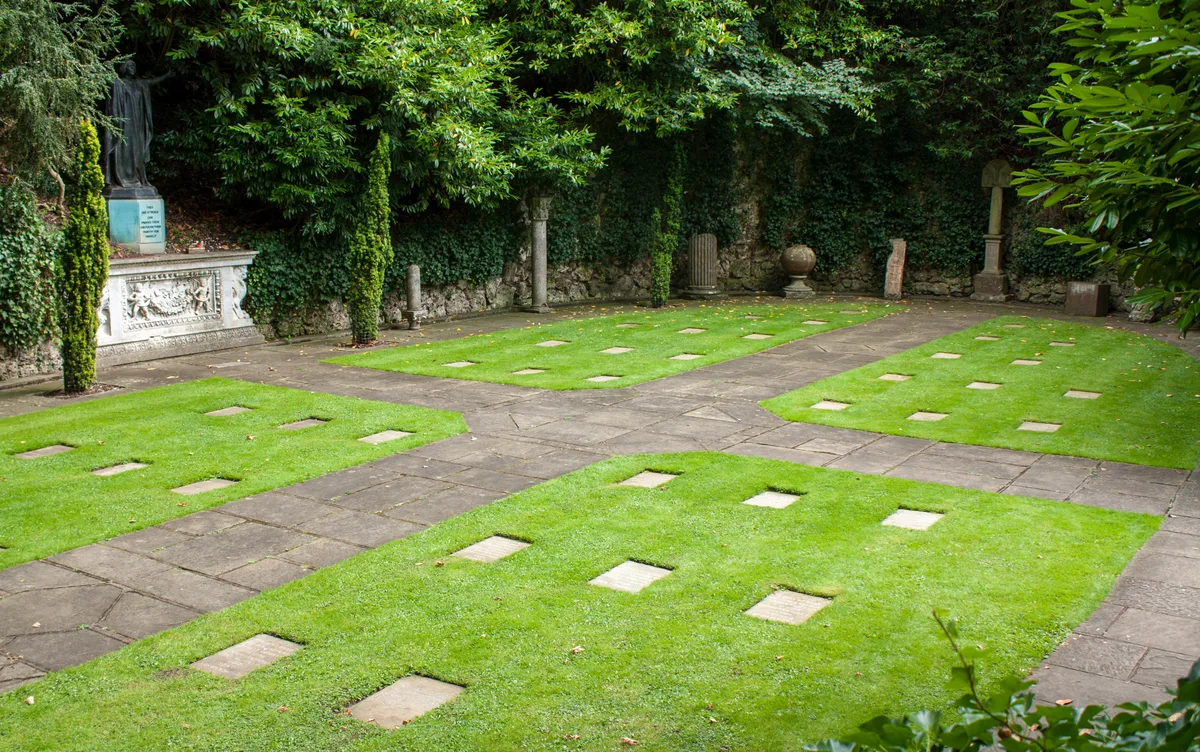
Cliveden War Cemetery
Gardens · 0.2 km
.jpg?width=1200)
War Memorial Garden
Cemeteries · 0.2 km

Terrace Wall To Garden Front, Cliveden
Holy wells · 0.2 km

Cliveden
Historic houses · 0.3 km
Cliveden House
Manor houses · 0.3 km
Cliveden House
Hotels · 0.3 km
.jpg?width=1200)
Duke of Sutherland Statue
Memorials & monuments · 0.4 km

The Feathers Public House
Historic pubs · 0.5 km

Shell Fountain, Cliveden
Public art & sculpture · 0.6 km

Cookham Lock
Canal locks · 0.8 km

Amphitheatre, Cliveden Estate
Open-air theatres · 0.8 km
Nearby
📷 5Chapels · South East England
Octagon Temple Chapel, Cliveden
Octagon Temple Chapel, Cliveden — chapel in the Octagon Temple, Cliveden, Buckinghamshire, England, United Kingdom.
📷 5Gardens · South East England
Cliveden War Cemetery
Cliveden War Cemetery — cemetery in Buckinghamshire, United Kingdom.
📷 5Cemeteries · South East England
War Memorial Garden
War Memorial Garden is a cemetery in the United Kingdom.
📷 5Holy wells · South East England
Terrace Wall To Garden Front, Cliveden
Terrace Wall To Garden Front, Cliveden — Grade I listed wall in South Bucks, United Kingdom.
📷 5Historic houses · South East England
Cliveden
Cliveden (pronounced ) is an English country house and estate in the care of the National Trust in Buckinghamshire, on the border with Berkshire. The Italianate mansion, also known as Cliveden House,
📷 5Manor houses · South East England
Cliveden House
Cliveden House — a manor in england-south-east, United Kingdom.
Where to eat & stay near The Rape of Proserpina
Places to stay
📷 5Hotels · South East England
Cliveden House
Cliveden House — a hotel in england south east.
 📷 5
📷 5Hotels · South East England
Bel and the Dragon
Bel and the Dragon — a hotel in england south east.
 📷 7
📷 7 📷 5
📷 5Hotels · South East England
Taplow House Hotel
Taplow House Hotel — a hotel in england south east.
 📷 5
📷 5Hotels · South East England
Burnham Beeches Hotel
Burnham Beeches Hotel — a hotel in england south east.
 📷 5
📷 5Caravan parks · South East England
Amerden Caravan Park
Amerden Caravan Park — a caravan park in england south east.
Places to eat & drink
📷 7Historic pubs · South East England
The Feathers Public House
The Feathers Public House in England South East, United Kingdom.
 📷 5
📷 5Restaurants · South East England
The Ferry
The Ferry — a restaurant in england south east.
 📷 5
📷 5 📷 7
📷 7Historic pubs · South East England
Green Dragon Public House
Green Dragon Public House in England South East, United Kingdom.
 📷 5
📷 5Historic pubs · South East England
Gardeners Arms Public House
Gardeners Arms Public House in England South East, United Kingdom.
 📷 5
📷 5Historic pubs · South East England
The Queen's Head
The Queen's Head in England South East, United Kingdom.
More places in this region
 📷 5
📷 5Public art & sculpture · South East England
The Jurors
The Jurors — Public artwork (installation) by Hew Locke.
 📷 5
📷 5Public art & sculpture · South East England
The Woking Martian
The Woking Martian — a public art in england-london, United Kingdom.
 📷 5
📷 5Public art & sculpture · South East England
The Golf Ball
The Golf Ball — a public art in england-london, United Kingdom.
 📷 5
📷 5Public art & sculpture · South East England
Memorial to Alan Turing
Memorial to Alan Turing — a public art in england-london, United Kingdom.
Frequently asked questions
- Where is The Rape of Proserpina?
- The Rape of Proserpina is in South-East England, United Kingdom (postcode SL6 0JA), in the parish of Taplow.
- What is The Rape of Proserpina?
- The Rape of Proserpina — a public art in england-south-east, United Kingdom.
- How do I get to The Rape of Proserpina?
- The nearest railway station is Cookham, about 2.3 km away. The nearest town is Cookham. Drivers can use postcode SL6 0JA.
- Is The Rape of Proserpina a protected site?
- Yes — The Rape of Proserpina is part of the Chilterns National Landscape (AONB).
- Is The Rape of Proserpina free to visit?
- Yes, The Rape of Proserpina is free to enter.
- How do I get to The Rape of Proserpina?
- The nearest railway station is Cookham, about 2.3 km away. Drivers can navigate to postcode SL6 0JA.