
Historic houses · South East England
The Post and Telegraph
In or near Brighton and Hove.
The Post and Telegraph — a Grade II-listed historic house in england-south-east, United Kingdom.

Roger Kidd — CC BY-SA 2.0 via Wikimedia Commons licence

Plan your visit
- Typical visit
- 1 h–2 h
- Nearest railway station
- Brighton · 0.7 km
- Family-friendly
- Limited wheelchair access
Getting there & planning your visit
To visit The Post and Telegraph, the nearest railway station is Brighton, which is 0.7 km away. The postcode for sat-nav is BN1 1UF. Please note that accessibility is limited for wheelchair users.
About
The Post and Telegraph is a Grade II-listed building in england-south-east, United Kingdom. Grade II status is conferred by Historic England (or Cadw, Historic Environment Scotland or NIEA equivalents) on buildings of exceptional national interest. See the linked Wikipedia article for full historical and architectural details.
Photo gallery
360° viewimagery from 2018
Imagery © Mapillary contributors, CC BY-SA 4.0
From the Wikipedia article
The building at 155–158 North Street in Brighton, part of the English coastal city of Brighton and Hove, was built between 1921 and 1923 as a branch of National Provincial Bank. The King Louis-style bank was built on the site of several shops (with offices above). The properties were acquired by the National Provincial Bank during 1916–20. The Brighton Gazette had occupied 155a North Street since 1910, when its long-time home at number 150 was converted into the Cinema de Luxe. Published by William James Towner, the paper’s full title was the Brighton Gazette, Hove Post and Sussex Telegraph (It later became part of National Westminster Bank's network of branches following the merger of National Provincial and Westminster Bank). In 2011 it became J D Wetherspoon's second pub in central Brighton. One of many buildings by the prolific local architecture firm of Clayton & Black, whose work in various styles can be found across the city, it forms an important component of the range of banks, offices and commercial buildings on North Street—a significant commercial thoroughfare since the 18th century. In particular, the "good attention to detail" shown throughout the building's Louis XVI-style façade has been praised. English Heritage has listed it at Grade II for its architectural and historical importance.
Excerpt from Wikipedia under CC BY-SA 4.0. See the source article linked in Sources below.
Background
History
Brighton (originally Brighthelmston) originated as a fishing village bounded by four streets named after the points of the compass. The land to the north, west and east was agricultural. North Street lay on the main route towards London, and it thrived as the town grew in the 18th century: by 1800 it was the centre of commerce, lined with inns, shops and offices. Many buildings on the north side were removed between 1874 and 1879 when the road was widened, and offices and banks were attracted to the area. Large early 20th-century buildings included offices for the Prudential Association and the Royal Assurance Society and a branch of Midland Bank, and the north side of the street was soon…
Architecture
The stone-built structure is in the Louis XVI style, a derivative of Neoclassical architecture. Elements of the Edwardian Baroque style, which Clayton & Black used in their 1904 commission at 163 North Street, have also been identified. The building has been said to stand "glowering ... across the entrance to Bond Street" at T.B. Whinney's Edwardian/Italianate Midland Bank branch of 1902. The two-storey building has six windows facing North Street, a chamfered corner entrance bay and three windows to each floor facing Bond Street. There are dormer windows set into the slate-tiled mansard roof. There are three entrances: two subsidiary doorways in the outermost bays, and an elaborate…
Sourced from Wikipedia under CC BY-SA 4.0.
- Coordinates
- 50.8230, -0.1405
- District
- Brighton and Hove
- Parish
- Brighton and Hove, unparished area
- Postcode
- BN1 1UF
- Parliamentary constituency
- Brighton Pavilion
- Established
- 1921
- Nearest railway station
- Brighton — 0.7 km
Sources
- wikidata: Q4550560 (CC0)
- wikipedia: 155–158 North Street, Brighton (CC BY-SA 4.0)
Other places nearby

The Post and Telegraph
Historic pubs · 0.0 km

Theatre Royal
Open-air theatres · 0.1 km
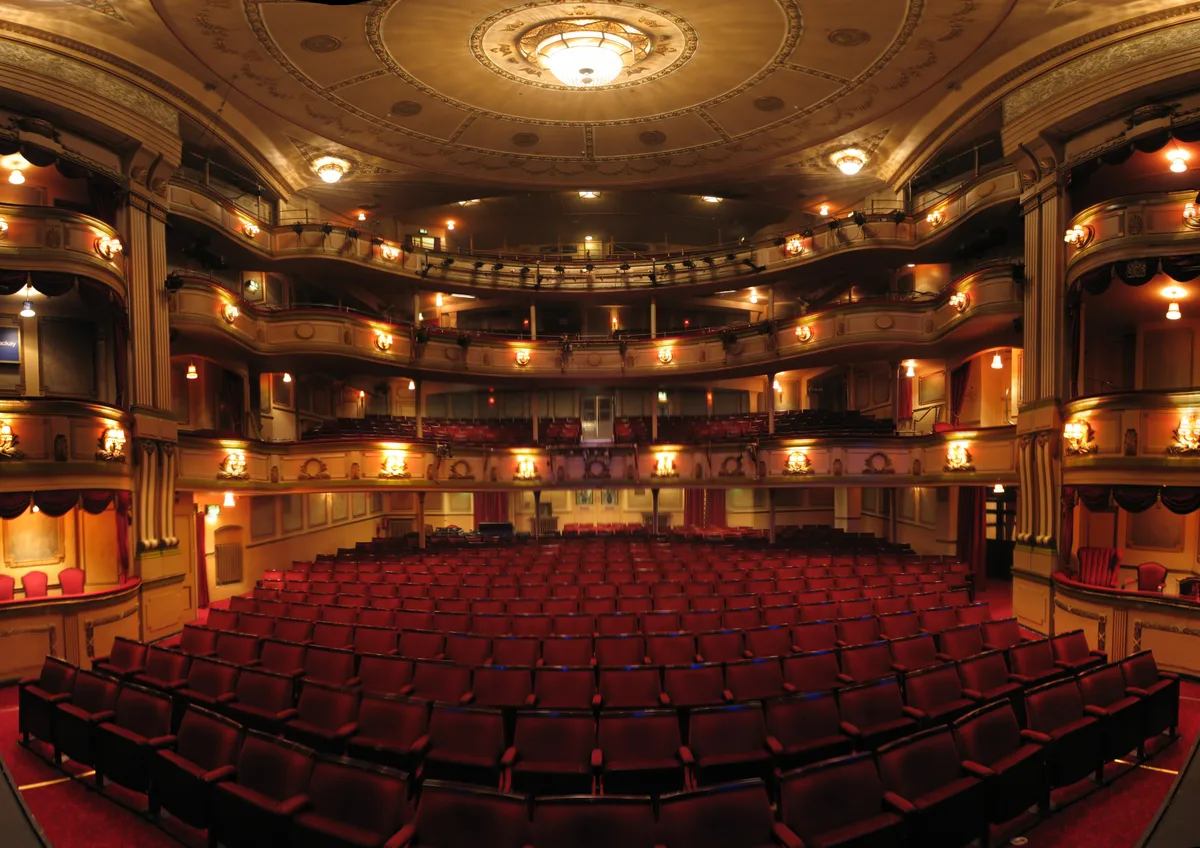
Theatre Royal
Theatres · 0.1 km

163 North Street, Brighton
Gardens · 0.1 km

Paris Continental Cinema
Theatres · 0.1 km
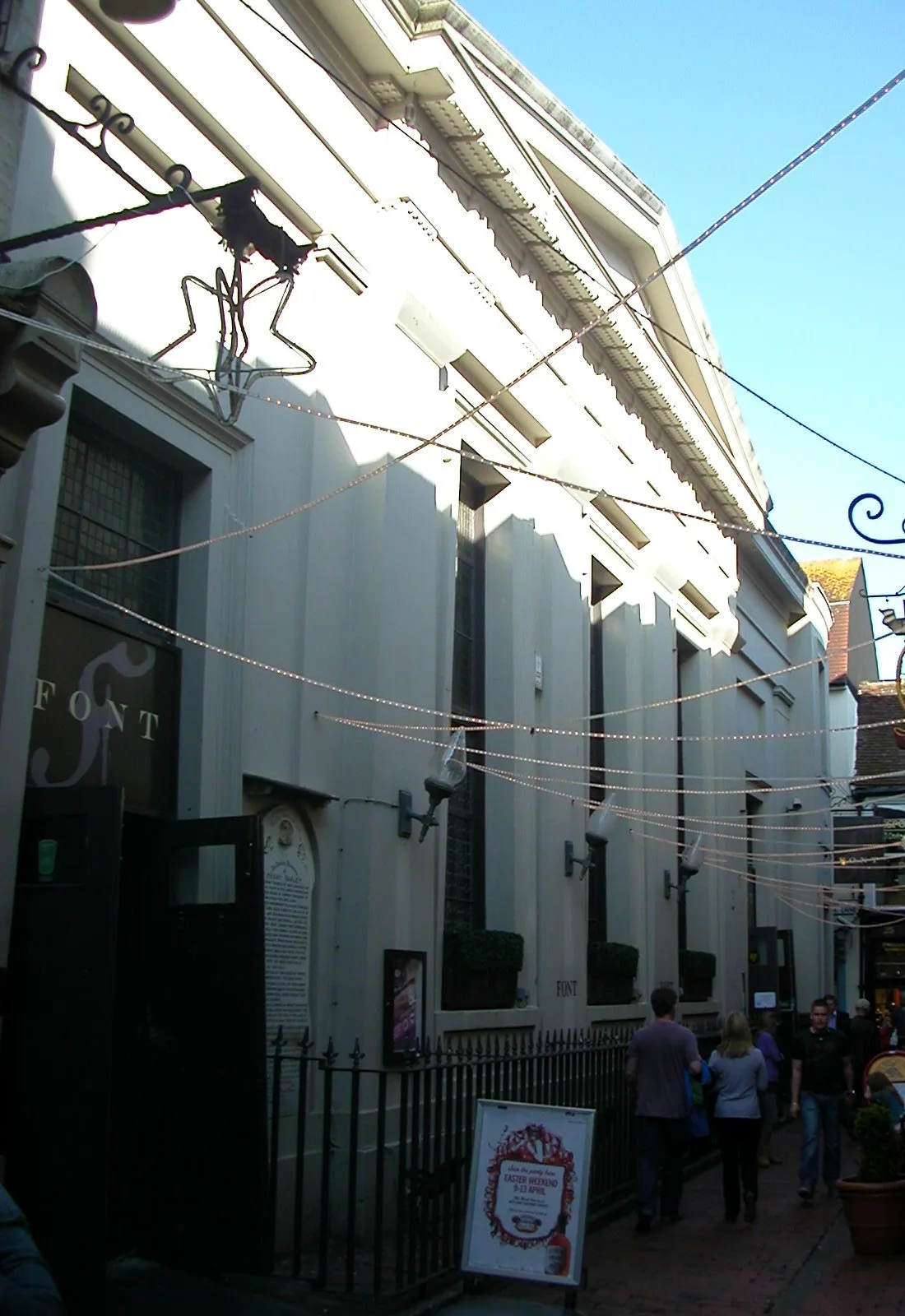
Union Chapel
Historic churches · 0.1 km

Union Chapel
Historic pubs · 0.1 km
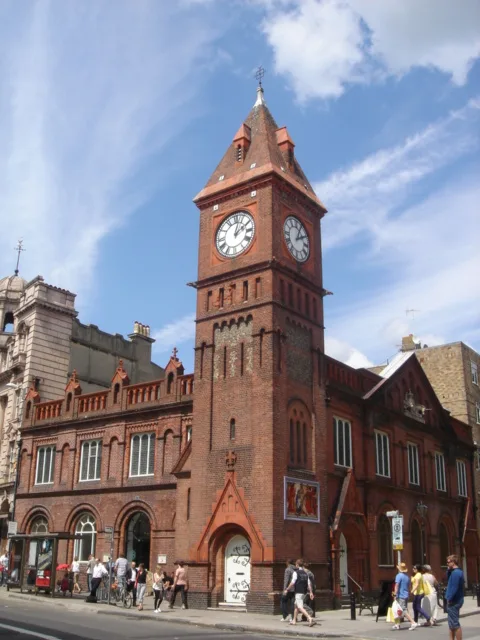
Chapel Royal, Brighton
Historic churches · 0.1 km
statue of Max Miller
Public art & sculpture · 0.1 km

The Dolphin Fountain
Public art & sculpture · 0.1 km
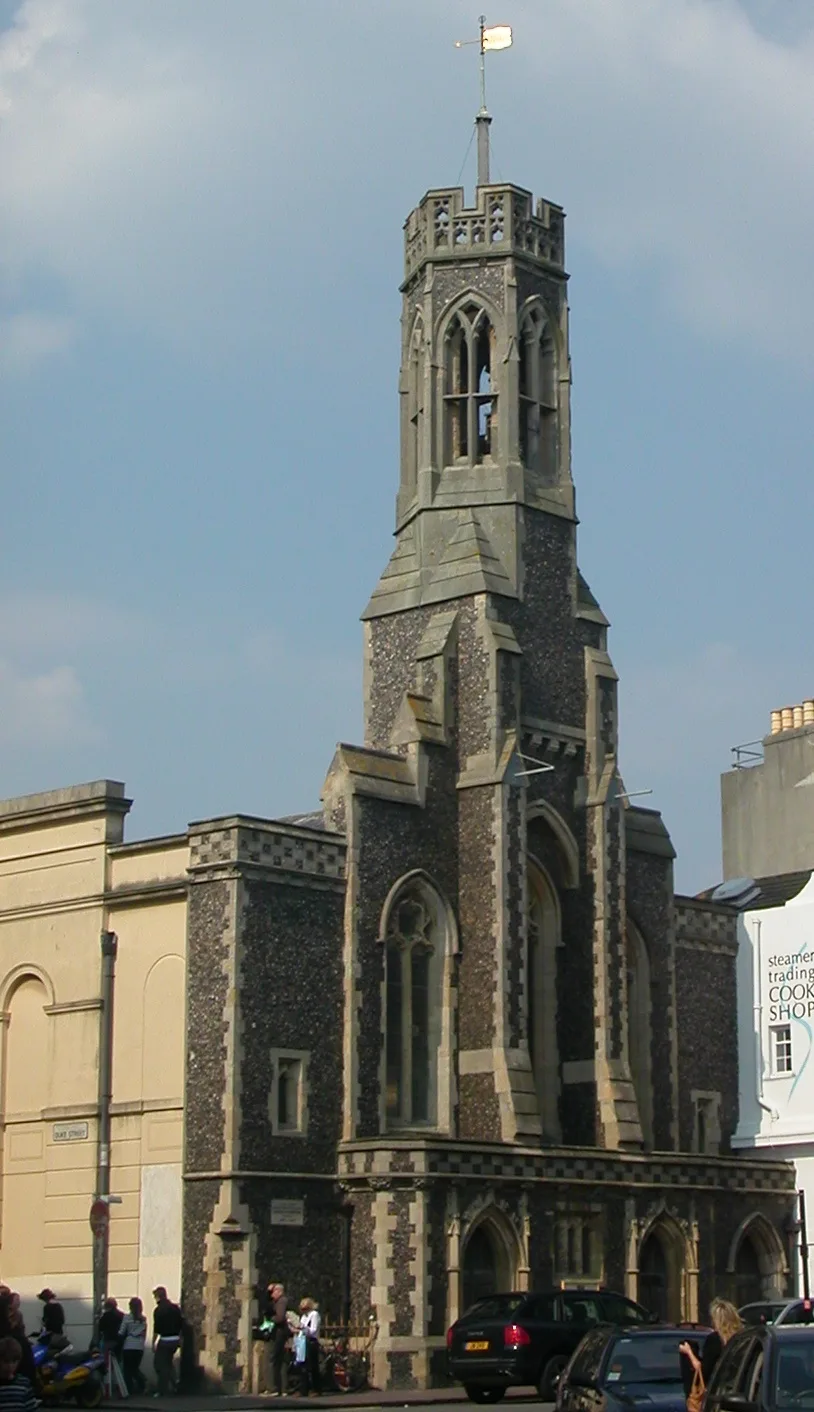
Holy Trinity Church, Brighton
Historic churches · 0.1 km

Fabrica
Galleries · 0.1 km
Nearby
📷 5Historic pubs · South East England
The Post and Telegraph
The Post and Telegraph in England South East, United Kingdom.
📷 5Open-air theatres · South East England
Theatre Royal
Theatre Royal — a open-air theatre in england south east.
📷 5Theatres · South East England
Theatre Royal
Theatre Royal is a theatre in the United Kingdom.
📷 5Gardens · South East England
163 North Street, Brighton
163 North Street, Brighton — a garden in england-south-east, United Kingdom.
📷 5Theatres · South East England
Paris Continental Cinema
Paris Continental Cinema — a cinema heritage in england-south-east, United Kingdom.
📷 5Historic churches · South East England
Union Chapel
Union Chapel — pub and former chapel in Brighton, East Sussex, England, UK.
Where to eat & stay near The Post and Telegraph
Places to stay
 📷 7
📷 7Hotels · South East England
The Old Ship Hotel
The Old Ship Hotel — a hotel in england south east.
 📷 5
📷 5 📷 5
📷 5Hostels · South East England
Kipp's Hostel
Kipp's Hostel — a hostel in england south east.
 📷 5
📷 5Hostels · South East England
A&O Hostel Brighton
A&O Hostel Brighton — a hostel in england south east.
 📷 5
📷 5Hostels · South East England
Smart Brighton Beach
Smart Brighton Beach — a hostel in england south east.
 📷 5
📷 5Hostels · South East England
HostelPoint
HostelPoint — a hostel in england south east.
Places to eat & drink
📷 5Historic pubs · South East England
The Post and Telegraph
The Post and Telegraph in England South East, United Kingdom.
📷 5 📷 5
📷 5Cafés · South East England
Caffè Nero
Caffè Nero — a café in england south east. Cuisine: coffee shop. Brand: Caffè Nero.
 📷 5
📷 5Restaurants · South East England
Bella Italia
Bella Italia — a restaurant in england south east. Cuisine: italian. Brand: Bella Italia.
 📷 5
📷 5Historic pubs · South East England
Royal Pavilion Tavern
Royal Pavilion Tavern in England South East, United Kingdom.
 📷 5
📷 5Historic pubs · South East England
King and Queen, Brighton
King and Queen, Brighton in England South East, United Kingdom.
More historic houses in this region
 📷 5
📷 5Historic houses · South East England
12 and 14 High Street, Rochester
12 and 14 High Street, Rochester — building in Rochester, Kent, England, UK.
 📷 5
📷 5Historic houses · South East England
Berkeley House
Berkeley House — house in Rochester, Kent, England, UK.
.jpg?width=1200) 📷 5
📷 5Historic houses · South East England
Betchworth House
Betchworth House — house in Betchworth, Mole Valley, England, UK.
 📷 5
📷 5Historic houses · South East England
Bookham Grove
Bookham Grove — building in Mole Valley, Surrey, England, UK.
Frequently asked questions
- Where is The Post and Telegraph?
- The Post and Telegraph is in South-East England, United Kingdom (postcode BN1 1UF), in the parish of Brighton and Hove, unparished area.
- What is The Post and Telegraph?
- The Post and Telegraph — a Grade II-listed historic house in england-south-east, United Kingdom.
- How do I get to The Post and Telegraph?
- The nearest railway station is Brighton, about 0.7 km away. The nearest town is Brighton and Hove. Drivers can use postcode BN1 1UF.
- When was The Post and Telegraph built?
- Built or established in 1921.
- Who owns The Post and Telegraph?
- The Post and Telegraph is owned by J D Wetherspoon.
- Is The Post and Telegraph a listed building?
- The Post and Telegraph is officially recognised as Grade II listed.
- How do I get to The Post and Telegraph?
- The nearest railway station is Brighton, about 0.7 km away. Drivers can navigate to postcode BN1 1UF.