
Memorials & monuments · Scottish Lowlands
The Callant statue
In or near Denholm.
The Callant statue — category A listed building-listed memorial in scotland-lowlands, United Kingdom.

Billy McCrorie — CC BY-SA 2.0 via Wikimedia Commons licence

Plan your visit
- Typical visit
- 15 min–45 min
- Free entry
- Dog-friendly
About
The Callant statue is a category A listed building-listed memorial in scotland-lowlands, United Kingdom, registered on the Historic Environment Scotland register (entry LB34645). Listed status protects buildings and structures of special architectural or historic interest. See the linked Wikipedia article for further details.
Photo gallery
See it from the streetimagery from 2022
Imagery © Mapillary contributors, CC BY-SA 4.0
Heritage listing
Category A Date Added 16/03/1971 Local Authority Scottish Borders Planning Authority Scottish Borders Burgh Hawick NGR NT 50428 14790 Coordinates 350428, 614790 — William Francis Beattie, 1914, completed by his father, Thomas Beattie, 1921. Prominently sited bronze equestrian statue of mounted standard bearer, situated on oval-plan stone pedestal and positioned at critical junction in town centre. Statue of standard bearer sitting astride horse, holding unfurled flag aloft in right hand. Horse with right foreleg raised and head bowed. Pedestal with deep plinth; base course, cornice. Inscription to front (S) TERIBUS YE TERIODIN with date 1514 above and town coat-of-arms plaque above. Other inscriptions to sides (see Notes). — Prominently positioned in the centre of the town, this well-detailed sculpture celebrates one of the most famous events in the town's history and is one of its major landmarks. Also known as the 1514 Memorial, it was erected in 1914 to celebrate the 1514 defeat of Lord Dacre's English Army at Hornshole, two miles away, by a party of local youths. The youths then brought a flag back from the battle site. A replica of this flag is carried each year around the boundaries of the common lands, borne by the standard bearer or 'Cornet' and accompanied by other riders. Known as the Common Riding, this is the major festival for the town, and The Horse has become a focus of the festivities, being decked with blue and gold ribbons by each year's Cornet since 1923. The inscription to the side of the pedestal reads: 'ERECTED TO COMMEMORATE THE RETURN OF THE HAWICK CALLANTS FROM HORNSHOLE IN 1514, WHEN AFTER THE BATTLE OF FLODDEN THEY ROUTED THE ENGLISH MARAUDERS AND CAPTURED THEIR FLAG.' The inscription at the opposite side commemorates the unveiling in 1914. Th
From Historic Environment Scotland under OGL v3.
Official information
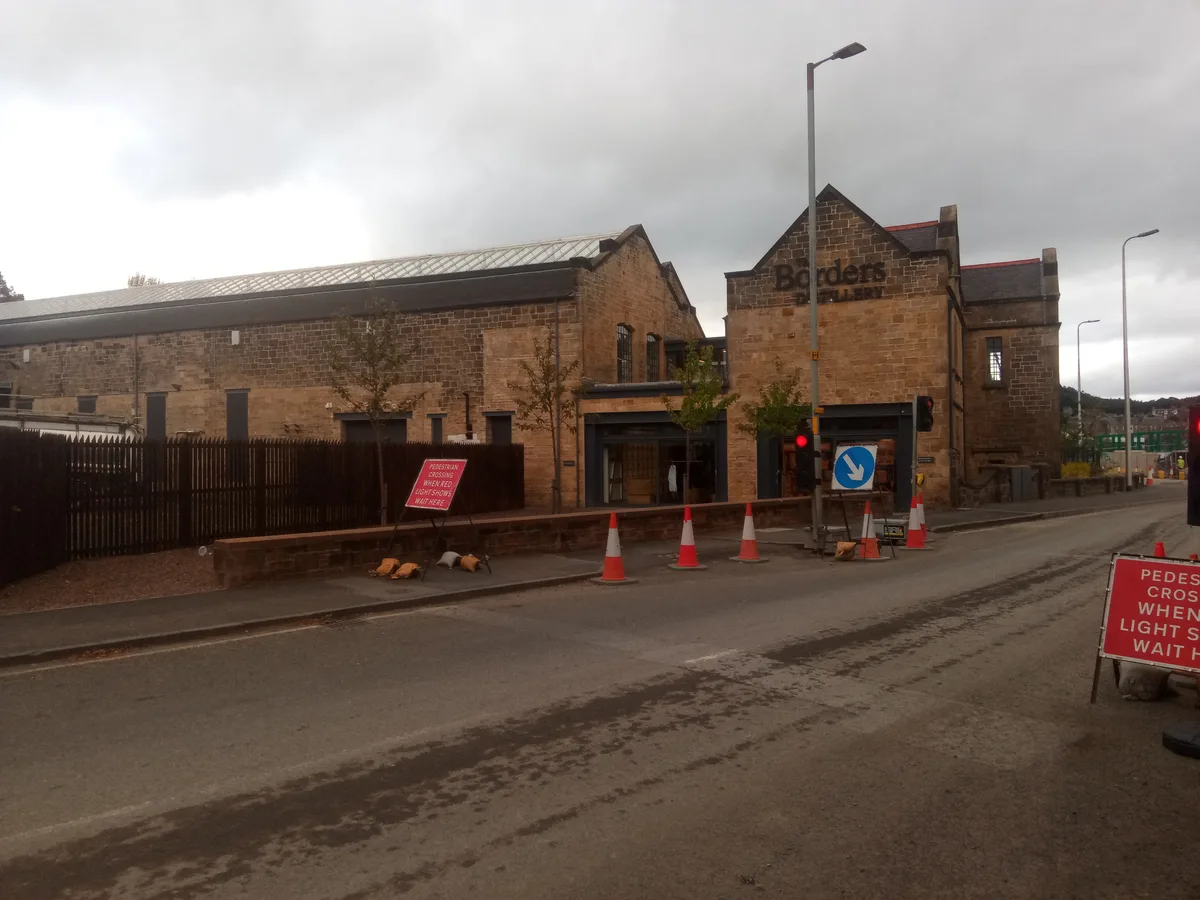
The Borders Distillery is the first Scotch whisky distillery in the Scottish Borders since 1837. Visitors can explore the distillation process and taste a variety of spirits crafted from locally sourced ingredients.
Place summary
The Callant statue is a memorial located in the Scottish Lowlands. It is a category A listed building, signifying its national importance and architectural significance.
AI-generated from the structured facts on this page (operator, designation, listing, era). Not a substitute for visiting.
- Coordinates
- 55.4245, -2.7848
- District
- Scottish Borders
- Postcode
- TD9 9BG
- Parliamentary constituency
- Berwickshire, Roxburgh and Selkirk
- Established
- 1914
- Official site
- www.thebordersdistillery.com
Sources
- wikidata: Q17571529 (CC0)
Other places nearby
The Horse
Memorials & monuments · 0.0 km
Central Square Clock
Public art & sculpture · 0.0 km

East Port
Memorials & monuments · 0.1 km

Hawick Film and Video Club
Cinemas · 0.1 km

Hawick Congregational Community Church And Halls, Bourtree Place
Historic churches · 0.1 km

North Port
Memorials & monuments · 0.2 km
South Port
Memorials & monuments · 0.3 km
The Borders Distillery
Distilleries · 0.3 km

Garfield Mill
Galleries · 0.3 km
Staney Brae Anvil
Public art & sculpture · 0.3 km

Hawick Savings Bank
Memorials & monuments · 0.3 km

Wilton Mills Sign
Public art & sculpture · 0.4 km
Nearby
📷 3Memorials & monuments · Scottish Lowlands
The Horse
The Horse is a memorial in the United Kingdom.
📷 3Public art & sculpture · Scottish Lowlands
Central Square Clock
Central Square Clock — a public art in scotland-lowlands, United Kingdom.
📷 3Memorials & monuments · Scottish Lowlands
East Port
East Port — a memorial in scotland-lowlands, United Kingdom.
📷 5Cinemas · Scottish Lowlands
Hawick Film and Video Club
Hawick Film and Video Club — a cinema in scotland lowlands.
📷 5Historic churches · Scottish Lowlands
Hawick Congregational Community Church And Halls, Bourtree Place
Hawick Congregational Community Church And Halls, Bourtree Place — category C listed building-listed church in scotland-lowlands, United Kingdom.
📷 3Memorials & monuments · Scottish Lowlands
North Port
North Port — a memorial in scotland-lowlands, United Kingdom.
Where to eat & stay near The Callant statue
Places to stay
 📷 5
📷 5Caravan parks · Scottish Lowlands
Haugh Caravan Park
Haugh Caravan Park — a caravan park in scotland lowlands.
 📷 7
📷 7Hotels · Scottish Lowlands
Mansfield House Hotel
Mansfield House Hotel — a hotel in scotland lowlands.
 📷 5
📷 5Caravan parks · Scottish Lowlands
Riverside Park Hawick
Riverside Park Hawick — a caravan park in scotland lowlands.
 📷 5
📷 5Campsites · Scottish Lowlands
Ruberslaw Wild Woods Camping
Ruberslaw Wild Woods Camping — a campsite in scotland lowlands.
 📷 5
📷 5Campsites · Scottish Lowlands
Feather Down - Chesters
Feather Down - Chesters — a campsite in scotland lowlands.
 📷 7
📷 7Hotels · Scottish Lowlands
The County
The County — a hotel in scotland central.
Places to eat & drink
 📷 6
📷 6Historic pubs · Scottish Lowlands
Town Arms Inn, 1 Market Place, Selkirk
Town Arms Inn, 1 Market Place, Selkirk in Scotland Central, United Kingdom.
 📷 7
📷 7Historic pubs · Scottish Lowlands
Clovenfords Hotel, Clovenfords
Clovenfords Hotel, Clovenfords in Scotland Central, United Kingdom.
More memorials in this region
 📷 4
📷 4Memorials & monuments · Scottish Lowlands
Jedburgh and Oxnam Parish Church
Jedburgh and Oxnam Parish Church in England North East, United Kingdom.
 📷 4
📷 4Memorials & monuments · Scottish Lowlands
Ladykirk and Norham Bridge
Ladykirk and Norham Bridge in England North East, United Kingdom.
 📷 4
📷 4Memorials & monuments · Scottish Lowlands
Greenknowe Tower
Greenknowe Tower in England North East, United Kingdom.
 📷 4
📷 4Memorials & monuments · Scottish Lowlands
Smailholm Tower
Smailholm Tower in England North East, United Kingdom.
Frequently asked questions
- Where is The Callant statue?
- The Callant statue is in the Scottish Lowlands, United Kingdom (postcode TD9 9BG).
- What is The Callant statue?
- The Callant statue — category A listed building-listed memorial in scotland-lowlands, United Kingdom.
- How do I get to The Callant statue?
- The nearest town is Denholm. Drivers can use postcode TD9 9BG.
- When was The Callant statue built?
- Built or established in 1914.
- Is The Callant statue a listed building?
- The Callant statue is officially recognised as category A listed building listed.
- Is The Callant statue free to visit?
- Yes, The Callant statue is free to enter.
- How do I get to The Callant statue?
- Drivers can navigate to postcode TD9 9BG. It sits within the Berwickshire, Roxburgh and Selkirk parliamentary constituency.