
Forts · East of England
The Battle of Maldon
In or near Mundon.
The Battle of Maldon is a fort in the United Kingdom.
.jpg?width=1200)
Wikimedia Commons contributors — see linked file page for photographer and licence licence
.jpg)
Plan your visit
- Typical visit
- 45 min–1.5 h
- Nearest railway station
- North Fambridge · 7.6 km
Getting there & planning your visit
To visit The Battle of Maldon, the nearest railway station is North Fambridge, which is 7.6 km away. The postcode for the site is CM9 6PP. Entry details are not provided, so please check ahead for accessibility information.
About
The Battle of Maldon is a historic fort or fortified site in the United Kingdom. Coordinates: 51.7155°, 0.7043°. This entry is part of The Great Britain Guide, a free, ad-free, open-data tourist directory.
Photo gallery
Protected designations
- Site of Special Scientific Interest: Blackwater Estuary SSSI
- Ramsar wetland: Blackwater Estuary (Mid-Essex Coast Phase 4)
Designations sourced from Natural England open data under OGL v3.
From the Wikipedia article
The Battle of Maldon took place on 10 or 11 August 991 AD near Maldon beside the River Blackwater in Essex, England, during the reign of Æthelred the Unready. Earl Byrhtnoth and his thegns led the English against a Viking invasion. The battle ended in an Anglo-Saxon defeat. After the battle Archbishop Sigeric of Canterbury and the aldermen of the south-western provinces advised King Æthelred to buy off the Vikings rather than continue the armed struggle. The result was a payment of Danegeld of 10,000 Roman pounds (3,300 kg) of silver (approx £1.8M at 2022 prices). An account of the battle, embellished with many speeches attributed to the warriors and with other details, is related in an Old English poem which is usually named The Battle of Maldon. A modern embroidery created for the millennium celebration in 1991 and, in part, depicting the battle, can be seen at the Maeldune Centre in Maldon. One manuscript of the Anglo-Saxon Chronicle states that a certain Olaf, possibly the Norwegian Olaf Tryggvason, led the Viking forces, these estimated to have been between 2,000 and 4,000 fighting men. A source from the 12th-century Liber Eliensis, written by the monks at Ely, suggests that Byrhtnoth had only a few men to command: "he was neither shaken by the small number of his men, nor fearful of the multitude of the enemy". Not all sources indicate such a disparity in numbers.
Excerpt from Wikipedia under CC BY-SA 4.0. See the source article linked in Sources below.
Background
Description
"The Battle of Maldon" is the name conventionally given to a surviving 325-line fragment of Old English poetry. Linguistic study has led to the conjecture that initially the complete poem was transmitted orally, then in a lost manuscript in the East Saxon dialect and now survives as a fragment in the West Saxon form, possibly that of a scribe active at the Monastery of Worcester late in the 11th century. It is fortuitous that this was attached at an early date to a very notable manuscript, Asser's Life of King Alfred, which undoubtedly assisted in its survival. The manuscript, by now detached, was burned in the Cotton library fire at Ashburnham House in 1731. The keeper of the collection,…
Sourced from Wikipedia under CC BY-SA 4.0.
- Coordinates
- 51.7155, 0.7043
- County
- Essex
- District
- Maldon
- Parish
- Maldon
- Postcode
- CM9 6PP
- Parliamentary constituency
- Maldon
- Nearest railway station
- North Fambridge — 7.6 km
- Official site
- www.battlefieldstrust.com
Sources
- osm: n1237722828 (ODbL)
- wikipedia: Battle of Maldon (CC BY-SA 4.0)
- commons: Alfred Pearseː Battle of Maldon in 991 (Hutchinson's Story of the British Nation, 1922).jpg (CC BY-SA 4.0)
Other places nearby

River Chelmer
Museums · 0.8 km

Byrhtnoth the Ealdorman of Essex
Public art & sculpture · 1.2 km
Byrhtnoth
Public art & sculpture · 1.2 km
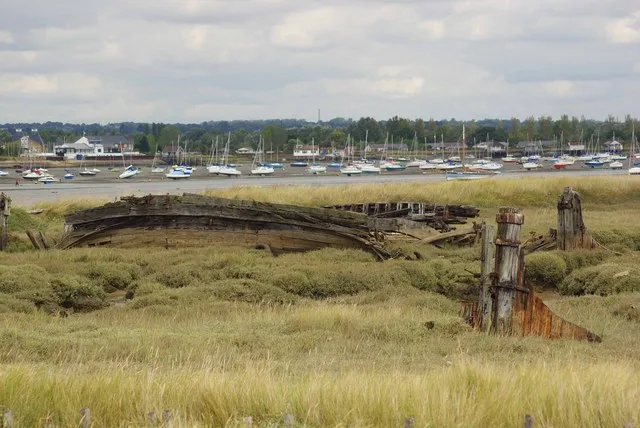
Northey Island
Wildlife reserves · 1.4 km

Promanade Park Zoo
Zoos & aquariums · 1.5 km

Maldon Amphiatheatre
Theatres · 1.6 km
.jpg?width=1200)
Promenade Park
Country parks · 1.6 km

Museum in the Park
Museums · 1.8 km

The Waffle Bar
Restaurants · 2.1 km

Studio One
Theatres · 2.4 km

The Swan Hotel
Hotels · 2.4 km

Mill Beach
Beaches · 2.5 km
Nearby
📷 5📷 3Public art & sculpture · East of England
Byrhtnoth the Ealdorman of Essex
Byrhtnoth the Ealdorman of Essex in England East, United Kingdom.
📷 4Public art & sculpture · East of England
Byrhtnoth
Byrhtnoth — a public art in england-east, United Kingdom.
📷 3Wildlife reserves · East of England
Northey Island
Northey Island — island in the estuary of the River Blackwater, Essex.
📷 3Zoos & aquariums · East of England
Promanade Park Zoo
Promanade Park Zoo — a zoo aquarium in england-east, United Kingdom.
📷 3Theatres · East of England
Maldon Amphiatheatre
Maldon Amphiatheatre is a theatre in the United Kingdom.
Where to eat & stay near The Battle of Maldon
Places to stay
📷 5 📷 5
📷 5Caravan parks · East of England
Happy Days Caravan Park
Happy Days Caravan Park — a caravan park in england east.
 📷 5
📷 5Caravan parks · East of England
Mill Beach Caravan Park
Mill Beach Caravan Park — a caravan park in england east.
 📷 7
📷 7 📷 5
📷 5Caravan parks · East of England
Osea Leisure Park
Osea Leisure Park — a caravan park in england east.
📷 5Places to eat & drink
📷 7Restaurants · East of England
The Waffle Bar
The Waffle Bar — a restaurant in england east.
 📷 7
📷 7 📷 7
📷 7 📷 5
📷 5 📷 5
📷 5 📷 5
📷 5Historic pubs · East of England
The Hurdlemarker's Arms
The Hurdlemarker's Arms in England East, United Kingdom.
More forts in this region
 📷 5
📷 5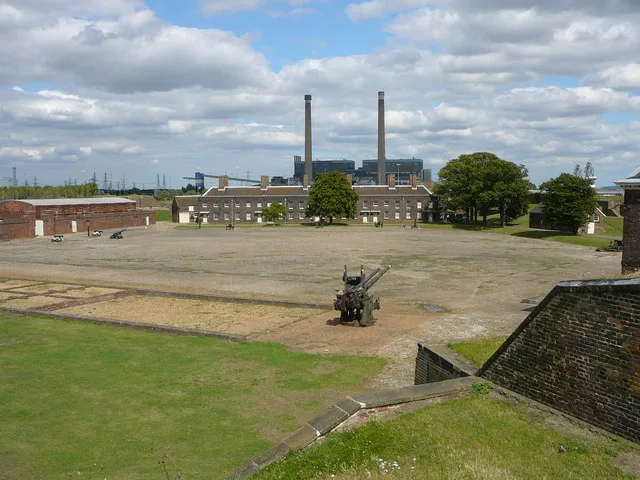 📷 5
📷 5Forts · East of England
Tilbury Fort
Tilbury Fort is a fort in the United Kingdom.
 📷 5
📷 5Forts · East of England
Wallbury Fort
Wallbury Fort is a fort in the United Kingdom.
 📷 5
📷 5Forts · East of England
The maze and monument on Hilton Green
The maze and monument on Hilton Green — a martello broad in england-london, United Kingdom.
Frequently asked questions
- Where is The Battle of Maldon?
- The Battle of Maldon is in Essex, East of England, United Kingdom (postcode CM9 6PP), in the parish of Maldon.
- What is The Battle of Maldon?
- The Battle of Maldon is a fort in the United Kingdom.
- How do I get to The Battle of Maldon?
- The nearest railway station is North Fambridge, about 7.6 km away. The nearest town is Mundon. Drivers can use postcode CM9 6PP.
- Is The Battle of Maldon a protected site?
- Yes — The Battle of Maldon is part of the Blackwater Estuary SSSI Site of Special Scientific Interest and the Blackwater Estuary (Mid-Essex Coast Phase 4) Ramsar wetland.
- How do I get to The Battle of Maldon?
- The nearest railway station is North Fambridge, about 7.6 km away. Drivers can navigate to postcode CM9 6PP.