
Memorials & monuments · Central Scotland
St George and the Dragon
Also known as: Equestrian Statue
In or near Glasgow.
St George and the Dragon is a memorial in the United Kingdom.

habiloid — CC BY-SA 2.0 via Wikimedia Commons licence

Plan your visit
- Typical visit
- 15 min–45 min
- Nearest railway station
- St George's Cross · 0.1 km
- Free entry
- Dog-friendly
Getting there & planning your visit
To visit St George and the Dragon, the nearest railway station is St George's Cross, located just 0.1 km away. Entry to the memorial is free, but please note that it is not wheelchair accessible. The postcode for sat-nav is G20 7PW.
About
St George and the Dragon is a public memorial in central Scotland, recording local sacrifice and named in the parish register of war and civic monuments. It sits within the Glasgow North parliamentary constituency. The nearest railway station is St George's Cross, about 0.1 km away. Postcode area G20.
Photo gallery
See it from the streetimagery from 2022
Imagery © Mapillary contributors, CC BY-SA 4.0
From the Wikipedia article
Saint George and the Dragon is a legend in which Saint George—a soldier venerated in Christianity and among the Druze—defeats a dragon. The story goes that the dragon originally extorted tribute from villagers. When they ran out of livestock and trinkets for the dragon, they started giving up a human tribute once a day. One day, the princess herself was chosen as the next offering. As she was walking toward the dragon's cave, St. George saw her and asked her why she was crying. The princess told the saint about the dragon's atrocities and asked him to flee immediately, in fear that he might be killed too. But the saint refused to flee, slew the dragon, and rescued the princess. The narrative was first set in Cappadocia in the earliest sources of the 11th and 12th centuries, but transferred to Libya in the 13th-century Golden Legend. The narrative has pre-Christian origins (Jason and Medea, Perseus and Andromeda, Typhon, etc.), and is recorded in various saints' lives prior to its attribution to Saint George specifically. It was particularly attributed to Saint Theodore Tiro in the 9th and 10th centuries, and was first transferred to Saint George in the 11th century. The oldest known record of Saint George slaying a dragon is found in a Georgian text of the 11th century. The legend and iconography spread rapidly through the Byzantine cultural sphere in the 12th century. It reached Western Christian tradition still in the 12th century, via the Crusades. The knights of the First Crusade believed that Saint George, along with his fellow soldier-saints Demetrius, Maurice, Theodore and Mercurius, had fought alongside them at Antioch and Jerusalem. The legend was popularised in Western tradition in the 13th century based on its Latin versions in the Speculum Historiale and the Golden Legend. At first limited to the courtly setting of chivalric romance, the legend was popularised in the 13th century and became a favourite literary and pictorial subject in the Late Middle Ages and Renaissance, and it has become an integral part of the Christian traditions relating to Saint George in both Eastern and Western tradition.
Excerpt from Wikipedia under CC BY-SA 4.0. See the source article linked in Sources below.
- Coordinates
- 55.8708, -4.2683
- District
- Glasgow City
- Postcode
- G20 7PW
- Parliamentary constituency
- Glasgow North
- Nearest railway station
- St George's Cross — 0.1 km
Sources
- osm: n712560596 (ODbL)
- wikipedia: St George and the Dragon (CC BY-SA 4.0)
Other places nearby

Raptor Mural
Public art & sculpture · 0.1 km

Glasgow Al-Furqan Mosque
Historic churches · 0.2 km
Al Furqan Mosque
Historic churches · 0.2 km

The Tenement House
Museums · 0.3 km
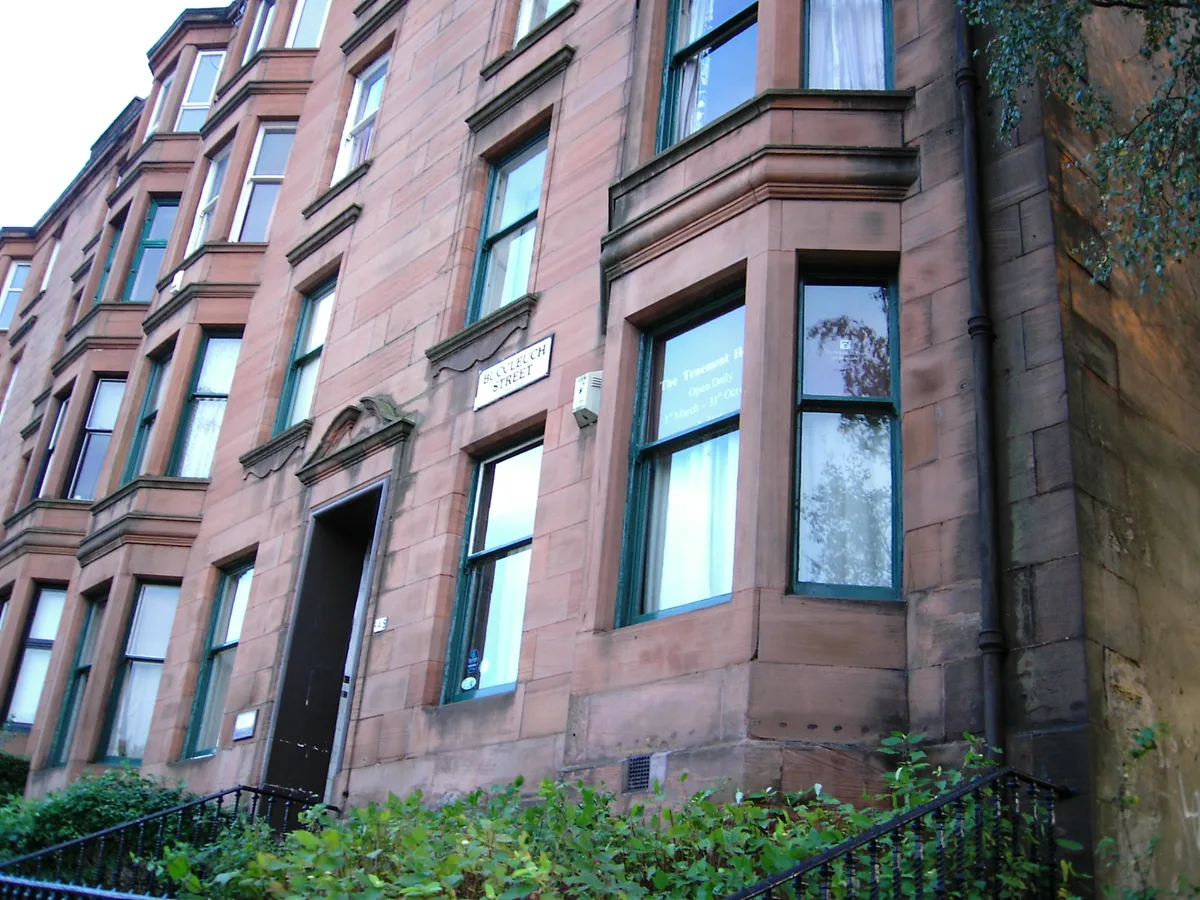
Tenement House
Historic houses · 0.3 km

ABC Charing Cross
Theatres · 0.3 km

Mosque, 19 Ashley Street, Glasgow
Historic churches · 0.4 km

Hill Street Viewpoint Garnethill
Viewpoints · 0.4 km

SYHA Glasgow Metro Youth Hostel
Hostels · 0.4 km
.jpg?width=1200)
Scottish Jewish Archives Centre
Museums · 0.4 km

James Torrens Memorial Fountain
Memorials & monuments · 0.4 km

Garnethill Synagogue
Historic churches · 0.4 km
Nearby
📷 3Public art & sculpture · Central Scotland
Raptor Mural
Raptor Mural — a public art in scotland-central, United Kingdom.
📷 5Historic churches · Central Scotland
Glasgow Al-Furqan Mosque
Glasgow Al-Furqan Mosque — a mosque in scotland-central, United Kingdom.
📷 5Historic churches · Central Scotland
Al Furqan Mosque
Al Furqan Mosque — a church in scotland-central, United Kingdom.
📷 3Museums · Central Scotland
The Tenement House
The Tenement House — a museum in scotland-central, United Kingdom.
📷 5Historic houses · Central Scotland
Tenement House
Tenement House — house in Glasgow, Scotland, UK.
📷 3Where to eat & stay near St George and the Dragon
Places to stay
📷 5Hostels · Central Scotland
SYHA Glasgow Metro Youth Hostel
SYHA Glasgow Metro Youth Hostel — a hostel in scotland central.
 📷 5
📷 5 📷 5
📷 5 📷 5
📷 5Hostels · Central Scotland
Clyde Hostel
Clyde Hostel — a hostel in scotland central.
 📷 5
📷 5Hostels · Central Scotland
Safestay Glasgow Hostel
Safestay Glasgow Hostel — a hostel in scotland central.
 📷 5
📷 5Hotels · Central Scotland
DoubleTree by Hilton Hotel Glasgow Central
DoubleTree by Hilton Hotel Glasgow Central — a hotel in scotland central. 4-star. Brand: DoubleTree.
Places to eat & drink
 📷 5
📷 5Historic pubs · Central Scotland
Public House, 401, 403, 405, 407, 409 Sauchiehall Street, Glasgow
Public House, 401, 403, 405, 407, 409 Sauchiehall Street, Glasgow in Scotland Central, United Kingdom.
 📷 5
📷 5Cafés · Central Scotland
Willow Tearooms
The Willow Tearooms are tearooms at 217 Sauchiehall Street, Glasgow, Scotland, designed by internationally renowned architect Charles Rennie Mackintosh, which opened for business in October 1903. They
 📷 5
📷 5Historic pubs · Central Scotland
Hubbard Tea Rooms, 508, 510, 512 Great Western Road, Glasgow
Hubbard Tea Rooms, 508, 510, 512 Great Western Road, Glasgow in Scotland Central, United Kingdom.
 📷 5
📷 5Historic pubs · Central Scotland
The Buttery, 646, 650, 652, 654 Argyle Street, Glasgow
The Buttery, 646, 650, 652, 654 Argyle Street, Glasgow in Scotland Central, United Kingdom.
 📷 5
📷 5Historic pubs · Central Scotland
Horse Shoe Bar, 17-21 Drury Street, Glasgow
Horse Shoe Bar, 17-21 Drury Street, Glasgow in Scotland Central, United Kingdom.
 📷 5
📷 5Historic pubs · Central Scotland
27a, 29 St Vincent Place, Public House
27a, 29 St Vincent Place, Public House in Scotland Central, United Kingdom.
More memorials in this region
 📷 3
📷 3Memorials & monuments · Central Scotland
Mutiny Stones
Mutiny Stones in England North East, United Kingdom.
 📷 3
📷 3Memorials & monuments · Central Scotland
Augusta, Princess Dowager of Wales Monument
Augusta, Princess Dowager of Wales Monument is a memorial in the United Kingdom.
 📷 3
📷 3Memorials & monuments · Central Scotland
Battle of Largs Monument
Battle of Largs Monument — Monument, dating to 1912.
 📷 3
📷 3Memorials & monuments · Central Scotland
Declaration of Arbroath Monument
Declaration of Arbroath Monument is a memorial in the United Kingdom.
Frequently asked questions
- Where is St George and the Dragon?
- St George and the Dragon is in central Scotland, United Kingdom (postcode G20 7PW).
- What is St George and the Dragon?
- St George and the Dragon is a memorial in the United Kingdom.
- How do I get to St George and the Dragon?
- The nearest railway station is St George's Cross, about 0.1 km away. The nearest town is Glasgow. Drivers can use postcode G20 7PW.
- Is St George and the Dragon free to visit?
- Yes, St George and the Dragon is free to enter.
- How do I get to St George and the Dragon?
- The nearest railway station is St George's Cross, about 0.1 km away. Drivers can navigate to postcode G20 7PW.