
Natural landmarks · South East England
Spitfire
Also known as: Supermarine Spitfire
In or near Capel-le-Ferne.
Spitfire — Public artwork (sculpture).

Wikimedia Commons contributors — see linked file page for photographer and licence licence

Plan your visit
- Typical visit
- 1 h–2 h
- Nearest railway station
- Folkestone Central · 3.1 km
- Free entry
- Dog-friendly
Getting there & planning your visit
To visit the Spitfire, the nearest railway station is Folkestone Central, which is approximately 3.1 km away. The postcode for the location is CT18 7ND, and entry is free.
About
Spitfire is a place of interest in the United Kingdom. Wikidata describes it as: "Public artwork (sculpture).". Coordinates: 51.0984°, 1.2050°.
Photo gallery
360° viewimagery from 2019
Imagery © Mapillary contributors, CC BY-SA 4.0
Official information
The page provides a comprehensive list of aircraft types that have been part of the Irish Air Force throughout its history. It includes details such as the quantity, service entry, retirement dates, and origin of each aircraft.
Protected designations
- Site of Special Scientific Interest: Folkestone Warren SSSI
- Area of Outstanding Natural Beauty: Kent Downs
Designations sourced from Natural England open data under OGL v3.
From the Wikipedia article
The Supermarine Spitfire is a British single-seat fighter aircraft that was used by the Royal Air Force and other Allied countries before, during, and after World War II. It was the only British fighter produced continuously throughout the war. The Spitfire was a short-range, high-performance interceptor aircraft designed by R. J. Mitchell, chief designer at Supermarine Aviation Works, which operated as a subsidiary of Vickers-Armstrong from 1928. Mitchell modified the Spitfire's distinctive elliptical wing (designed by Beverley Shenstone) with innovative sunken rivets to have the thinnest possible cross-section, achieving a potential top speed greater than that of several contemporary fighter aircraft, including the Hawker Hurricane. Mitchell continued to refine the design until his death from cancer in 1937, whereupon his colleague Joseph Smith took over as chief designer. Smith oversaw the Spitfire's development through many variants, from the Mk 1 to the Rolls-Royce Griffon-engined Mk 24, using several wing configurations and guns. The original airframe was designed to be powered by a Rolls-Royce Merlin engine producing 1,030 hp (768 kW). It was strong enough and adaptable enough to use increasingly powerful Merlins, and in later marks, Rolls-Royce Griffon engines producing up to 2,340 hp (1,745 kW). As a result, the Spitfire's performance and capabilities improved over the course of its service life. During the Battle of Britain (July–October 1940), the more numerous Hurricane flew more sorties resisting the Luftwaffe, but the Spitfire captured the public's imagination, in part because the Spitfire was generally a better fighter aircraft than the Hurricane. Spitfire units had a lower attrition rate and a higher victory-to-loss ratio than Hurricanes, most likely due to the Spitfire's higher performance. During the battle, Spitfires generally engaged Luftwaffe fighters—mainly Messerschmitt Bf 109E-series aircraft—which were a close match for them. After the…
Excerpt from Wikipedia under CC BY-SA 4.0. See the source article linked in Sources below.
Background
History
]] In 1931, the Air Ministry released specification F7/30, calling for a modern fighter capable of a flying speed of 250 mph to replace the Gloster Gauntlet biplane. R. J. Mitchell designed the Supermarine Type 224 to fill this role in competition with the Blackburn F.3 and Westland F.7/30 and privately funded designs from Gloster. The 224 was an open-cockpit monoplane with bulky gull wings and a large, fixed, spatted undercarriage powered by the 600 hp, evaporatively cooled Rolls-Royce Goshawk engine. It made its first flight in February 1934. Of the seven designs tendered to F7/30, the Gloster Gladiator biplane was accepted for service. The Type 224 was a big disappointment to Mitchell…
Description
Although R. J. Mitchell is justifiably known as the engineer who designed the Spitfire, his premature death in 1937 meant that all development after that date was undertaken by a team led by his chief draughtsman, Joe Smith, who became Supermarine's chief designer on Mitchell's death. As Jeffrey Quill noted: "If Mitchell was born to design the Spitfire, Joe Smith was born to defend and develop it." pushing an early Spitfire Mark IXb at Biggin Hill in late 1942]] There were 24 marks of Spitfire and many sub-variants. These covered the Spitfire in development from the Merlin to Griffon engines, the high-speed photo-reconnaissance variants and the different wing configurations. More Spitfire…
Sourced from Wikipedia under CC BY-SA 4.0.
- Coordinates
- 51.0984, 1.2050
- County
- Kent
- District
- Dover
- Parish
- Capel-le-Ferne
- Postcode
- CT18 7ND
- Parliamentary constituency
- Dover and Deal
- Phone
- +44 1303 249292
- Nearest railway station
- Folkestone Central — 3.1 km
- Official site
- web.archive.org
Sources
- osm: n3114498958 (ODbL)
- wikipedia: Supermarine Spitfire (CC BY-SA 4.0)
- commons: Ray Flying Legends 2005-1.jpg (CC BY-SA 4.0)
Other places nearby

Junkers Ju 87 "Stuka"
Public art & sculpture · 0.0 km
_(41455530471).jpg?width=1200)
Hurricane
Battlefields & battle sites · 0.0 km

The Wing
Museums · 0.1 km

Swinge Hill
Mountains & hills · 0.5 km

Little Switzerland
Campsites · 0.6 km

Folkstone Camping and Caravan Club Site
Campsites · 0.6 km

Capel-le-Ferne
Towns & cities · 0.6 km

Other People's Photographs Swiss Way
Public art & sculpture · 0.9 km

The Warren
Beaches · 1.0 km

East Cliff and Warren Country Park
Parks · 1.0 km

Other People's Photographs Wear Bay Road
Public art & sculpture · 1.1 km

Folkestone Roman Villa
Roman villas · 1.2 km
Nearby
📷 5Public art & sculpture · South East England
Junkers Ju 87 "Stuka"
Junkers Ju 87 "Stuka" — Public artwork (sculpture).
📷 5Battlefields & battle sites · South East England
Hurricane
Hurricane — Public artwork (sculpture).
📷 5Museums · South East England
The Wing
The Wing — a museum in england-south-east, United Kingdom.
📷 5Mountains & hills · South East England
Swinge Hill
Swinge Hill — a hill or mountain in england south east.
📷 5Campsites · South East England
Little Switzerland
Little Switzerland — a campsite in england south east.
📷 5Campsites · South East England
Folkstone Camping and Caravan Club Site
Folkstone Camping and Caravan Club Site — a campsite in england south east.
Where to eat & stay near Spitfire
Places to stay
📷 5Campsites · South East England
Little Switzerland
Little Switzerland — a campsite in england south east.
📷 5Campsites · South East England
Folkstone Camping and Caravan Club Site
Folkstone Camping and Caravan Club Site — a campsite in england south east.
 📷 5
📷 5 📷 5
📷 5Hotels · South East England
Grand Burstin Hotel
Grand Burstin Hotel — a hotel in england south east.
 📷 5
📷 5Campsites · South East England
Greenhill Glamping
Greenhill Glamping — a campsite in england south east.
 📷 7
📷 7Places to eat & drink
 📷 5
📷 5Historic pubs · South East England
The Martello Public House
The Martello Public House in England South East, United Kingdom.
 📷 5
📷 5Historic pubs · South East England
The Samuel Peto
The Samuel Peto in England South East, United Kingdom.
 📷 5
📷 5Historic pubs · South East England
The White Hart Inn
The White Hart Inn in England South East, United Kingdom.
 📷 5
📷 5Historic pubs · South East England
Dukes Head Inn
Dukes Head Inn in England South East, United Kingdom.
 📷 7
📷 7Restaurants · South East England
The Swingate Inn, Namaste Curry House
The Swingate Inn, Namaste Curry House — a restaurant in england south east. Cuisine: indian.
 📷 7
📷 7More natural landmarks in this region
 📷 5
📷 5Natural landmarks · South East England
Queen Victoria Statue
Queen Victoria Statue — Public artwork (statue) by Victor Ferdinand Franz Eugen Gustaf Adolf Constantin Friedrich of Hohenlohe-Langenburg.
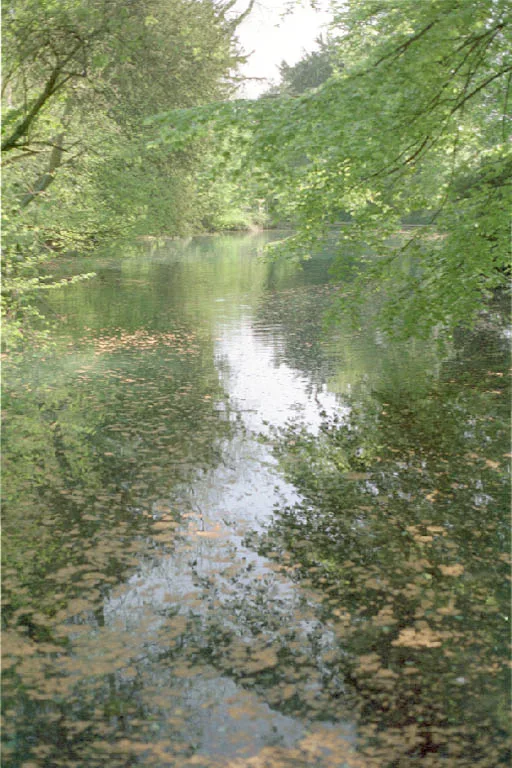 📷 5
📷 5Natural landmarks · South East England
Silent Pool
Silent Pool — lake in the United Kingdom.
 📷 5
📷 5Natural landmarks · South East England
Thomas & Jane Holloway Statue
Thomas & Jane Holloway Statue — Public artwork (statue) by Victor Ferdinand Franz Eugen Gustaf Adolf Constantin Friedrich of Hohenlohe-Langenburg.
 📷 5
📷 5Natural landmarks · South East England
Polesden Lacey
Polesden Lacey — a other in england-london, United Kingdom.
Frequently asked questions
- Where is Spitfire?
- Spitfire is in Kent, South-East England, United Kingdom (postcode CT18 7ND), in the parish of Capel-le-Ferne.
- What is Spitfire?
- Spitfire — Public artwork (sculpture).
- How do I get to Spitfire?
- The nearest railway station is Folkestone Central, about 3.1 km away. The nearest town is Capel-le-Ferne. Drivers can use postcode CT18 7ND.
- Is Spitfire a protected site?
- Yes — Spitfire is part of the Folkestone Warren SSSI Site of Special Scientific Interest and the Kent Downs National Landscape (AONB).
- Is Spitfire free to visit?
- Yes, Spitfire is free to enter.
- How do I get to Spitfire?
- The nearest railway station is Folkestone Central, about 3.1 km away. Drivers can navigate to postcode CT18 7ND.