
Memorials & monuments · East Midlands
Spalding War Memorial
Spalding War Memorial — Grade I listed building-listed memorial in england-east-midlands, United Kingdom.

Richard Croft — CC BY-SA 2.0 via Wikimedia Commons licence

Plan your visit
- Typical visit
- 15 min–45 min
- Nearest railway station
- Spalding · 0.8 km
- Free entry
- Dog-friendly
Getting there & planning your visit
To visit Spalding War Memorial, you can take a train to Spalding station, which is 0.8 km away. The postcode for the memorial is PE11 2RA. Entry to the memorial is free.
About
Spalding War Memorial is a Grade I listed building-listed memorial in england-east-midlands, United Kingdom, registered on the National Heritage List for England (NHLE entry 1064002). Listed status protects buildings and structures of special architectural or historic interest. See the linked Wikipedia article for further details.
Photo gallery
Heritage listing
Spalding War Memorial is a First World War memorial in the gardens of Ayscoughfee Hall (pronounced ) in Spalding, Lincolnshire, in eastern England. It was designed by the architect Sir Edwin Lutyens. The proposal for a memorial to Spalding's war dead originated in January 1918 with Barbara McLaren, whose husband and the town's Member of Parliament, Francis McLaren, was killed in a flying accident during the war. She engaged Lutyens via a family connection and the architect produced a plan for a grand memorial cloister surrounding a circular pond, in the middle of which would be a cross. The memorial was to be built in the formal gardens of Ayscoughfee Hall, which was owned by the local district council.
From the Historic England List Entry under OGL v3.
From the Wikipedia article
Spalding War Memorial is a First World War memorial in the gardens of Ayscoughfee Hall (pronounced ) in Spalding, Lincolnshire, in eastern England. It was designed by the architect Sir Edwin Lutyens. The proposal for a memorial to Spalding's war dead originated in January 1918 with Barbara McLaren, whose husband and the town's Member of Parliament, Francis McLaren, was killed in a flying accident during the war. She engaged Lutyens via a family connection and the architect produced a plan for a grand memorial cloister surrounding a circular pond, in the middle of which would be a cross. The memorial was to be built in the formal gardens of Ayscoughfee Hall, which was owned by the local district council. When McLaren approached the council with her proposal, it generated considerable debate within the community and several alternative schemes were suggested. After a public meeting and a vote in 1919, a reduced-scale version of McLaren's proposal emerged as the preferred option, in conjunction with a clock on the town's corn exchange building. The total cost of the memorial was £3,500, of which McLaren and her father-in-law contributed £1,000 each; her brother-in-law donated a pair of painted stone flags and the remainder was raised from voluntary subscription, which took until 1922. The memorial consists of a brick pavilion at the south end of the garden and a Stone of Remembrance, both at the head of a long reflecting pool, which incorporates the remains of an 18th-century canal. It was unveiled at a ceremony on 9 June 1922. Lutyens went on to use the style of the pavilion for shelter buildings in several war cemeteries on the Western Front, though none of his other war memorials follow the design and the memorial became relatively obscure. Spalding War Memorial is today a Grade I listed building, having been upgraded when Lutyens's war memorials were declared a "national collection" and all were granted listed building status or had their listing renewed.
Excerpt from Wikipedia under CC BY-SA 4.0. See the source article linked in Sources below.
Background
History
Lutyens's memorial in Ayscoughfee Hall Gardens was constructed by Hodson Limited of Nottingham, at the south end of the formal gardens, replacing an earlier castellated towera 19th-century folly known as the "Owl Tower". The unveiling took place at a ceremony on 9 June 1922, presided over by General Sir Ian Hamilton and dedicated by Reverend Alfred Jarvis, Assistant Chaplain-General to Northern Command. Barbara McLaren attended the ceremony along with several other members of the Jekyll and McLaren families. Several dignitaries gave speeches at the ceremony, including Jarvis, who spoke of the dead among the poppies on the Western Front, a "symbol of oblivion". Hamilton spoke of the results…
Architecture
Spalding's war memorial comprises a brick-built pavilion structure with hipped roof of red pantiles and floored with red bricks in a herringbone pattern. The side of the pavilion facing the pool has three Tuscan stone arches, with another Tuscan arch opening on each sidewall. The solid rear wall bears two painted stone flagsthe Union Flag to the left and the White Ensign to the rightand three panels on which are inscribed the names of more than two hundred servicemen from Spalding who died in the First World War. The central panel bears the dedication: "IN LOVE AND HONOUR OF THOSE WHO GAVE THEIR LIVES FOR THEIR COUNTRY IN THE YEARS OF WAR MCMXIVMCMXIX / THIS MEMORIAL IS RAISED IN THEIR HOME…
Sourced from Wikipedia under CC BY-SA 4.0.
- Coordinates
- 52.7835, -0.1493
- County
- Lincolnshire
- District
- South Holland
- Parish
- South Holland, unparished area
- Postcode
- PE11 2RA
- Parliamentary constituency
- South Holland and The Deepings
- Established
- 1922
- Nearest railway station
- Spalding — 0.8 km
Sources
- wikidata: Q22271787 (CC0)
- wikipedia: Spalding War Memorial (CC BY-SA 4.0)
Other places nearby

Ayscoughfee Hall Museum
Museums · 0.1 km
Ayscoughfee Hall
Museums · 0.1 km
.jpg?width=1200)
Westbourne House
Historic houses · 0.2 km
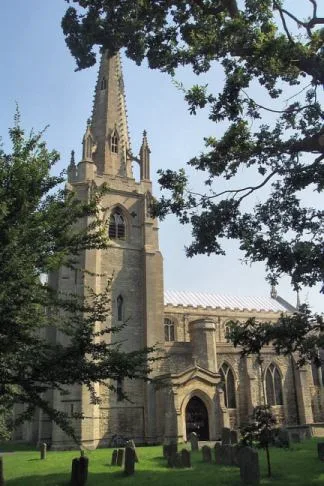
St Mary and St Nicolas
Historic churches · 0.2 km

Lincoln Arms Public House
Historic pubs · 0.3 km

Wistaria Lodge
Historic houses · 0.3 km

Spalding, Lincolnshire
Museums · 0.4 km

South Holland Centre
Theatres · 0.4 km

Holland House
Historic houses · 0.4 km

Rush Hour
Escape rooms · 0.5 km

Sessions House
Historic houses · 0.5 km

Spalding Gentlemans Society
Museums · 0.5 km
Nearby
📷 3Museums · East Midlands
Ayscoughfee Hall Museum
Ayscoughfee Hall Museum — a museum in england-east-midlands, United Kingdom.
📷 5Museums · East Midlands
Ayscoughfee Hall
Ayscoughfee Hall is a grade I listed building and modest associated parkland in central Spalding, Lincolnshire, England, and is a landmark on the fen tour.
📷 3Historic houses · East Midlands
Westbourne House
Westbourne House — house in South Holland, Lincolnshire, England, UK.
📷 4Historic churches · East Midlands
St Mary and St Nicolas
St Mary and St Nicolas — parish church of Spalding, Lincolnshire, England, UK.
📷 5Historic pubs · East Midlands
Lincoln Arms Public House
Lincoln Arms Public House in England East, United Kingdom.
📷 3Historic houses · East Midlands
Wistaria Lodge
Wistaria Lodge — house in Spalding, Lincolnshire, England, UK.
Where to eat & stay near Spalding War Memorial
Places to stay
 📷 5
📷 5Hotels · East Midlands
Cley Hall Hotel
Cley Hall Hotel — a hotel in england east midlands.
 📷 5
📷 5 📷 5
📷 5B&Bs · East Midlands
Westgate House & Barn
Westgate House & Barn — a bed-and-breakfast in england east midlands.
 📷 5
📷 5Campsites · East Midlands
WigWam Crowtree
WigWam Crowtree — a campsite in england east midlands.
 📷 5
📷 5Caravan parks · East Midlands
The BlueBell Inn
The BlueBell Inn — a caravan park in england east midlands.
📷 5Caravan parks · East Midlands
The Bluebell Inn
The Bluebell Inn — a caravan park in england east midlands.
Places to eat & drink
📷 5Historic pubs · East Midlands
Lincoln Arms Public House
Lincoln Arms Public House in England East, United Kingdom.
 📷 5
📷 5Historic pubs · East Midlands
The Black Swan Public House Premises Occupied By Rodi Property Co Ltd
The Black Swan Public House Premises Occupied By Rodi Property Co Ltd in England East, United Kingdom.
 📷 5
📷 5Historic pubs · East Midlands
Ship Albion Public House
Ship Albion Public House in England East, United Kingdom.
 📷 5
📷 5Historic pubs · East Midlands
Money Bridge Public House
Money Bridge Public House in England East, United Kingdom.
 📷 5
📷 5Historic pubs · East Midlands
The George And Angel Public House
The George And Angel Public House in England East, United Kingdom.
 📷 5
📷 5More memorials in this region
 📷 5
📷 5Memorials & monuments · East Midlands
Bainton Buttercross
Bainton Buttercross is a memorial in the United Kingdom.
 📷 5
📷 5Memorials & monuments · East Midlands
clock tower and war memorial
clock tower and war memorial is a memorial in the United Kingdom.
 📷 5
📷 5Memorials & monuments · East Midlands
John Clare Memorial
John Clare Memorial is a memorial in the United Kingdom.
 📷 5
📷 5Memorials & monuments · East Midlands
The Butter Cross
The Butter Cross is a memorial in the United Kingdom.
Frequently asked questions
- Where is Spalding War Memorial?
- Spalding War Memorial is in Lincolnshire, the East Midlands, United Kingdom (postcode PE11 2RA), in the parish of South Holland, unparished area.
- What is Spalding War Memorial?
- Spalding War Memorial — Grade I listed building-listed memorial in england-east-midlands, United Kingdom.
- How do I get to Spalding War Memorial?
- The nearest railway station is Spalding, about 0.8 km away. Drivers can use postcode PE11 2RA.
- When was Spalding War Memorial built?
- Built or established in 1922.
- Is Spalding War Memorial a listed building?
- Spalding War Memorial is officially recognised as Grade I listed building listed.
- Is Spalding War Memorial free to visit?
- Yes, Spalding War Memorial is free to enter.
- How do I get to Spalding War Memorial?
- The nearest railway station is Spalding, about 0.8 km away. Drivers can navigate to postcode PE11 2RA.