
Memorials & monuments · East of England
Southend-on-Sea War Memorial
In or near Southend-on-Sea.
Southend-on-Sea War Memorial — Grade II* listed building-listed memorial in england-south-east, United Kingdom.

Mr James D — CC BY-SA 2.0 via Wikimedia Commons licence

Plan your visit
- Typical visit
- 15 min–45 min
- Nearest railway station
- Southend Cliff Lift (Top) · 0.4 km
- Free entry
- Dog-friendly
Getting there & planning your visit
The Southend-on-Sea War Memorial is located at postcode SS1 1DL. The nearest railway station is Southend Cliff Lift (Top), which is 0.4 km away. Entry to the memorial is free.
About
Southend-on-Sea War Memorial is a Grade II* listed building-listed memorial in england-south-east, United Kingdom, registered on the National Heritage List for England (NHLE entry 1322329). Listed status protects buildings and structures of special architectural or historic interest. See the linked Wikipedia article for further details.
Photo gallery
Heritage listing
Southend-on-Sea War Memorial, or Southend War Memorial, is a First World War memorial in Southend-on-Sea, Essex, in south-eastern England. It was designed by Sir Edwin Lutyens and unveiled in 1921. Southend-on-Sea is a seaside resort famous for its pleasure pier, which was used by the military during the First World War. The town was a stopping point for soldiers en route to the front and, as the war drew on, it also became an important disembarkation point for the evacuation of injured troops. This saw the conversion of several buildings in Southend into hospitals. A committee appointed Lutyens, the architect of The Cenotaph, to design a permanent memorial as a replacement for temporary shrines.
From the Historic England List Entry under OGL v3.
Official information
The Southend-on-Sea War Memorial is a community-driven initiative aimed at preserving the heritage of Clifftown. It serves as a tribute to the local history and enhances community spirit through various projects.
Protected designations
- Site of Special Scientific Interest: Benfleet and Southend Marshes SSSI
- Ramsar wetland: Benfleet and Southend Marshes
Designations sourced from Natural England open data under OGL v3.
From the Wikipedia article
Southend-on-Sea War Memorial, or Southend War Memorial, is a First World War memorial in Southend-on-Sea, Essex, in south-eastern England. It was designed by Sir Edwin Lutyens and unveiled in 1921. Southend-on-Sea is a seaside resort famous for its pleasure pier, which was used by the military during the First World War. The town was a stopping point for soldiers en route to the front and, as the war drew on, it also became an important disembarkation point for the evacuation of injured troops. This saw the conversion of several buildings in Southend into hospitals. A committee appointed Lutyens, the architect of The Cenotaph, to design a permanent memorial as a replacement for temporary shrines. He originally proposed a cenotaph but this was rejected in favour of an obelisk rising from a screen wall. In front of the monument is a garden, also designed by Lutyens, and the words "lest we forget" are set in stone on a lawn. Instead of carving them on the memorial, the names of the 1,338 dead from Southend are recorded on plaques fixed to the walls of Prittlewell Priory. The memorial is one of six obelisks Lutyens designed for war memorials in Britain and closely resembles those for Northampton and for the North Eastern Railway. It was largely praised by art historians but one Lutyens biographer felt the lettering in the grass detracted from it. The memorial was unveiled on 27 November 1921 by the Lord Lieutenant of Essex and dedicated by the Bishop of Chelmsford in front of a large crowd. Invited guests included the mayor, local clergy, veterans from the district, and organisations which had contributed to the war effort in the area. The memorial became a listed building in 1974. Lutyens's memorials were declared a national collection in 2015 to commemorate the centenary of the war and Southend's was upgraded to grade II*. A statue of a soldier was added in 2019.
Excerpt from Wikipedia under CC BY-SA 4.0. See the source article linked in Sources below.
Background
History
Southend-on-Sea War Memorial was unveiled by Amelius Lockwood, 1st Baron Lambourne, the Lord Lieutenant of Essex, at a ceremony on 27 November 1921. It was dedicated by the Right Reverend Dr John Watts Ditchfield, Bishop of Chelmsford. The assembled crowd was one of the largest public gatherings ever recorded in the town. Soldiers from D Company of the 6th Battalion, Essex Regiment, provided a guard of honour and representatives of local organisations who were involved in the local war effort also attended. To commemorate the centenary of the end of the First World War, Southend-on-Sea Council commissioned a bronze statue of a soldier, which was installed in front of the memorial, at the…
Architecture
Southend War Memorial consists of an obelisk surrounded on three sides by a screen wall, entirely in Portland stone. The obelisk tapers and rises to a height of approximately 11 m. It sits on a square base, below which is a moulded cornice. The cornice connects the base to a pedestal, which is in six stages of unequal size and shape. The lowest stage is incorporated into the screen wall, which narrows, forming an enclosure. Instead of the screen wall, at the front of the memorial (viewed from the north), is a flight of six shallow steps. The obelisk is approached via another two shallow steps. At the ends of the walls are bronze mounts for flags. The only sculptural features on the obelisk…
Sourced from Wikipedia under CC BY-SA 4.0.
- Coordinates
- 51.5347, 0.7049
- District
- Southend-on-Sea
- Parish
- Southend-on-Sea, unparished area
- Postcode
- SS1 1DL
- Parliamentary constituency
- Southend East and Rochford
- Established
- 1921
- Nearest railway station
- Southend Cliff Lift (Top) — 0.4 km
Sources
- wikidata: Q22914723 (CC0)
- wikipedia: Southend-on-Sea War Memorial (CC BY-SA 4.0)
Other places nearby

Prittlewell Square
Parks · 0.2 km

Clifftown Telephone Museum
Museums · 0.4 km

Cliff Town Congregational Church
Gardens · 0.4 km

Victoria Hall
Theatres · 0.4 km

Southend Cliff Lift
Natural landmarks · 0.4 km

Former Beecroft Art Gallery
Galleries · 0.5 km
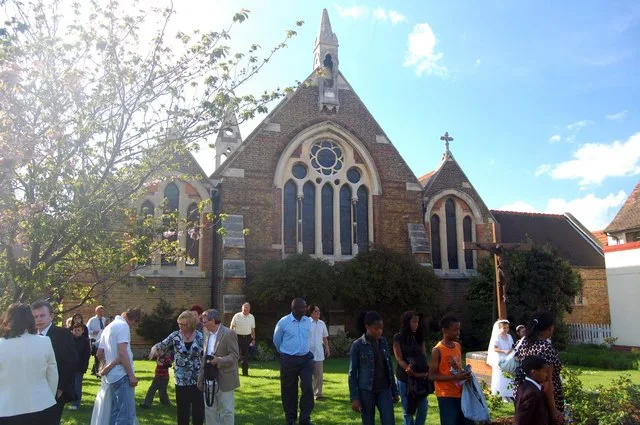
Our Lady Help of Christians and St Helen's Church, Westcliff-on-Sea
Abbeys & priories · 0.5 km

Empire Theatre
Open-air theatres · 0.5 km
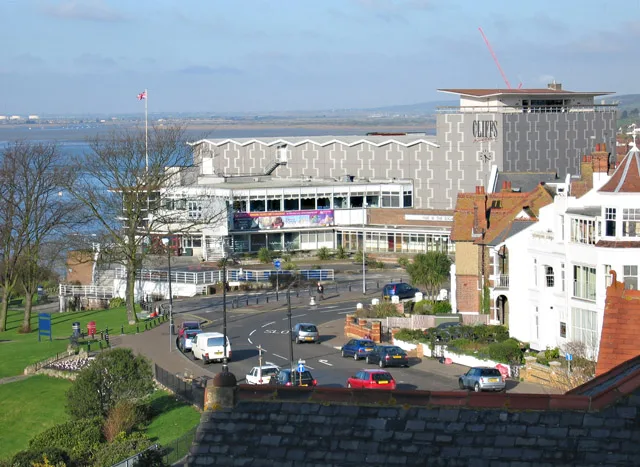
Cliffs Pavilion
Theatres · 0.6 km

Cliffs Pavilion
Open-air theatres · 0.6 km
The Last Post
Hotels · 0.6 km

Faisal al-Madinah
Historic churches · 0.6 km
Nearby
📷 5📷 5Museums · East of England
Clifftown Telephone Museum
Clifftown Telephone Museum — a museum in england-south-east, United Kingdom.
📷 5Gardens · East of England
Cliff Town Congregational Church
Cliff Town Congregational Church — a garden in england-south-east, United Kingdom.
📷 5📷 5Natural landmarks · East of England
Southend Cliff Lift
Southend Cliff Lift — a natural landmark in england-south-east, United Kingdom.
📷 5Galleries · East of England
Former Beecroft Art Gallery
Former Beecroft Art Gallery — a gallery in england-south-east, United Kingdom.
Where to eat & stay near Southend-on-Sea War Memorial
Places to stay
📷 5Hotels · East of England
The Last Post
The Last Post — a hotel in england south east.
 📷 5
📷 5Campsites · East of England
The Lake at Nine Acres
The Lake at Nine Acres — a campsite in england south east.
📷 5 📷 5
📷 5Campsites · East of England
Ark Lane Scout Campsite
Ark Lane Scout Campsite — a campsite in england south east.
 📷 5
📷 5Campsites · East of England
Belchamps Scout Activity Centre
Belchamps Scout Activity Centre — a campsite in england south east.
 📷 5
📷 5Caravan parks · South East England
Haven Kent Coast (Allhallows) Leisure Park
Haven Kent Coast (Allhallows) Leisure Park — a caravan park in england south east.
Places to eat & drink
 📷 5
📷 5Restaurants · East of England
Billy Hundreds Fish n Tapas
Billy Hundreds Fish n Tapas — a restaurant in england south east. Cuisine: seafood. 4.6-star.
 📷 7
📷 7Historic pubs · East of England
The Crooked Billet Public House
The Crooked Billet Public House in England South East, United Kingdom.
 📷 5
📷 5Historic pubs · East of England
Bell House Public House
Bell House Public House in England South East, United Kingdom.
 📷 5
📷 5Historic pubs · East of England
Cottages And The Golden Lion Public House
Cottages And The Golden Lion Public House in England South East, United Kingdom.
 📷 5
📷 5Historic pubs · East of England
The Cherry Tree Public House
The Cherry Tree Public House in England South East, United Kingdom.
 📷 5
📷 5Cafés · East of England
Labworth Café
Labworth Café — a café in england london.
Other works by Edwin Lutyens
 📷 5
📷 5Historic churches · London
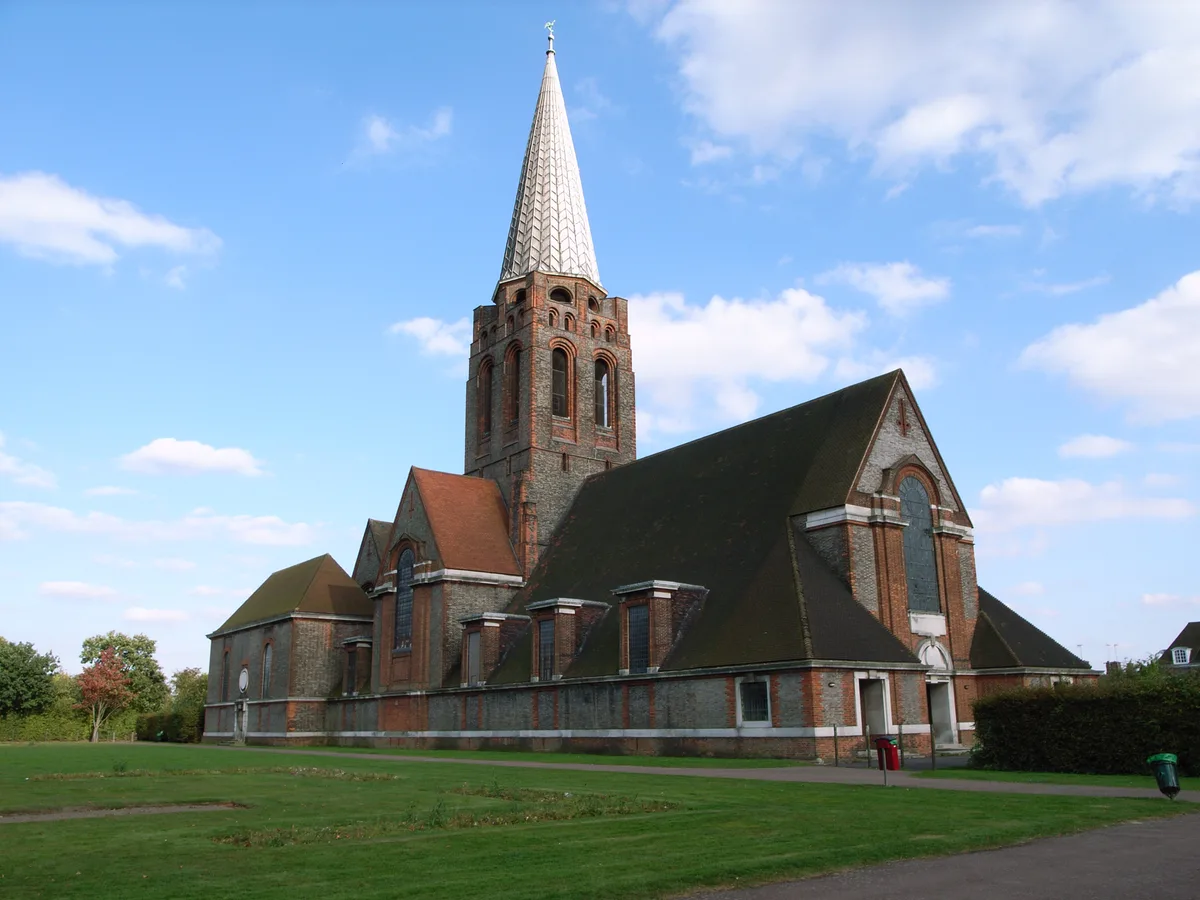
St Jude's Church, Hampstead Garden Suburb
St Jude's Church, Hampstead Garden Suburb — church in London Borough of Barnet, UK.
 📷 5
📷 5Gardens · London
9, Salisbury Court Ec4
9, Salisbury Court Ec4 — a garden in england-london, United Kingdom.
 📷 5
📷 5Memorials & monuments · London
South African War Memorial, Richmond Cemetery
South African War Memorial, Richmond Cemetery — Grade II listed building-listed memorial in england-london, United Kingdom.
 📷 5
📷 5Memorials & monuments · London
The Mercantile Marine Memorial
The Mercantile Marine Memorial — Grade I listed building-listed memorial in england-london, United Kingdom.
More memorials in this region
 📷 5
📷 5Memorials & monuments · East of England
386th B.G.(M), 9th Air Force USAAF Memorial
386th B.G.(M), 9th Air Force USAAF Memorial is a memorial in the United Kingdom.
 📷 5
📷 5Memorials & monuments · East of England
Ailesbury Mausoleum
Ailesbury Mausoleum is a memorial in the United Kingdom.
 📷 5
📷 5Memorials & monuments · East of England
Archie F. Daniels Memorial
Archie F. Daniels Memorial is a memorial in the United Kingdom.
 📷 5
📷 5Memorials & monuments · East of England
Barnwell War Memorial
Barnwell War Memorial is a memorial in the United Kingdom.
Frequently asked questions
- Where is Southend-on-Sea War Memorial?
- Southend-on-Sea War Memorial is in East of England, United Kingdom (postcode SS1 1DL), in the parish of Southend-on-Sea, unparished area.
- What is Southend-on-Sea War Memorial?
- Southend-on-Sea War Memorial — Grade II* listed building-listed memorial in england-south-east, United Kingdom.
- How do I get to Southend-on-Sea War Memorial?
- The nearest railway station is Southend Cliff Lift (Top), about 0.4 km away. The nearest town is Southend-on-Sea. Drivers can use postcode SS1 1DL.
- When was Southend-on-Sea War Memorial built?
- Built or established in 1921. Designed by Edwin Lutyens.
- Is Southend-on-Sea War Memorial a listed building?
- Southend-on-Sea War Memorial is officially recognised as Grade II* listed building listed.
- Is Southend-on-Sea War Memorial a protected site?
- Yes — Southend-on-Sea War Memorial is part of the Benfleet and Southend Marshes SSSI Site of Special Scientific Interest and the Benfleet and Southend Marshes Ramsar wetland.
- Is Southend-on-Sea War Memorial free to visit?
- Yes, Southend-on-Sea War Memorial is free to enter.
- How do I get to Southend-on-Sea War Memorial?
- The nearest railway station is Southend Cliff Lift (Top), about 0.4 km away. Drivers can navigate to postcode SS1 1DL.