
Memorials & monuments · South East England
Simeon Monument
In or near Sonning.
Simeon Monument is a memorial in the United Kingdom.

Wikimedia Commons contributors — see linked file page for photographer and licence licence

Plan your visit
- Typical visit
- 15 min–45 min
- Nearest railway station
- Reading · 0.4 km
- Free entry
- Dog-friendly
Getting there & planning your visit
To visit the Simeon Monument, the nearest railway station is Reading, located 0.4 km away. Entry to the monument is free.
About
Simeon Monument is a public memorial or monument in the United Kingdom. Coordinates: 51.4556°, -0.9695°. This entry is part of The Great Britain Guide, a free, ad-free, open-data tourist directory.
Photo gallery
Heritage listing
The Simeon Monument, also known as the Soane Obelisk, the Soane Monument and the Simeon Obelisk, is a stone structure in Market Place, the former site of the market in Reading, Berkshire. It was commissioned by Edward Simeon, a Reading-born merchant who became extremely wealthy as a City of London trader. Simeon's brother, John, was a former Member of Parliament for Reading who had lost his seat in the 1802 elections to the parliament of the newly created United Kingdom of Great Britain and Ireland, since which time the family had been engaged in ostentatious spending locally in an effort to gain support among the town's voters.
From the Historic England List Entry under OGL v3.
From the Wikipedia article
The Simeon Monument, also known as the Soane Obelisk, the Soane Monument and the Simeon Obelisk, is a stone structure in Market Place, the former site of the market in Reading, Berkshire. It was commissioned by Edward Simeon, a Reading-born merchant who became extremely wealthy as a City of London trader. Simeon's brother, John, was a former Member of Parliament for Reading who had lost his seat in the 1802 elections to the parliament of the newly created United Kingdom of Great Britain and Ireland, since which time the family had been engaged in ostentatious spending locally in an effort to gain support among the town's voters. Although street lighting had been installed in Reading in 1797, the system used was one of lamps attached to the sides of buildings and as a consequence open spaces remained unlit. In 1804 Simeon persuaded the Mayor of Reading that it would be of benefit to erect a structure in Market Place, which would serve both to carry lamps to light the area and to improve the flow of traffic in the area, and volunteered to pay for such a structure himself. Simeon commissioned local architect John Soane to design a suitable structure. Soane designed an unusual triangular structure, 25 feet (7.6 m) tall and built of Portland stone. It had no official unveiling or opening ceremony, but the stonework was complete by September 1804. The structure was immediately controversial, denounced within weeks of its opening as "a paltry gew-gaw thing without use, or name", built by Simeon to promote himself rather than for the public benefit. In early 1805, Simeon donated an annuity of 3% interest on £1,000 to pay for the lamps on the obelisk to be lit in perpetuity. By 1900 a cabmen's shelter had been erected next to the monument, and in 1933 underground public toilets had been built alongside it. Although Simeon had stipulated that the lamps were to remain lighted forever, by this time the lamps were no longer operational, having been replaced by baskets of…
Excerpt from Wikipedia under CC BY-SA 4.0. See the source article linked in Sources below.
Background
History
The town of Reading is at the confluence of the River Thames and River Kennet, approximately 40 mi west of London. The settlement has existed since at least the Anglo-Saxon period, it became a prominent town in 1121 following the foundation of Reading Abbey. Located on the Great West Road, the main route connecting London to Bath and Bristol, and with the Thames providing direct shipping routes to London and Oxford, the city grew prosperous and became a major industrial centre, particularly noted for its iron production and breweries, as well as a major market town for the surrounding area. Market Place in Reading was a large triangular piece of open land, surrounded by shops, which since…
Architecture
Soane's initial design was based on an unbuilt Palladian structure Soane had designed for Norwich Market, comprising a square base with Ionic columns supporting a cupola and four lamps on diagonally-set piers; the cupola would in turn be topped with a caduceus. He soon rejected this shape in favour of an unconventional triangular design. It is unrecorded why he made this choice; Sowan (2007) speculates that it may have been inspired by triangular Roman lamps Soane had seen on a recent visit to Pompeii, although it is more likely to be a response to the triangular shape of Market Place itself. His final design was a mixture of differing architectural styles, and consisted of a triangular…
Sourced from Wikipedia under CC BY-SA 4.0.
- Coordinates
- 51.4556, -0.9695
- District
- Reading
- Parish
- Reading, unparished area
- Postcode
- RG1 2DE
- Parliamentary constituency
- Reading Central
- Nearest railway station
- Reading — 0.4 km
- Opening
- We; Fr
Sources
- osm: n1622819412 (ODbL)
- wikipedia: Simeon Monument (CC BY-SA 4.0)
- commons: The Obelisk, Market Place, Reading - geograph.org.uk - 688310.jpg (CC BY-SA 4.0)
Other places nearby

Blue Collar (Wed) CHOW (Fri)
Farmers’ markets · 0.0 km

The Coopers Public House
Historic pubs · 0.0 km

Perry's
Restaurants · 0.1 km

The George Hotel, Reading
Historic houses · 0.1 km
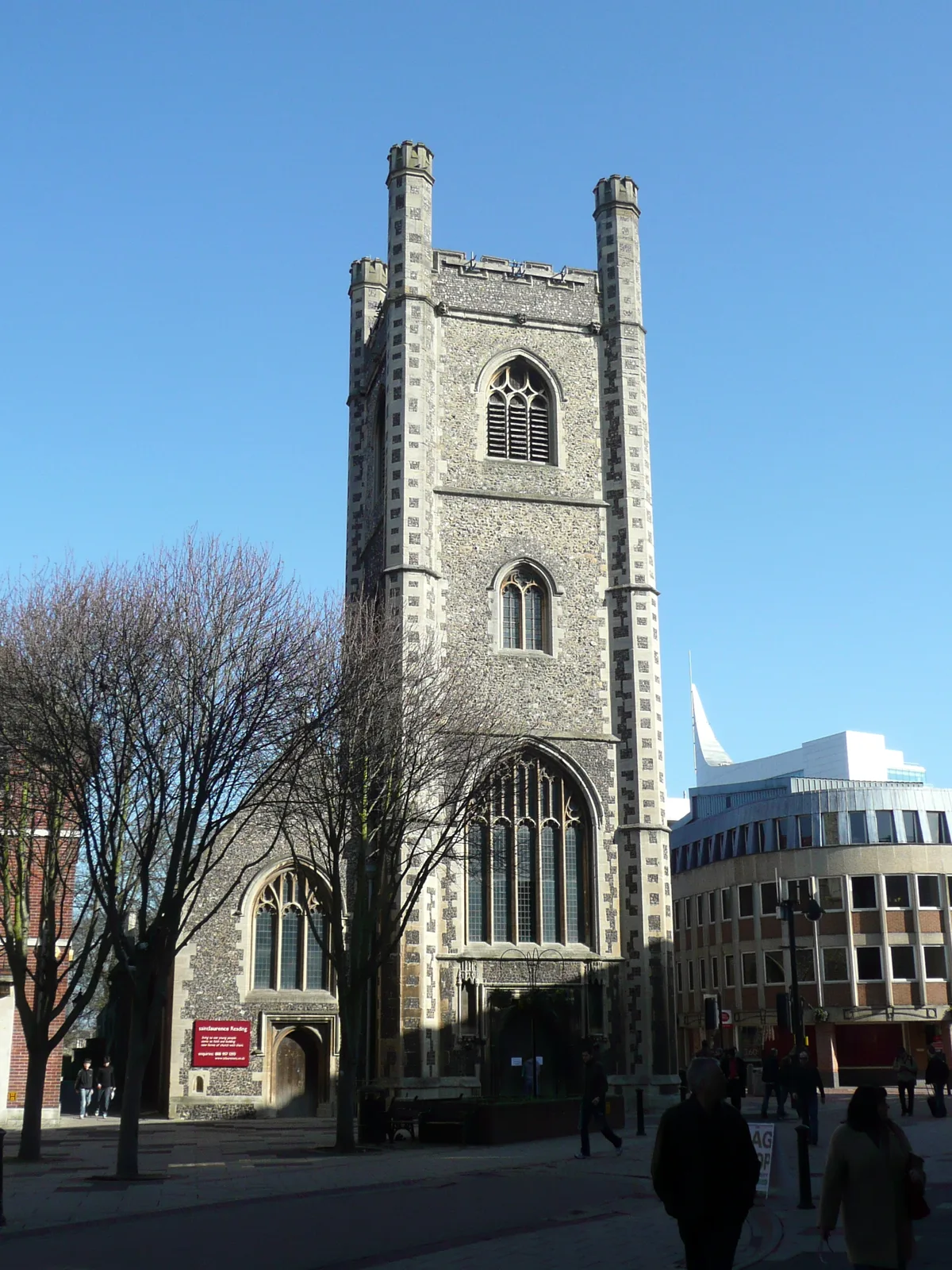
St Laurence's Church, Reading
Historic churches · 0.1 km

Queen Victoria
Memorials & monuments · 0.1 km
Escape Hunt Reading
Escape rooms · 0.1 km

In Memory of Henry West
Memorials & monuments · 0.1 km

War Memorial
Memorials & monuments · 0.1 km

Hospitium of St John the Baptist
Gardens · 0.1 km

Roseate Reading Hotel
Historic houses · 0.2 km

Reading Museum
Museums · 0.2 km
Nearby
📷 5Farmers’ markets · South East England
Blue Collar (Wed) CHOW (Fri)
Blue Collar (Wed) CHOW (Fri) — a UK farmers' market in england south east.
📷 7Historic pubs · South East England
The Coopers Public House
The Coopers Public House in England South East, United Kingdom.
📷 5📷 5Historic houses · South East England
The George Hotel, Reading
The George Hotel, Reading — a Grade II-listed historic house in england-south-east, United Kingdom.
📷 5Historic churches · South East England
St Laurence's Church, Reading
St Laurence's Church, Reading — church in Reading, Berkshire, England, UK.
📷 5Memorials & monuments · South East England
Queen Victoria
Queen Victoria is a memorial in the United Kingdom.
Where to eat & stay near Simeon Monument
Places to stay
 📷 7
📷 7Hotels · South East England
Travelodge Reading
Travelodge Reading — a hotel in england south east.
 📷 5
📷 5Hotels · South East England
Pentahotel Reading
Pentahotel Reading — a hotel in england south east.
 📷 5
📷 5Hotels · South East England
Crescent Hotel
Crescent Hotel — a hotel in england south east.
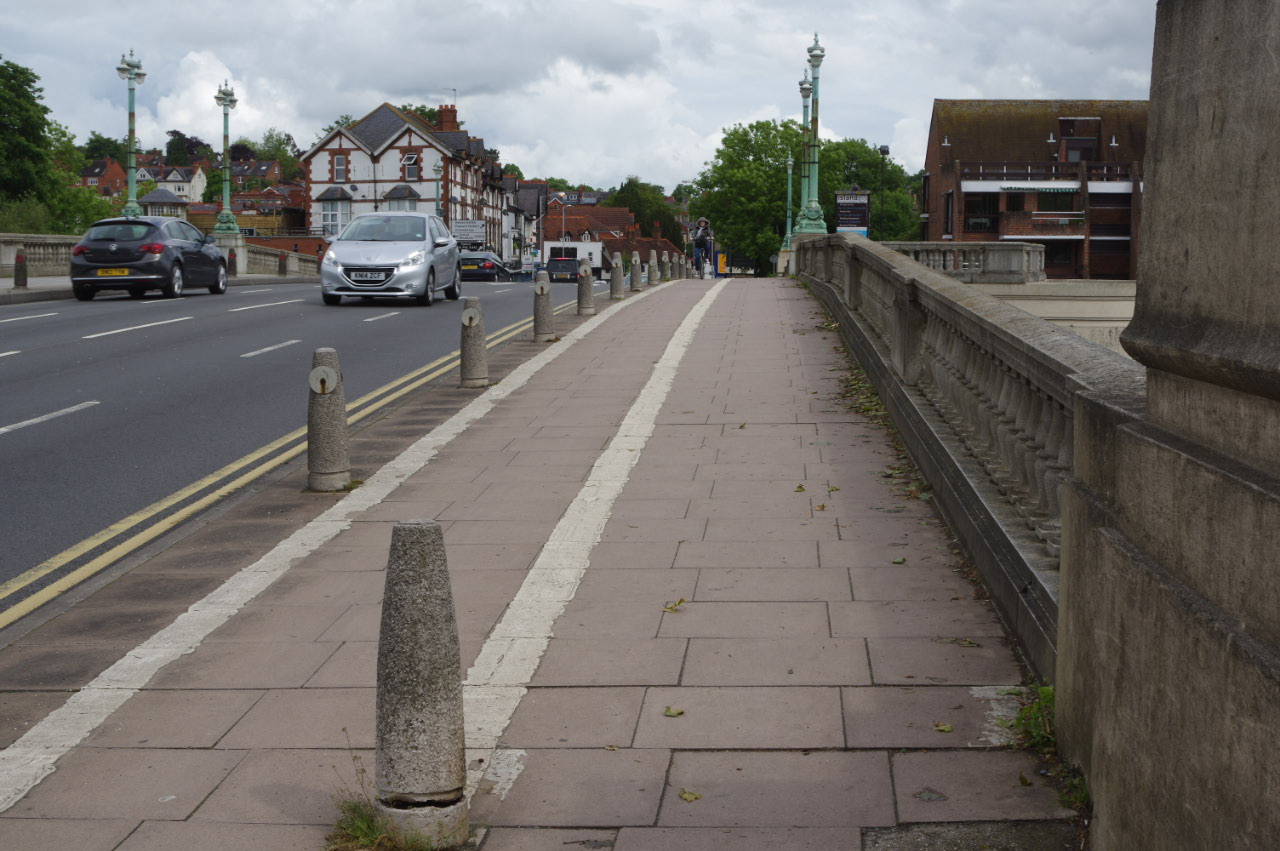 📷 7
📷 7Hotels · South East England
The Village Hotel
The Village Hotel — a hotel in england south east.
 📷 7
📷 7Hotels · South East England
Sure Hotel by Best Western Reading
Sure Hotel by Best Western Reading — a hotel in england south east. Brand: Sure Hotel by Best Western.
 📷 7
📷 7Places to eat & drink
📷 7Historic pubs · South East England
The Coopers Public House
The Coopers Public House in England South East, United Kingdom.
📷 5 📷 7
📷 7Restaurants · South East England
London Street Brasserie
London Street Brasserie — a restaurant in england south east. Cuisine: international;fine dining.
 📷 5
📷 5Historic pubs · South East England
Purple Turtle
Purple Turtle in England South East, United Kingdom.
 📷 5
📷 5Historic pubs · South East England
BrewDog Reading
BrewDog Reading in England South East, United Kingdom.
 📷 7
📷 7Restaurants · South East England
The Thirsty Bear
The Thirsty Bear — a restaurant in england south east.
More memorials in this region
 📷 5
📷 5Memorials & monuments · South East England
Air Forces Memorial
Air Forces Memorial is a memorial in the United Kingdom.
 📷 5
📷 5Memorials & monuments · South East England
All Saints Church
All Saints Church is a memorial in the United Kingdom.
 📷 5
📷 5Memorials & monuments · South East England
Bevans War Memorial
Bevans War Memorial is a memorial in the United Kingdom.
.jpg?width=1200) 📷 5
📷 5Memorials & monuments · South East England
Cumberland Obelisk
Cumberland Obelisk is a memorial in the United Kingdom.
Frequently asked questions
- Where is Simeon Monument?
- Simeon Monument is in South-East England, United Kingdom (postcode RG1 2DE), in the parish of Reading, unparished area.
- What is Simeon Monument?
- Simeon Monument is a memorial in the United Kingdom.
- How do I get to Simeon Monument?
- The nearest railway station is Reading, about 0.4 km away. The nearest town is Sonning. Drivers can use postcode RG1 2DE.
- Is Simeon Monument a listed building?
- Simeon Monument is officially recognised as Grade II* listed building listed.
- Is Simeon Monument free to visit?
- Yes, Simeon Monument is free to enter.
- How do I get to Simeon Monument?
- The nearest railway station is Reading, about 0.4 km away. Drivers can navigate to postcode RG1 2DE.