
Follies · South Wales
Shell Grotto, Pontypool
In or near Caerleon.
The Shell Grotto - (Welsh: Groto Cregyn) - (sometimes called the Shell Hermitage) is a Grade II* listed (as of 7 February 1962) late-18th-century stone built, cylindrical, slate roofed shell grotto de

David Roberts — CC BY-SA 2.0 via Wikimedia Commons licence

Plan your visit
- Typical visit
- 20 min–45 min
- Nearest railway station
- Pontypool and New Inn · 1.0 km
- Free entry
- Dog-friendly
Getting there & planning your visit
To visit the Shell Grotto in Pontypool, you can take a train to Pontypool and New Inn station, which is 1 km away. The postcode for sat-nav is NP4 8AF, and entry to the grotto is free.
About
The Shell Grotto - (Welsh: Groto Cregyn) - (sometimes called the Shell Hermitage) is a Grade II* listed (as of 7 February 1962) late-18th-century stone built, cylindrical, slate roofed shell grotto decorated with shells and animal bones on the interior. It stands on a prominent ridge 700 ft (213 m) above sea level, within the boundary of Pontypool Park, Torfaen in south Wales. It is considered to be the best surviving grotto in Wales. It is an important local landmark commanding views south towards the Severn Estuary. A little further along the same ridge can be found the Folly Tower.
Photo gallery
Protected designations
- Site of Special Scientific Interest: River Wye SSSI
- Site of Special Scientific Interest: Severn Estuary SSSI
Designations sourced from Natural England open data under OGL v3.
From the Wikipedia article
The Shell Grotto - (Welsh: Groto Cregyn) - (sometimes called the Shell Hermitage) is a Grade II* listed (as of 7 February 1962) late-18th-century stone built, cylindrical, slate roofed shell grotto decorated with shells and animal bones on the interior. It stands on a prominent ridge 700 ft (213 m) above sea level, within the boundary of Pontypool Park, Torfaen in south Wales. It is considered to be the best surviving grotto in Wales. It is an important local landmark commanding views south towards the Severn Estuary. A little further along the same ridge can be found the Folly Tower.
Excerpt from Wikipedia under CC BY-SA 4.0. See the source article linked in Sources below.
Background
History
The grotto was commissioned by John Hanbury as a hunting lodge/summerhouse in the late 18th century. The Hanbury family were local ironmasters who owned Pontypool Park. During the early 19th century, Capel Hanbury Leigh (6 Oct 1776 - 28 Sep 1861) undertook renovations of the family house and park's grounds and it is thought that his wife Molly Ann (married 14 Apr 1797, she was the widow of Sir Robert Humphrey Mackworth (died 1794)) was responsible for the interior shell decoration. Although there is no direct evidence that the shell interior was Molly's invention, it is known that she was an avid collector of shells (and built another shell grotto near her home at Gnoll). The shell…
Architecture
The grotto is constructed of local red Pennant sandstone and conical stone tiled with a fan vaulted roof (with six fans rising from six pillars) and the supporting pillars and ceiling are covered with thousands of shells interspersed with minerals and real stalactites removed from caves in the local area. The interior walls are mostly bare stone, with some embedded calcite crystals. The floor incorporates animal bones and teeth forming arcs, circles, stars, hearts and diamonds. The two remaining windows contain coloured glass.
Sourced from Wikipedia under CC BY-SA 4.0.
- Coordinates
- 51.7034, -3.0239
- District
- Torfaen
- Parish
- New Inn
- Postcode
- NP4 8AF
- Parliamentary constituency
- Torfaen
- Nearest railway station
- Pontypool and New Inn — 1 km
Sources
- wikipedia: Shell Grotto, Pontypool (CC BY-SA 4.0)
Other places nearby

Shell Grotto
Archaeological sites · 0.0 km

Bridge 56, Monmouthshire and Brecon Canal
Historic bridges · 0.5 km

Gorsedd Stones
Heritage railway stations · 0.6 km
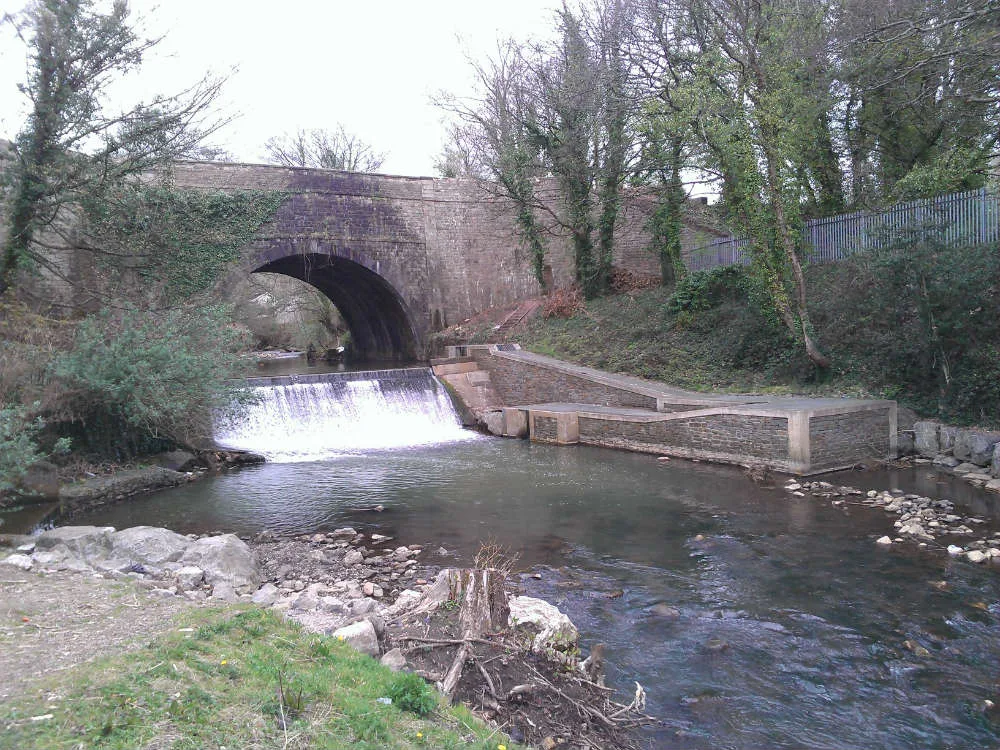
Aqueduct over Afon Lwyd, Monmouthshire and Brecon Canal
Aqueducts · 0.7 km

Pontypool Park
Parks · 0.8 km

Pontymoile Basin
Canals · 0.9 km
Bridge 52 at Pontymoile Basin, Monmouthshire and Brecon Canal
Historic bridges · 0.9 km

Trevethin Community School
Natural landmarks · 1.1 km

Mount Pleasant United Reformed Church
Historic churches · 1.1 km

Hanbury Arms Haunted Hotel & Museum
Museums · 1.1 km

Torfaen Museum
Museums · 1.1 km

Pontypool War Memorial Gates
Memorials & monuments · 1.1 km
Nearby
📷 5📷 5Historic bridges · South Wales
Bridge 56, Monmouthshire and Brecon Canal
Bridge 56, Monmouthshire and Brecon Canal — Grade II listed building-listed bridge in wales-south, United Kingdom.
📷 5Heritage railway stations · South Wales
Gorsedd Stones
Gorsedd Stones — Public artwork (sculpture).
📷 3Aqueducts · South Wales
Aqueduct over Afon Lwyd, Monmouthshire and Brecon Canal
Aqueduct over Afon Lwyd, Monmouthshire and Brecon Canal — Grade II listed building in Torfaen County Borough. It is about 450m south-east of Pontymoile roundabout approached by the canal towpath from Pontymoile basin. Spans the border between New Inn and Pontymoile communities.
📷 4Parks · South Wales
Pontypool Park
Pontypool Park — former grounds of Pontypool House.
📷 4Canals · South Wales
Pontymoile Basin
Pontymoile Basin (Welsh: Basn Pont-y-moel) is a mooring point and canal junction on the Monmouthshire & Brecon Canal.
Where to eat & stay near Shell Grotto, Pontypool
Places to stay
 📷 5
📷 5 📷 5
📷 5Campsites · South Wales
Pont Kemys Caravan & Camping Park
Pont Kemys Caravan & Camping Park — a campsite in wales south.
 📷 7
📷 7 📷 5
📷 5 📷 5
📷 5 📷 5
📷 5Places to eat & drink
 📷 5
📷 5Restaurants · South Wales
Little Crown
Little Crown — a restaurant in wales south.
 📷 7
📷 7 📷 7
📷 7 📷 3
📷 3 📷 5
📷 5Historic pubs · South Wales
The White Hart, Llangybi, Monmouthshire
The White Hart, Llangybi, Monmouthshire in Wales South, United Kingdom.
 📷 7
📷 7Restaurants · South Wales
The Priory Hotel & Restaurant
The Priory Hotel & Restaurant — a restaurant in wales south. Cuisine: international. 3-star.
More follies in this region
 📷 3
📷 3 📷 3
📷 3 📷 3
📷 3 📷 3
📷 3Frequently asked questions
- Where is Shell Grotto, Pontypool?
- Shell Grotto, Pontypool is in South Wales, United Kingdom (postcode NP4 8AF), in the parish of New Inn.
- What is Shell Grotto, Pontypool?
- The Shell Grotto - (Welsh: Groto Cregyn) - (sometimes called the Shell Hermitage) is a Grade II* listed (as of 7 February 1962) late-18th-century stone built, cylindrical, slate roofed shell grotto de
- How do I get to Shell Grotto, Pontypool?
- The nearest railway station is Pontypool and New Inn, about 1.0 km away. The nearest town is Caerleon. Drivers can use postcode NP4 8AF.
- Who owns Shell Grotto, Pontypool?
- Shell Grotto, Pontypool is owned by Torfaen County Borough Council.
- Is Shell Grotto, Pontypool a protected site?
- Yes — Shell Grotto, Pontypool is part of the River Wye SSSI Site of Special Scientific Interest and the Severn Estuary SSSI Site of Special Scientific Interest.
- Is Shell Grotto, Pontypool free to visit?
- Yes, Shell Grotto, Pontypool is free to enter.
- How do I get to Shell Grotto, Pontypool?
- The nearest railway station is Pontypool and New Inn, about 1.0 km away. Drivers can navigate to postcode NP4 8AF.