
Historic houses · East of England
Scott Polar Research Institute
In or near Cambridge.
Scott Polar Research Institute — a Grade II-listed historic house in england-london, United Kingdom.

Julian Paren — CC BY-SA 2.0 via Wikimedia Commons licence

Plan your visit
- Typical visit
- 1 h–2 h
- Nearest railway station
- Cambridge · 0.9 km
- Free entry
- Family-friendly
- Wheelchair accessible
Getting there & planning your visit
To visit the Scott Polar Research Institute, you can take a train to Cambridge station, which is 0.9 km away. Entry is free, and the site is wheelchair accessible. The postcode for sat-nav is CB2 1EN.
About
Scott Polar Research Institute is a Grade II-listed building in england-london, United Kingdom. Grade II status is conferred by Historic England (or Cadw, Historic Environment Scotland or NIEA equivalents) on buildings of exceptional national interest. See the linked Wikipedia article for full historical and architectural details.
Photo gallery
See it from the streetimagery from 2020
Imagery © Mapillary contributors, CC BY-SA 4.0
Summary from the official site
The Polar Museum, part of the Scott Polar Research Institute, showcases collections related to polar exploration and research. Visitors can explore permanent displays and special exhibitions that highlight the history and significance of polar regions.
Read more on the official property page.
From the Wikipedia article
The Scott Polar Research Institute (SPRI) is a centre for research into the polar regions and glaciology worldwide. It is a sub-department of the Department of Geography in the University of Cambridge, located on Lensfield Road in the south of Cambridge. SPRI was founded by Frank Debenham in 1920 as the national memorial to Captain Robert Falcon Scott and his companions, who died on their return journey from the South Pole in 1912. It investigates issues relevant to the Arctic and Antarctic in the environmental sciences, social sciences and humanities. The institute is home to the Polar Museum and has some 60 personnel, consisting of academic, library and support staff plus postgraduate students, associates and fellows attached to research programmes. The institute also hosts the Scientific Committee on Antarctic Research.
Excerpt from Wikipedia under CC BY-SA 4.0. See the source article linked in Sources below.
Background
History
While climbing Mount Erebus in November 1912 as part of Robert Falcon Scott's ill-fated Terra Nova expedition, Frank Debenham came up with the idea of a polar research institute. After the end of World War I, he co-founded the institute with Raymond Priestley and was its first director. The Grade II listed main building (1933–1934) is by Sir Herbert Baker. The small halls have shallow domed ceilings painted with the aspect of the globe from north and south poles, by MacDonald Gill. The small gardens are home to a range of sculptures and historic artefacts relating to the polar regions.
Description
SPRI operates the Polar Museum, which presents a range of objects, artworks, documents and photographs from the institute's extensive polar collections. The collections include material related to polar history, exploration, science, art and Arctic cultures. In 2010 the renovated Polar Museum opened its doors to the public; the reopening was met with widespread acclaim and the museum was shortlisted for the Art Fund's Museum of the Year prize in 2011. It contains displays of Arctic art and artefacts, material from the nineteenth-century search for the elusive Northwest Passage, relics from the Heroic Age of Antarctic Exploration (including the last letters of Captain Scott), and…
Sourced from Wikipedia under CC BY-SA 4.0.
- Coordinates
- 52.1984, 0.1262
- County
- Cambridgeshire
- District
- Cambridge
- Parish
- Cambridge, unparished area
- Postcode
- CB2 1EN
- Parliamentary constituency
- Cambridge
- Established
- 1920
- Nearest railway station
- Cambridge — 0.9 km
- Opening
- Tuesdays–Saturdays 10am–4pm
- Official site
- www.spri.cam.ac.uk
Sources
- wikidata: Q2747894 (CC0)
- wikipedia: Scott Polar Research Institute (CC BY-SA 4.0)
Other places nearby

The Polar Museum
Museums · 0.0 km
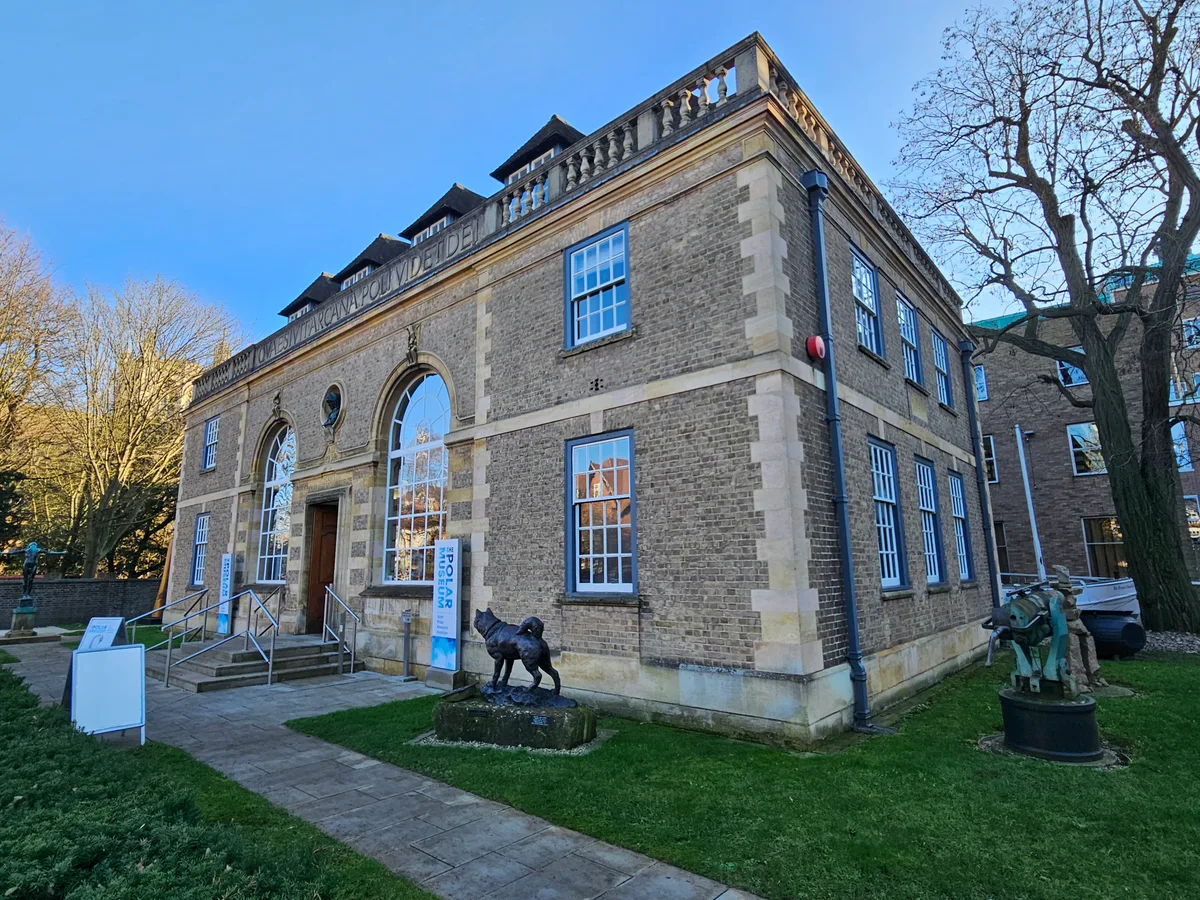
Polar Museum
Museums · 0.0 km
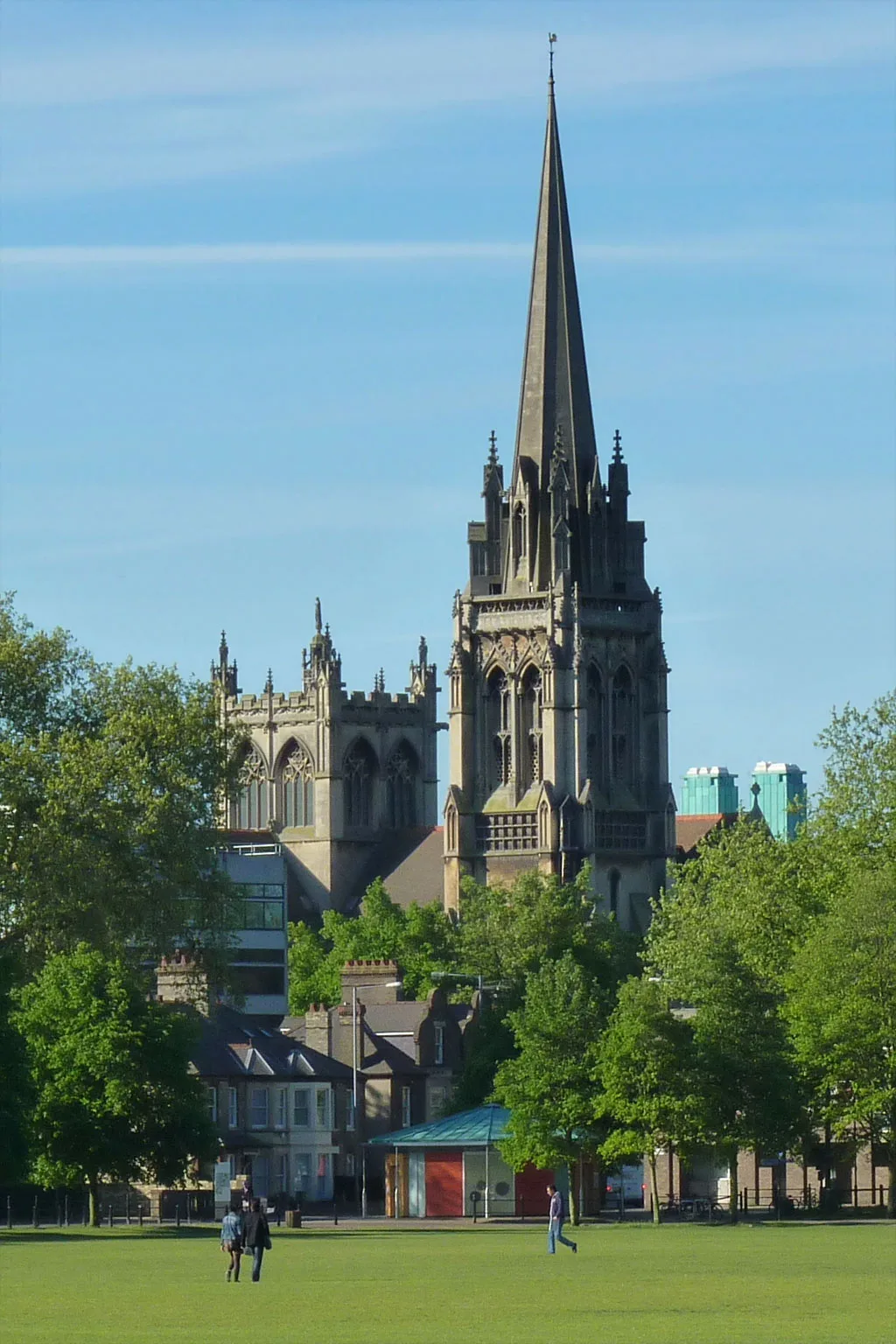
Our Lady and the English Martyrs Church
Historic churches · 0.1 km

The Oak Public House
Historic pubs · 0.1 km

Wanstead House
Historic houses · 0.1 km

Lockhouse Escape Games
Escape rooms · 0.2 km

Panton Arms
Historic pubs · 0.2 km

Gonville Hotel
Hotels · 0.2 km

Hobson's Conduit Monument
Memorials & monuments · 0.3 km

Cambridge Muslim College
Ironworks & forges · 0.3 km

Downing College
Historic bridges · 0.3 km

Cambridge Institute for Sustainability Leadership
Natural landmarks · 0.3 km
Nearby
📷 5Museums · East of England
The Polar Museum
The Polar Museum — a museum in england-london, United Kingdom.
📷 5Museums · East of England
Polar Museum
Polar Museum — museum in Cambridge, Cambridgeshire, England.
📷 5Historic churches · East of England
Our Lady and the English Martyrs Church
Our Lady and the English Martyrs Church — Roman Catholic church in Cambridge.
📷 5Historic pubs · East of England
The Oak Public House
The Oak Public House in England East, United Kingdom.
📷 5Historic houses · East of England
Wanstead House
Wanstead House — house in Cambridge, Cambridgeshire, England, UK.
📷 5Escape rooms · East of England
Lockhouse Escape Games
Lockhouse Escape Games — a escape room in england-london, United Kingdom.
Where to eat & stay near Scott Polar Research Institute
Places to stay
📷 5Hotels · East of England
Gonville Hotel
Gonville Hotel — a hotel in england london.
 📷 5
📷 5Hotels · East of England
Regent Hotel
Regent Hotel — a hotel in england london.
 📷 5
📷 5 📷 6
📷 6Hotels · East of England
Hilton Cambridge City Centre
Hilton Cambridge City Centre — a hotel in england london. 4-star. Brand: Hilton.
 📷 5
📷 5 📷 7
📷 7Hotels · East of England
Graduate by Hilton Cambridge
Graduate by Hilton Cambridge — a hotel in england london. 4-star. Brand: Graduate.
Places to eat & drink
📷 5Historic pubs · East of England
The Oak Public House
The Oak Public House in England East, United Kingdom.
📷 7 📷 5
📷 5 📷 7
📷 7 ★ Iconic📷 4
Historic pubs · East of England
The Eagle, Cambridge
The Cambridge pub where DNA was announced — and the WWII RAF ceiling-graffiti bar.
 📷 7
📷 7Restaurants · East of England
The Cambridge Chop House
The Cambridge Chop House — a restaurant in england london. Cuisine: steak house.
More historic houses in this region
 📷 5
📷 5Historic houses · East of England
41 and 41a, Broad Street
41 and 41a, Broad Street — Grade II* listed house in Ely, East Cambridgeshire, England, UK.
 📷 5
📷 5Historic houses · East of England
Abbey Gate House
Abbey Gate House — house in St Albans, Hertfordshire, England, UK.
 📷 5
📷 5Historic houses · East of England
Abbey House
Abbey House — house in Cambridge, Cambridgeshire, England, UK.
.jpg?width=1200) 📷 5
📷 5Historic houses · East of England
Amores Including Outbuildings
Amores Including Outbuildings — architectural structure in Hertford, East Hertfordshire, England, UK.
Frequently asked questions
- Where is Scott Polar Research Institute?
- Scott Polar Research Institute is in Cambridgeshire, East of England, United Kingdom (postcode CB2 1EN), in the parish of Cambridge, unparished area.
- What is Scott Polar Research Institute?
- Scott Polar Research Institute — a Grade II-listed historic house in england-london, United Kingdom.
- How do I get to Scott Polar Research Institute?
- The nearest railway station is Cambridge, about 0.9 km away. The nearest town is Cambridge. Drivers can use postcode CB2 1EN.
- When was Scott Polar Research Institute built?
- Built or established in 1920.
- Is Scott Polar Research Institute a listed building?
- Scott Polar Research Institute is officially recognised as Grade II listed.
- Is Scott Polar Research Institute free to visit?
- Yes, Scott Polar Research Institute is free to enter.
- How do I get to Scott Polar Research Institute?
- The nearest railway station is Cambridge, about 0.9 km away. Drivers can navigate to postcode CB2 1EN.