
Memorials & monuments · North West England
Ruskin Monument
In or near Braithwaite.
Ruskin Monument is a memorial in the United Kingdom.

Wikimedia Commons contributors — see linked file page for photographer and licence licence

Plan your visit
- Typical visit
- 15 min–45 min
- Nearest railway station
- Threlkeld Quarry · 6.6 km
- Free entry
- Family-friendly
- Dog-friendly
Getting there & planning your visit
To visit the Ruskin Monument, the nearest railway station is Threlkeld Quarry, located 6.6 km away. The postcode for the monument is CA12 5DL, which you can use for sat-nav coordinates (54.5904, -3.1408). Entry to the monument is free.
About
Ruskin Monument is a public memorial or monument in the United Kingdom. Records date its origin to 1900. Coordinates: 54.5904°, -3.1408°.
Photo gallery
See it from the streetimagery from 2022
Imagery © Mapillary contributors, CC BY-SA 4.0
Official information
The Ruskin Monument is a listed building located at Friars Crag in Keswick, commemorating the life and works of John Ruskin. It features a vertical slab of local slate inscribed with quotations and a bust in relief, showcasing Art Nouveau lettering.
Protected designations
- Site of Special Scientific Interest: River Derwent and Tributaries SSSI
- National Nature Reserve: BORROWDALE RAINFOREST
Designations sourced from Natural England open data under OGL v3.
From the Wikipedia article
The Ruskin Monument is a memorial to John Ruskin located on the edge of Derwentwater in the English Lakes at Friars' Crag, Keswick, Cumbria. It was erected on 6 October 1900, shortly after his death, largely through the efforts of Hardwicke Rawnsley. The monument consists of a monolithic block of Borrowdale stone. It is of the type of the standing stones of Galloway, the earliest Christian monuments of the Celtic people, and was chosen as a link with Scotland, the land of Ruskin's fore-elders. Upon one side is incised a Chi-Rho enclosed in a circle after the fashion of the earliest crosses, with the following inscription beneath from Deucalion, Lecture xii., par. 40:The Spirit of God is around you in the air that you breathe,—His glory in the light that you see; and in the fruitfulness of the earth, and the joy of its creatures, He has written for you, day by day, His revelation, as He has granted you, day by day, your daily bread.On the other side of the monolith, facing the lake which Ruskin once described "as one of the three most beautiful scenes in Europe," there is a medallion in bronze, the work of Signor Lucchesi, representing Ruskin in profile as he was in the early 1870s, when he composed Fors Clavigera and was Slade Professor of Fine Art at the University of Oxford. A crown of wild olive is seen in the background of the panel, which is hollowed to give the profile high relief, and Ruskin's motto, "To-day," is among the olive leaves in the background over the head. Above the portrait is the name "John Ruskin," beneath are his dates 1819 to 1900. Beneath these again is incised an inscription taken from Modern Painters, vol. iii, ch. vxii:The first thing which I remember, as an event in life, was being taken by my nurse to the brow of Friar's Crag on Derwent Water.The lettering was designed and drawn by Ruskin's biographer, W. G. Collingwood, and was so designed to indicate Ruskin's dot and dash style of drawing. Ruskin wrote that "all monuments to…
Excerpt from Wikipedia under CC BY-SA 4.0. See the source article linked in Sources below.
- Coordinates
- 54.5904, -3.1408
- District
- Cumberland
- Parish
- Keswick
- Postcode
- CA12 5DL
- Parliamentary constituency
- Penrith and Solway
- Established
- 1900
- Nearest railway station
- Threlkeld Quarry — 6.6 km
- Official site
- historicengland.org.uk
Sources
- osm: n686809526 (ODbL)
- wikipedia: Ruskin Monument (CC BY-SA 4.0)
- commons: Ruskin memorial at Derwentwater.jpg (CC BY-SA 4.0)
Other places nearby

Friar's Crag
Viewpoints · 0.1 km

Derwent Island House
Historic houses · 0.3 km

The Old Chapel At Landing Stage
Chapels · 0.3 km

Theatre by the Lake
Open-air theatres · 0.6 km
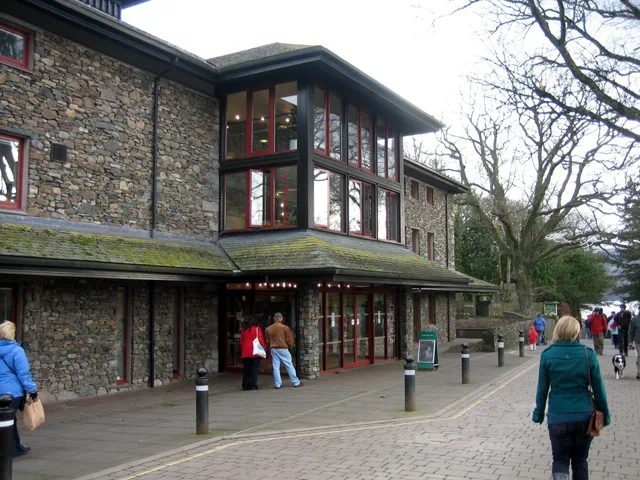
Theatre by the Lake
Theatres · 0.6 km

Castlehead
Mountains & hills · 0.7 km

Castlehead
Viewpoints · 0.7 km

Max
Public art & sculpture · 0.8 km

Hundred Year Stone
Public art & sculpture · 0.9 km

Derwent Water
Lakes · 0.9 km
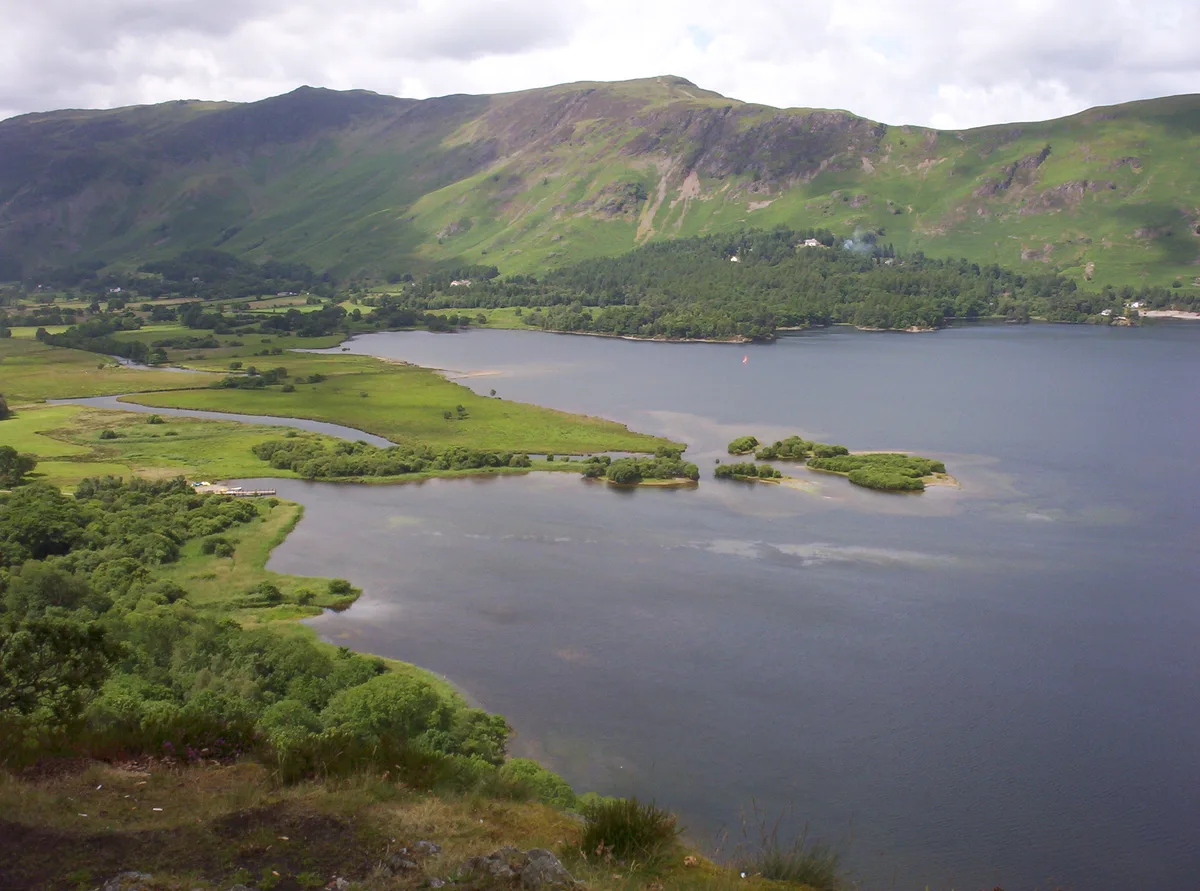
Derwentwater
Natural landmarks · 1.0 km

The Lingholm House
Manor houses · 1.0 km
Nearby
📷 4Viewpoints · North West England
Friar's Crag
Friar's Crag is a viewpoint in the United Kingdom.
📷 4Historic houses · North West England
Derwent Island House
Derwent Island House — Grade II listed house on Derwent Island, Cumbria, England, UK.
📷 3Chapels · North West England
The Old Chapel At Landing Stage
The Old Chapel At Landing Stage — chapel in Keswick, Cumberland, Cumbria, England, UK.
📷 5Open-air theatres · North West England
Theatre by the Lake
Theatre by the Lake — a open-air theatre in england north east.
📷 3Theatres · North West England
Theatre by the Lake
Theatre by the Lake is a theatre in the United Kingdom.
📷 5Mountains & hills · North West England
Castlehead
Castlehead — mountain in england north east. Elevation: 162 m.
Where to eat & stay near Ruskin Monument
Places to stay
 📷 5
📷 5Caravan parks · North West England
Derwentwater Camping and Caravan Club
Derwentwater Camping and Caravan Club — a caravan park in england north east.
 📷 7
📷 7B&Bs · North West England
Stonegarth
Stonegarth — a bed-and-breakfast in england north east.
 📷 5
📷 5Caravan parks · North West England
Derwent Water Caravan Park
Derwent Water Caravan Park — a caravan park in scotland lowlands.
 📷 5
📷 5Hotels · North West England
Kings Arms Hotel
Kings Arms Hotel — a hotel in scotland lowlands.
 📷 7
📷 7Hotels · North West England
The Skiddaw Hotel
The Skiddaw Hotel — a hotel in scotland lowlands.
 📷 5
📷 5Caravan parks · North West England
Keswick Camping and Caravanning Club Site
Keswick Camping and Caravanning Club Site — a caravan park in scotland lowlands.
Places to eat & drink
 📷 5
📷 5 📷 7
📷 7Cafés · North West England
Grange Bridge Cottage
Grange Bridge Cottage — a café in england north east.
 📷 7
📷 7Historic pubs · North West England
The Pheasant Inn
The Pheasant Inn in Scotland Lowlands, United Kingdom.
 📷 7
📷 7Historic pubs · North West England
The Travellers Rest
The Travellers Rest in England North West, United Kingdom.
 📷 4
📷 4Historic pubs · North West England
Oddfellows Arms
Oddfellows Arms — Historic pub — listed building or notable heritage status.
 📷 5
📷 5Historic pubs · North West England
Horse And Farrier Inn And Stables
Horse And Farrier Inn And Stables in Scotland Lowlands, United Kingdom.
Other memorials from this era
 📷 5
📷 5Memorials & monuments · London
Admiral Sir John Franklin
Admiral Sir John Franklin is a memorial in the United Kingdom.
 📷 5
📷 5Memorials & monuments · London
Baron de Stern Clock Tower
Baron de Stern Clock Tower is a memorial in the United Kingdom.
.jpg?width=1200) 📷 5
📷 5Memorials & monuments · London
Bringer of Peace
Bringer of Peace is a memorial in the United Kingdom.
 📷 5
📷 5Memorials & monuments · London
Charles George Gordon
Charles George Gordon — Public artwork (statue).
More memorials in this region
 📷 3
📷 3Memorials & monuments · North West England
3rd Duke of Bridgewater's monument
3rd Duke of Bridgewater's monument — Monument, dating to 1905.
 📷 3
📷 3Memorials & monuments · North West England
Airborne Forces Memorial
Airborne Forces Memorial is a memorial in the United Kingdom.
 📷 4
📷 4Memorials & monuments · North West England
Albert Memorial
Albert Memorial — Monument, dating to 1869.
 📷 3
📷 3Memorials & monuments · North West England
Armada Beacon
Armada Beacon is a memorial in the United Kingdom.
Frequently asked questions
- Where is Ruskin Monument?
- Ruskin Monument is in North-West England, United Kingdom (postcode CA12 5DL), in the parish of Keswick.
- What is Ruskin Monument?
- Ruskin Monument is a memorial in the United Kingdom.
- How do I get to Ruskin Monument?
- The nearest railway station is Threlkeld Quarry, about 6.6 km away. The nearest town is Braithwaite. Drivers can use postcode CA12 5DL.
- When was Ruskin Monument built?
- Built or established in 1900.
- Is Ruskin Monument a protected site?
- Yes — Ruskin Monument is part of the River Derwent and Tributaries SSSI Site of Special Scientific Interest and the BORROWDALE RAINFOREST National Nature Reserve.
- Is Ruskin Monument free to visit?
- Yes, Ruskin Monument is free to enter.
- How do I get to Ruskin Monument?
- The nearest railway station is Threlkeld Quarry, about 6.6 km away. Drivers can navigate to postcode CA12 5DL.