
Memorials & monuments · London
Robert Watson-Watt
In or near Thames Ditton.
Robert Watson-Watt — a memorial in england-london, United Kingdom.

Christine Johnstone — CC BY-SA 2.0 via Wikimedia Commons licence

Plan your visit
- Typical visit
- 15 min–45 min
- Nearest railway station
- Mortlake · 1.2 km
- Free entry
- Dog-friendly
Getting there & planning your visit
To visit the Robert Watson-Watt memorial, you can take a train to Mortlake station, which is 1.2 km away. Entry is free, and the location is accessible. The postcode for sat-nav is SW14 8BJ.
About
Robert Watson-Watt is a memorial located in england-london, United Kingdom. Sourced from OpenStreetMap (ODbL licence); see local listings for visitor information, opening hours and admission details.
Photo gallery
From the Wikipedia article
Sir Robert Alexander Watson-Watt (13 April 1892 – 5 December 1973) was a Scottish radio engineer and pioneer of radio direction finding and radar technology. Watt began his career in radio physics with a job at the Meteorological Office, where he began looking for accurate ways to track thunderstorms using the radio waves given off by lightning. This led to the 1920s development of a system later known as high-frequency direction finding (HFDF or "huff-duff"). Although well publicized, the system's enormous military potential was not developed until the late 1930s. Huff-duff allowed operators to determine the location of an enemy radio transmitter in seconds and it became a major part of the network of systems that helped defeat the threat of German U-boats during World War II. It is estimated that huff-duff was used in about a quarter of all attacks on U-boats. In 1935, Watt was asked to comment on reports of a German death ray based on radio. Watt and his assistant Arnold Frederic Wilkins quickly determined it was not possible, but Wilkins suggested using radio signals to locate aircraft at long distances. This led to a February 1935 demonstration of signals from a BBC short-wave transmitter bounced off a Handley Page Heyford aircraft. Watt led the development of a practical version of this device, which entered service in 1938 under the code name Chain Home. This system provided the vital advance information that helped the Royal Air Force in the Battle of Britain. After the success of his invention, Watson Watt was sent to the U.S. in 1941 to advise on air defence after Japan's attack on Pearl Harbor. He returned and continued to lead radar development for the War Office and Ministry of Supply. He was elected a Fellow of the Royal Society in 1941, knighted in 1942 and awarded the US Medal for Merit in 1946.
Excerpt from Wikipedia under CC BY-SA 4.0. See the source article linked in Sources below.
Background
Description
During the First World War, the Germans had used Zeppelins as long-range bombers over Britain and defences had struggled to counter the threat. Since that time, aircraft capabilities had improved considerably and the prospect of widespread aerial bombardment of civilian areas was causing the government anxiety. Heavy bombers were now able to approach at altitudes that anti-aircraft guns of the day were unable to reach. With enemy airfields across the English Channel potentially only 20 minutes' flying-time away, bombers would have dropped their bombs and be returning to base before any intercepting fighters could get to altitude. The only answer seemed to be to have standing patrols of…
Sourced from Wikipedia under CC BY-SA 4.0.
- Coordinates
- 51.4575, -0.2675
- District
- Richmond upon Thames
- Parish
- Richmond upon Thames, unparished area
- Postcode
- SW14 8BJ
- Parliamentary constituency
- Richmond Park
- Nearest railway station
- Mortlake — 1.2 km
Sources
- osm: node/8050612596 (ODbL)
- wikipedia: Robert Watson-Watt (CC BY-SA 4.0)
Other places nearby

Kitty Godfree
Memorials & monuments · 0.3 km
East Sheen Common
Parks · 0.7 km

Mortlake and East Sheen War Memorial
Memorials & monuments · 0.8 km
VII Miles from the Standard in Cornhill London
Memorials & monuments · 0.8 km

East Sheen
Chapels · 0.8 km

Hare and Hounds
Historic houses · 0.9 km

Hare and Hounds
Historic pubs · 0.9 km
Mortlake
Chapels · 0.9 km

Richmond Park Golf Course
Golf courses · 1.1 km

Ibstock Place School
Natural landmarks · 1.1 km

The Lancaster Monument, East Sheen Cemetery
Public art & sculpture · 1.2 km

Old Mortlake Burial Ground
Cemeteries · 1.2 km
Nearby
📷 5Memorials & monuments · London
Kitty Godfree
Kitty Godfree — a memorial in england-london, United Kingdom.
📷 5Parks · London
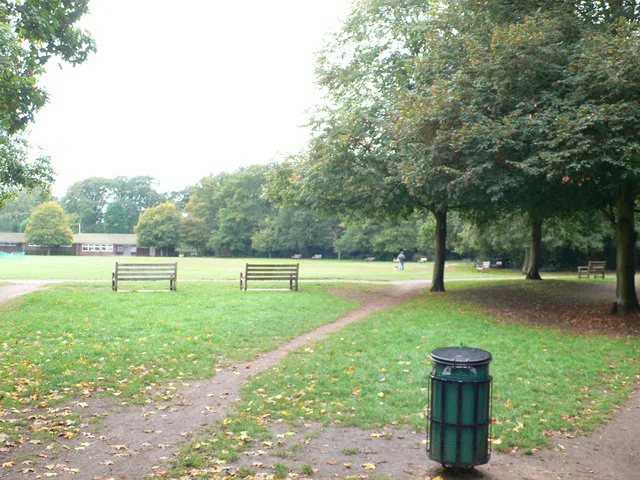
East Sheen Common
East Sheen Common — Public space in East Sheen, London, England.
📷 5Memorials & monuments · London
Mortlake and East Sheen War Memorial
Mortlake and East Sheen War Memorial — Grade II listed building-listed memorial in england-london, United Kingdom.
📷 5Memorials & monuments · London
VII Miles from the Standard in Cornhill London
VII Miles from the Standard in Cornhill London — a memorial in england-london, United Kingdom.
📷 5Chapels · London
East Sheen
East Sheen — a methodist chapel in england-london, United Kingdom.
📷 5Historic houses · London
Hare and Hounds
Hare and Hounds — a Grade II-listed historic house in england-london, United Kingdom.
Where to eat & stay near Robert Watson-Watt
Places to stay
 📷 5
📷 5Hotels · London
Richmond Hill Hotel
Richmond Hill Hotel — a hotel in england london.
 📷 5
📷 5 📷 7
📷 7 📷 5
📷 5 📷 6
📷 6Hotels · London
Novotel London Brentford
Novotel London Brentford — a hotel in england london.
 📷 5
📷 5Hotels · London
Holiday Inn Express London Hammersmith
Holiday Inn Express London Hammersmith — a hotel in england london. 3-star. Brand: Holiday Inn Express.
Places to eat & drink
📷 5 📷 5
📷 5 📷 5
📷 5Historic pubs · London
The Bull's Head
The Bull's Head in England London, United Kingdom.
 📷 5
📷 5 📷 5📷 7
More memorials in this region
.jpg?width=1200) 📷 5
📷 5Memorials & monuments · London
1st Surrey Rifles War Memorial
1st Surrey Rifles War Memorial is a memorial in the United Kingdom.
 📷 5
📷 5Memorials & monuments · London
24th East Surrey Division War Memorial
24th East Surrey Division War Memorial is a memorial in the United Kingdom.
 📷 5
📷 5Memorials & monuments · London
Abney Park Cemetery CWGC Cross
Abney Park Cemetery CWGC Cross is a memorial in the United Kingdom.
 📷 5
📷 5Memorials & monuments · London
Admiral Sir John Franklin
Admiral Sir John Franklin is a memorial in the United Kingdom.
Frequently asked questions
- Where is Robert Watson-Watt?
- Robert Watson-Watt is in London, United Kingdom (postcode SW14 8BJ), in the parish of Richmond upon Thames, unparished area.
- What is Robert Watson-Watt?
- Robert Watson-Watt — a memorial in england-london, United Kingdom.
- How do I get to Robert Watson-Watt?
- The nearest railway station is Mortlake, about 1.2 km away. The nearest town is Thames Ditton. Drivers can use postcode SW14 8BJ.
- Is Robert Watson-Watt free to visit?
- Yes, Robert Watson-Watt is free to enter.
- How do I get to Robert Watson-Watt?
- The nearest railway station is Mortlake, about 1.2 km away. Drivers can navigate to postcode SW14 8BJ.