
Memorials & monuments · London
Robert Hooke
In or near City of London.
Robert Hooke — a memorial in england-london, United Kingdom.

Basher Eyre — CC BY-SA 2.0 via Wikimedia Commons licence
_-_geograph.org.uk_-_3352059.jpg)
Plan your visit
- Typical visit
- 15 min–45 min
- Nearest railway station
- Liverpool Street · 0.3 km
- Free entry
- Dog-friendly
- Wheelchair accessible
Getting there & planning your visit
The Robert Hooke memorial is located in the City of London, postcode EC3A 6AT. The nearest railway station is Liverpool Street, which is 0.3 km away. Entry is free, and the site is wheelchair accessible.
About
Robert Hooke is a memorial located in england-london, United Kingdom. Sourced from OpenStreetMap (ODbL licence); see local listings for visitor information, opening hours and admission details.
Photo gallery
See it from the streetimagery from 2024
Imagery © Mapillary contributors, CC BY-SA 4.0
Official information
Horizon 22 is the highest free viewing platform in London, located on the 58th floor of 22 Bishopsgate. Visitors can enjoy 300-degree views of the city and its iconic landmarks, accessible via high-speed lifts.
From the Wikipedia article
Robert Hooke (; 18 July 1635 – 3 March 1703) was an English polymath who was active as a physicist ('natural philosopher'), astronomer, geologist, meteorologist, and architect. He is credited as one of the first scientists to investigate living things at microscopic scale in 1665, using a compound microscope that he designed. Hooke was an impoverished scientific inquirer in young adulthood who went on to become one of the most important scientists of his time. After the Great Fire of London in 1666, Hooke (as a surveyor and architect) attained wealth and esteem by performing more than half of the property line surveys and assisting with the city's rapid reconstruction. Often vilified by writers in the centuries after his death, his reputation was restored at the end of the twentieth century and he has been called "England's Leonardo [da Vinci]". Hooke was a Fellow of the Royal Society and from 1662, he was its first Curator of Experiments. From 1665 to 1703, he was also Professor of Geometry at Gresham College. Hooke began his scientific career as an assistant to the physical scientist Robert Boyle. Hooke built the vacuum pumps that were used in Boyle's experiments on gas law and also conducted experiments. In 1664, Hooke identified the rotations of Mars and Jupiter. Hooke's 1665 book Micrographia, in which he coined the term cell, encouraged microscopic investigations. Investigating optics – specifically light refraction – Hooke inferred a wave theory of light. His is the first-recorded hypothesis of the cause of the expansion of matter by heat, of air's composition by small particles in constant motion that thus generate its pressure, and of heat as energy. In physics, Hooke inferred that gravity obeys an inverse square law and arguably was the first to hypothesise such a relation in planetary motion, a principle Isaac Newton furthered and formalised in Newton's law of universal gravitation. Priority over this insight contributed to the rivalry between Hooke and Newton. In geology and palaeontology, Hooke identified the organic origin and significance of fossils embedded in sedimentary rocks, thus questioning the Biblical view of the Earth's creation. His explanations for the origin of such fossils, some of which he identified as being of extinct species, presaged 19th-century arguments for biological evolution. He also argued that hills and mountains had become elevated by geological processes (rather than having been created exactly as they are today).
Excerpt from Wikipedia under CC BY-SA 4.0. See the source article linked in Sources below.
Background
Architecture
at Willen, Milton Keynes, designed by Hooke]] Robert Hooke was Surveyor to the City of London and chief assistant to Christopher Wren, in which capacities he helped Wren rebuild London after the Great Fire of 1666. Hooke designed the Monument to the Great Fire of London (1672), Montagu House in Bloomsbury (1674) and Bethlem Royal Hospital (1674), which became known as "Bedlam". Other buildings Hooke designed include the Royal College of Physicians (1679); Aske's Hospital (1679), Ragley Hall, Warwickshire (1680); the Church of St Mary Magdalene at Willen, Buckinghamshire (1680) and Ramsbury Manor, Wiltshire (1681). He worked on many of the London churches that were rebuilt after the fire;…
Sourced from Wikipedia under CC BY-SA 4.0.
- Coordinates
- 51.5146, -0.0818
- District
- City of London
- Parish
- City of London, unparished area
- Postcode
- EC3A 6AT
- Parliamentary constituency
- Cities of London and Westminster
- Nearest railway station
- Liverpool Street — 0.3 km
Sources
- osm: node/4002427990 (ODbL)
- wikipedia: Robert Hooke (CC BY-SA 4.0)
Other places nearby

summer moon - Ugo Rondinone
Public art & sculpture · 0.0 km

It Was Only a Matter of Time Before We Found the Pyramid and Forced It Open
Public art & sculpture · 0.0 km
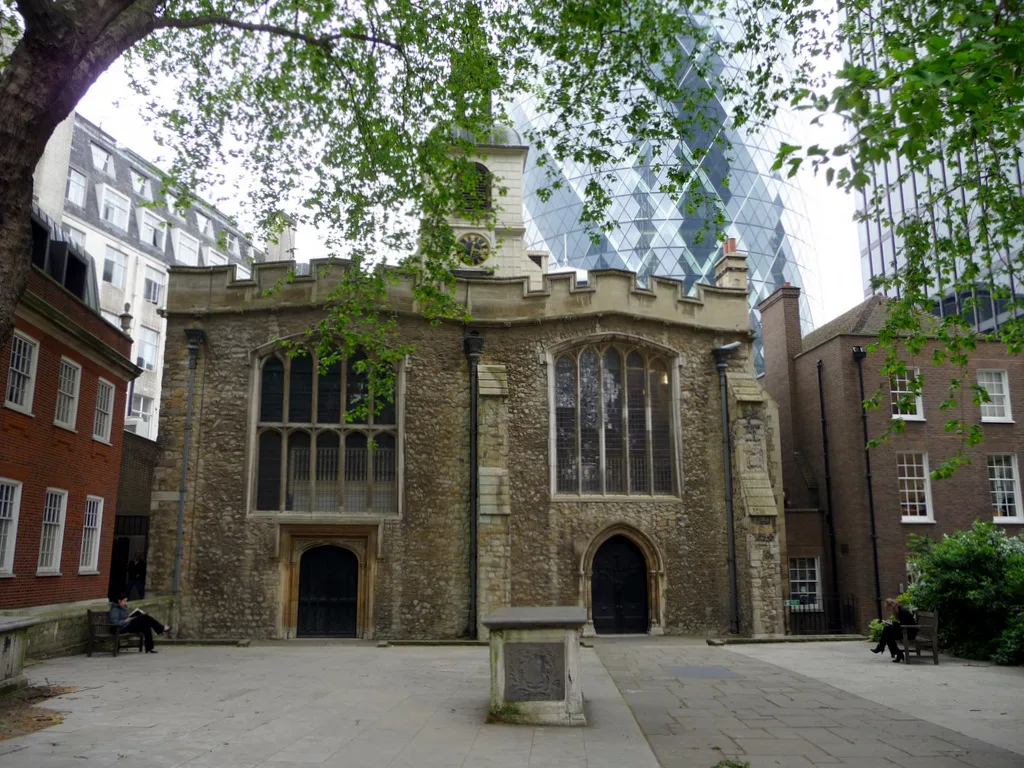
St Helen's Bishopsgate
Historic churches · 0.0 km

Church of St Mary Axe
Historic churches · 0.1 km

St Mary Axe
Memorials & monuments · 0.1 km

Horizon 22
Viewpoints · 0.1 km

Numen (Shifting Votive One & Two)
Public art & sculpture · 0.1 km

Victims of the Baltic Exchange bombing
Memorials & monuments · 0.1 km

Parish Clerks' Company
Memorials & monuments · 0.1 km
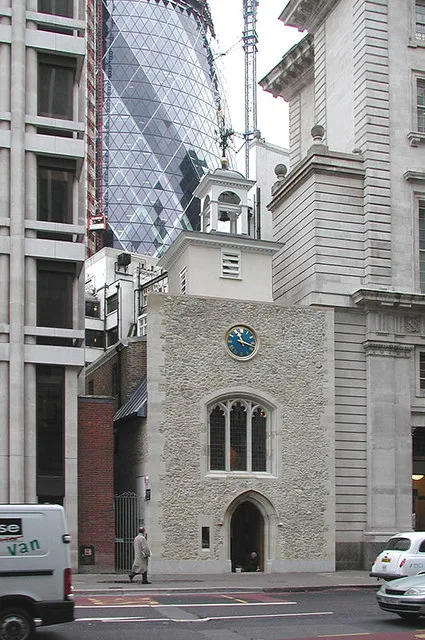
Church of St Ethelburga, Bishopsgate
Historic churches · 0.1 km
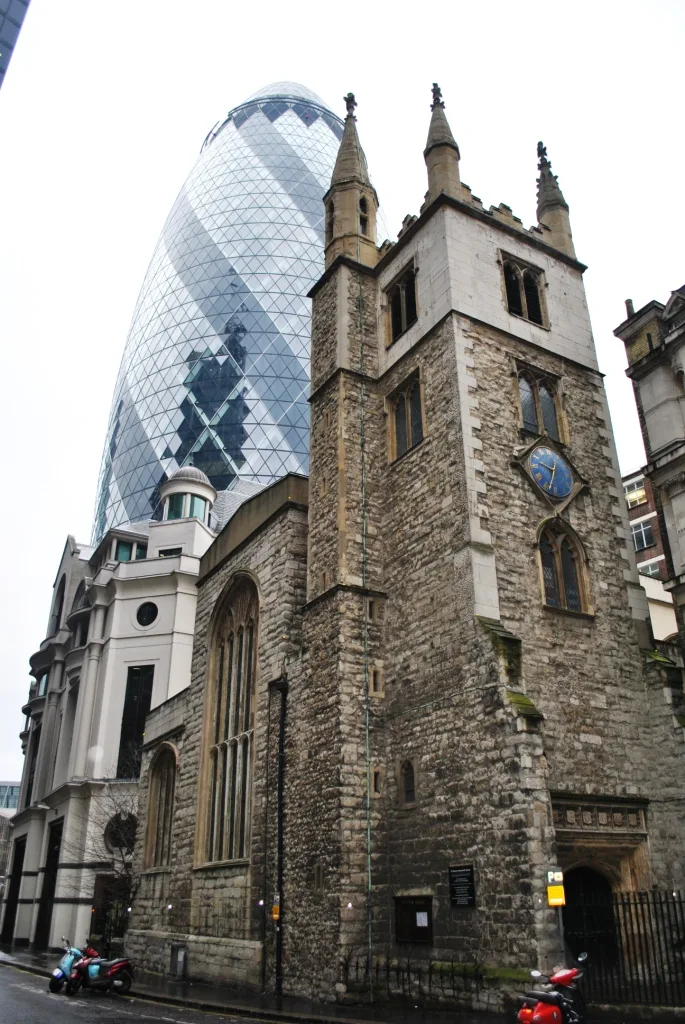
St Andrew Undershaft
Historic churches · 0.1 km

Gibson Hall, London
Historic houses · 0.1 km
Nearby
📷 5Public art & sculpture · London
summer moon - Ugo Rondinone
summer moon - Ugo Rondinone — a public art in england-london, United Kingdom.
📷 5Public art & sculpture · London
It Was Only a Matter of Time Before We Found the Pyramid and Forced It Open
It Was Only a Matter of Time Before We Found the Pyramid and Forced It Open — a public art in england-london, United Kingdom.
📷 5Historic churches · London
St Helen's Bishopsgate
St Helen's Bishopsgate — church in City of London, England, UK.
📷 5Historic churches · London
Church of St Mary Axe
Church of St Mary Axe — church in City of London, UK.
📷 5Memorials & monuments · London
St Mary Axe
St Mary Axe — a memorial in england-london, United Kingdom.
📷 5Viewpoints · London
Horizon 22
Horizon 22 — Named viewpoint at 254 m elevation.
Where to eat & stay near Robert Hooke
Places to stay
 📷 5
📷 5 📷 5
📷 5Hotels · London
Andaz Liverpool Street
Andaz Liverpool Street — a hotel in england london.
 📷 5
📷 5Hotels · London
DoubleTree by Hilton Hotel London - Tower of London
DoubleTree by Hilton Hotel London - Tower of London — a hotel in england london. 4-star. Brand: DoubleTree.
 📷 7
📷 7Hotels · London
Canopy by Hilton London City
Canopy by Hilton London City — a hotel in england london. 4-star. Brand: Canopy.
 📷 5
📷 5 📷 5
📷 5Hotels · London
Novotel London Tower Bridge
Novotel London Tower Bridge — a hotel in england london. 4-star. Brand: Novotel.
Places to eat & drink
 📷 5
📷 5Historic pubs · London
East India Arms
East India Arms in England London, United Kingdom.
 📷 5
📷 5Historic pubs · London
Jamaica Wine House
Jamaica Wine House in England London, United Kingdom.
 📷 5
📷 5 📷 7
📷 7 📷 5
📷 5Restaurants · London
Boulebar Spitalfields
Boulebar Spitalfields — a restaurant in england london. Cuisine: french;coffee shop. 5-star. Brand: Boulebar.
 📷 5
📷 5More memorials in this region
.jpg?width=1200) 📷 5
📷 5Memorials & monuments · London
1st Surrey Rifles War Memorial
1st Surrey Rifles War Memorial is a memorial in the United Kingdom.
 📷 5
📷 5Memorials & monuments · London
24th East Surrey Division War Memorial
24th East Surrey Division War Memorial is a memorial in the United Kingdom.
 📷 5
📷 5Memorials & monuments · London
Abney Park Cemetery CWGC Cross
Abney Park Cemetery CWGC Cross is a memorial in the United Kingdom.
 📷 5
📷 5Memorials & monuments · London
Admiral Sir John Franklin
Admiral Sir John Franklin is a memorial in the United Kingdom.
Frequently asked questions
- Where is Robert Hooke?
- Robert Hooke is in London, United Kingdom (postcode EC3A 6AT), in the parish of City of London, unparished area.
- What is Robert Hooke?
- Robert Hooke — a memorial in england-london, United Kingdom.
- How do I get to Robert Hooke?
- The nearest railway station is Liverpool Street, about 0.3 km away. The nearest town is City of London. Drivers can use postcode EC3A 6AT.
- Is Robert Hooke free to visit?
- Yes, Robert Hooke is free to enter.
- How do I get to Robert Hooke?
- The nearest railway station is Liverpool Street, about 0.3 km away. Drivers can navigate to postcode EC3A 6AT.